
Isaacman before Congress: Speaking the truth to power
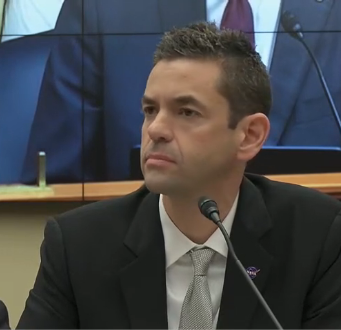
Jared Isaacman at House hearing yesterday
There has been a lot of attention given by the propaganda press to the testimony yesterday by NASA administrator Jared Isaacman before the House Science Committee, with almost all of that coverage focused on two issues, Trump’s proposal to cut NASA’s budget significantly, and the public statement by Isaacman that two Lunar Gateway modules were delivered “corroded.”
On the corrosion issue, much of the press focused on whether Isaacman’s statement is true (contractors are denying it). I instead was struck by how little pushback there was overall from Congress about Isaacman’s proposal to cancel Gateway entirely. In two hours of testimony, only one congressman brought it up, and even he did not challenge Isaacman’s decision very strongly.
Put simply, it really didn’t matter whether these modules were corroded or not. Congress is not going to challenge Isaacman on this decision. Some politicians might use it in fund-raising letters or at press events as a hammer to win votes or donations, but when it comes time to approve NASA’s budget, they are willing to accept Isaacman’s overall judgment. Gateway will be gone.
As for the budget cuts, I was also struck by the lack of hard opposition from Congress, despite reporting from the propaganda press (like this story) suggesting the cuts were rejected outright. Though repeatedly Isaacman was questioned about those cuts — especially from Democrats — repeatedly he fought back hard, to good effect. He supports Trump’s cuts and does not want more money, because in reviewing NASA’s budget and recent actions, he has found there is ample cash available in Trump’s reduced budget by simply shutting down bad or duplicative projects and focusing his resources more effectively.
The only threatened program that seemed to generate any passion from Congress was Trump’s effort to eliminate NASA’s education STEM program. “We need this program to inspire kids!” they would say. Isaacman would bluntly respond “No we don’t,” noting that NASA issues millions in education grants outside that program (making that program duplicative and unnecessary), and that the best way NASA can inspire kids is to actually fly missions, not send money to some bureaucratic program. Isaacman wants to use that money to make building the lunar base more likely.
Over and over again Isaacman pulled the rug out from under this big-spending congress critters by simply pointing out the truth to them, with one exchange with Zoe Lofgren (D-California) quite typical. She clearly was opposed to Trump’s cuts and wanted to challenge any cancellations being put forth. To do so, however, she wanted Isaacman to provide more detailed information about those cuts. Issacman said sure, I’m glad to provide you everything you want, but then added this:
I am here at NASA for the mission. If there is a program that is under-performing, not meeting expectations, or not [using] the best resources, I can assure you and promise you I will over-communicate and make the case why those resources should be spent on something else that better serves NASA’s mission.
In other words, if Congress wants to fund useless pork, or a mission that can’t do what it promises, Isaacman was making it clear that he was going fight against it, and will use his public platform to do so.
This puts the pork-lovers in a difficult position. Isaacman now has clout with the public. To go against him will not win votes. Moreover, he is playing this game very smartly. They all want a successful government space program, and he is eager to give to them. He is just demanding they let him do it using his own judgment. He will not support any program he thinks is counter productive, and he said so candidly over and over.
As a result, there was little pushback from Congress during this hearing over Isaacman’s major reshaping of Artemis. And though it is very likely they will restore most of Trump’s cuts, it is also very likely Isaacman will convince them to give him more flexibility on how to use the money.

Using NASA wisely, for the first time in decades
Isaacman also argued strongly, with little opposition, that the goal should be to off-load as much of NASA’s work to the private sector. Let NASA do stuff the private sector can’t, but the instant the private sector can do it, NASA should back off, stop doing it, and move on to other stuff outside the realm of the private sector.
Overall, this hearing reaffirms my earlier conclusion that Isaacman’s political skills are far better than anyone expected. He is forcing Congress to shift its focus from funding pork to funding a real American space effort, and to do so in a way that will in quickly foster a vibrant American space industry, outside government.
Keep your fingers crossed. If Isaacman succeeds in this effort, he will profoundly change America’s future in space, and for the good.

On Christmas Eve 1968 three Americans became the first humans to visit another world. What they did to celebrate was unexpected and profound, and will be remembered throughout all human history. Genesis: the Story of Apollo 8, Robert Zimmerman's classic history of humanity's first journey to another world, tells that story, and it is now available as both an ebook and an audiobook, both with a foreword by Valerie Anders and a new introduction by Robert Zimmerman.
The print edition can be purchased at Amazon or from any other book seller. If you want an autographed copy the price is $60 for the hardback and $45 for the paperback, plus $8 shipping for each. Go here for purchasing details. The ebook is available everywhere for $5.99 (before discount) at amazon, or direct from my ebook publisher, ebookit. If you buy it from ebookit you don't support the big tech companies and the author gets a bigger cut much sooner.
The audiobook is also available at all these vendors, and is also free with a 30-day trial membership to Audible.
"Not simply about one mission, [Genesis] is also the history of America's quest for the moon... Zimmerman has done a masterful job of tying disparate events together into a solid account of one of America's greatest human triumphs."--San Antonio Express-News
“”shutting down bad or duplicative projects””
There’s the rub!
As Ronald Reagan said: “”the nearest thing to eternal life”” is government program.
No Mas
Very little scientific benefit came of Artemis-2, but it did seem to wake up the general public on NASA-related issues.
Perhaps Congress is a bit hesitant to challenge Isaacman, as the PUBLIC may see him as an objective NASA Director who helped Artemis-2 to be a success.
Now all we have to do is find someone able to compete with SpaceX in the Big Leagues!
We’ve got some medium-lift outfits making good progress (e.g. Rocket Lab) but only Blue Origin is trying to compete in the Bigs, and they aren’t exactly setting the world on fire with having just dumped their first commercial payload, and the FAA thus grounding New Glenn.
They had better pray that New Glenn second stage doesn’t come down someplace heavily populated, but the obvious conclusion from BO’s silence is that:
a) they don’t have a clue where it will come down and,
b) they have no ability to influence it anyway.
F,
Are you certain? Let’s check back in six months from now, my guess is that nothing will have changed. If it turns out otherwise, I would be pleasantly surprised.
Robert,
We can only hope, he’s the first administrator willing to buck the status quo in a long time.
If Congress continues to fund NASA at current levels, and Isaacman finds it possible to make cuts to Gateway and perhaps SLS, then that’s effectively a massive boost to NASA’s commercial-lunar and science budgets.
Maybe with enough lunar success, the White House will look on NASA’s science goals more kindly.
Not only has Isaacman proven more politically adroit than any prior NASA Administrator, he is the only one pursuing what he sees to be the national interest without any compromise based on future career plans. He’s very definitely not going to be a lobbyist when he leaves office and so has no compunctions about ruffling business-as-usual feathers on either side of the aisle.
And, crucially, he is entirely indifferent to Trump’s attempted budget cuts. The Congresscritters want a bigger NASA budget more than he does. That means they have zero leverage in terms of threatening their own budget cuts – the usual method by which Congresscritters attempt to coerce executive branch administrators.
I have no idea to what extent, if any, Trump’s second attempt at significant NASA budget cuts was coordinated with Isaacman, but either way, he is using that proposal to completely eliminate any ground for any nouveau-would-be-Shelby to stand on in attempting to browbeat him into going along with some parochial boondoggle or other.
I think we can say we are witnessing a master class in institutional reform here. May it continue.
After watching Congress’s misadventures regarding space, including X-33 and SLS, I find Isaacman to be a breath of fresh air. I’m looking forward to the day when cislunar space becomes profitable. Profit is a much more reliable motivator than politics.
Trump’s Deputy Chief of Staff Dan Scavino Tweeted this video of Todd Kellett winner of France’s 2025 Enduropale du Touquet, the world’s largest motorcycle sand race, to the choral version of Madonna’s “Like a Prayer”.
This be America under Trump’s leadership.
https://x.com/DanScavino/status/2047267672816054443
1 minute
Isaacman is amazing.
The NSF had special summer camps and other outreach to promote under-represented groups into sciences in the 1970s. I have no idea how those programs recruited the employees involved, or the standards for supervision, but horrible, even criminal things were done to some of the participants, things I learned directly from some participants, but about which I was too young to process what to do about it., and it involved people that were in a position to retaliate. Ultimately I think these programs did more harm than good because it ruined the lives of people who were already interested in the sciences anyway. I once tried to get Grace Hopper to talk about this subject. But I digress. A lot of these problems are as old as the invention of alcohol thousands of years ago.
As far as NASA “science goals” go. There is a lot of duplication of effort, and a lack of bold proposals.
“I instead was struck by how little pushback there was overall from Congress about Isaacman’s proposal to cancel Gateway entirely. In two hours of testimony, only one congressman brought it up, and even he did not challenge Isaacman’s decision very strongly.”
It’s a great point, Bob, and of all the commentary I have read on Isaacman’s appearance, you’re the only person to make it.
Yeah. Gateway’s dead.
One other comment: “The only threatened program that seemed to generate any passion from Congress was Trump’s effort to eliminate NASA’s education STEM program.”
The really wild thing is that Lori Garver has the exact opposite reaction: she opposed the science directorate cuts, or most of ’em, but actually thinks the STEM program is a lame waste of money, for the same reason you do: she thinks that the best way NASA can inspire kids is to actually fly missions.
Alas, too few people on either side of the aisle on the Hill share that viewpoint.
On a related point: Eric Berger has gotten some sort of confirmation from both Northrop Grumman and the ESA of Isaacman’s claim in the previous hearing that the Gateway HALO and I-Hab modules being built by Thales Alenia really did suffer some corrosion issues issues.
https://arstechnica.com/space/2026/04/well-this-is-embarrassing-the-lunar-gateways-primary-modules-are-corroded/
But, wait, there’s more:
“I can confirm that the Axiom-1 module, also manufactured by Thales Alenia, has experienced a similar corrosion issue. Axiom still hopes to launch the module in 2028.”
https://x.com/i/status/2047710860055888211
Oh dear.
I suspect the NASA STEM program exists, and is popular in Congress, because funds for it are widely spread around and because it doubtless allows opportunities for Congresscritter photo ops with eager young future voters who are the offspring of current voters and which are designed for pickup by the legacy media. It’s federally-funded assistance to their re-election campaigns and likely also far from the only such.
Actually, speaking truth to power is what SLS fans do—they get threatened and banned by the echo chambers.
Robert wrote: “… and that the best way NASA can inspire kids is to actually fly missions, not send money to some bureaucratic program.”
After all, if there won’t be any missions, why would anyone be inspired? Without missions, what’s the point? Without missions, who would be inspired to be an astronaut?
Wait until people start buying products that were made in space. Then we will see interest in space and inspiration to work in the space industry. The space industry will become tangible rather than an abstract concept that affects other people.
____________
F wrote: “Very little scientific benefit came of Artemis-2, but it did seem to wake up the general public on NASA-related issues.”
This could be true. However, the same people who talked to me about Artemis II, this past month or so, are the same ones who talk to me about Starship and some other space news. They all remember Apollo and the Moon landings. The younger people I know do not talk to me about space topics, outside of SpaceX.
What reassures me is that these people also knew about the questionable heat shield and that its reliability was seriously questioned. These people also hoped that the shield would hold throughout reentry.
_____________
Richard M,
Well, that certainly explains the corrosion issue.
We all must remember that material selection is important. Handling and treatment are also high priority.
It seems that too many companies have relied upon this one source, and that source turned out to not have the experience needed to do the job properly.
I”m not certain what the solution has been determined to be, but some corrosion problems can be solved. I once had an assembly brazed by dipping in sodium (yes, that is how they did it, and if you are asking how the whole thing didn’t corrode, I’m not sure myself), and one spot on the brazement developed a little corrosion (are questions answered?). The brazed surfaces were large enough that we could grind out the corrosion and re-treat the surface. Problem solved. Assembly flown.
Tangential, but related development: SpaceX just dropped a 25 minute documentary on Starship over on X, titled, “Test Like You Fly.” It is must watch viewing, gents.
https://www.spacex.com/content/starship/test-like-you-fly
I think back to just how amateurish NASA’s Artemis II coverage was by comparison. Yet one more way in which SpaceX is simply playing on a different level.
Richard M: Just finished watching it. Fun but not as informative as I would have liked. It is mostly a sales pitch, but done well with no giggling female anchors blathering about how excited they are. :)
The music score in all these videos from everyone bugs me, though I know it is now common practice and necessary in many ways. Life however does not have a music score.
Hi Bob,
Oh, I am sure the impending IPO is not a coincidence for the timing here…. :)
Still, while it is not really a technical video, they did show and reveal things I was not expecting. They’re still willing to show their setbacks and failures up close. They could have avoided even discussing their testing hiccups and RUDs and a certain rock tornado, but they put ’em all right in there. A lot of factory interior glimpses of what it looks like now that would bear slow motion examination that I’m sure is already underway by certain Youtubers….
But yeah, music aside (and at least it was not TOO intrusive), it was blessedly free of the kind of nonsense we have to put up with in Blue Origin and NASA videos and broadcasts.
I feel optimistic about Flight 12.
P.S. One thing I missed but just caught on rewatch is that there will be a 48 hour on orbit initial capability for Starship V3. Not a massive revelation but an interesting one. Very curious now how they plan to ramp up the duration of that capability.
One thing a lot of this footage brings home is just how much V3 really is a new rocket. It looks superficially similar to V1 and V2, but they have changed *so much*, and not just the Raptors. And that goes for the new launch pad and GSE design, too. And it’s all happened in such a short period of time.
All of which is very important to what Jared Isaacman wants to do in the next three years.
That “Test” video is nice and all–but that wasn’t what just sent America to the Moon and back.
Indeed, it was that service module from Europe that gave Integrity that last little thump…fitting, since an OMS engine also got orbiters to LEO similarly.
Starship may well be what helps industrialize space
But not today
“That “Test” video is nice and all–but that wasn’t what just sent America to the Moon and back.”
No, it isn’t, but what sent America to the Moon — and it wasn’t technically the Moon, but just cislunar space, if we are being honest! — doesn’t have the capability to do anything more than it did, either.
It’s basically a 21st century version of Zond. Only more reliable, with a couple extra seats and a walk-in toilet.
“Life however does not have a music score.”
Perhaps I am overly imaginative. Activities can be scored while performing them. Never imagined “Theme from Chariots of Fire”? Never thought of “Eye of the Tiger”? Maybe it’s just oxygen-deprivation while cycling.
Isaacman illustrates that money buys freedom. This concept is valid from at every economic level. Only the richest societies, have the freedom to support the seeds of their own destruction,
Dick Eagleson: I think more important than any photo-ops, these “whatever outreach activity” programs are 99% to create jobs for connected individuals.
You can see my earlier disturbing post about (before it was called STEP) outreach. I was also first hand familiar with US Department of Agriculture programs such as 4-H Summary Camp, and the type of people sometimes recruited into Camp counselor jobs when there was extra federal money to throw around. Some recruited were criminals that had other people punching their time cards for their other gov-jobs-programs job(s) and who were quite inappropriate in behaviors toward the 4-H kids in the camp, even putting a kid into the hospital due to injuries caused by the counselors.
Speaking of Jared Isaacman, he was involved in a transatlantic social media scrum today — over what he said about Gateway module corrosion in the hearing.
1. The ESA is unhappy because they don’t think the corrosion is the main reason he killed Gateway, but they think he implied it was:
https://europeanspaceflight.com/esa-sheds-light-on-nasa-administrators-claims-on-gateway-modules/
2. Andrew Parsonson of European Spaceflight is unhappy because he thinks it was the “wrong form and forum” for Isaacman to talk about it.
3. Isaacman fired back:
https://x.com/i/status/2048085214568820911
Call me a biased American, but I think Jared has the better argument.
Jeff Wright,
SLS, not so long ago, was the power we NewSpacers were speaking the truth to. But the delays continued, Shelby retired, Trump came back, Jared is now NASA Admin and SLS is forced to rely on its merits – which turn out to be very few. Quit playing the victim here.
Richard M,
Like legacy contractors on this side of the pond, the Euros are long accustomed to being coddled, cosseted and indulged by NASA. Those days are over and throwing tantrums will yield no positive returns.
George C,
Didn’t know about the specifics of the situation you describe, but pedos always scheme to get at kids and one of the historical routes they have always taken is to get on-staff of any government program involving kids.
Hello Dick,
I think there are hurt feelings at Thales Alenia, which has seen its stock hammered over the last two weeks. Indeed, it’s lost all of its 2026 gains now.
But if they really had justice on their side, why are they taking nearly a week to issue a formal response to Isaacman’s claims? Even Parsonson admits that such a delay in saying anything is a “public relations disaster.”
I don’t think this was the primary reason why Isaacman’s team decided to kill and repurpose Gateway. But Thales Alenia didn’t do themselves any favors by this screw up, either. The fact that it has apparently now happened on three different pressurized modules is an especially bad look.
All: If you take a look at my space station rankings posted today, you will note that I have shifted Axiom below Starlab. Even though I still consider the first three station projects essentially tied, the rumored corrosion on Axiom’s modules threatens that station significantly.
“Life however does not have a music score.”
“That’s my theme music. Every good hero should have some.”
https://www.youtube.com/watch?v=hz-KwtKRBUY
Speaking of those corroded Gateway and Axiom modules, Andrew Parsons has just published the promised statement from Thales Alenia Space (released almost a week later!) on his X account:
https://x.com/AndrewParsonson/status/2048709985492754586
Most of the word count is discussing the modules they built for the ISS back in the day, and how they ran into some similar issues with those, too, and yet here we are today, decades later, and the modules are still functional. Or something like that. No real detail provided on just exactly what the “metallurgical behavior” in question actually was. But, read it for yourself.
Sean Duffy hardest hit.
Richard M
I thought the corrosion issue might have been just another tactic to go after anything OldSpace.
With those ISS modules fine and Integrity safely back, Camarda is now going after NSF….I guess Handmer stuck his head out…saw his shadow, and went back inside.
Jeff Wright,
That something meets a nominal goal doesn’t mean that it was safe (which itself is a sliding scale, not either/or), reliable, or perfected. This is true for all complex machines. Calling it a ‘tactic’ when someone criticizes what you support says nothing about the validity of someone’s argument. The ISS, Integrity, and now the Gateway modules all have significant issues, and ignoring them to impugn honest men like Charlie or Casey reflects poorly on you. ‘It worked’ is not good enough to quiet legitimate debate.
Nate P wrote: “‘It worked’ is not good enough to quiet legitimate debate.”
How true that is! It is how we got Challenger and Columbia. They both worked, until they didn’t. The problems were known but ignored, or at least not fixed.
From the Thales Alenia statement:
Thales did not say whether they performed any corrective action or whether they flew corroded modules to the ISS. This is a scary thought. The same ‘good enough’ attitude seems to be working again at NASA as well as at Thales Alenia Space. Just because they have been delivering corroded products to NASA for decades — and that NASA has been flying it — does not mean that corrosion is acceptable. In fact, I sincerely hope that NASA took corrective action on the corroded portions before flying the modules. Either way, Thales Alenia is now showing the same lazy-fair attitude that brought us Challenger and Columbia. ‘Nothing went wrong. yet, so it must be OK.’
American OldSpace companies have known the dangers of corrosion for decades, and I don’t think any of them would be stupid enough to deliver — much less fly — corroded parts. At least, nowhere that I worked took corrosion lightly. Even if it worked this time, there was no assurance it would work next time, and if it was on a long-term mission, there was no assurance that if it worked today then it would continue working in the near or distant future.
I swear, I am getting upset at what I hear is happening in my industry. Are we handing out trophies, these days, for participation or for quality workmanship and actual success?