Curiosity drill samples taken at different elevations show different Martian climates
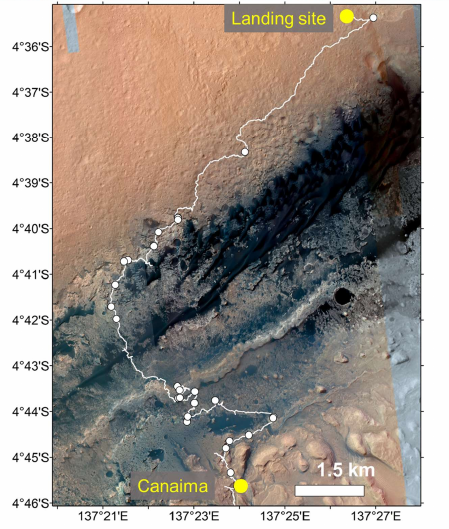
Figure S1 of the study, showing the location
of the core samples. Click for source.
By comparing 20 different Curiosity drill samples taken during the rover’s fourteen years on Mars, scientists have detected hard evidence that the climate in Gale Crater was distinctly different at different elevations, for long periods.
This study shows that hematite can also be a marker of climate changes based on its crystallite sizes and structures, which change under different temperatures. The scientists found that hematite crystallites from higher elevations in Gale Crater were less than 10 nanometers in size, while crystallites from lower locations were generally larger, reaching up to 65 nanometers. These findings aligned with the observations that samples from higher elevations contained both hematite and goethite, while lower elevation samples lacked goethite.
They concluded that, under warmer conditions when the pH of water is neutral or slightly alkaline, goethite can transform into hematite. These warmer conditions also favored an increase in hematite crystallite size in the deeper layers of Gale Crater through a process known as Ostwald ripening, in which smaller crystallites dissolve and contribute to the growth of larger ones. “This can tell you that the top layers were colder and didn’t have enough water, or the water presence was relatively short-lived, so the crystallites didn’t have sufficient time and conditions to grow in size,” said Peretyazhko. “But the lower layers had longstanding warm water that allowed those crystallites to grow.”
The white dots on the map to the right shows the location of the drill samples used, taken along Curiosity’s travels as it climbed Mount Sharp. Overall Curiosity has climbed about 2,500 feet, so the differences found the samples mark the past climate differences between the crater floor and the mountain’s foothills. According to this data, the crater floor had long-standing water in some form, exceeding millions of years. At higher altitudes there was less and less, and it was there for increasingly shorter periods.
As the press release notes, “A unique highlight of this study is that the data comes from Martian samples, rather than from theoretical modeling.” Similar conclusions from earlier Curiosity data required Earth proxies and computer modeling. This result is from hard data from Mars.

On Christmas Eve 1968 three Americans became the first humans to visit another world. What they did to celebrate was unexpected and profound, and will be remembered throughout all human history. Genesis: the Story of Apollo 8, Robert Zimmerman's classic history of humanity's first journey to another world, tells that story, and it is now available as both an ebook and an audiobook, both with a foreword by Valerie Anders and a new introduction by Robert Zimmerman.
The print edition can be purchased at Amazon or from any other book seller. If you want an autographed copy the price is $60 for the hardback and $45 for the paperback, plus $8 shipping for each. Go here for purchasing details. The ebook is available everywhere for $5.99 (before discount) at amazon, or direct from my ebook publisher, ebookit. If you buy it from ebookit you don't support the big tech companies and the author gets a bigger cut much sooner.
The audiobook is also available at all these vendors, and is also free with a 30-day trial membership to Audible.
"Not simply about one mission, [Genesis] is also the history of America's quest for the moon... Zimmerman has done a masterful job of tying disparate events together into a solid account of one of America's greatest human triumphs."--San Antonio Express-News
Figure S1 of the study, showing the location
of the core samples. Click for source.
By comparing 20 different Curiosity drill samples taken during the rover’s fourteen years on Mars, scientists have detected hard evidence that the climate in Gale Crater was distinctly different at different elevations, for long periods.
This study shows that hematite can also be a marker of climate changes based on its crystallite sizes and structures, which change under different temperatures. The scientists found that hematite crystallites from higher elevations in Gale Crater were less than 10 nanometers in size, while crystallites from lower locations were generally larger, reaching up to 65 nanometers. These findings aligned with the observations that samples from higher elevations contained both hematite and goethite, while lower elevation samples lacked goethite.
They concluded that, under warmer conditions when the pH of water is neutral or slightly alkaline, goethite can transform into hematite. These warmer conditions also favored an increase in hematite crystallite size in the deeper layers of Gale Crater through a process known as Ostwald ripening, in which smaller crystallites dissolve and contribute to the growth of larger ones. “This can tell you that the top layers were colder and didn’t have enough water, or the water presence was relatively short-lived, so the crystallites didn’t have sufficient time and conditions to grow in size,” said Peretyazhko. “But the lower layers had longstanding warm water that allowed those crystallites to grow.”
The white dots on the map to the right shows the location of the drill samples used, taken along Curiosity’s travels as it climbed Mount Sharp. Overall Curiosity has climbed about 2,500 feet, so the differences found the samples mark the past climate differences between the crater floor and the mountain’s foothills. According to this data, the crater floor had long-standing water in some form, exceeding millions of years. At higher altitudes there was less and less, and it was there for increasingly shorter periods.
As the press release notes, “A unique highlight of this study is that the data comes from Martian samples, rather than from theoretical modeling.” Similar conclusions from earlier Curiosity data required Earth proxies and computer modeling. This result is from hard data from Mars.
On Christmas Eve 1968 three Americans became the first humans to visit another world. What they did to celebrate was unexpected and profound, and will be remembered throughout all human history. Genesis: the Story of Apollo 8, Robert Zimmerman's classic history of humanity's first journey to another world, tells that story, and it is now available as both an ebook and an audiobook, both with a foreword by Valerie Anders and a new introduction by Robert Zimmerman.
The print edition can be purchased at Amazon or from any other book seller. If you want an autographed copy the price is $60 for the hardback and $45 for the paperback, plus $8 shipping for each. Go here for purchasing details. The ebook is available everywhere for $5.99 (before discount) at amazon, or direct from my ebook publisher, ebookit. If you buy it from ebookit you don't support the big tech companies and the author gets a bigger cut much sooner.
The audiobook is also available at all these vendors, and is also free with a 30-day trial membership to Audible.
"Not simply about one mission, [Genesis] is also the history of America's quest for the moon... Zimmerman has done a masterful job of tying disparate events together into a solid account of one of America's greatest human triumphs."--San Antonio Express-News