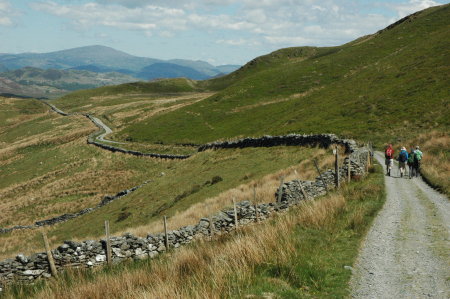
In our final day of our Wales journey, we spent the day strolling across the beautiful countryside of Cregennan, one of several parks along the flanks of the Cadair Idris range, which runs north-south to the coast. This park is closest to the ocean, so at our highest point we were overlooking the Irish Sea and the town of Barmouth.
The three pictures on the right are only a small selection of the beauty of this region. There were several magnificent lakes nestled amid the mountains and fields. There were pastures with numerous sheep, some eating, some resting like white blobs on the green grass, and some “baa’ing” at each other. It was especially entertaining when a lamb started calling out for its mother, the mother responding, and then the two searching and finding each other.
And of course there were the standing stones and ancient ruins scattered about on several hilltops.
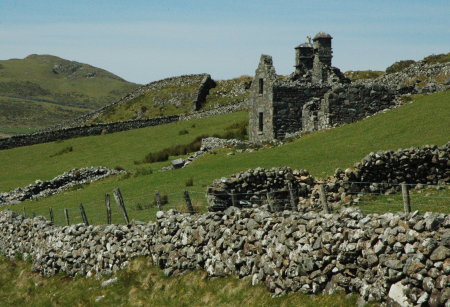
The abandoned house in the second picture is of special interest because it had been the home of an obscure 18th century Welsh composer by the name of John Williams. Williams was actually quite successful in his time, but only recently have some locals rediscovered unpublished manuscripts of his work. They plan a performance this fall.
Apparently his father was a hat-maker of some note, able to accumulate enough wealth to build this large country house in such a setting. Though I don’t know this, I suspect his success came from providing high quality hats to the upper classes, and this in turn gave his son the contacts necessary to become even more successful as a composer.
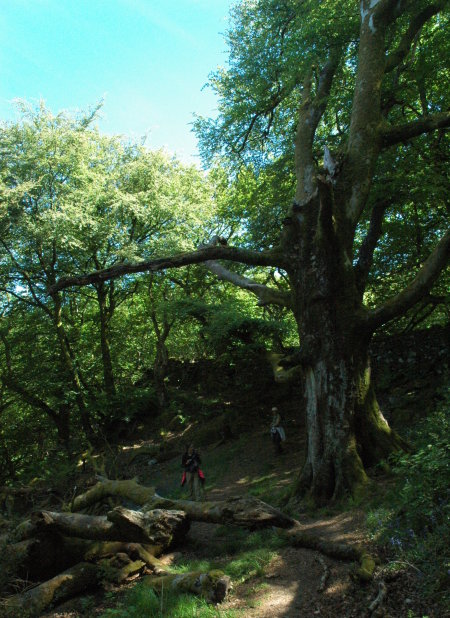
The last photo was taken as we walked downhill toward the ocean in a forested area beside a flowing stream, passing numerous waterfalls. This area is where our tour leader, Hywel “Taff” Roberts, was born and grew up, so he could give us some extra historical details about everything we saw. For example, the giant tree in that last picture was something that he remembered since childhood, home for birds and animals galore. It is old now, which is why several large branches have broken off.
Tomorrow the tour ends, and Diane and I will be taking the train to London, where we will spend two days before flying back to the states.