Sweden’s Esrange spaceport signs launch deal with Swedish military
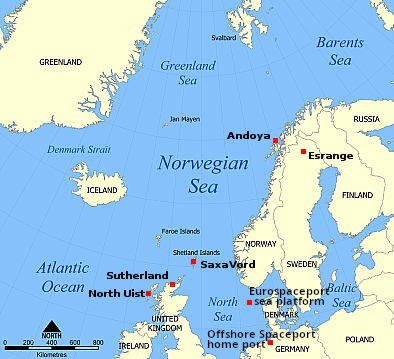
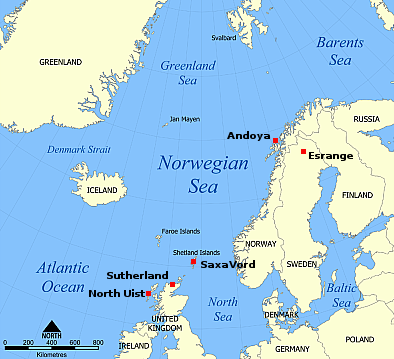
Proposed or active spaceports in North Europe

Sweden’s Esrange spaceport, used for decades for suborbital test launches but now trying to become an orbital spaceport, this past week signed a launch agreement worth about $22 million with Sweden’s military.

The contract covers systems and infrastructure that ensure protection, availability, and execution of satellite launches for the Swedish Armed Forces, as well as for partners and allies. The capability is scheduled to be operational by 2028.

…The initiative is part of a government decision from 2023 to allocate approximately [$100 million] to the Swedish Armed Forces through 2032 to develop Sweden’s space capabilities. The decision includes, among other things, improved space situational awareness, expansion of infrastructure at Esrange in cooperation with SSC Space, and the ability for the Swedish Armed Forces to carry out multiple satellite launches.

It seems unlikely Sweden’s military will be able to produce its own rockets for this amount of money. More likely they will buy the services from others. The American rocket company Firefly in 2024 signed a deal to launch its Alpha rocket from Esrange, but it appears there might be regulatory issues blocking any launches, some of which might stem from opposition by Norway. Esrange has an interior location, so any orbital launch has to fly over territory belonging to other countries. It appears Sweden is having problems getting permission to do so.

My guess is that this deal is mostly aimed at keeping Esrange open. Or to put it more bluntly, use the earnings of Swedish taxpayers to support a government-controlled spaceport with little financial promise.
South Korean rocket startup Perigee signs deal to launch from the Philippines

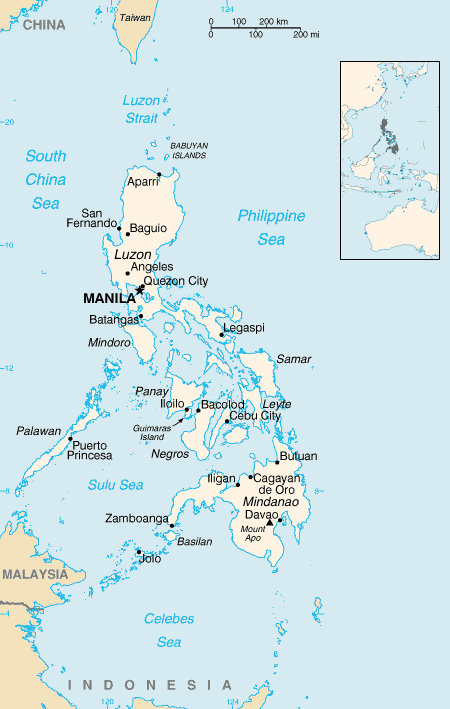
The Philippines

The South Korean rocket startup Perigee yesterday signed an agreement with the government of the Philippines, allowing it to launch its proposed suborbital and orbital Blue Whale rockets from a sea platform within that country’s territorial waters.

The Philippine Space Agency (PhilSA), together with the Department of Information and Communications Technology (DICT), Cagayan Economic Zone Authority (CEZA), Ascend International Gateway, Inc., and … Perigee Aerospace, Inc. signed a Memorandum of Understanding … to collaborate on a framework for rocket development training and experimental rocket launches in the Philippines. These initiatives will demonstrate the viability of the establishment and operation of a Philippine spaceport, with the goal of positioning the country as a gateway to space in the region.

…The agreement builds on the rocket technology know-how transfer and training program undertaken by PhilSA engineers in the Republic of Korea from October to November 2025, in collaboration with Perigee Aerospace. The program equipped the engineers with foundational and applied knowledge in launch vehicle systems through lectures and hands-on experience in rocket assembly and testing. These initiatives lay the groundwork for future activities, including possible localized assembly, testing, and launch operations in the Philippines.

The first four entities listed above are all government agencies in the Philippines. Apparently Perigee is providing training and aid to the Philippines in exchange for the right to launch from within that country. It website states the suborbital version of Blue Whale will launch from a sea platform, but the launch site for the orbital version is unclear.

This deal however sets the stage for possibly developing a land-based spaceport in the Philippines. As shown by the map to the right, the country is well situated for such purposes, with a lot of eastern coastline facing the vast Pacific ocean. A spaceport located on its southernmost island of Mindanao would be especially well placed.

Russia in discussions with Malaysian province about potential spaceport

Proposed spaceports in Malaysia

Officials from Glavcosmos, the commercial division of Russia’s Roscosmos space agency, have been holding meetings with officials from the Malaysian province of Sabah about building a spaceport there.

Glavkosmos said technical studies identify Sabah as the most suitable location in Southeast Asia for orbital launches, including low-earth and sun-synchronous orbits, due to its strategic geography and safe rocket stage drop zones. The proposed spaceport could create more than 2,000 high-income jobs and boost local supporting industries.

One year ago, in January 2025, the Sabah government announced it was holding similar discussions with the Ukraine. It seems either those talks fell through, or Russia decided to move in and block the Ukraine from making a deal.

A second Malaysian state, Pahang, is also planning a spaceport, working instead with China.

In all cases, it does appear for some reason Malaysia is not very interested in working with western nations.

Isar postpones 2nd Spectrum rocket launch attempt, no new date set

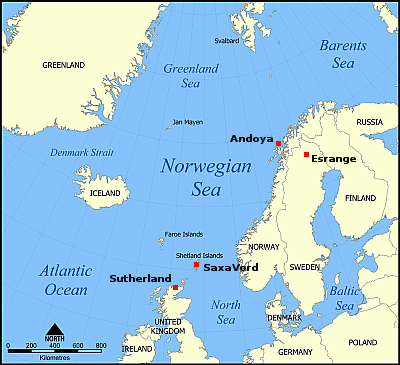
Proposed or active spaceports in North Europe

The German rocket startup Isar Aerospace yesterday canceled its second attempt to launch its Spectrum rocket from Norway’s Andoya spaceport, citing an issue with a “pressurization valve”.

We are standing down from today’s launch attempt to address an issue with a pressurization valve. The teams are currently assessing the next possible launch opportunities and a new target date will be announced shortly.

The update also stated the company is moving to a “new launch window” without noting the dates of that window. This statement however suggests that no new launch attempt will occur for at least a month. And considering it is winter at Andoya in the high north, it is quite possible the launch will be delayed until March.

Meanwhile, Andoya continues to lead the race to become the first spaceport in Europe to achieve an orbital launch. Sweden’s Estrange spaceport is limited because of its interior location. The two sea platforms proposed for the North Sea are not yet ready.

And the United Kingdom has effectively eliminated itself from the competition. Its bureaucracy and Byzantine regulations have now put two rocket companies out of business, and that same red tape (combined with location opposition) has essentially shut down the Sutherland spaceport. I doubt there are any rocket companies willing to deal with the UK at this point.

South Korean rocket startup Innospace signs deal with Portugal’s Santa Maria spaceport

Santa Maria spaceport

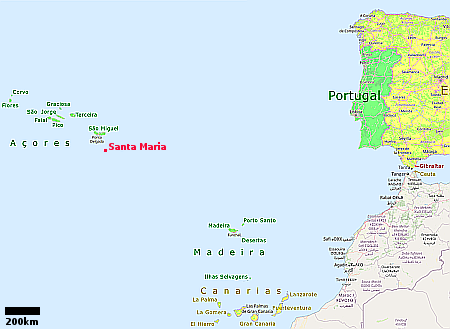
The South Korean rocket startup Innospace, which just last month attempted its first launch out of Brazil, has now signed a deal to launch its rocket from Portugal’s proposed Santa Maria spaceport in the Azores, located about 900 miles west of the European mainland.

Through this agreement, INNOSPACE has secured priority and long-term access to the Malbusca Launch Center, located on Santa Maria Island in the Azores, Portugal, for a five-year period starting in 2026. The company plans to gradually establish key launch infrastructure required for initial operations, including launch pads, operations and control systems, and testing facilities, with the goal of conducting its first commercial launch in the fourth quarter of 2026.

Despite the launch failure last month, Innospace has been aggressive about obtaining agreements for launching its rockets from multiple locations. That first launch occurred at Brazil’s long unused Alcantera spaceport on its eastern coast, and the company will use it for its second launch attempt later this year. It has also signed agreements with two spaceports in Australia (Southern Launch and Equatorial Launch), though the latter spaceport is not yet operational and might never exist.

A UK law professor and news outlet prove the UK is not the place to launch rockets

Proposed or active spaceports in North Europe

If I had any remaining hopes that the United Kingdom might finally begin to reform its Byzantine space regulations that bankrupted one rocket company and has blocked any launches from its proposed spaceports for almost a decade — allowing other spaceports in Europe to attract rocket companies and leap ahead — those hopes vanished in reading an article in the Shetland Times today, in which a professor specializing in UK space law described its red tape as “very good,” drawing “on best practice from other industries and jurisdictions.”

Alexander Simmonds of the University of Dundee says a balance should be struck to avoid launch operators being put off by strict regulatory requirements. The lecturer in space law and writer behind The Space Legislation of the United Kingdom says UK regulation of the space industry is “very good” and draws on best practice from other industries and jurisdictions.

Licences are in place for SaxaVord to host the first vertical satelite launch in 2026, and Dr Simmonds says operators have taken responsibilities “very seriously”. But he fears future operators could look elsewhere if compliance becomes too much of a problem and more cost-effective alternatives are available.

“My own view is we’re in a very good place at the moment, as regards to regulation,” Dr Simmonds told The Shetland Times. “I think that the legilsators have been cautious with this and have been very entitled to be, given the nature of what we are dealing with.”

Both this so-called expert and the journalist interviewing him appear entirely ignorant about the history of past decade. While red tape in the UK has blocked or seriously delayed launches, rocket startups have “looked elsewhere,” signing deals and launching from Norway’s long established Andoya spaceport that has now gone commercial with enthusiastic government support. At the same time, new spaceport projects have begun at three other locations, all of which appear to also have support from their local governments in Sweden and Germany. While the UK government has choked off business, the governments at these other spaceports have moved aggressively to ease regulation.

The cluelessness of both Simmonds and the Shetland Times reporter indicates there is absolutely no urgency in the UK to fix things, and in fact it appears they aren’t even aware their emperor is wearing no clothes.

Third proposed UK spaceport gets conditional airspace approval

Map of spaceports surrounding Norwegian Sea
Spaceports surrounding the Norwegian Sea

The third proposed spaceport in Scotland, located on the northwest coast of the island of North Uist (as shown on the map to the right) has now received a conditional airspace approval by the United Kingdom’s Civil Aviation Authority (CAA).

While the airspace is designated as permanent, it will not be restricted indefinitely. Instead, it will be “activated by Notice to Aviation (NOTAM)” only when launch operations are scheduled to occur. The CAA noted that the approval is “subject to conditions” that the change sponsor must satisfy before the airspace can be fully utilised. Detailed regulatory assessments and the specific list of conditions are expected to be published on the CAA’s Airspace Change Portal shortly.

The spaceport’s airspace is set to become legally effective on Thursday, January 22.

Based on the CAA’s past behavior, this approval means very little. It will still require long lead times to issue any specific launch approvals, making any planned launches at this spaceport as difficult as all the other spaceports that have attempted to lift off from Great Britain. Those red tape delays put Virgin Orbit out of business. It has caused Orbex to abandon the Sutherland spaceport, which increasingly looks like a dead project. And it has caused numerous other small rocket startups to look everywhere else but Great Britain for a launch site.

Kenya to build its own spaceport

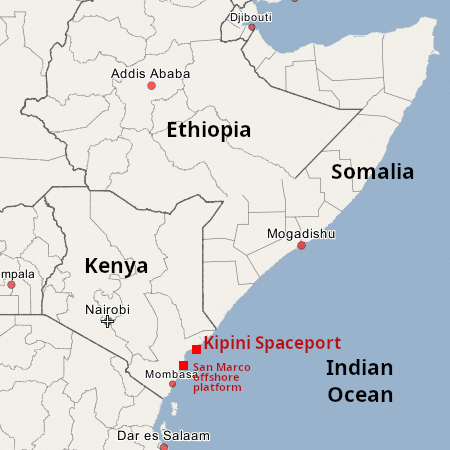
Kenya spaceports
Kenya spaceports

The Kenyan government has now initiated a project to establish a second commercial spaceport on the country’s coast, located near the town of Kipini.

As stated in the document made public on December 16, 2025, the government is looking to recruit a skilled transaction advisor who is capable of analyzing the technical, financial, legal, environmental, and social feasibility of the construction of the spaceport based on a PPP model. The strategy utilizes Kenya’s location on the equator, which provides some benefits in satellite launches, among them lower fuel consumption, lower launch costs, and easier satellite placement in low-inclined orbits around the earth’s equatorial region.

…Under the plan, the transaction advisor will prepare a detailed feasibility study in line with the PPP Act, 2021. The study will include concept designs, launch vehicle options, infrastructure requirements, lifecycle cost estimates, and a phased implementation plan for the facility.

As shown on the map to the right, this new facility would be to the north of the San Marco offshore platform that had been used for eight launches by Italy from the ’60s to the ’80s and that the Italian rocket company Avio is now planning to re-open.

The Kenyan government apparently wants to build its own a launch site that it can offer to others to use.

MDA invests $7 million to become part owner of proposed Nova Scotia spaceport

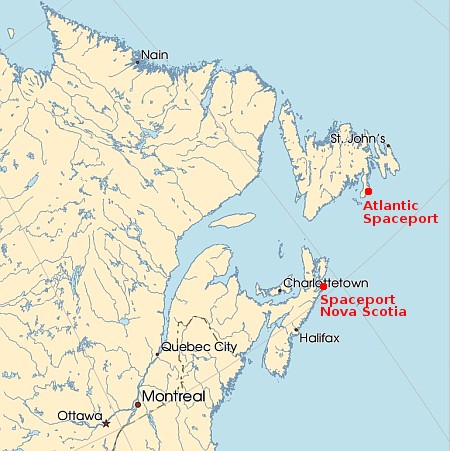
Proposed Canadian spaceports

The Canadian space company MDA Space has now purchased for $10 million ($7 million in U.S. dollars) a part ownership in the proposed Spaceport Nova Scotia that the startup Maritime Launch Services (MLS) has been trying to establish since 2016, with little success.

The transaction includes an Investor Rights Agreement, entered into between MDA Space and Maritime Launch, providing MDA Space with certain rights, including the right to nominate one individual to sit on the board of Maritime Launch and pro-rata participatory rights in future financings of the Spaceport. The investment will be used for applicable research and development initiatives relating to the ongoing development of Spaceport Nova Scotia and will trigger the retirement of convertible debentures.

The history of this spaceport has been a frustrating one. Originally it had partnered with a Ukrainian rocket company, proposing to offer satellite companies both the launch facilities and the rocket. That plan died in 2022, when Russia invaded the Ukraine and the rocket company switched from making rockets to making drones.

MLS then opened up Spaceport Nova Scotia to all rocket companies, hoping the new launch startups building portable small rockets that could be set up anywhere would buy in. Though it periodically announced deals, none were with established orbital companies. Some were startups that after years have yet to launch, such as the British company Skyrora. Other contracts were with startups that weren’t even rocket companies, such as the space station startup Voyager Space.

Meanwhile, a second spaceport startup, Nordspace, appeared in 2022, proposing a spaceport in Newfoundland dubbed The Atlantic Spaceport. While it has not launched anything either, it has quickly signed contracts for ground stations and a mission control center, and even attempted (though scrubbed) a launch of its own rocket.

Whether this new deal can finally get Spaceport Nova Scotia off the ground remains very uncertain. MDA is not a launch company. It is a long established satellite company that also builds the robot arms used on ISS.

Firefly studying feasibility of launching from northern Japanese spaceport

Japan's spaceports
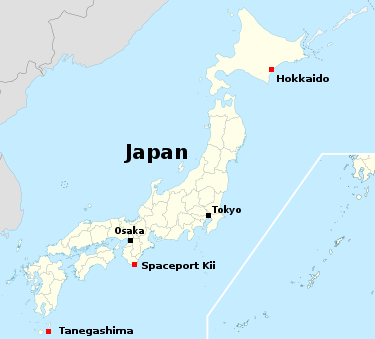
Japan’s spaceports indicated by red dots.

Firefly and the commercial Japanese Hokkaido spaceport in the north of Japan have begun a feasibility study for launching Firefly’s Alpha rocket there.

Establishing an memorandum of understanding with the Hokkaido Spaceport means that the two entities can flesh out a more concrete launch complex design and figure out all of the logistics to bring Alpha launch capabilities to Japan.

In the past Hokkaido has been the location for a number of suborbital launches, but no orbital launches as yet. For example, the Japanese startup Interstellar used this site for its suborbital test flights in 2018, and hopes to use it for future orbital flights.

Firefly meanwhile has launched its Alpha rocket multiple times from Vandenberg in California. The company is also building a launchpad at Wallops Island in Virginia, and has signed a deal with the Esrange spaceport in Sweden. The Swedish launch site however is questionable because any orbital launch from there would have to cross over land of other countries, and so far it appears permission for such a thing has not been arranged. Firefly might therefore be looking at Hookaiddo for precisely this reason.

Two spaceports in Alaska sign partnership agreement

Alaska spaceports

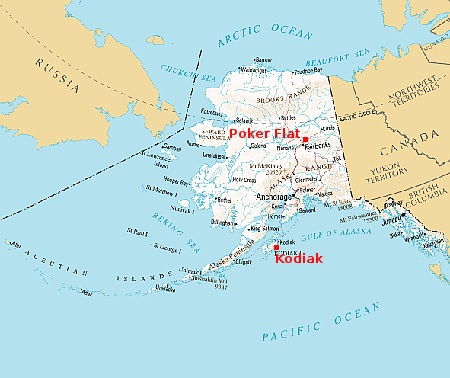
The Alaska Aerospace Corporation, which runs the Kodiak spaceport in Alaska, has now signed a five year partnership agreement with University of Alaska’s Geophysical Institute in Fairbanks, which runs the Poker Flat suborbital spaceport, to upgrade the latter for commercial orbital launches.

Though the terms of that agreement are highly technical, Gov. Mike Dunleavy’s draft budget for the corporation indicates that the university plans to seek a FAA spaceport license for the university’s Poker Flat Research Range, which has been flying sounding rockets — smaller rockets used for research — into the upper atmosphere since March 1969, including some earlier this spring.

An FAA license could allow Poker Flat to launch larger rockets, and for commercial purposes, not just scientific ones. Making Poker Flat a “licensed vertical orbital spaceport” could take up to two years, the budget documents state.

The map to the right shows the location of each spaceport. You can read the text of the agreement here [pdf].

Kodiak has been used recently by several orbital rocket startups, most often by Astra. Poker Flat in turn has only done suborbital launches (mostly for universities), and its interior location suggests it would have a very limited capability to do orbital launches. The lower stages of any orbital rocket would crash either in Alaska or Canada, something that neither the U.S. or Canada has previously allowed.

The deal however allows both spaceports to coordinate their effort, which might bring more business to both, for different purposes.

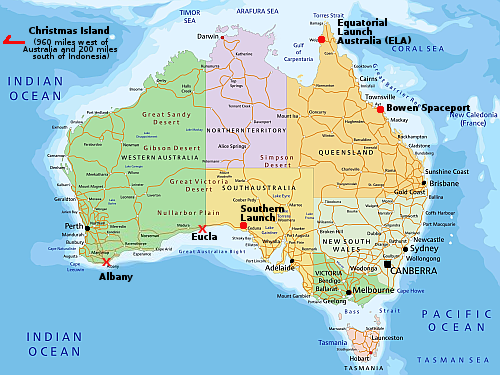
Proposed Australian spaceport changes name

Proposed Australian spaceports
Proposed Australian spaceports.
Click for original image.

A proposed Australian spaceport company that was previously called Equatorial Launch Australia and was forced to shift its location because of red tape has apparently changed its name to Space Centre Australia and named its proposed spaceport the Atakani Space Centre.

It is also possible there was a major shake-up in management, but this is unclear from available sources.

The map to the right shows the location where Atakani is planned, on Cape York in Queensland. Previously this company hoped to build the spaceport to the west in the Northern Territory, but local bureaucracy made that impossible.

Right now the company hopes to open for launches by 2029.

Scandal at Great Britain’s first spaceport at Cornwall airport

A local council in Cornwall has withdrawn £200K of funding from spaceport operations at the local airport — the first spaceport established in Great Britain where Virgin Orbit launched its last flight — because one council member responsible for distributing the funds was also at the same time getting a job at the spaceport without telling anyone.

The decision has come after it was revealed that the council’s then cabinet member for the economy Cllr Louis Gardner – who oversaw SPF allocation as part of his portfolio – was actually in the process of getting a top job at the Spaceport when he was part of an Economic Prosperity Board meeting on February 27. He was among members who agreed to give the space hub the £200k levelling up money. He didn’t declare an interest during the meeting.

Days later it was announced he had got the £70,000 head of future air and space role, which sees him controlling a budget which would have included the £200,001 fund previously agreed by him and other Economic Prosperity Board members. On accepting the Spaceport role he stood down from his position as the local authority’s Conservative cabinet member for the economy and will retire as a Newquay councillor on Cornwall Council at the election tomorrow (Thursday, May 1).

It appears this kerfuffle is also linked to the continuing collapse of the conservative Tory Party in Great Britain. Gardner is a Tory, and it appears his actions convinced two other Tory councilors to publicly break from that party and join Nigel Farage’s Reform party.

Before the meeting even started there was no escaping what many are calling a “scandal” when Tory rebels Cllr Steve Arthur (Perranporth) and Cllr John Conway (Launceston South) arrived wearing NASA spacesuits, much to the amusement of many of their colleagues. The councillors, who resigned from the Conservative group to start an independent non-aligned group, said they had pulled the stunt to highlight the issue.

The decision to withdraw this money however makes sense from another perspective. The spaceport has no customers, as there are literally no rocket companies in existence at present able to launch from an airport runway. Cornwall’s only customer, Virgin Orbit, went bankrupt after its one launch there failed.

Nor should anyone expect any new rocket companies to appear eager to use Cornwall. The red tape that Virgin Orbit had to clear to launch took almost a year, and that delay was part of the reason the company went belly-up. It used up its cash reserves waiting for Great Britain’s bureaucrats to fill out forms.

A Malaysian state plans spaceport, working in partnership with China

Proposed spaceports in Malaysia

According to an report out of Malaysia yesterday, the Malaysian state of Pahang has initiated a one year study to build a spaceport off its eastern coast near the town of Nensasi, working in partnership with China.

“On April 15, PKNP [Pahang State Development Corporation] signed a letter of intent with China Great Wall Industry Corporation (CGWIC) and Lestari Angkasa Sdn Bhd to establish a strategic collaboration in the space technology sector. “Next month, PKNP and Lestari Angkasa will visit Wenchang Space City in Hainan, China, to hold further discussions on the Pahang International Spaceport project,” he said during the Pahang state assembly session today.

This is the second Malaysian state to propose its own spaceport. In January the eastern state of Sabah began its own study, working in partnership with the Ukraine.

The partnership with China is worrisome for the U.S., as it is very likely that China will arrange use of that spaceport for its own purposes. It will also use its presence there to access and steal any technology brought by other western companies or nations should they launch there as well.

Iran accelerates plans for new coastal spaceport

Iran's spaceports

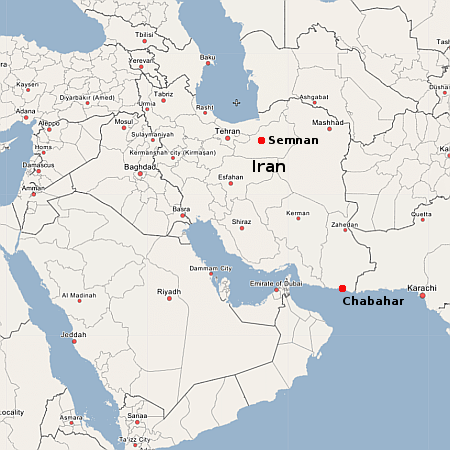
According to Iran’s state-run press, the government is about to begin the next construction phase for its proposed new coastal spaceport near the city of Chabahar.

The head of the Iranian Space Agency has announced that the second phase of the Chabahar spaceport for semi-heavy liquid-fueled launchers is to be inaugurated in the current Persian calendar year. Hassan Salarieh said on Tuesday that the first phase of the Chabahar spaceport is for solid fuel launchers and is expected to be inaugurated this year (which started March 21), adding that adequate studies were conducted regarding the second phase of the site in previous years and the new phase for semi-heavy liquid fuel launchers is to be opened during the year.

The details are very vaguely words. Will launches of solid-fueled rockets begin this year, or construction? Earlier reports had promised the first launch from Chabahar would occur in March 2025. That clearly has not occurred.

This spaceport will supplement Iran’s older Semnan launch facility in the country’s interior, from which all previous Iranian launches have occurred.

Launch window for first launch of German rocket startup Isar rocket revealed

Proposed spaceports surrounding Norwegian Sea

According to filings from the Norway’s Andoya spaceport, the launch window for Germany’s rocket startup Isar Aerospace for the first test orbital launch of its Spectrum rocket is now from March 20, 2025 to March 30, 2025.

On 12 March, Andøya Space, the mostly government-owned commercial entity that operates Andøya Spaceport, published a launch period notice covering 20 to 30 March. In relation to a maritime danger-area warning, the notice specifies launch windows between 12:30 and 16:30 CET throughout the 11-day period.

While the notice does not explicitly mention Isar Aerospace, as the company is currently the launch site’s sole customer, it can only refer to Isar. The company itself has yet to make a formal announcement regarding the published launch window.

In general Isar has been very closed-mouthed about its launch plans, so this supposition is not uncertain. The article however is right that there is no other rocket entity at Andoya that the launch window could refer to.

If Isar succeeds at this launch, it will win the race among about a half dozen European rocket startups to get an orbital launch off the ground first. Rocket Factory Augsburg had hoped to launch last year, but a fire during the one of the last rocket engine tests destroyed the rocket.

Regardless of whether Isar’s launch is successful, Norway meanwhile will win the race to be the first European spaceport to achieve an orbital launch. Though it shifted to orbital commercial operations much later than the two UK spaceports, years of regulatory red tape has prevented those UK spaceports from launching.

Australia’s government proposes subsidies to build spaceport in Western Australia

Australian spaceports
Proposed commercial spaceports in Australia

The Labor Party that presently runs Australia has now proposed a $2 million program to “develop a business case” for a spaceport in the generally unpopulated state of Western Australia.

The red arrow and two X’s on the map to the right shows three potential locations. The Eucla and Christmas Island locations have been proposed by a private startup dubbed Space Angel. The Albany location has been proposed by a different startup called WA Australia.

At present, only the Bowen spaceport on Australia’s eastern coast has all its license approvals to do orbital launches, with the first now scheduled for mid-March. Southern Launch however has been a suborbital launch site for decades, and is also where many spacecraft returning from space have landed.

That the present leftist Australian government is considering a program to encourage new spaceports at these other locations instead makes me wonder if there isn’t a bit of political quid-pro-quo going on. Why favor these new locations in Western Australia exclusively? Why not offer this program to all the spaceports? I am especially suspicious of this proposal considering the regulatory burden the Labor government has placed on those other eastern spaceports, delaying approvals for years.

With so many commercial Australia spaceport proposals however suggests the political pressure to ease those regulations might be soon forthcoming.

Malaysia begins spaceport study

Malaysia
Click for original image.

The Malaysian state of Sabah this week announced it has partnered with a Ukrainian government agency to study the possibilities of developing its space industry, including establishing a spaceport on that state’s coast.

Initially floated in 2023, the state government signed a memorandum of understanding with Ukraine’s Yuzhnoye State Design Office – which specialises in space-rocket technology – and local defence and aerospace firm Sovereign Sengalang, to explore Sabah’s potential as a regional space launch site.

Sabah has an extensive shoreline stretching about 1,500km on its mainland, and sits close to the equator, ideal conditions for rocket launches and recovery.

Based on the map to the right, it seems the best location for a Sabah spaceport would be on the state’s eastern coast, to the south. Any other location means rockets would have to cross land or islands of other nations.

Alabama Republican congressman introduces spaceport funding bill to help a non-spaceport

In an example of the typically corrupt behavior of the Washington swamp, Alabama Republican congressman Dale Strong yesterday introduced a bill dubbed the Spaceport Project Opportunities for Resilient Transportation (SPACEPORT) act that has a lot of high-minded goals, but is mainly designed to funnel federal money to local regions. To quote Strong himself:

“The U.S. is the global leader in space, and North Alabama is at the forefront of that effort,” Strong said. “As former Chairman of the Madison County Commission, I worked closely with local city officials and commercial space stakeholders to secure Huntsville International Airport’s designation as the first entry site for space vehicle landings. I understand the preparation, coordination, and support required to safely and efficiently manage space launches and reentries. North Alabama is ready to leverage our unparalleled civil, commercial, and national security space expertise to support space infrastructure projects and the future of space exploration.” [emphasis mine]

Huntsville International Airport is not a spaceport. Giving it cash for this is nothing more than pork and a waste of the taxpayer’s money.

Strong’s bill is merely a proposal, and has been announced I think mostly to give this guy a photo-op. Nonetheless, it shows that we cannot trust any politician to do what they say. The Republicans always run on cutting the budget, but here we have a Republican eagerly proposing we spend money we don’t have in order to provide pork to his district. It is essential that his own constituents tell him in no uncertain terms that this kind of legislation is not what they hired him for. If they don’t, then things in Washington will only continue to do downhill.

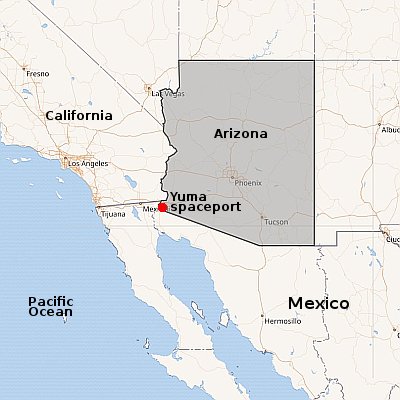
Yuma competing for up to $160 million in an NSF grant to establish its own spaceport

Yuma spaceport

Arizona wants its own spaceport! The city of Yuma, located in Arizona’s southwest corner, is now a finalist in a National Science Foundation (NSF) grant program that could award it up to $160 million to establish a spaceport there.

The city is one of two Arizona applicants, the other being the University of Arizona, which wants to use the grant money “to make the state a proving ground for transformative mining technologies.” There are in addition 69 other applicants to the NSF grant.

This announcement is mostly PR, since Yuma not only does not yet have a spaceport licence from the FAA, it does not yet have approval from Mexico to fly missions over that country. Yuma is not on the coast, so launches must cross land. And if not over Mexico, launches would have to cross other U.S. states, something that would need approval as well.

This proposal has been in the works for many years, as having a spaceport in Arizona would draw a lot of space business to the state. It could happen, but to do so will require a lot of approvals from a lot of government agencies.

ESA flies suborbital rocket from Swedish spaceport

Proposed spaceports surrounding Norwegian Sea

The European Space Agency (ESA) yesterday successfully flew a small suborbital rocket from the Esrange spaceport in Sweden, completing the sixteenth such flight since 1987.

The rocket reached an altitude of 256 km before falling back to Earth and providing approximately six minutes of microgravity to six scientific experiments onboard.

…All systems performed well during the flight and the valuable payloads were recovered by helicopter soon after landing. Flight samples of the experiments will now be returned for further analysis to science teams from Sweden, Germany and Finland, after more than two years of preparations.

This suborbital launch is only a preliminary of much bigger things to come. The rocket startup Firefly is building a launchpad at Esrange for orbital launches. Furthermore, the European startup MaiaSpace, a subsidary of ArianeGroup, plans to do tests of its partly reusable Maia rocket there in 2025.

Australia issues licenses for two spaceports

Australian commercial spaceports
Australia’s commercial spaceports. Click for original map.

The Australian government has now issued permits for two different spaceports, making possibly orbital launches at both in the near future.

First the planning minister for the province of South Australia has issued final approval allowing launches at the Southern Launch facility on Australia’s southern coast, though that approval included serious restrictions, such as no rocket launched could be taller than 30 meters. He also placed limitations on the number of launches per year, 36, the amount of noise a launch could make, and added other rules “regarding cultural heritage and native vegetation management.”

The spaceport hopes to complete its first orbital launch by the end of next year. Not surprisingly, the leftists in Green Party opposed the spaceport.

Second, the Australian Space Agency issued a launch license to Gilmour Space at its Bowen spaceport on the eastern coast of Australia, seven months late. This quote from the company’s founder is instructive:

But Mr Gilmour said when he and his brother, James Gilmour, set out to be the first to build a rocket of its kind in Australia almost a decade ago, he never imagined that getting a [launch] permit would be the most difficult part. “In my wildest dreams, I didn’t think it’d take this long,” he said. “I honestly thought the environmental approval [to launch a rocket over the Great Barrier Reef] would take the longest, and we got that well over a year ago.”

The company had originally hoped to launch early this year. It still hopes to do so before the end of 2024.

Sutherland spaceport submits another revised plan to local council

Proposed spaceports surrounding Norwegian Sea
Proposed spaceports surrounding Norwegian Sea.

We’re from the government and we are here to help you! The long-delayed proposed Sutherland spaceport on the north coast of Scotland has now submitted another revised plan to its local Highlands council for approval.

The amended plans for Sutherland Spaceport include a smaller launch pad and launch services facility, and realigning an access road to avoid an area of deep peat. Highland Council planners said the changes would mean reducing the amount of peat that would have to be excavated by more than half. The soil is seen as important because it absorbs CO2.

Highland councillors meeting next week have been asked to approve the amendments. In a report, officials said the amount of peat to be dug up could be cut from 24,046 cubic metres to 9,895 cubic metres.

This is the second time the spaceport has had to submit revised plans to this council. It did so in December 2023, but apparently the council was not satisfied.

Meanwhile Sutherland’s main launch customer, Orbex, has still not gotten its launch licence from the UK’s Civil Aviation Authority, first applied for in February 2022. Orbex, which has a fifty year lease at Sutherland and has built its rocket factory nearby, had planned to do its first test launch of its Prime rocket two years ago. Didn’t happen.

Adding to these bureaucratic delays, Anders Holch Povlsen, a local billionaire — who is an investor in the Saxaford spaceport on the Shetland Islands — in July 2024 filed what appeared to be an absurd harrasment lawsuit against Sutherland, and this was the second time he had done so.

I think Orbex picked the wrong spaceport horse in this race, and is likely going to be killed by this red tape and opposition.

Spaceport startup SUAS Aerospace signs deal to launch small suborbital rocket from west coast of Ireland

SUAS's proposed spaceport plan
Click for original image.

The Irish spaceport startup SUAS Aerospace has now signed a partnership deal with the Netherlands rocket startup T-Minus Engineering to launch a small suborbital rocket from west coast of Ireland in order to demonstrate the viability of Ireland as a potential spaceport location.

According to this report, “T-Minus will provide its Dart rocket for the launch. Dart stands at 3.5 metres and is capable of carrying payloads of up to 3.5 kilograms to a maximum altitude of 200 kilometres.”

Though SUAS has raised €5 million in private investment capital to push its project to build two launch sites within Ireland, it has not made it clear the exact locations of these sites, other than indicating it wants to place them at two locations on Ireland’s west coast, as shown by the company graphic to the right. I suspect it does not yet have rights to the land, and its lobbying effort is largely focused on getting government help to obtain those rights, either on public or private land.

For example, its press release does not provide any details on where this suborbital launch will occur. I am not even sure the company knows. It might simply arrange some coastal location, simply to make possible this demonstration launch, even if that place is not the actual location of its proposed spaceport.

Private company launches small test rocket from privately run sea-based platform

The rocket startup Evolotion Space on August 31, 2024 successfully launched a small test rocket from privately run sea-based platform operated by the Spaceport Company, a startup in itself.

The launch itself did not appear to reach space, but was instead designed to test both the rocket and the sea platform’s operation.

The experiment occurred approximately 30 miles south of Mississippi in the Gulf of Mexico. The test served to validate The Spaceport Company’s sea-based launch equipment and ground support equipment, said the company’s CEO and founder Tom Marotta. “Emerging hypersonic technologies require additional and larger test ranges to accommodate higher cadence testing campaigns,” he said. “With this new commercial facility, we will alleviate the burdens on government ranges and enable at-sea test environments that existing land-based ranges are unable to provide.”

The solid-fueled rocket meanwhile is being developed by Evolution to initially do hypersonic testing for the military.

UK distributes cash to space sector to keep them in the UK

The United Kingdom government today announced five different grants totalling $14 million to various institutions and companies in an effort to promote aerospace operations within the UK.

The biggest grant, $6.45 million, went to the German rocket startup Hyimpulse to help pay the cost of a vertical launch of its SR75 test suborbital rocket from the Saxavord spaceport in the Shetland Islands.

Hyimpulse, which had originally planned to do its test launches from Saxavord, had been forced to do its first launch from the Southern Launch spaceport in Australia because of regulatory delays in the UK. Because of that red tape the company also signed a further agreement with that Australian spaceport for future test flights. It appears this grant is the UK government effort to get Hyimpulse launches back.

Nor is this the first such grant to Hyimpulse, or to a German rocket startup. Previously Hyimpulse had won two grants totaling almost $5 million. In addition, the UK has also awarded the German rocket startup Rocket Factory Augsburg just under $5 million.

Of the other four grants in this most recent award, the second biggest ($4.57 million) went to a Glasgow company, Spire Global, to develop better weather satellite forecasting technologies. The other three grants were all about a million dollars each, and went a variety of space sector institutions/companies in Scotland.

It is apparent that the red tape problems at Saxavord that has been driving rocket startups away from the UK has forced the UK government to reach into its wallet to try to keep them from leaving. For these companies, taking the money is a two-edge sword. The cash is nice, but if they can’t launch as planned it does them little good. I expect these deals require Hyimpulse and Rocket Factory to launch from Saxavord, but do not require them to do so first. This gives these companies the freedom to go elsewhere if necessary to meet their schedules.

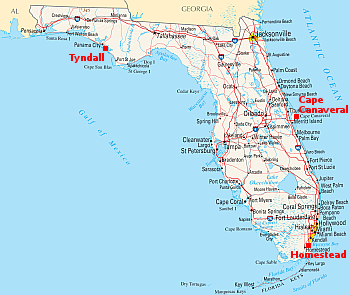
Florida approves expansion of spaceport territories

Map of potential Florida spaceports

The Florida legislature has now approved two new locations in Florida where rocket launches can take place.

Governor Ron DeSantis signed off on a bill that, as of Monday, will add South Florida’s Homestead Air Reserve Base and the panhandle’s Tyndall Air Force Base to Florida’s growing spaceport territories.

The map to the right shows the spaceport locations within Florida. While the state government might now allow launches from these locations, it is unclear if either military facility is entertaining the idea.

Regardless, the Florida government is clearly intent on encouraging and attracting this new industry to its state.

Indonesia government offering proposed launch site to SpaceX and others

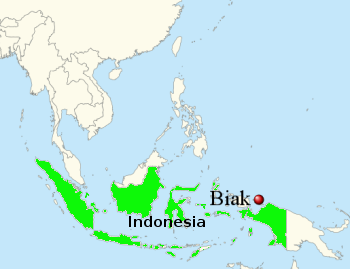
Indonesia proposed spaceport on Baik

As part of its effort to promote a long term space industry development plan, Indonesian officials have repeatedly been offering a proposed launch site to SpaceX and others on government land on the island of Biak off the coast of New Guinea.

The map to the right shows the location. First SpaceX and China were offered use of Baik. Neither has accepted. Then,

As recently as 2023, BRIN officials promoted their spaceport plans at the G20 Space Economy Leaders’ Meeting and Asia-Pacific Regional Space Agency Forum. China, Russia, Japan, South Korea and India were invited as potential partners, but none signed on.

Meanwhile, the article says Indonesia hopes to launch 19 satellites in 2025, using a variety of commercial launchers.

Private Nova Scotia spaceport company opens spaceport to all rocket companies

The company Maritime Launch, which has been building a new spaceport in Nova Scotia since 2016, has abandoned its original concept of providing both the launch facilities and rocket for satellite companies, and will instead make its launch facilities available to all rocket companies.

In an interview with The Journal last week, Matier – who started the spaceport project in 2016 to launch satellites with Cyclone-4M rockets it intended to buy from a Ukrainian manufacturer – said geopolitical realities in Eastern Europe now makes that approach unworkable. “We can’t get the rockets out of Ukraine,” he said. “So, we’ve pivoted away from a customer-supplier relationship with [them] … There’s such huge demand for satellites going into orbit that there’s all these [other] rockets in development that don’t have a home. The bottleneck is really the spaceport, and that’s what we’re addressing.”

According to the article at the link, the spaceport is already negotiating with an unnamed European rocket company to do an orbital launch by 2025. Matier also said there will a suborbital launch at the spaceport this summer, but offered no details about the rocket or payload.

Australian spaceport on sourthern coast prepares for launch

Australian commercial spaceports
Click for original map.

According to a report today, the first suborbital launch from a new commercial spaceport on the sourthern coast of Australia is now expected by the end of April or early May.

New launch facilities at the Koonibba Test Range, South Australia’s first permanent spaceport, are almost complete ahead of the impending inaugural launch. Located northwest of Ceduna, the range is a partnership between Southern Launch and the Koonibba Community Aboriginal Corporation. It is the largest commercial testing range in the Southern Hemisphere.

Space Industries Minister Susan Close is today visiting the site ahead of the sub-orbital test launch of German manufacturer HyImpulse’s SR75 rocket, which, subject to final regulatory approval, will go ahead at the end of April or early May. The rocket will reach an altitude of 50 kilometres before parachuting back to Earth where it will be recovered for testing.

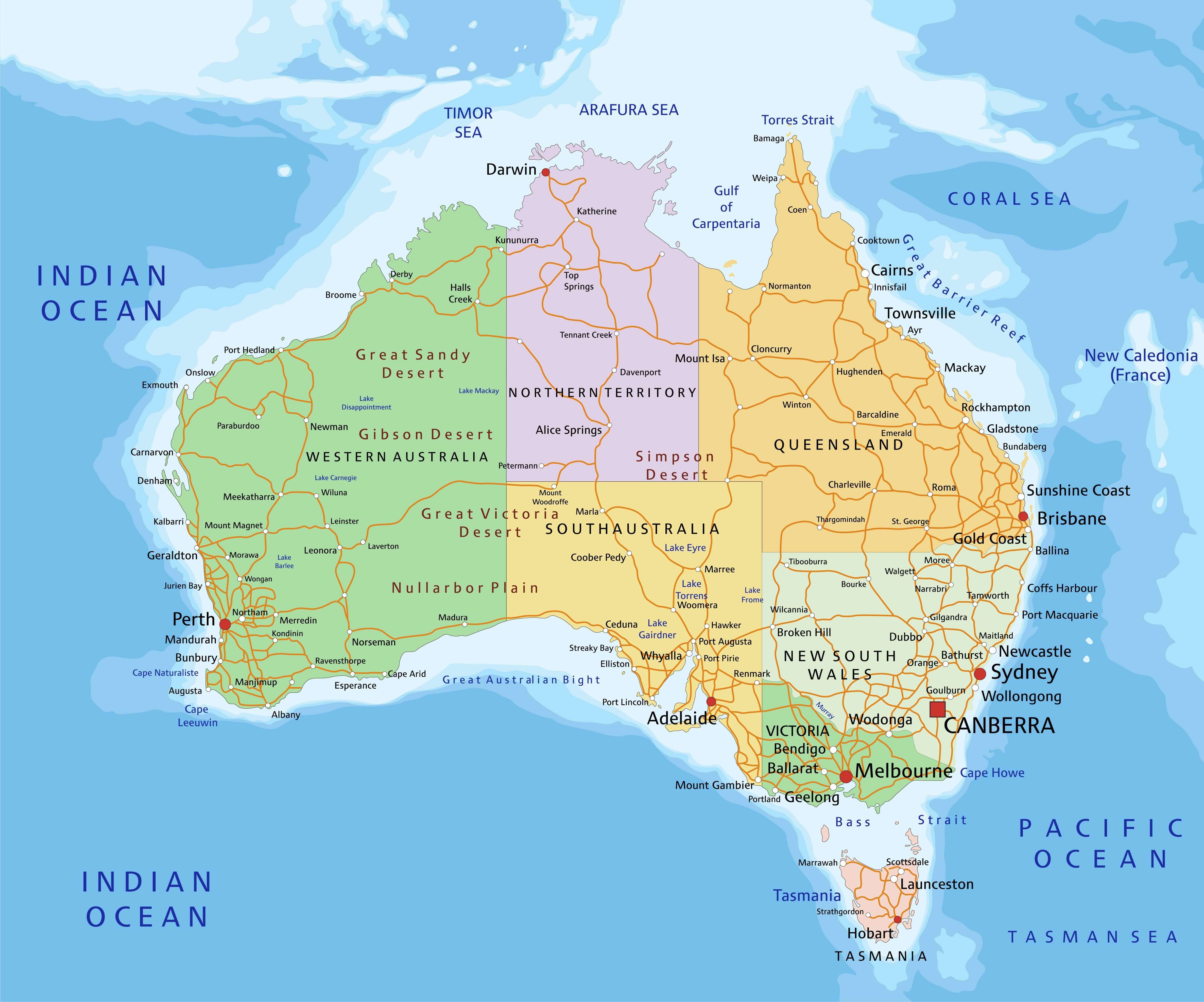
Southern Launch, marked on the map to the right, is on south coast of Australia. Two other Australian commercial spaceports also under development are noted on the northern and eastern coasts.

We shall see if this suborbital launch occurs as planned. Recently the evidence has suggested that Australia’s regulatory state is as bad as the United Kingdom, taking forever to issue licenses for private launches.

1 2