Rocket Lab gets contract with military to study point-to-point cargo transport

Capitalism in space: Rocket Lab yesterday revealed that the U.S. military has given it a contract to study whether its rockets could eventually be used for point-to-point cargo transport.

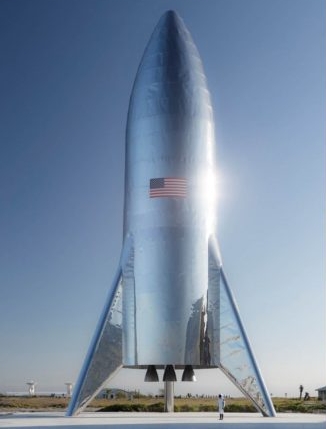
This study contract is similar to the one the military gave SpaceX for its Starship/Superheavy rocket. Both are intended not to actual fly missions, but to look at the engineering of the rockets to see if it will be practical to use them for point-to-point cargo transport on Earth.

The deal suggests the military has been impressed with Rocket Lab’s efforts to make its smallsat Electron rocket resusable, as well as its development program for its newer and larger Neutron resusable rocket.

2 comments

Computer model: Glaciers move slower in Mars’ gravity

Using a computer model that compared glacier flows on Earth and Mars, scientists have concluded that past glaciers on Mars flowed more slowly than on Earth, and produced different types of erosion features that might explain the red planet’s many riverlike geological features.

The new study modeled how Mars’ low gravity would affect the feedback between how fast an ice sheet slides and how water drains below the ice, finding under-ice channels would be likely to form and persist. Fast water drainage would increase friction at the interface of rock and ice. This means ice sheets on Mars likely moved, and eroded the ground under them, at exceedingly slow rates, even when water accumulated under the ice, the authors said.

From the paper [pdf]:

We show quantitatively that the lower surface gravity on Mars should alter the behavior of wet-based ice masses by modifying the subglacial drainage system, making efficient, channelized drainage beneath Martian ice both more likely to form and more resilient to closure. Using as an example the case of the ancient southern circumpolar ice sheet, we demonstrate that the expected finger-print of wet-based Martian ice sheets is networks of subglacial channels and eskers, consistent with the occur-rence of valley networks and inverted ridges found on the Martian highlands.

This paper confirms the sense I have gotten from the planetary community about glaciers on Mars, that it could be the flow of glaciers that formed its many meandering canyons, not liquid water. The case however is not yet proven, as this is only a computer model.

0 comments

China’s Long March 2D launches two military satellites

China yesterday successfully launched two military satellites using its Long March 2D rocket.

Launched from an interior spaceport, the rocket’s first stage crashed somewhere in China.

The leaders in the 2022 launch race:

40 SpaceX
36 China
11 Russia
6 Rocket Lab
5 ULA

American private enterprise still leads China 55 to 36 in the national rankings, and the entire world combined 55 to 54.

0 comments

September 6, 2022 Quick space links

Courtesy of Jay, BtB’s intrepid stringer.

  • Sierra Space: Mission: Tenacity Part 1
  • This video is just an empty-of-content commercial for Sierra Space, filled with feel-good “woke” blather but little real information about the actual status of this long overdue spacecraft. It is worth watching however because it reveals this emptiness. Reminds me of the many similar videos from Blue Origin and NASA over the years, filled with big promises but little actual achievement.

  • How does Starlink Satellite Internet Work?
  • This video, almost 30 minutes long, is definitely worth watching if you have any interest in signing up for Starlink, or just have an interest in the coming low orbit satellite constellation boom.

2 comments

The evidence continues to pile up: The government’s strongarm policies against COVID were utter failures

The modern basis of medical research in the dark age
Health policy during the Wuhan panic

Since my last COVID update in June, the number of research papers has continued to show, with increasing force, the total and utter failure of every single one of the draconian edicts imposed on the pubic by leftist governments both in Democratic Party controlled states in the U.S. as well as worldwide.

Below are a small sampling of this accumulating research. Read it and weep.

My sorrow however comes from knowing that this knowledge was patently obvious from day one. This new research really isn’t new, it confirms what was well known, and was confirmed quickly as early as March 2020. However, when skeptics like myself, mostly on the right, desperately tried to stem the panic, it was all to no avail. The government’s edicts were always wrong, but no one wanted to listen. The data below merely confirms what all the data, before and during the Wuhan panic, was already telling us.
» Read more

17 comments

South Korea’s Danuri lunar orbiter successfully makes course correction

On September 2nd engineers for South Korea’s Danuri lunar orbiter successfully completed a major course correction, firing its engines to adjust its path towards the Moon.

The science ministry announced Sept. 4 that the maneuver was so successful that the Korea Aerospace Research Institute (KARI), which controls the spacecraft called Danuri, has decided to skip an additional correction maneuver planned for Sept. 16.

It will reach lunar orbit on December 16th, then make five more orbital adjustments before reaching its science orbit in January. While the spacecraft has instruments from both South Korea and the U.S. for studying the lunar surface, its main goal is to teach South Korea engineers and scientists how to do this.

1 comment

Inouye Solar Telescope begins science operations

The National Science Foundation yesterday announced the inauguration of science operations of the Daniel K. Inouye Solar Telescope in Hawaii.

The sample first images provided at the link are excellent, but rather than show this telescope’s abilities, they instead illustrate the absurdity of spending millions to build a ground-based telescope. None compare with the spectacular high resolution solar images being produced today from the myriad of solar telescopes in space.

Moreover, the history of this telescope tells us much about the bankrupt nature of all modern government projects:

Over 25 years ago, the NSF invested in creating a world-leading, ground-based solar observatory to confront the most pressing questions in solar physics and space weather events that impact Earth. This vision, executed by the Association of Universities for Research in Astronomy (AURA) through the NSF’s National Solar Observatory (NSO), was realized during the formal inauguration of the Inouye Solar Telescope. [emphasis mine]

It took our modern incompetent federal government a quarter century to build this single telescope. Compare that with the construction of the solar telescopes it is replacing. They were conceived, designed, and built in much less than a decade back in the early 1960s. And cost less too.

The press release at the link also spends a lot of space touting “diversity” and “Native Hawaiian” cultural needs, which really have nothing to do with the study of the Sun. That focus tells us how misguided our government has become, and how it is using its coercive power to drag us all along down that foolish path towards hell.

2 comments

Webb’s infrared view of the Tarantula Nebula

Two views of the Tarantula Nebula by Webb
Click for original image.

The two images to the right, reduced and annotated to post here, were released today by the science team of the James Webb Space Telescope, and show two different views of the Tarantula Nebula, located 161,000 light years away in the Large Magellanic Cloud.

It is home to the hottest, most massive stars known. Astronomers focused three of Webb’s high-resolution infrared instruments on the Tarantula. Viewed with Webb’s Near-Infrared Camera (NIRCam) [top], the region resembles a burrowing tarantula’s home, lined with its silk. The nebula’s cavity centered in the NIRCam image has been hollowed out by blistering radiation from a cluster of massive young stars, which sparkle pale blue in the image. Only the densest surrounding areas of the nebula resist erosion by these stars’ powerful stellar winds, forming pillars that appear to point back toward the cluster. These pillars contain forming protostars, which will eventually emerge from their dusty cocoons and take their turn shaping the nebula.

…The region takes on a different appearance when viewed in the longer infrared wavelengths detected by Webb’s Mid-infrared Instrument (MIRI) [bottom]. The hot stars fade, and the cooler gas and dust glow. Within the stellar nursery clouds, points of light indicate embedded protostars, still gaining mass. While shorter wavelengths of light are absorbed or scattered by dust grains in the nebula, and therefore never reach Webb to be detected, longer mid-infrared wavelengths penetrate that dust, ultimately revealing a previously unseen cosmic environment.

As with all images from Webb, these are false color, as the telescope views the infrared heat produced by stars and galaxies and interstellar clouds, not the optical light our eyes see. Thus, the scientists assign different colors to the range of wavelengths each instrument on Webb captures.

These photos once again illustrate Webb’s value. It will provide a new layer of data to supplement the basic visual information provided by the Hubble Space Telescope, allowing scientists to better understand the puzzles we see in the optical.

8 comments

More static fire tests of Starship/Superheavy expected this week

SpaceX appears to be gearing up for more engine tests of both Superheavy prototype #7 and Starship prototype #24 this week, having called for road closures at Boca Chica today with additional options thoughout the week.

The article at the link mostly provides an overview of the changes in both stages that occurred because of the shift from the first version of the Raptor engine to the much more streamlined Raptor-2. The side-by-side image of both versions is quite revealing, showing once again how much SpaceX adheres to Musk’s adage that “the best part is no part.” Raptor-2 is astonishingly simpler and more compact, even though it produces about 25% more power.

0 comments

China launches two satellites with its Kuaizhou-1A rocket

China today successfully placed what it labeled as “two test satellites” into orbit using its smallsat Kuaizhou-1A rocket.

No information at all was released about both satellites.

The leaders in the 2022 launch race:

40 SpaceX
35 China
11 Russia
6 Rocket Lab
5 ULA

American private enterprise now leads China 55 to 35 in the national rankings, and the entire world combined 55 to 53.

0 comments
1 706 707 708 709 710 2,914