
The secret world of doomsday shelters
Got a few hundred thousand you can spare? Why not build a doomsday bomb shelter?
Got a few hundred thousand you can spare? Why not build a doomsday bomb shelter?
Discovery has landed safely, for the last time.
An evening pause:
More evidence that Penn State’s investigation of IPCC climate researcher Michael Mann was a whitewash.
The key point is that the Penn State investigators never interviewed a principal who was able to confirm or deny a key charge against “Hockey Stick” lead author of “Hide the Decline” infamy Michael Mann. This individual has now been interviewed, and what he told federal investigators has indicted Mann and Penn State.
I have noted this already, the very week the Penn State report was issued, but it is nice to see there is further evidence to confirm my conclusions.
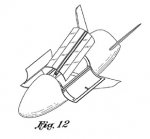
Want to know what’s inside X-37b? New Scientist dug around in the patent office and got some clues. Key quote:
Boeing reveals in the patent that the solar array has been designed to permit fast folding and stowing. The reason? So the X-37B can fold the solar array away, fire its thrusters and change its orbit to confound adversaries. This would be useful for satellites, too, says Boeing: “The ability to completely re-stow would offer mission flexibility to move the satellite thus making its orbit unpredictable.”
Discovery has undocked from ISS, for the last time.
Planetary scientists make their recommendations for the kinds of planetary missions they think the United States should do for the next decade. And it looks like a lean future, as the scientists also note that their primary recommendations, missions to Mars and Europa, should only be built if their budgets can be trimmed significantly:
NASA’s top priority, according to the survey’s recommendations, should be the Mars Astrobiology Explorer Cacher, or MAX-C, which could help determine whether Mars ever supported life and offer insight on its geologic and climate history. It would also be the first step in an effort to get samples from Mars back to Earth. However, the report said this mission should only be undertaken if NASA’s cost is about $2.5 billion, which is $1 billion less than independent estimates provided to the panel. The mission would be run jointly by NASA and the European Space Agency, according to the survey.
A mission to Europa and its subsurface ocean — which might support life — should be the second priority mission, the experts said. But its estimated price tag of $4.7 billion may make it too expensive without an increase in NASA’s planetary science budget or a paring of the mission’s costs. [emphasis mine]
An evening pause:
The second X-37b is in orbit. Key quote:
Similar to [Orbital Test Vehicle-1] , [Orbital Test Vehicle-2]’s actual mission duration will depend on the vehicle achieving its test objectives, but he expects it to remain on orbit for approximately 270 days. “We may extend the mission to enhance our understanding of the OTV capabilities,” Colonel Giese said, “especially since the performance data from the first flight suggest that the vehicle could have gone beyond the 270-day requirement.”
Weather has scrubbed today’s X-37B launch. They’ll try again tomorrow.