
Tag: Hollywood
Midnight repost: Truth, Justice, and the American Way
Tonight Diane and I decided to watch again the 1978 Richard Donner movie, Superman. The overall film is lighthearted entertainment that captures the myth of this super-hero perfectly. However, it has two scenes that remain among the best moments in movie history (which you can watch here and here). The first captures the myth in every way. The second shows us that Superman truly stood for the best in America.
In watching the movie tonight again and reliving the myth I grew up with — that great things are possible if you believe and follow sincerely Superman’s motto of “truth, justice, and the American way” — I decided to repost my essay from 2020 where I attempted to explain what that motto really meant.
Enjoy!
———————
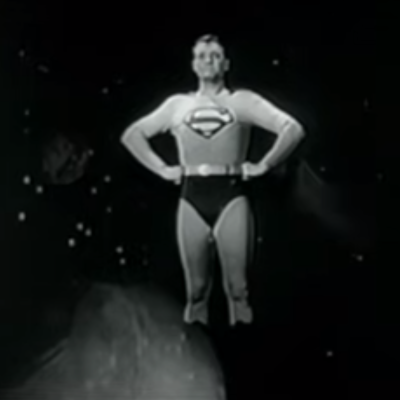
George Reeves as the heroic Superman as envisioned
in the 1950s television show, emulated later by Richard
Donner in his 1978 movie. Click for show’s opening credits.
Truth, Justice, and the American Way
The words spoken during the opening credits of a 1950s children’s television show:
Faster than a speeding bullet.
More powerful than a locomotive.
Able to leap tall buildings in a single bound.
Look up in the sky!
It’s a bird.
It’s a plane.
It’s Superman!
Yes, it’s Superman, strange visitor from another planet who came to Earth with powers and abilities far beyond those of mortal men.
Superman, who can change the course of mighty rivers, bend steel in his bare hands, and who, disguised as Clark Kent, mild-mannered reporter for a great metropolitan newspaper, fights a never-ending battle for truth, justice, and the American Way.
That television show was obviously Superman, starring George Reeves, and these opening words expressed the mythology and basic ideals by which this most popular of all comic-book super-heroes lived.
I grew up with those words. They had been bequeathed to me by the American generation that had fought and won World War II against the genocidal Nazis, and expressed the fundamental ideals of that generation.
Much of the meaning of these fundamental ideals is outright and clear.
» Read more
Judy Garland -Trolley Song
An evening pause: From the 1944 film, Meet me in St. Louis. I posted this in July 2010 as one of the very first evening pauses. As I wrote then, “The last line of the song says it all, about life and love.”
Hat tip to Judd Clark, who suggested it, which convinced me it was time to post it again.
Doris Day – Shaking the Blues Away
Bing Crosby – Let’s Start the New Year Right
An evening pause: From the 1942 film Holiday Inn. Stay with this after the song for a truly spectacular dance number by Fred Astaire, dancing as a New Year’s Eve drunk with Marjorie Reynolds.
Thanksgiving repost: Miracle on 34th Street
An evening pause: This was posted in 2023. Time to repost.
Original text:
—————————
This movie used to be a tradition for television on Thanksgiving. At that time the holiday was well linked with the then joyous and relatively Christian Macy’s Day Parade (now warped into a queer agenda demonstration). [Editor: an agenda that thank god appears to be on the run.]
I think it makes for a good opening to the holiday season.
Marilyn Monroe – Lazy
An eveing pause: From the Hollywood film There’s No Business Like Show Business (1954).
Hat tip Judd Clark.
Lena Horne – Stormy Weather
Renewing the heroic Superman of America
George Reeves as the heroic Superman as envisioned
in the 1950s television show, emulated later by Richard
Donner in his 1978 movie. Click for show’s opening credits.
Not surprisingly, the newest Hollywood attempt to tell the story of Superman appears by all accounts to be on the verge of another movie disaster, for all the usual reasons. Though the first weekend receipts were acceptable, a closer look suggests they also have feet of clay. When compared with the 2013 attempt to reboot the 1978 classic Richard Donner film, the numbers do not look that good.
Now, look at the number of tickets sold:
Estimated tickets sold opening weekend:
MAN OF STEEL (14.3M)
SUPERMAN (10.7M)Sometimes a win isn’t quite a win.
The article also notes that the movie is having problems attracting foreign audiences.
The reviews meanwhile have been horrible. Take for example this review:
I’ve seen a lot of superhero movies, and this one — given the level of investment involved, the promotional push, the iconic nature of the character and the importance to the future of DC and Warner Bros. — is by far the worst. I would have left the theater if I hadn’t gone with a friend. There are minor Marvel entries with more to their credit than this. It doesn’t even manage to be fun.
Why should this new movie about the first true American super-hero standing for “truth, justice, and the American way” be having problems at box office? Isn’t the story exactly the kind of thing audiences love and normally consume with eager anticipation?
The problem is that this modern Superman movie is not about “truth, justice, and the American way.” Instead, the film’s director and producer, James Gunn, decided it should instead be about “truth, justice, and the human way,” a statement that is not only meaningless and carrying far less substance, it is a slap in the face of the very noble American ideals of this very American legend.
» Read more
Mae West – I Wonder Where My Easy Rider’s Gone
An evening pause: From the 1933 film She Done Him Wrong. And yes, the young guy you see is Cary Grant. Sadly the print here is old and fuzzy, but a newer reprint is not available on line.
Hat tip Judd Clark.
Gina Lollobrigida – Pagan dance
An evening pause: I think this makes a great start to the weekend. Clips from the 1959 movie Solomon and Sheba, centered on Gina’s pagan dance as Sheba, and edited to a piece of music by Dead Can Dance, called Cantara, which the youtube website labels “genuinely pagan music.” If you want to see the original film, go here and go to about 90 minutes. In the original, God steps in to stop all this hanky-panky.
Hat tip Judd Clark.
An evening pause: I think this makes a great start to the weekend. Clips from the 1959 movie Solomon and Sheba, centered on Gina’s pagan dance as Sheba, and edited to a piece of music by Dead Can Dance, called Cantara, which the youtube website labels “genuinely pagan music.” If you want to see the original film, go here and go to about 90 minutes. In the original, God steps in to stop all this hanky-panky.
Hat tip Judd Clark.
Lucille Ball – Jitterbug Bite
John Gabriel & Nelson Riddle – El Dorado
An evening pause: I think this song quite fitting to end the summer season. Sung by George Alexander, it plays over the opening credits to the classic 1966 John Wayne film of the same name, directed by Howard Hawks. The magnificent paintings that form the backdrop to the credits were painted by Olaf Wieghorst.
My daddy once told me what a man ought to be.
There’s much more to life than the things we can see.
And the godliest mortal you ever will know
Is the one with the dream of El Dorado.So ride, boldly ride, to the end of the rainbow.
Ride, boldly ride, till you find El Dorado.
Dorothy Dandridge – Cow Cow Boogie
Ann Miller – I’ve Gotta Hear That Beat
An evening pause: From the 1953 film Small Town Girl. Proves once again that America was not hostile to highlighting women in all things in the past. They simply had to have the talent, skill, and determination to earn that spotlight.
Hat tip Judd Clark.
Clap Yo’ Hands – Fred Astaire & Kay Thompson
An evening pause: From the 1957 musical Funny Face. I only saw this film for the first time last week, and as I watched this scene I was most amused by Astaire’s dance moves in the second half of this number. “Why, Astaire is doing Gene Kelly!” I exclaimed to Diane.
Both men had their own styles. Kelly was into grand film presentations, acrobatics, and the soft shoe. Fred Astaire was into dance, in all its forms. If you are familiar with Kelly’s dance style you will see immediately how Astaire is parodying it, but with great respect.
Astaire’s partner in this number is Kay Thompson, in her only starring movie role. Thompson had an amazing artistic career, from writer (the Eloise children’s books) to vocal coach for Judy Garland and Gene Kelly to recording artist to night club performer. It is a shame we don’t have more films of her singing and dancing.
Rita Hayworth – Put The Blame On Mame
An evening pause: From the 1946 film, Gilda, which could be considered one of Hollywood’s first film noir classics. The song was sung by Anita Ellis for Hayworth.
Hat tip Judd Clark.
Jean Harlow
An evening pause: A look back at early Hollywood, and someone who was then a big star and a great comic actor but who is mostly forgotten today.
Hat tip Judd Clark.
Fred Astair & Ginger Rodgers – The yam dance
Miracle on 34th Street
An evening pause: This movie used to be a tradition for television on Thanksgiving. At that time the holiday was well linked with the then joyous and relatively Christian Macy’s Day Parade (now warped into a queer agenda demonstration).
I think it makes for a good opening to the holiday season.
Today’s blacklisted American: Hollywood’s new racist discrimination employment policies which blacklist whites
They’re coming for you next: According to a lawsuit filled by the non-profit legal firm First Liberty on behalf of James Harker, a white film electrician, the film industry has set up a racially segregated apprentice program that specifically excludes whites and is designed only for minorities.
When Harker complained about the bigoted nature of this program, he was then blacklisted, and has no longer been able to get any freelance jobs, despite 27 years of experience in the industry.
You can read the lawsuit here [pdf]. The program itself is called “Double the Line” (DTL). Its purpose is to force film companies to hire one minority to match every crew person it hires normally. That minority will be paid a full if not higher salary, regardless of his or her experience or training, and will later receive favored treatment in hiring, in order “to push forward a demographic shift,” as noted on the Equity and Inclusion website of the Association of Independent Producers (AICP), one of the defendents in this case.
In other words, the program specifically favors minorities in hiring and training, and specifically excludes whites because of their race.
The lawsuit was triggered when Harker discovered this program on a job. » Read more
They’re coming for you next: According to a lawsuit filled by the non-profit legal firm First Liberty on behalf of James Harker, a white film electrician, the film industry has set up a racially segregated apprentice program that specifically excludes whites and is designed only for minorities.
When Harker complained about the bigoted nature of this program, he was then blacklisted, and has no longer been able to get any freelance jobs, despite 27 years of experience in the industry.
You can read the lawsuit here [pdf]. The program itself is called “Double the Line” (DTL). Its purpose is to force film companies to hire one minority to match every crew person it hires normally. That minority will be paid a full if not higher salary, regardless of his or her experience or training, and will later receive favored treatment in hiring, in order “to push forward a demographic shift,” as noted on the Equity and Inclusion website of the Association of Independent Producers (AICP), one of the defendents in this case.
In other words, the program specifically favors minorities in hiring and training, and specifically excludes whites because of their race.
The lawsuit was triggered when Harker discovered this program on a job. » Read more
Busby Berkeley – Tap dance sequence from Lullaby of Broadway
An evening pause: Time for another Berkeley extravaganza. This except is only a small part of the full thirteen-plus minute Lullaby of Broadway number in the movie Gold Diggers of 1935. This movie was made when the talking pictures were still new, and making films that highlighted “All Talking! All Singing! All Dancing!” was the rage. It was also a time when all Americans danced arm-in-arm as one of their main forms of entertainment, so interest in great dancing like this was at its height.
Hat top Judd Clark.
Busby Berkeley – By a Waterfall
An evening pause: From the 1933 Hollywood musical, Footlight Parade, one of Berkeley’s most spectacular overhead dance numbers. Remember, no CGI. These are real women performing this number.
Hat tip Judd Clark.
Today’s blacklisted American: Modern Hollywood now celebrates McCarthyism and blacklisting
The modern dark age: Despite a history during the 1950s McCarthy era, when many of its most talented members were blacklisted because of their leftwing political beliefs, Hollywood today celebrates and encourages the blacklisting of conservative talent.
Consider the blacklisting described by comedian Adam Carolla and late night Fox show host Greg Gutfield during one recent podcast:
“Oh, we can’t get the guys who wrote on ‘Conan’ to come into the writers’ room because they’re scared of being blackballed. It drives me insane that they never stop complaining about McCarthyism and they’re more than happy to blackball anybody who crosses the line,” Carolla said.
“They’re the new McCarthy-ites, especially in this woke culture,” Gutfeld said. “I’m counting on this show succeeding without names and creating our own celebrities, which is actually what happens at Fox.”
Both men also described how, even if a writer or performer wanted to work for them, they often backed out because their agent or publicist told them not to, either because of the same fear or because of hostility to their politics.
In addition, Carolla in a different podcast described how this same blacklisting culture is now being used not just against conservatives, but against those who refuse to bow to the absurd COVID edicts.
The story of one actor, Clifton Duncan, is typical.
» Read more
The modern dark age: Despite a history during the 1950s McCarthy era, when many of its most talented members were blacklisted because of their leftwing political beliefs, Hollywood today celebrates and encourages the blacklisting of conservative talent.
Consider the blacklisting described by comedian Adam Carolla and late night Fox show host Greg Gutfield during one recent podcast:
“Oh, we can’t get the guys who wrote on ‘Conan’ to come into the writers’ room because they’re scared of being blackballed. It drives me insane that they never stop complaining about McCarthyism and they’re more than happy to blackball anybody who crosses the line,” Carolla said.
“They’re the new McCarthy-ites, especially in this woke culture,” Gutfeld said. “I’m counting on this show succeeding without names and creating our own celebrities, which is actually what happens at Fox.”
Both men also described how, even if a writer or performer wanted to work for them, they often backed out because their agent or publicist told them not to, either because of the same fear or because of hostility to their politics.
In addition, Carolla in a different podcast described how this same blacklisting culture is now being used not just against conservatives, but against those who refuse to bow to the absurd COVID edicts.
The story of one actor, Clifton Duncan, is typical.
» Read more
Sam Dodge – the Mitchell BNCR camera
An evening pause: A bit of history about one of the most fundamental pieces of equipment used on practically every big Hollywood film.
Hat tip Wayne Devette.
Julie Andrews – My Favorite Things
An evening pause: From the movie The Sound of Music (1965), a song about teaching children to face fear, to push past it, and live boldly and with courage. And to do it with humor. As Ray Bradbury wrote in his book, Something Wicked This Way Comes, you defeat evil and fear by laughing at it. The world needs to recapture this idea, or else we are doomed.
Hat tip Tom Wilson.
Today’s blacklisted American: Leftist actor/rapper Icecube forced from Sony film rather than get a COVID shot
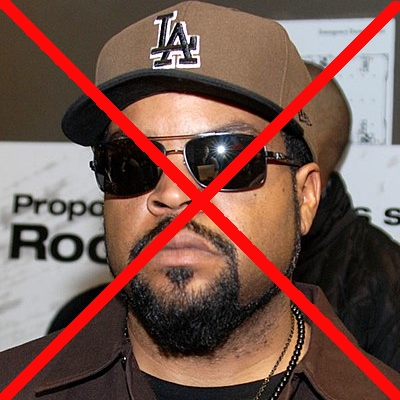
Ice Cube: now an unclean non-person
Original photo by Adam Bielawski
They’re coming for you next: Actor and rapper Icecube, who has throughout his career been linked to leftist and pro-black racial causes, has pulled out as one of the leads of a Sony film because he refuses to comply with the film company’s COVID shot mandate.
According to the Hollywood Reporter, which broke the story,
Ice Cube has departed Sony’s upcoming comedy, Oh Hell No, in which he would’ve co-starred with Jack Black, after declining a request from producers to get vaccinated, sources tell The Hollywood Reporter.
Apparently this decision has cost him a $9 million check.
The first link above notes this important point about Ice Cube:
» Read more
Ice Cube: now an unclean non-person
Original photo by Adam Bielawski

They’re coming for you next: Actor and rapper Icecube, who has throughout his career been linked to leftist and pro-black racial causes, has pulled out as one of the leads of a Sony film because he refuses to comply with the film company’s COVID shot mandate.
According to the Hollywood Reporter, which broke the story,
Ice Cube has departed Sony’s upcoming comedy, Oh Hell No, in which he would’ve co-starred with Jack Black, after declining a request from producers to get vaccinated, sources tell The Hollywood Reporter.
Apparently this decision has cost him a $9 million check.
The first link above notes this important point about Ice Cube:
» Read more
Seven Brides for Seven Brothers – Lonesome Polecat
An evening pause: This song, from the 1954 MGM classic musical, was one of the first evening pauses I posted back in 2010. As Diane and I recently rewatched the musical, I think it time to repost it. As I said then,
This haunting song from the movie Seven Brides for Seven Brothers is notable not only because of the beauty of the music and dancing, but because the entire number is shot as one take, no cuts. Everyone, from the actors with their axes to the crew moving the camera on its dolly and crane, had to be right on cue for everything to work.
Having spent almost twenty years in the movie business, I can promise you that this is not easy.
The 2010 evening pause uses the original voice of red-haired Matt Mattox, which was dubbed for the movie.
An evening pause: This song, from the 1954 MGM classic musical, was one of the first evening pauses I posted back in 2010. As Diane and I recently rewatched the musical, I think it time to repost it. As I said then,
This haunting song from the movie Seven Brides for Seven Brothers is notable not only because of the beauty of the music and dancing, but because the entire number is shot as one take, no cuts. Everyone, from the actors with their axes to the crew moving the camera on its dolly and crane, had to be right on cue for everything to work.
Having spent almost twenty years in the movie business, I can promise you that this is not easy.
The 2010 evening pause uses the original voice of red-haired Matt Mattox, which was dubbed for the movie.
Today’s blacklisted American: Anyone in Hollywood who is white

A banned race in Hollywood.
Blacklists are back and Hollywood’s got ’em: Warner Brothers has decided its next Superman will be super-woke and must star a black Superman.
More important, the studio has decided that in order to make the film the “super-woke” concept they envision it must only hire blacks to make it. Not only has the studio hired a black writer to write the script, it is insisting that the director and crew must be black also.
The Hollywood Reporter proudly makes note of the fact that they are looking for only black people to do it all, and are looking for a black director. The piece unabashedly excludes the film’s producer J.J. Abrams as a candidate purely because it would be “tone-deaf.”
Nor is that all. Hollywood also wants the focus for all its future superhero films to be “diversity” and racial oppression rather those evil and quaint old concepts of “truth, justice, and the American way.”
» Read more
A banned race in Hollywood.
Blacklists are back and Hollywood’s got ’em: Warner Brothers has decided its next Superman will be super-woke and must star a black Superman.
More important, the studio has decided that in order to make the film the “super-woke” concept they envision it must only hire blacks to make it. Not only has the studio hired a black writer to write the script, it is insisting that the director and crew must be black also.
The Hollywood Reporter proudly makes note of the fact that they are looking for only black people to do it all, and are looking for a black director. The piece unabashedly excludes the film’s producer J.J. Abrams as a candidate purely because it would be “tone-deaf.”
Nor is that all. Hollywood also wants the focus for all its future superhero films to be “diversity” and racial oppression rather those evil and quaint old concepts of “truth, justice, and the American way.”
» Read more
Today’s blacklisted American: A movie about the dark side of Planned Parenthood
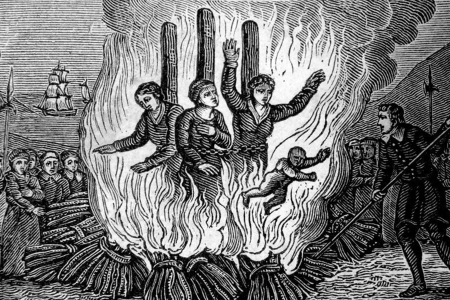
Burning witches: What Hollywood now routinely tries
to do to conservatives.
Blacklists are back and Hollywood’s got ’em: When long time Hollywood filmmakers Cary Solomon and Chuck Konzelman decided to make the film Unplanned, telling the story of a woman who went from being Planned Parenthood clinic director supporting abortion to an avid advocate for the unborn, they did so under assumed names, and discovered themselves fighting an aggressive effort both in Hollywood and in social media to suppress the film once released.
Multiple cable networks, such as Lifetime, Hallmark Channel, HGTV, USA Network, Food Network, The Travel Channel, refused to carry commercials promoting the film. Multiple theater owners received death threats and harassment prior to screenings, with a few cancelling the screenings out of fear for themselves and their families.
And then there was the usual Twitter censorship.
» Read more
Burning witches: What Hollywood now routinely tries
to do to conservatives.
Blacklists are back and Hollywood’s got ’em: When long time Hollywood filmmakers Cary Solomon and Chuck Konzelman decided to make the film Unplanned, telling the story of a woman who went from being Planned Parenthood clinic director supporting abortion to an avid advocate for the unborn, they did so under assumed names, and discovered themselves fighting an aggressive effort both in Hollywood and in social media to suppress the film once released.
Multiple cable networks, such as Lifetime, Hallmark Channel, HGTV, USA Network, Food Network, The Travel Channel, refused to carry commercials promoting the film. Multiple theater owners received death threats and harassment prior to screenings, with a few cancelling the screenings out of fear for themselves and their families.
And then there was the usual Twitter censorship.
» Read more