UAE extends mission of its Al-Amal Mars orbiter
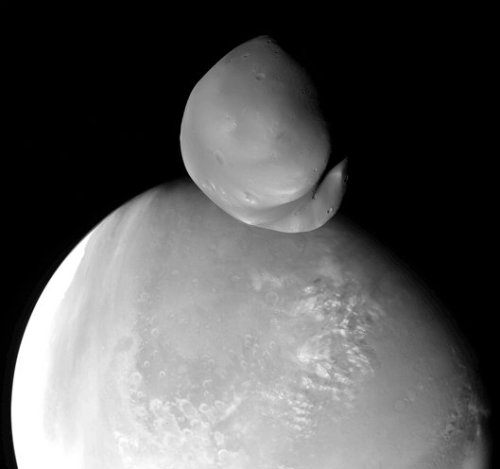
Al-Amal’s 2023 image of Deimos, the first good
picture of the moon ever taken. Click for full movie.
The United Arab Emirates (UAE) yesterday announced it is extending the mission of its Al-Amal Mars orbiter (“Hope” in English) to 2028, significantly beyond its initial planned mission of two years.
Launched in July 2020, the Hope Probe successfully entered Mars orbit in February 2021 after a seven-month interplanetary journey, marking a historic achievement as the first Arab nation to reach the Red Planet. Originally designed as a two-year mission to observe and study Mars’ atmosphere, the probe has far exceeded expectations. Since reaching Mars, it has gathered around 10 terabytes of scientific data, shared through more than a dozen datasets with research institutions worldwide.
The probe itself was mostly built by American engineers and organizations, as part of a deal to train UAE students. Once in operation around Mars, the UAE and those students took over almost all operations. It orbits Mars in a very wide orbit, allowing it to study global weather and atmosphere conditions, such as dust storms.
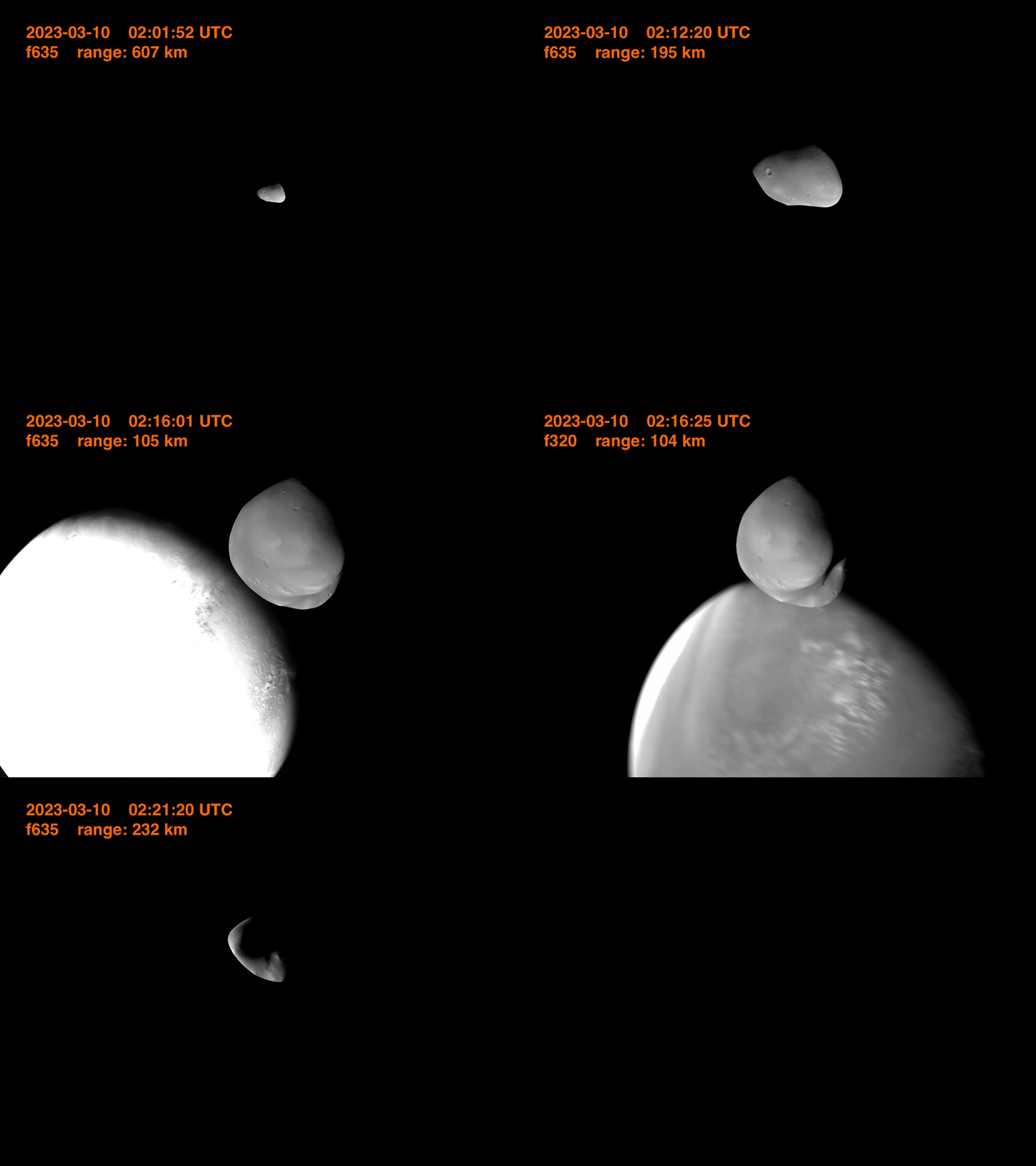
Al-Amal’s 2023 image of Deimos, the first good
picture of the moon ever taken. Click for full movie.
The United Arab Emirates (UAE) yesterday announced it is extending the mission of its Al-Amal Mars orbiter (“Hope” in English) to 2028, significantly beyond its initial planned mission of two years.
Launched in July 2020, the Hope Probe successfully entered Mars orbit in February 2021 after a seven-month interplanetary journey, marking a historic achievement as the first Arab nation to reach the Red Planet. Originally designed as a two-year mission to observe and study Mars’ atmosphere, the probe has far exceeded expectations. Since reaching Mars, it has gathered around 10 terabytes of scientific data, shared through more than a dozen datasets with research institutions worldwide.
The probe itself was mostly built by American engineers and organizations, as part of a deal to train UAE students. Once in operation around Mars, the UAE and those students took over almost all operations. It orbits Mars in a very wide orbit, allowing it to study global weather and atmosphere conditions, such as dust storms.