Hundreds of NASA-funded researchers violated the law that bans working with China

ASU, apparently one of many universities filled with people now hostile to America
ASU, apparently one of many universities filled
with people now hostile to America

According to a just completed House investigation, hundreds of academics and universities have routinely violated the law by taking NASA funding for their research but then working hand-in-glove with Chinese individuals or institutions.

A House investigation has identified hundreds of scientific publications in which NASA-funded U.S. researchers appear to have conducted joint work with Chinese institutions, potential violations of a federal law that has barred such collaboration for more than a decade.

The report, released on Wednesday by the House Select Committee on the Chinese Communist Party, also found that, in several instances, some of that research involved collaboration between National Aeronautics and Space Administration (NASA) scientists and institutions that are part of “China’s defense research and industrial base.”

You can read the full report here [pdf]. Among its numerous findings for example it notes that Arizona State University and Stanford University both filed false certifications, stating that they were not working with Chinese individuals, agencies, or institutes, even though their later published papers blandly listed such individuals, agencies, and institutes. The report lists numerous other similar examples.

During Trump’s first administration the Justice Department made a concerted effort to enforce this law. Under Biden that effort ended (with many prosecutions abandoned), to be replaced with a zealous effort to ignore it, an effort enthusiastically supported by the partisan leftist academic community. This new report essential outlines the violations that began during the Biden era.

China is aggressively working on all levels to steal technology from the west. Sadly, it is more and more aided by America’s university system and the administrators, professors, and researchers based there, a large majority of whom are now outright hostile to our country and wish to sabotage it.

9 comments

New cost estimate for Trump’s Golden Dome exceeds $1 trillion over 20 years

According to the Congressional Budget Office’s (CBO) new estimates, the cost to build Trump’s proposed Golden Dome defense plan will be about $1.2 trillion over the next 20 years, double what the CBO predicted last year and more than six times what the program’s head has predicted.

The Congressional Budget Office issued an updated estimate today of the cost of President Trump’s Golden Dome missile defense system. Lacking detailed data from the Administration, CBO based its analysis on the capabilities called for in Trump’s January 2025 Executive Order and concluded the total cost over 20 years is $1.2 trillion, about twice its estimate last year, with the bulk of it for Space-Based Interceptors.

Trump issued the Iron Dome for America Executive Order on January 27, 2025, seven days after his second term began. He soon renamed it Golden Dome in part to distinguish it from Israel’s Iron Dome system which has more limited capabilities. Trump appointed Gen. Michael Guetlein to lead the project and in an Oval Office meeting on May 20, 2025, said it would cost $175 billion and be completed in three years, before he leaves office.

By then CBO had estimated the cost at $524 billion based on information available at the time.

Guetlein has since raised his estimate to $185 billion, but it is widely viewed as far too low.

Several important points: First, the CBO’s cost estimates are usually wrong, in either direction, which means the cost could be a lot less, or a lot more. Odds are that in this case its estimate is trending in the right direction. Guetlein’s cost estimate is absurdly too low.

Second, the high cost helps explain why a lot of investment money is pouring into a lot of new space startups, for both rocket and satellite companies. Wall Street sees the federal government spending a lot of money on Golden Dome, and wants to get into the action. For the same reason this is why a lot of space companies have shifted their focus from civilian projects to the military.

Finally, the idea of Golden Dome is perfectly reasonable, as its concept has already been proven both by the U.S.’s Patriot missile system and Israel’s Iron Dome. The implementation however is going to be bad, because the people in Washington being asked to do it have a terrible track record. They routinely waste money and manage projects badly.

8 comments

Paraguay becomes the 67th nation to sign Artemis Accords

Artemis program logo

Paraguay yesterday became the 67th nation to sign Artemis Accords, continued the flood of smaller third world nations that have signed up in the last few weeks following the completion of the Artemis-2 mission around the Moon.

The remarks of NASA administration Jared Isaacman in connection with this event I find most tantalizing:

“They join an ever-growing coalition of like-minded nations committed to the peaceful, transparent, and responsible exploration of space. Established by President Trump in his first term, the Artemis Accords provided the principles for how we explore the Moon, Mars, and beyond. Now, with his national space policy, we are putting the Artemis Accords into practice with our Moon Base. We are creating opportunities for all Artemis Accords signatories, including Paraguay, to join us on the lunar surface and advance our shared objectives in this next era of exploration.” [emphasis mine]

While that national space policy [pdf] accepts the Outer Space Treaty’s limitation on establishing American law on other worlds, including property rights, it also makes its first goal that of promoting private enterprise.
» Read more

0 comments

House Appropriations committee approves NASA budget, with some cuts proposed by Trump

In what is no surprise if one watched last week’s House hearing about the NASA budget, the House Appropriations committee yesterday approved a NASA budget for fiscal year 2027, giving the agency the same funding it had in 2026, just over $24 billion, rejecting Trump’s proposed major reduction in the budget of over $5 billion.

The vote was along party lines, with the Republicans approving and the Democrats opposing. As expected, while the overall budget was maintained, the Republicans went along with the sense of Trump’s cuts — and the desires of NASA administrator Jared Isaacman — by shifting money from science to exploration within the budget.

The subcommittee bill provides $8.926 billion for human exploration, an increase of about $400 million above the request, and the request itself favors exploration. … The subcommittee’s bill raises the FY2027 level for [NASA science] to $6 billion, but that’s still a $1.3 billion reduction from current spending as Ranking Member Grace Meng (D-New York) pointed out.

The bill also agreed with Trump’s proposal to eliminate NASA’s STEM education office, something Isaacman had repeatedly testified was redundant and a waste of money.

In other words, the committee is giving Isaacman more flexibility with the money it is giving him, as I predicted.

This is only the first step in the budget process. The budget still has to be approved by the full House, the Senate, and the President. Expect changes.

3 comments

Ireland to sign Artemis Accords

According to a NASA press release late yesterday, Ireland will sign the Artemis Accords on May 4, 2026, becoming the 65th nation to join this American space alliance.

NASA Administrator Jared Isaacman will host Ambassador of Ireland to the United States of America Geraldine Byrne Nason; Minister for Enterprise, Tourism and Employment Peter Burke, T.D., of Ireland; and U.S. Department of State officials for the ceremony.

As I predicted yestesday when Morocco signed the accords, the success of the Artemis-2 mission around the Moon has prompted a number of smaller third world countries to finally sign the accords, and thus should expect more signings to follow. Ireland illustrates this. There will be more soon.

The full list of nations in this American space alliance is as follows:

Angola, Argentina, Armenia, Australia, Austria, Bahrain, Bangladesh, Belgium, Brazil, Bulgaria, Canada, Chile, Colombia, Cyprus, Czech Republic, Denmark, Dominican Republic, Ecuador, Estonia, Finland, France, Germany, Greece, Hungary, Iceland, India, Ireland, Israel, Italy, Japan, Jordan, Latvia, Liechtenstein, Lithuania, Luxembourg, Malaysia, Mexico, Morocco, the Netherlands, New Zealand, Nigeria, Norway, Oman, Panama, Peru, Poland, Portugal, Romania, Rwanda, Saudi Arabia, Senegal, Singapore, Slovakia, Slovenia, South Korea, Spain, Sweden, Switzerland, Thailand, the Philippines, the United Kingdom, the United Arab Emirates, the Ukraine, the United States and Uruguay.

4 comments

Trump fires the entire governing board of the National Science Foundation

In a move that should surprise no one at this point in Trump’s second term, yesterday President Trump informed all 24 members of the National Science Board, the committee that runs the National Science Foundation (NSF), that they have been fired.

“On behalf of President Donald J Trump, I am writing to inform you that your position as a member of the National Science Board is terminated, effective immediately,” reads a 24 April email from Mary Sprowls of the presidential personnel office to each NSB member. “Thank you for your service.”

The article at the link, from the journal Science, takes the typical one-sided propaganda press anti-Trump view, interviewing only those who oppose Trump and spending most of its time screaming “He’s destroying science!”

A wider view would ask this: Is there a reason that the president of the United States, elected by the American people, might have reasons to question the management of this board? At the moment the federal government is running a deficit that is back-breaking, and this board publicly criticized Trump’s effort to rein in spending when he proposed a 55% cut in NSF’s budget. If they are not going to cooperate with their boss, then maybe they should leave, and not let the door hit them as they head out.

The Science article also included this howler: “the mass firing is the latest indication that the White House is ignoring the board’s authority and dictating policies at NSF.” Um, who elected them? No one. In fact, they were appointed by the president himself, and he is the only one with the constitutional authority to decide these matters.

Expect court suits of course, with some lower level unelected judge somewhere attempting to take over running the executive branch by demanding these board members remain in power, defying the elected president of the U.S.

20 comments

Jordan to sign the Artemis Accords

According to a press announcement tonight from NASA, Jordan will sign the Artemis Accords on April 23, 2026 at NASA headquarters in Washington, DC.

NASA Administrator Jared Isaacman will host Ambassador Dina Kawar of the Hashemite Kingdom of Jordan and U.S. Department of State Principal Deputy Assistant Secretary for Oceans and International Environmental and Scientific Affairs Ruth Perry for the ceremony.

Jordan becomes the 63rd nation to sign the accords. It also joins Bahrain, Oman, Saudi Arabia, and the United Arab Emirates from the Arab Middle East. While it is certainly wise to not trust any nation controlled by Islam, having these nations allied with us in space will help mitigate the worst aspects of their religion. That they are also joining a space alliance that includes Israel is another indication that they are realizing that their future is better aligned with Israel than against it.

The full list of nations in this American space alliance is as follows:

Angola, Argentina, Armenia, Australia, Austria, Bahrain, Bangladesh, Belgium, Brazil, Bulgaria, Canada, Chile, Colombia, Cyprus, Czech Republic, Denmark, Dominican Republic, Ecuador, Estonia, Finland, France, Germany, Greece, Hungary, Iceland, India, Israel, Italy, Japan, Jordan, Latvia, Liechtenstein, Lithuania, Luxembourg, Malaysia, Mexico, the Netherlands, New Zealand, Nigeria, Norway, Oman, Panama, Peru, Poland, Portugal, Romania, Rwanda, Saudi Arabia, Senegal, Singapore, Slovakia, Slovenia, South Korea, Spain, Sweden, Switzerland, Thailand, the Philippines, the United Kingdom, the United Arab Emirates, the Ukraine, the United States and Uruguay.

4 comments

Kratos wins $446 million contract to build/operate ground system for Space Force satellite constellation

The military contractor Kratos Defense & Security Solutions was yesterday awarded a $446 million contract by the Space Force to build and operate the ground systems used to control the military’s missile warning satellite constellation.

The contract covers ground management and integration for the service’s Resilient Missile Warning and Tracking program, according to a March 19 statement from Space Systems Command. Kratos will provide the systems used to operate the satellites after launch, including sending commands, receiving sensor data and processing that information for delivery to military operators.

The work supports a constellation being deployed in phases. The first 12 satellites, known as Epoch 1, are being built by Millennium Space Systems, a Boeing subsidiary. A second set of 10 satellites, called Epoch 2, is under contract to BAE Systems. Launches are expected over the next several years.

The method in which this entire constellation is being built and operated once again highlights the profound transformation that has occurred in how the Pentagon works in space since the formation of the Space Force. Beforehand, when the Air Force ran the military’s space operations, it would attempt to design and build everything, and the satellites built would be big and expensive, and take years to complete. Generally, little got built for a lot of money. Moreover, the upper management of the Air Force was in general not interested in space projects, and often gave these projects lower priority.

The Space Force was created during Trump’s first term to change this, giving the military an agency focused on its space needs. It was also designed to put those in charge who had been advocating going from these big gold-plated satellites that were few in number to many small satellites built quickly and cheaply by the private sector.

This new missile warning and tracking constellation demonstrates that this transition is largely complete. It is being built quickly by two different satellite companies, and will be maintained on the ground by a third.

Note: Kratos also builds the hypersonic test vehicles that Rocket Lab launches on its HASTE suborbital rocket. It will soon also fly those vehicles on a Firefly rocket.

1 comment

Real change at the FCC?

Brendan Carr during Breitbart interview

FCC chairman Brendan Carr this week didn’t simply make a public statement yesterday against Amazon, as I reported earlier today. The day earlier, on March 10th, he did an hour-long interview with Breibart News, providing a more complete summary of the FCC’s overall agenda since the change of administrations from Joe Biden to Donald Trump.

You can watch that interview here. To put it mildly, the shift in policy and approach at the FCC is significant, and appears to be generally moving in the right direction.

To understand the context, we need to first review the FCC’s approach during the Biden administration. My regular readers will remember the many stories during that time describing the FCC’s aggressive effort to expand its regulatory power, in many cases in areas completely exceeding its fundamental statutory authority. For example, it proposed new regulations designed to tell satellite companies how and when to de-orbit their satellites. It also wanted to its own bureaucracy for imposing those regulations, and went ahead and created it without any congressional approval. It also under Biden attempted to limit satellite operations that the astronomy community opposed, an action that was once again outside its statute authority.

Overall, the goal of the FCC under Biden was to expand the power of the administrative state, in as many areas as possible. And though there was push back from Congress, as long as a Democrat was president it was clear that this power-grab was going to grow exponentially.

After the 2024 election, however a Democrat was no longer president. Trump quickly moved in 2025 to squash the FCC’s power grab, with a stated public goal to instead streamline FCC regulations and speed license approvals.

Carr’s interview earlier this week essentially gave us an update on that Trump policy, and it appears this new anti-regulatory policy is moving forward, with a goal to eliminate ten regulations for every one regulation added. According to Carr:
» Read more

7 comments

While Democrats rage against the American/Israel war on Iran, the PEOPLE celebrate

Without doubt there remain great risks and real constitutional issues involved the present military campaign by both the United States and Israel to destroy the Islamic leadership in Iran. First, it is almost impossible to force a change in power solely by air power. This has been tried numerous times, with little success. Killing the leaders of this terrorist Iranian government is a positive step, but it remains entirely unclear whether this war can produce a better government there.

Second, as much as there might be legal precedents that allow President Trump to initiate this action without direct congressional approval, it continues a dangerous trend ceding power away from Congress and to the presidency, in direct opposition to the intentions of the Founding Fathers in their writing of the Constitution. They very much were opposed to giving any president the power to start a war unilaterally.

Pro-U.S. and Israeli demonstrations by Iranians
Click here and here for original videos.

Having stated the reasonable objections to this military action, however, we must now take a look at the two images to the right to see its immediate and very positive consequences. Both pictures are from videos of very spontaneous demonstrations on February 28, 2026 by Iranian refugees celebrating the American/Israeli attacks against Iran.

The top picture is a screen capture from a demonstration in Georgetown, DC. The bottom picture is a screen capture from a demonstration in Austin, Texas.

Note the flags in both pictures. There are numerous flags of Iran (the version during the Shah’s rule, not the version from the Islamic Revolution). There are many American flags, of course, since these demonstrations are in America.

What is most revealing however are the Israeli flags, being enthusiastically waved by Iranians. Clearly the decades of hate against Israel and Jews by the mullahs in Iran has not had any impact on these Iranian refugees. In fact, in the video of the bottom picture they are chanting “Thank you, Bibi!”, referring to Israel’s leader Benjamin Netanyahu as the camera pans across the crowd.

Moreover, these demonstrations took place in two Democratic Party strongholds, cities where pro-Hamas demonstrations have been routine, including rioting and violence against Jews and anyone who dared suggest Israel’s actions in Gaza might be justified.

Nor are these two demonstrations an exception. They have been the rule across the United States and Europe, as well as in Iran itself. The public — the ordinary people for whom governments are meant to serve — seem very much in favor of what President Trump and Netanyahu are doing in Iran. And they are expressing that support of both America and Israel quite unequivocally. If this doesn’t indicate to the world that Israel and the rest of the Middle East can live together in peace and mutual cooperation, nothing can.

This conclusion is further supported by the response by almost every Arab nation in the Middle East, most of whom started off quite willing to let the U.S. and Israel do this deed, with no opposition or with covert support. Now, because of Iran’s indiscriminate attacks on Arab nations, they have all publicly joined the war, allying themselves not with the Islamic nation of Iran but with the U.S. and Israel.

I would not be surprised if Saudi Arabia soon signs the Abraham Accords. Nor would I be surprised if most of the last remaining Arab nations that have not yet done so join Saudi Arabia.

We could very well be seeing a major realignment of alliances in the Middle East that could really really harbinger the beginnings of real peace in that region. Imagine: Israel at peace with all its neighbors, because the Arabs have finally recognized that it is to their own best interest to do so as well.

37 comments

SpaceX wants revisions to federal rural grant program that has awarded it $733 million

SpaceX is presently asking for changes in the Broadband Equity Access and Deployment (BEAD) program that awards grants to companies that provide internet in rural areas and has already awarded the company $733 million in grants.

BEAD was part of the Biden administration’s bipartisan infrastructure act – originally a $42 billion program to bring broadband internet to areas of the country with little or no broadband access. The Trump administration eliminated other infrastructure act programs, and cut BEAD outlays to $21 billion, along with rule changes to allow satellite providers.

SpaceX applied for BEAD funds in 2025. The company won $733 million worth of BEAD projects nationwide, including $109 million in Texas.

Initially the Biden administration awarded SpaceX almost a billion dollar grant, because its Starlink constellation was the only broadband outlet actually doing the job. Then Musk began to campaign for Republicans, and suddenly the Biden administration pulled that grant, saying absurdly that SpaceX was failing to provide its service to rural areas, when that was exactly what it was doing.

Now SpaceX wants BEAD to ease some of its requirements, and wants these grant funds upfront.

I say, this whole BEAD program is a waste of taxpayer money and a perfect example of crony capitalism. I’m glad Trump cut it in half, but that wasn’t good enough. It should be shut down entirely. SpaceX doesn’t need this handout. It is making money hand-over-fist on its own.

14 comments

Oman says it wants to sign the Artemis Accords

Middle East, showing Oman's proposed spaceport
The Middle East, showing the location of
Oman’s proposed spaceport at Duqm.

In a diplomatic meeting between Oman and U.S. state department in Oman, Oman officials announced their Sultan wants his country to sign the Artemis Accords.

The two sides discussed means of maximising the benefits of the Free Trade Agreement between the two countries and augmenting American investments in sectors of priority for the Sultanate of Oman. These sectors include the digital economy, technology and space, in addition to mining, logistics, aviation and infrastructure.

Cooperation in the fields of education and culture was also discussed, particularly educational programmes, academic and professional exchange and investment in research and innovation. The two sides further exchanged views and positions on a number of regional and international issues, emphasising the importance of backing efforts for peace, stability and development.

During the dialogue, the Omani side announced the Sultanate of Oman’s approval to join the ‘Artemis Accords’ for space exploration. A cooperation statement on the 250th anniversary of the founding of the United States of America was also signed. [emphasis mine]

Much of this is diplomatic blather, meaning little. While I would expect the Trump administration welcome Oman as an Artemis Accord partner, in the talks related to the highlighted first paragraph above it likely demanded some concessions first. Free trade in Oman is going to require some protection for American technology.

For example, right now State Department rules make it difficult if not impossible to launch American satellites or rockets from Oman’s proposed spaceport in Duqm, rules imposed because Oman cannot be trusted. I expect the State Department is demanding total security control from U.S. entities on any launch before agreeing to an Oman Artemis Accord agreement.

0 comments

NASA and Department of Energy agree to place nuclear reactor on Moon by ’30

NASA and Department of Energy have signed an agreement to develop nuclear power stations for NASA lunar base, and are targeting 2030 for placing a nuclear reactor on Moon.

NASA, along with the U.S. Department of Energy (DOE), announced Tuesday a renewed commitment to their longstanding partnership to support the research and development of a fission surface power system for use on the Moon under the Artemis campaign and future NASA missions to Mars.

A recently signed memorandum of understanding between the agencies solidifies this collaboration and advances President Trump’s vision of American space superiority by deploying nuclear reactors on the Moon and in orbit, including the development of a lunar surface reactor by 2030. This effort ensures the United States leads the world in space exploration and commerce. [emphasis mine]

Wanna bet? I’m laying odds that this joint government effort will end up being delayed and overbudget. In fact, the highlighted phrase suggests this work is already experiencing delays and budget overruns. Why else make a big deal about “a renewed commitment”?

3 comments

Isaacman okays flying Artemis-2 manned, despite heat shield questions

According to an article posted today at Ars Technica, after a thorough review NASA administrator Jared Isaacman has decided to allow the Artemis-2 mission — set to launch sometime before April and slingshot around the Moon — to fly manned with four astronauts despite the serious questions that still exist about its heat shield.

The review involved a long meeting at NASA with NASA engineers, several outside but very qualified critics, as well as two reporters (for transparency).

Convened in a ninth-floor conference room at NASA Headquarters known as the Program Review Center, the meeting lasted for more than three hours. Isaacman attended much of it, though he stepped out from time to time to handle an ongoing crisis involving an unwell astronaut on orbit. He was flanked by the agency’s associate administrator, Amit Kshatriya; the agency’s chief of staff, Jackie Jester; and Lori Glaze, the acting associate administrator for NASA’s Exploration Systems Development Mission Directorate. The heat shield experts joined virtually from Houston, along with Orion Program Manager Howard Hu.

Isaacman made it clear at the outset that, after reviewing the data and discussing the matter with NASA engineers, he accepted the agency’s decision to fly Artemis II as planned. The team had his full confidence, and he hoped that by making the same experts available to Camarda and Olivas, it would ease some of their concerns.

My readers know that I have been strongly opposed to flying Artemis-2 manned, an opposition I expressed in an op-ed at PJMedia only yesterday. However, after reading this Ars Technica report, my fears are allayed somewhat by this quote:
» Read more

21 comments

Zimmerman Op-Ed at PJ Media

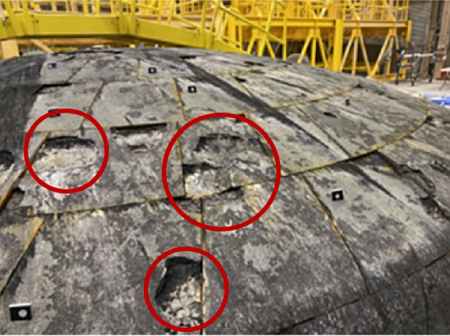
Orion's damage heat shield
Damage to Orion heat shield caused during re-entry in 2022,
including “cavities resulting from the loss of large chunks”

PJ Media this evening published an op-ed I prepared this week in a last desperate effort to convince both President Trump and NASA administrator Jared Isaacman to rethink the manned nature of the Artemis-2 mission scheduled to launch sometime in the next three months.

President Trump and NASA Administrator Isaacman: Please Take the Crew Off of Artemis II

Nothing I say in this op-ed will be unfamiliar to my readers. I choose to farm it to PJ Media because I wanted it to get as much exposure as possible. As big as my audience is becoming, from 4 to 6 million hits per month, PJ Media has a wider reach.

I also decided in the op-ed to make no general arguments against SLS or Orion. Though my opposition to them is long standing and well known, this is not the time to fight that battle. My goal was simply to get NASA to put engineering ahead of schedule, so as to avoid the possibility of it repeating another Apollo 1 fire or Challenger accident.

I doubt at this point this op-ed will make a difference, but to paraphrase a quote written by Gordon Dickson in his wonderful science fiction book Way of the Pilgrim, there was a hand pushing me from behind, forcing me forward. I had no choice. The image of Orion’s heat shield to the right, after the 2022 return from the Moon, required action.

25 comments

New Trump executive order today guarantees major changes coming to NASA’s Moon program

Change is coming to Artemis!

The White House today released a new executive order that has the typically grand title these type of orders usually have: “Ensuring American Space Superiority”. That it was released one day after Jared Isaacman was confirmed as NASA administrator by the Senate was no accident, as this executive order demands a lot of action by him, with a clear focus on reshaping and better structuring the entire manned exploration program of the space agency.

The order begins about outlining some basic goals. It demands that the U.S. return to the Moon by 2028, establish the “initial elements” a base there by 2030, and do so by “enhancing sustainability and cost-effectiveness of launch and exploration architectures, including enabling commercial launch services and prioritizing lunar exploration.” It also demands this commercial civilian exploration occur in the context of American security concerns.

Above all, the order demands that these goals focus on “growing a vibrant commercial space economy through the power of American free enterprise,” in order to attract “at least $50 billion of additional investment in American space markets by 2028, and increasing launch and reentry cadence through new and upgraded facilities, improved efficiency, and policy reforms.”

To achieve these goals, the order then outlines a number of actions required by the NASA administrator, the secretaries of Commerce, War, and State, as well as the Director of the Office of Management and Budget (OMB) and the Assistant to the President for Domestic Policy (APDP), all coordinated by the assistant to the President for Science and Technology (APST).

All of this is unsurprising. Much of it is not much different than the basic general space goals that every administration has touted for decades. Among this generality however was one very specific item, a demand to complete within 90 days the following review:
» Read more

29 comments

Jared Isaacman confirmed as NASA administrator

Jared Isaacman during his spacewalk
Jared Isaacman during his spacewalk in September 2024

The Senate today finally confirmed Jared Isaacman to be the next NASA administrator, by a vote of 67 to 30.

All of the opposition came from Democrats, who fear Isaacman will eliminate several NASA centers in their states, centers that for decades have accomplished little but be jobs programs sucking money from the American taxpayer.

During hearings and private meetings with the senators Isaacman denied he had any intention to do this. In fact, the 62-page policy document Isaacman had written outlining his plans when he was first nominated for this position back in the spring makes it clear that is not his goal.

Instead, an honest read of that document shows that Isaacman has approached this position as administrator like the businessman he is. He intends to review every aspect of NASA’s operations and to restructure them to run more efficiently. For one example, he plans to eliminate the numerous “deputies” that every manager at NASA has been given. The managers should do the work, not hire a flunky to do it for them.

He also plans to review the next two Artemis missions, specifically looking at the Orion capsule and the questions relating to its heat shield and its untested environmental system. The concern that I and many others have expressed is that this capsule is not ready yet for a manned mission. The heat shield showed significant and unexpected damage on its return to Earth from its first unmanned mission around the Moon in 2022. Rather than replace it or redesign it, NASA has decided to push ahead and fly four astronauts on it around the Moon no later than April 2026. The agency’s solution will be to change the capsule’s flight path to reduce stress on the shield, a solution that might work but remains untested. It is also willing to fly the astronauts in a capsule with a untested environmental system. This NASA decision to push ahead is so it can meet the goal of Trump and Congress to get humans back on the Moon ahead of the Chinese, and hopefully within Trump’s present term of office.

In other words, NASA management is once again putting schedule ahead of safety and engineering, as it did with Challenger and again with Columbia.

It appears that Isaacman will at least review this situation. Whether he will have the courage to take the astronauts off that mission however remains unknown. He will certainly face fierce opposition from Trump and Congress if he does so.

7 comments

More than 300 companies in discussions in connection Space Force’s “Golden Dome” project

According to guarded remarks by the head of Trump’s “Golden Dome” project, he has been in negotiations with more than 300 aerospace companies as the Space Force begins preliminary design work on this missile defense system.

President Trump’s Golden Dome czar says he has held “one-vs.-one” talks with more than 300 private companies in recent months to hash out the secretive architecture of the futuristic missile defense shield that the administration is determined to put into operation over the entire U.S. homeland by mid-2028.

In his first public remarks since being named to the position in June, Gen. Michael A. Guetlein, vice chief of space operations at the U.S. Space Force, told an audience at the annual Reagan National Defense Forum that although the layered design of the Golden Dome remains classified, he is confident that “our industry partners have a pretty good insight into what we’re doing.”

The project, which remains mostly cloaked in secrecy, received $24.5 billion in funding this year from Congress, with that number expected to rise considerably in later years.

My sense from Guetlein’s remarks is that right now the project is simply gathering already existing missile defense assets under one roof in order to get something operational by 2028 as ordered by Trump. Guetlein is also getting the enthusiastic support of the industry — which sees big bucks flowing their way from Golden Dome in the coming years. Many of the new space startups have been shifting operations from civilian space to this military project in anticipation of this funding.

While the concept is not unreasonable, considering the success seen with the Pentagon’s Patriot system and Israel’s Iron Dome, the secret structure so far of Golden Dome is almost guaranteed to lend itself to corruption and wasteful spending, a systemic problem within our present federal government.

4 comments

Yesterday’s Senate nomination hearing for Jared Isaacman was irrelevant; America’s real space “program” is happening elsewhere

Jared Isaacman
Billionaire Jared Isaacman

Nothing that happened at yesterday’s Senate hearing of Jared Isaacman’s nomination to be NASA’s next administrator was a surprise, or very significant, even if most media reports attempted to imply what happened had some importance. Here are just a small sampling:

To be fair, all of these reports focused on simply reporting what happened during the hearing, and the headlines above actually provide a good summary. Isaacman committed to the Artemis program, touted SLS and Orion as the fastest way to get Americans back to the Moon ahead of the Chinese, and dotted all the “i”s and crossed all the “t”s required to convince the senators he will continue the pork projects they so dearly love. He also dodged efforts by several partisan Democrats to imply Isaacman’s past business dealings with Musk and SpaceX posed some sort of conflict of interest.

What none of the news reports did — and I am going to do now — is take a deeper look. Did anything Isaacman promise in connection with NASA and its Artemis program mean anything in the long run? Is the race to get back to the Moon ahead of China of any importance?

I say without fear that all of this is blather, and means nothing in the long run. The American space program is no longer being run by NASA, and all of NASA’s present plans with Artemis, using SLS, Orion, and the Lunar Gateway station, are ephemeral, transitory, and will by history be seen as inconsequential by future space historians.
» Read more

16 comments

Senate Commerce committee to move up its vote on Isaacman’s nomination as NASA administrator

Jared Isaacman
Billionaire Jared Isaacman

Today Senator Ted Cruz (R-Texas) announced that the Commerce committee he heads will vote on the re-nomination of Jared Isaacman for NASA administration on December 8, 2025, only five days after tomorrow’s renomination hearing.

It appears Cruz and his committee is pushing to get Isaacman approved as quickly as possible. At least one Republican senator, John Cornyn (R-Texas) has met with Isaacman again and gotten his commitment to move the space shuttle Discovery to Texas, as mandated by the budget bill passed several months ago. That commitment was likely a quid pro quo by Cornyn to get his vote for Isaacman.

Once Isaacman is approved by Cruz’s committee, the Senate could vote at any time. Whether it will do so before the end of the year remains unknown, as it would likely require a special session as the Senate is expected to be in recess until after the new year.

If it does not, it will likely give Isaacman very little time to review the next Artemis mission, tentatively schedule for launch as early as February 2026, carrying four astronauts around the Moon on a Orion capsule with a questionable heat shield and an untested environmental system.

1 comment
1 2 3 35