
Hakuto-R successfully completes second mid-course correction
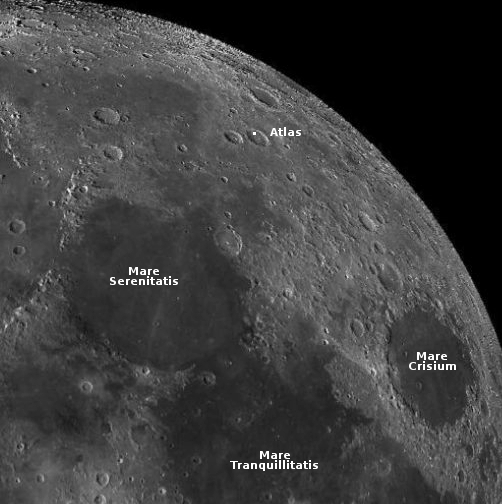
Hakuto-R’s planned landing site is in Atlas Crater.
According to Ispace, the private lunar lander company based in Japan, its Hakuto-R lander has now successfully completed second mid-course correction, and is functioning as expected on its way to the Moon.
The maneuver was carried out shortly after midnight on Jan. 2, 2023 (Japan Standard Time) and operations were managed from ispace’s mission control center located in Nihonbashi, Tokyo. This orbital control maneuver is the second maneuver to occur while the lander has been traveling to the moon. The first orbital control maneuver was completed on December 15, 2022. The second maneuver was carried out at a greater distance from Earth and lasted for a longer period than the first maneuver, verifying the company’s capability to carry out orbital maneuvers under various conditions.
As of Jan. 2, 2023, the lander has traveled approximately 1.24 million kilometers from the Earth and is scheduled to be at its farthest point of approximately 1.4 million km from the Earth by Jan. 20, 2023. Once the lander reaches its farthest point from Earth, a third orbital control maneuver may be performed, depending on its navigational status.
While Hakuto-R carries a number of commercial payloads — including Rashid, the first lunar rover built by the United Arab Emirates (UAE) — its primary goal is engineering. Ispace is using this mission to demonstrate its ability as a company to do this, in anticipation of later commercial planetary missions.