200-foot-wide asteroid has a 1-in-83 chance of hitting the Earth in 2032

New data that has refined the solar orbit of 200-foot-wide asteroid discovered in 2024, dubbed 2024 YR4, suggests it has a 1-in-83 chance of hitting the Earth on December 22, 2032.

“Odds have slightly increased to 1 in 83,” Catalina Sky Survey engineer and asteroid hunter David Rankin wrote on BlueSky. “This is one of the highest probabilities of an impact from a significantly sized rock ever.”

Amateur astronomer Tony Dunn shared a simulation of the asteroid approach on his X feed. “Recently-discovered #asteroid 2024 YR4 may make a very close approach to Earth in 8 years. It is thought to be 40-100 meters wide. Uncertainty is still high and more and more observations are needed confirm this.”

The asteroid is rated three on the Torino risk scale, which indicates a close encounter that warrants close attention from astronomers and an over 1% chance of impact.

Though most reports say the asteroid is about 200 feet across, there is great uncertainty in that number. It could also be as large as 320 feet, or as small as 130 feet.

At the moment the risk of impact is still small. If it does occur, there is a chance it could either cause a major airburst similar to the Chelyabinsk meteor impact in 2013 that injured more than 400 people, or even impact the ground or ocean. If it hits the ocean there is a considerable risk of tsunamis. At the moment it appears its path will cross from South America to Africa in the southern hemisphere, but this data remains very uncertain at this time.

Though there will be doom-sayers, overall this is not a world destroyer. It carries some risk, but we have eight years to refine our knowledge significantly, especially when it will make a close approach of five million miles in 2028. At that time scientists should be able to better measure its size as well as its future orbit, determining more precisely whether it will even hit the Earth in 2032.

2 comments

Juno detects the largest volcanic event on Io yet

Changes on Io since April 2024
Changes on Io since April 2024. Click for original image.

Infrared detection of volcanic hot spot
Infrared detection of volcanic hot spot.
Click for original image.

Using Juno’s Italian JIRAM infrared instrument image as well as its optical camera, scientists have detected what appears to be the largest volcanic event yet measured on the Jupiter moon Io, covering an area larger than Lake Superior,

Scientists with NASA’s Juno mission have discovered a volcanic hot spot in the southern hemisphere of Jupiter’s moon Io. The hot spot is not only larger than Earth’s Lake Superior, but it also belches out eruptions six times the total energy of all the world’s power plants.

…The JIRAM science team estimates the as-yet-unnamed feature spans 40,000 square miles (100,000 square kilometers). The previous record holder was Io’s Loki Patera, a lava lake of about 7,700 square miles (20,000 square kilometers). The total power value of the new hot spot’s radiance measured well above 80 trillion watts.

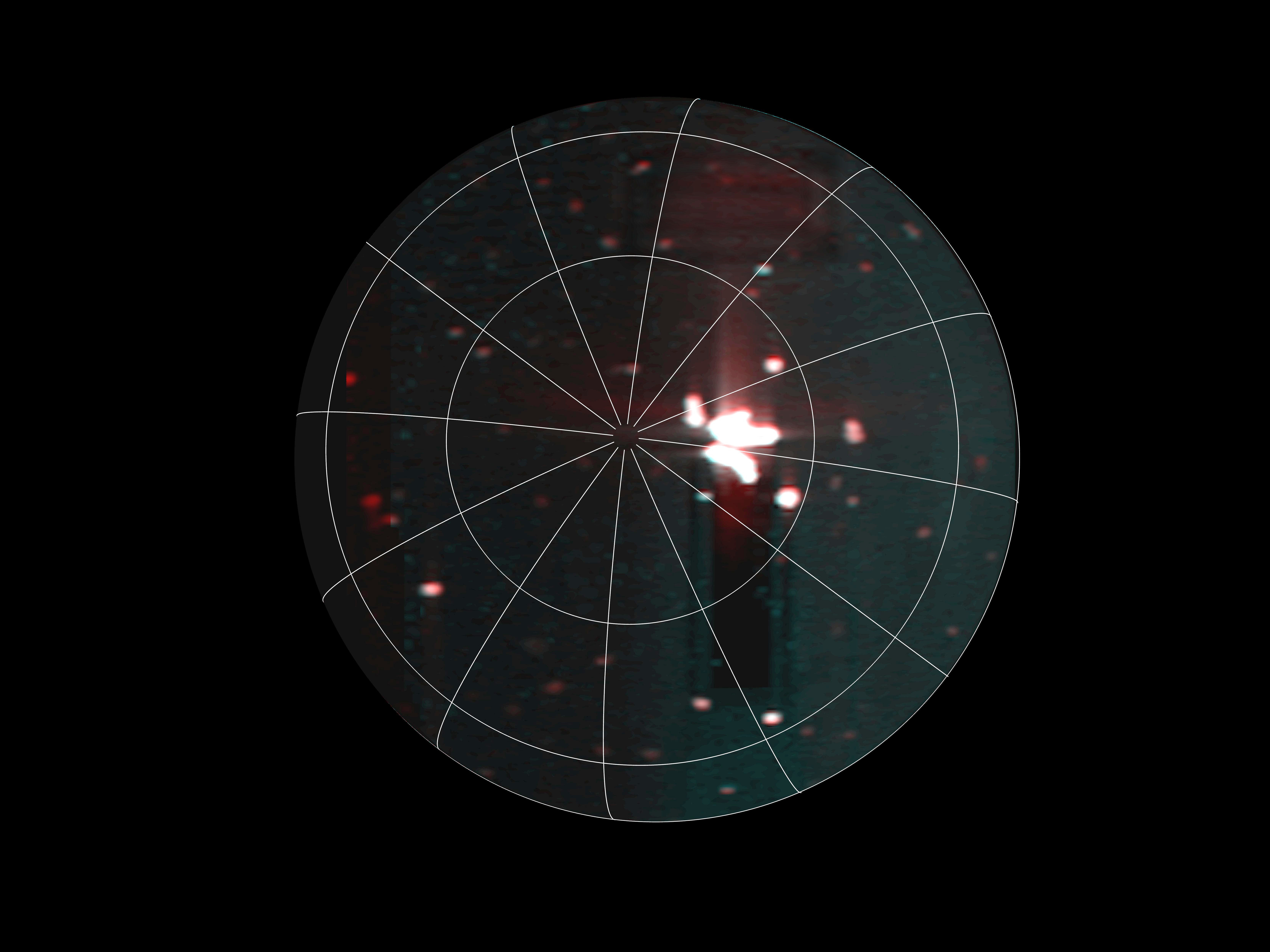
The pictures above were taken by Juno’s optical camera during the last three close flyby’s, looking down at the south pole, with the red arrows indicating the change to the pole’s right during each pass. The infrared image to the right shows a similar view during the fly-by, and shows that same hot spot as the bright area to the pole’s right.

Juno will do another fly-by of Io in March, though from a greater distance. Scientists plan to use both instruments to see how this hot spot has changed again since the end of December.

0 comments

United Kingdom awards rocket startup Orbex $25 million

The government of the United Kingdom has made a sudden and unexpected $25 million grant to the British rocket startup Orbex, which recently announced it was abandoning its launchpad at the Sutherland spaceport and switching to the Saxavord spaceport on the Shetland Islands.

While the UK Government has supported Orbex through grants awarded via the European Space Agency’s Boost! programme, the £20 million investment appears to represent the state acquiring a stake in the company and its future. This signals a significant show of support from the government as the company gears up to compete in the European Launcher Challenge.

Channeling former NASA Administrator Jim Bridenstine, Technology Secretary Peter Kyle declared that the government’s backing of Orbex would enable the launch of “British rockets carrying British satellites from British soil.”

It seems to me that this cash award is less an investment in the company and more a kind of guilt payment by the United Kingdom government because the red tape of its bureaucracy, the Civil Aviation Authority, prevented Orbex from launching at Sutherland for almost three years, delays that eventually forced the switch to Saxavord, which after its own long red tape delays finally has its license approvals not yet issued to Sutherland.

Orbex has probably indicated to the government that these delays have caused it significant cash flow problems, similar to what happened to Virgin Orbit where red tape delays eventually drove it to bankruptcy. The company also probably told the government it needed extra cash to prepare the launchpad at Saxavord for its rocket, money it had already spent at Sutherland and no longer had.

Thus, this $25 million government grant. The UK government realized that if a second rocket company went belly-up due to its red tape, it would likely end forever any chance of getting any rocket company from considering launching from the United Kingdom.

1 comment

Blue Ghost makes second orbital burn, setting up transfer from Earth to lunar orbit

Blue Ghost's first view of the Moon
Blue Ghost’s first view of the Moon.
Click for original image.

Firefly’s Blue Ghost lunar lander has successfully completed its second orbital burn, raising its Earth orbit in preparation for its shift into lunar orbit in the coming weeks.

Routine assessments while Blue Ghost is in transit show that all NASA payloads continue to be healthy. Firefly and NASA’s payload teams will continue to perform payload health checkouts and operations before reaching the Moon, including calibrating NASA’s Lunar Environment Heliospheric X-ray Imager (LEXI), continued transit operations of the Lunar GNSS Receiver Experiment (LuGRE), and analysis of radiation data collected from the Radiation Tolerant Computer (RadPC) technology demonstration.

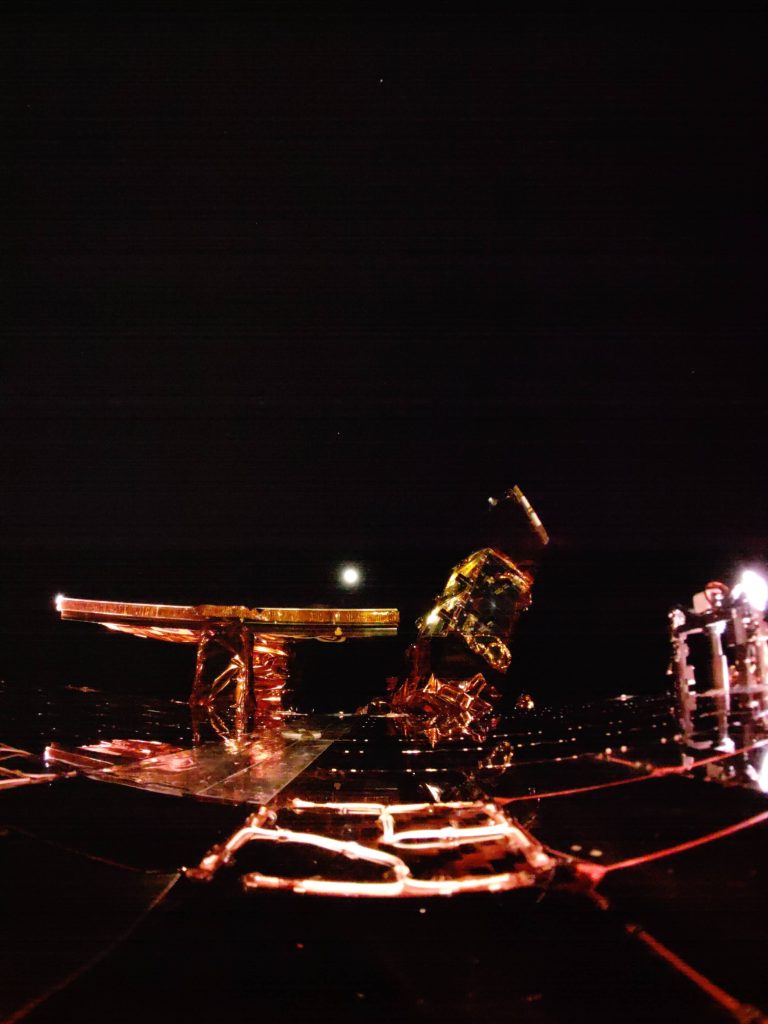
The picture to the right looks across the top of Blue Ghost, with the small bright object beyond its first image of the Moon. The actual landing is at least four weeks away.

0 comments

January 28, 2025 Quick space links

Courtesy of BtB’s stringer Jay. This post is also an open thread. I welcome my readers to post any comments or additional links relating to any space issues, even if unrelated to the links below.

0 comments

The blobby bottom of Utopia Basin

The blobby bottom of Utopia Basin
Click for original image.

Cool image time! The picture to the right, cropped, reduced, and sharpened to post here, was taken on October 25, 2024 by the high resolution camera on Mars Reconnaissance Orbiter (MRO). Labeled merely as a “terrain sample,” it was likely taken not as part of any specific research project, but to fill a gap in the camera’s schedule so as to maintain the camera’s proper temperature.

The terrain is definitely blobby, with some hollows appears to have ripple dunes suggesting dust and sand. The rounded mounds and some hollows however suggest instead near surface ice or places where sublimation of that underground ice caused the hollows.

Some of the circular depressions might suggest impact craters, but if so, those craters have been significantly modified and softened since impact. Some do appear to be filled with glacial debris.
» Read more

0 comments

Pushback: The left discovers it doesn’t have the right to break the law

The Bill of Rights, still in force

In the past few months, since Trump won re-election in November, the string of legal and political victories by the thousands of individuals blacklisted by the left and the Democratic Party in the past decade has been so overwhelming that for me to report each story as it happened would have required me to change the focus of this website entirely, something I did not wish to do.

Instead, I have collected a short list of these victories, hardly complete, and am now posting them here in one essay. This will not only put these victories on the record, it will show unequivocally how many leftists since 2020 somehow came to believe they were not required to follow the law in imposing their leftist agenda on others. The belief however was a delusion. It has just taken a few years to make the rule of law regain its primacy.

Read now and celebrate. Note also that Trump’s election win was completely irrelevant to most of these stories. While his return to the presidency clearly accelerated the trend, the trend had been established long before his election. And that trend has only just begun.
» Read more

21 comments

Arianespace to launch Ariane-6 five times in 2025, with the first launch targeting February 26th

Arianespace now plans to launch the Ariane-6 rocket five times in 2025, with the first launch scheduled for February 26, 2025.

On 13 and 14 January, the Ariane 6 core stage stack and two solid-fuel boosters were successfully brought together on the ELA-4 launch pad. While this process was occurring, an Antonov transport plane touched down at Felix Eboué Airport carrying the rocket’s payload, the CSO-3 reconnaissance satellite.

This will be the first commercial payload launched by Ariane-6, a military reconnaissance satellite for France.

In addition, the Vega-C rocket is scheduled for six flights, though some of those flights might be arranged and controlled by the rocket’s Italian builder, Avio, not the European Space Agency’s commercial arm, Arianespace. Sometime in the next two years Arianespace’s responsibiilty for Vega-C is being phased out, so that Avio will own and sell all further launches.

0 comments

Boom Supersonic’s XB-1 test plane breaks the sound barrier

UPDATE: The XB-1, using the exact same air corridor used by Chuck Yeager when he became the first pilot to break the sound barrier in 1947, has successfully become the first privately funded and constructed airplane to fly faster than the speed of sound, doing it three times for about six minutes total.

Original post:
—————————
The airplane startup Boom Supersonic is hoping to complete its first manned supersonic flight today, piloted by chief test tilot Tristan “Geppetto” Brandenburg.

The flight will be manned, using its prototype XB-1 test plane.

Since March 2024, Boom has carried out 11 test flights as it gradually pushed the envelope toward breaking the sound barrier. [Today’s] flight of the 68-ft-long (21-m) XB-1 prototype will be conducted in a special air corridor reserved for supersonic aircraft. During the 38-minute flight at an altitude of 34.000 ft (10,000 m), the aircraft is expected to reach Mach 1.1, which is half of the ultimate goal of Mach 2.2.

Once the company completes test flights of XB-1 it will begin building its Overture commercial supersonic plane for sale to airline companies, capable of carrying up to 80 passengers. It already has contracts and financial support from a number of major airlines, including United and Japan Airlines.

I have embedded the live stream below. It has already started.
» Read more

5 comments

Firefly planning five launches from Vandenberg in 2025

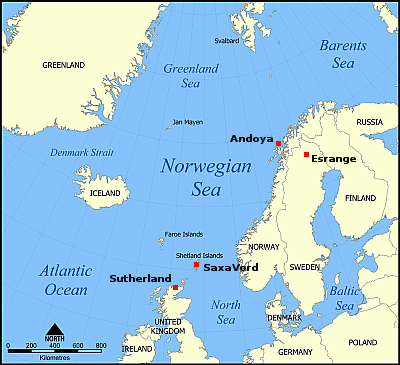
In announcing its plans to begin launches from both Wallops Island in Virginia and Esrange in Sweden in 2026, Firefly has also said it is planning five launches from Vandenberg in 2025.

Proposed spaceports surrounding Norwegian Sea

The company is also building a launchpad at Cape Canaveral, so if these plans reach fruition it will eventually have four different launch sites. One issue for all these sites remains red tape. For example:

[Firefly VP Adam] Oakes said Firefly is continuing to work on regulatory issues for launches from Esrange. “The regulatory piece can really put you back if you want to let it,” he said. “We have a lot of paperwork in place. We’re not quite there on everything but things are moving in the right direction.”

One serious problem for Esrange is its interior location in Sweden. Any orbital launch will have to cross land, with most crossing significant territory of other countries. While the site has been used for decades for suborbital test launches, no orbital launches have ever taken off from there, and getting clearance will not be easy for orbital rockets to cross either Norway, Finland, or Russia. And unless the lower stages are reusable they will have to crash inside those territories, or inside Sweden itself.

0 comments
1 167 168 169 170 171 182