Luca Stricagnoli – For A Few Dollars More

An evening pause: A magnificent cover of this classic Ennio Morricone film score. If you want to hear a compliation of all of Morricone’s western scores, go here.

For me however Morricone’s score for Cinema Paradiso remains my favorite.

Hat tip Mike Nelson.

6 comments

June 17, 2024 Quick space links

Courtesy of BtB’s stringer Jay. This post is also an open thread. I welcome my readers to post any comments or additional links relating to any space issues, even if unrelated to the links below.


  • Webb observes the most distant Type 1a supernova yet discovered
  • Type 1a supernovae were used to discover dark energy, based on the assumption that their brightness is always the same. Thus, the dimmer they are, the farther away they are. The data from this supernovae doesn’t break that assumption, according to the abstract, but it uncovered some pecularities that need explaining.

3 comments

The insane mountain slopes of Mars’ deep canyons

Overview map

The insane mountain slopes of Mars' deep canyons
Click for original image.

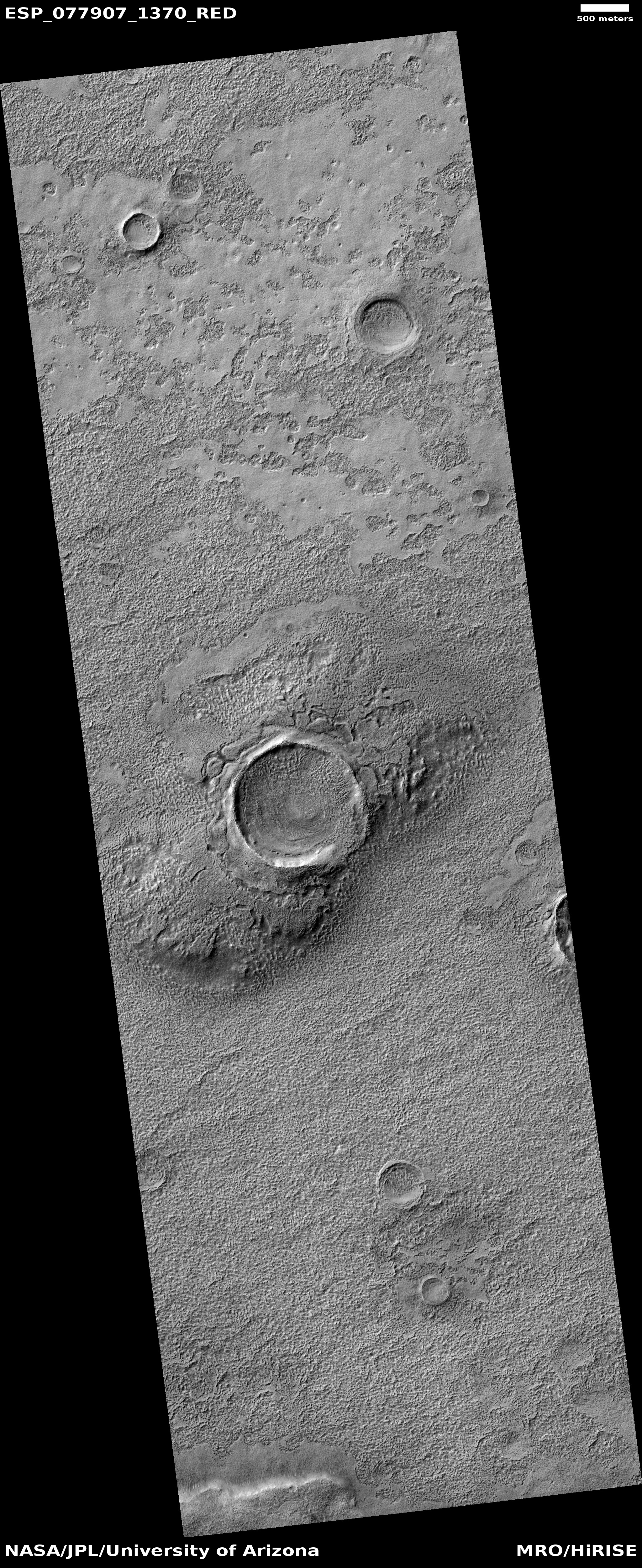
Cool image time! The picture to the right, rotated, cropped, reduced, and sharpened to post here, was taken on April 25, 2024 by the high resolution camera on Mars Reconnaissance Orbiter (MRO).

The scientists label this layered deposits, but that hardly describes what we are looking at. This slope, as shown in the overview map above, is the north flank of the central ridgeline inside the giant enclosed canyon depression dubbed Hebes Chasma, located just north of the main canyon of Valles Marineris, the largest known canyon in the solar system.

From floor to peak the ridge is around 16,000 feet high. Yet, its peak sits more than 6,000 feet below the plateau that surrounds Hebes. In this one picture the drop from high to low is only 5,700 feet, with thousands of feet of cliff unseen below and above.

Yet every single foot of these gigantic cliffs is layered. Based on close-up data obtained by Curiosity on the slopes of Mount Sharp in Gale Crater on the other side of the planet, the layers we can see here only represent the most coarse sedimentary boundaries. Within these layers are likely thousands upon thousands of thin additional layers, each likely representing some cyclical climate proces on Mars, even down to individual years.

Note too that the lower slopes in this picture (near the top) suggest some form of erosion flowing downhill. What caused that erosion process however remains unknown. It could have been liquid water, or glaciers, or some other process unique to Mars that we still haven’t uncovered.

0 comments

Just remember: These obnoxious disturbers of the peace are all Democrats

They’re coming for you next: In what is actually a relatively mild example of the obnoxious and almost always illegal protests by pro-Hamas supporters — such as taking over and trashing buildings, attacking Jews and blind children, and blocking traffic — for the past six months protesters have been disturbing the peace at late evening and early morning hours in the residential neighborhood where senator Ted Cruz (R-Texas) lives with his family in Houston.

For the past 6 months, anti-Israel protestors have come to my home just about every Sat morning at 7 am and most Fri nights until 10 or 11 pm. They scream, disturb the peace & wake the neighbors.

I have embedded below the video of these protesters that Cruz included with his tweet:
» Read more

7 comments

Lunar Reconnaissance Orbiter snaps picture of Chang’e-6 on far side of the Moon

Chang'e-6's landing site
Click for original image of Chang’e-6 on the Moon

The science team running Lunar Reconnaissance Orbiter (LRO) have now released an image of China’s Chang’e-6 lander on far side of the Moon, taken on June 7, 2024 one week after the spacecraft touched down.

Chang’e 6 landed on 1 June, 2024, and when LRO passed over the landing site almost a week later, it acquired an image showing the Chang’e 6 lander on the rim of an eroded ~50 meter diameter crater.

The LROC team computed the landing site coordinates as 41.6385°S, 206.0148°E, at -5256 meters elevation relative to the average lunar surface, with an estimated horizontal accuracy of plus-or-minus 30 meters.

The overview map to the right, showing the entire far side of the Moon, shows that picture as the inset in the lower left, cropped to post here. The black and white dot in the center is Chang’e-6’s lander, with the surrounding brightened ground showing the blast area produced by the engines during touchdown.

According to the LRO press release, the large dark area that surrounds the lander — as seen in the wider inset in the upper right — is a “basaltic mare deposit” — similar to the vast dark frozen lava seas evident to our own eyes on the near side of the Moon.

2 comments

Webb produces false color infrared image of the Crab Nebula

The Crab Nebula as in infrared by Webb
Click for original image.

The false-color infrared picture to the right, reduced and sharpened to post here, was taken by the Webb Space Telescope of the Crab Nebula, located 6,500 light years away and created when a star went supernova in 1054 AD, in order to better understand its make-up and origins. From the caption:

The supernova remnant is comprised of several different components, including doubly ionized sulfur (represented in green), warm dust (magenta), and synchrotron emission (blue). Yellow-white mottled filaments within the Crab’s interior represent areas where dust and doubly ionized sulfur coincide.

The spectroscopic data from this infrared observation has in fact increased the puzzle of the Crab’s origin. Previously the data suggested the supernova that caused it was one type of supernova. This data now suggests it could have been a different type, without precluding the possibility of the first.

“Now the Webb data widen the possible interpretations,” said Tea Temim, lead author of the study at Princeton University in New Jersey. “The composition of the gas no longer requires an electron-capture explosion, but could also be explained by a weak iron core-collapse supernova.”

You can read the published science paper here [pdf].

0 comments

German rocket startup looking for alternatives to Saxavord spaceport

Australian commercial spaceports
Australia’s commercial spaceports. Click for original map.

Because of regulatory delays at the Saxaford spaceport in Great Britain, the German rocket startup Hyimpulse has signed a launch deal with the Australian commercial spaceport Southern Launch.

In May, HyImpulse launched the inaugural flight of its suborbital SR75 rocket from the Southern Launch Koonibba Test Range. The flight had initially been expected to be launched from SaxaVord in Scotland, but delays in the construction of the facility forced the company to look elsewhere for a host.

On 6 June, Southern Launch announced that it had signed a Memorandum of Understanding with HyImpulse for the launch of additional SR75 missions from Koonibba. The agreement also included provisions for the pair to explore the possibility of launching orbital flights aboard the HyImpulse SL1 rocket from Whalers Way Orbital Launch Complex on the south coast of Australia.

According to Hyimpulse’s November 2023 deal with Saxaford, it was to have flown two suborbital flights of the SR75 in 2024 and one orbital flight of SL1 in 2025.

It could very well be that SL1’s first orbital test launch will still take place from Saxavord, but the several years of delays caused by the red tape from the UK’s Civil Aviation Authority in approving Saxavord has forced its customers to seek alternatives. Hyimpulse for example now has agreements not only with Southern Launch in Australia. The French space agency CNES has approved it to launch from French Guiana as well.

In addition, the German rocket startup Isar Aerospace in November 2023 signed a deal with the new Andoya commercial spaceport in Norway. Andoya had come into this spaceport competition very late, but it apparently won this deal because Isar saw the regulatory problems in the UK and decided to look elsewhere.

0 comments

June 14, 2024 Quick space links

Courtesy of BtB’s stringer Jay. This post is also an open thread. I welcome my readers to post any comments or additional links relating to any space issues, even if unrelated to the links below.


  • On this day in 1967, Mariner 5 launched to do the second fly-by of Venus
  • NASA had built it as a backup for its Mariner 4 Mars fly-by mission, and repurposed it for Venus, adding a sunshield. It zipped past Venus on October 19, 1967, one day after the Soviet Venera lander made the first attempt to soft land there. Both confirmed that Venus was a hot hellhole with an atmospheric temperature of 800 degrees Fahrenheit.


3 comments

Today’s blacklisted American: Entire family kicked out of Catholic school because their 13-year-old son supported patriotism to America

Jimmy Heyward, blacklisted for touting American patriotism
Jimmy Heyward, blacklisted for extolling
American patriotism

They’re coming for you next: When 13-year-old Jimmy Heyward decided to run for the position of “commissioner of spirit and patriotism” at St. Bonaventure Catholic middle school in Huntington Beach, California, he wrote a campaign speech that not only extolled the idea of patriotism, but wittily mimicked Donald Trump’s own campaign slogans. His conclusion:

So accordingly, I Jimmy Heyward, am running for Commissioner of Patriotism and School Spirit. I want to clarify that my ideas are not promises, but I can promise to make pep rallies great again! … I will make the school spirit great again! I will make patriotism within SBS great again! And most importantly I will MAKE SBS GREAT AGAIN!

The school principal, Mary Flock, didn’t like that. How dare he!
» Read more

7 comments

New evidence suggests some titanium on Boeing and Airbus planes might be fake

According to information provided to the FAA from Boeing, the documentation from a subcontractor for some of the titanium used on some Boeing and Airbus planes might be faked, suggesting that the titanium is fake as well.

Boeing discovered this possibility when one of its suppliers discovered holes in some metal pieces due to corrosion.

Apparently, Italian parts supplier Titanium International Group found small holes in titanium in December 2023, and also raised suspicions about the authenticity of documentation. It notified Spirit AeroSystems of the issue, which in turn informed Airbus and Boeing in January 2024. According to three anonymous sources close to the matter, affected planes include those built between 2019 and 2023 and involve the Boeing 737 MAX, 787 Dreamliner and Airbus A220 programs.

…The problem has been traced back to a Chinese supplier that sold titanium to Turkish company Turkish Aerospace Industries in 2019. Documentation from this Chinese supplier claimed that the titanium had been sourced from another Chinese firm, Baoji Titanium Industry – however, Baoji Titanium has confirmed that it did not provide this batch of titanium “and has no business dealing with this company.” [emphasis in original]

In other words, no one has any idea where that first Chinese supplier got the titanium, because its documentation was false.

Both Airbus and Boeing have done numerous tests and found no problems, though both have said they will remove any suspect parts. Spirit meanwhile has removed all the suspect parts, even though tests suggested the parts were “of sufficient quality for the aerospace industry.”

The real story here is not that these parts are unsafe (they apparently are not). The real story is the dependence by these airplane companies on so many subcontractors, some of which are subcontractors of subcontractors of subcontractors and also come from a hostile power. It leaves them all very vulnerable to others’ mistakes or malfeasance. During the Cold War it would have been inconceivable to rely on Soviet-built parts. Yet, today American airlines routine rely on Chinese companies when the Chinese government has made it clear it sees us as an enemy to be defeated.

13 comments
1 359 360 361 362 363 2,916