
June 13, 2025 Zimmerman/Batchelor podcast
Embedded below the fold in two parts.
To listen to all of John Batchelor’s podcasts, go here.
» Read more
Embedded below the fold in two parts.
To listen to all of John Batchelor’s podcasts, go here.
» Read more
An evening pause: Watch another demonstration of Galileo’s Leaning Tower of Pisa experiment where he proved gravity worked the same on all objects regardless of weight.
May everyone have a great weekend.
Hat tip Doug Johnson.

On Christmas Eve 1968 three Americans became the first humans to visit another world. What they did to celebrate was unexpected and profound, and will be remembered throughout all human history. Genesis: the Story of Apollo 8, Robert Zimmerman's classic history of humanity's first journey to another world, tells that story, and it is now available as both an ebook and an audiobook, both with a foreword by Valerie Anders and a new introduction by Robert Zimmerman.
The print edition can be purchased at Amazon or any other book seller. If you want an autographed copy the price is $60 for the hardback and $45 for the paperback, plus $8 shipping for each. Go here for purchasing details. The ebook is available everywhere for $5.99 (before discount) at amazon, or direct from my ebook publisher, ebookit. If you buy it from ebookit you don't support the big tech companies and the author gets a bigger cut much sooner.
"Not simply about one mission, [Genesis] is also the history of America's quest for the moon... Zimmerman has done a masterful job of tying disparate events together into a solid account of one of America's greatest human triumphs."--San Antonio Express-News
Courtesy of BtB’s stringer Jay. This post is also an open thread. I welcome my readers to post any comments or additional links relating to any space issues, even if unrelated to the links below.

Click for original image.

Click for interactive map
Cool image time! The picture above, cropped to post here, was taken on June 10, 2025 by the high resolution camera on the Mars rover Curiosity, and shows some of the stranger terrain found higher up the flanks of Mount Sharp in Gale Crater.
The blue dot on the overview map to the right marks Curiosity’s present position, where it is doing another drilling campaign into the first boxwork geology it has encountered. The white line marks its past travels, while the green dotted line its planned route.
The yellow lines indicate the area seen in the picture above. The wild mountain peaks on the horizon are part of the sulfate-bearing unit that appears very bright in the overview map. The material that makes up this terrain appears to be very easily eroded, based on its features as seen from orbit, as well as Curiosity’s distant view. Whether that erosion was wind, water, or ice, remains undetermined, and is the main question Curiosity will attempt to answer once it gets there, likely in a year or so.
Regardless, the landscape appears almost like it soft sand being washed away.
Where the rover will go next the science team has not yet decided. It will definitely continue uphill, but they do not yet know the route they will take through that sulfate-bearing unit.

Now available in hardback and paperback as well as ebook!
From the press release: In this ground-breaking new history of early America, historian Robert Zimmerman not only exposes the lie behind The New York Times 1619 Project that falsely claims slavery is central to the history of the United States, he also provides profound lessons about the nature of human societies, lessons important for Americans today as well as for all future settlers on Mars and elsewhere in space.
“Zimmerman’s ground-breaking history provides every future generation the basic framework for establishing new societies on other worlds. We would be wise to heed what he says.” —Robert Zubrin, founder of the Mars Society.
All editions are available at Amazon, Barnes & Noble, and all book vendors, with the ebook priced at $5.99 before discount. All editions can also be purchased direct from the ebook publisher, ebookit, in which case you don't support the big tech companies and the author gets a bigger cut much sooner.
Autographed printed copies are also available at discount directly from the author (hardback $29.95; paperback $14.95; Shipping cost for either: $6.00). Just send an email to zimmerman @ nasw dot org.
SpaceX this morning successfully placed 23 Starlink satellites into orbit (including 13 with phone-to-satellite capabilities), its Falcon 9 rocket lifting off from Cape Canaveral in Florida.
The first stage completed its 21st flight, landing on a drone ship in the Atlanta.
The leaders in the 2025 launch race:
74 SpaceX
33 China
8 Rocket Lab
6 Russia
SpaceX now leads the rest of the world in successful launches, 74 to 54.
The French startup, The Exploration Company, has now launched its own ship designed to recover its next prototype test cargo capsule, set to launch on a Falcon 9 on June 21, 2025.
In an 11 June update, The Exploration Company announced that the recovery vessel tasked with retrieving the Mission Possible capsule after splashdown had departed the previous day from a harbour in Alaska. The vessel, named Makushin Bay, is a 40-metre salvage and rescue ship owned and operated by US-based maritime logistics company Resolve Marine. Two members of The Exploration Company’s team will accompany the vessel on its mission. Over the next week, it will make its way to the expected splashdown zone in the central Pacific Ocean. According to The Exploration Company, current weather conditions appear favourable for both splashdown and recovery operations.
The company aims to provide cargo to the commercial space stations under development using its proposed Nyx capsule. As part of its own development program it has flown a smaller prototype already on the first launch of Europe’s Ariane-6 rocket, but was unable to test its re-entry capability because of a failure in that rocket’s upper stage. This second larger prototype will try again, and this time has a better shot at completing its test because it if flying on SpaceX’s very reliable Falcon 9. Thus, the launch of this recovery vessel.

Leaving Earth: Space Stations, Rival Superpowers, and the Quest for Interplanetary Travel, can be purchased as an ebook everywhere for only $3.99 (before discount) at amazon, Barnes & Noble, all ebook vendors, or direct from my ebook publisher, ebookit.
If you buy it from ebookit you don't support the big oppressive tech companies and I get a bigger cut much sooner.
"Leaving Earth is one of the best and certainly the most comprehensive summary of our drive into space that I have ever read. It will be invaluable to future scholars because it will tell them how the next chapter of human history opened." -- Arthur C. Clarke
Two stories today suggest that Kazakhstan is shifting its politics away from Russia and towards the west, albeit carefully and with an eye to avoid poking the bear that lives so close by.
First, the government’s tourism agency announced plans to develop tourism at its Baikonur spaceport.
Participants discussed infrastructure upgrades, the creation of new travel routes, brand strengthening, investment attraction and partnerships to support long-term development.
According to Kazakh Tourism Сhairman Kairat Sadvakasov, the concept focuses on building a sustainable tourism ecosystem during the periods between rocket launches. The goal is to integrate Baikonur into Kazakhstan’s cultural, educational and scientific agenda.
Both the Soviet and Russian governments have always treated Baikonur as a classified military installation, and forbid such visitation, including vetoing public viewing areas areas. Kazakhstan has likely seen the cash earned by India and U.S. by allowing such spaceport tourism, and wants some for itself. Evidently it now thinks the Russians no longer have the clout to stop it from doing so.
Next, Kazakhstan’s government announced it has signed a deal with SpaceX to introduce Starlink into the country.
The agreement ensures that Starlink will comply with Kazakhstan’s legal and regulatory requirements, including those related to information security and communications. Until now, Starlink operated in the country only on a pilot basis, providing internet access exclusively to schools.
The upcoming launch will allow citizens to legally purchase, register, and use Starlink terminals. The service aims to improve high-speed internet access in remote and hard-to-reach regions, supporting rural schools, healthcare centers, mobile units, and infrastructure sites – particularly in areas where laying fiber-optic networks is not feasible.
This deal also suggests a change in Kazakhstan’s relationship with Russia. Starlink is blocked from Russia due to its invasion on the Ukraine. Yet the service is now available to both Kazakhstan and the Ukraine, formerly part of the Soviet Union and directly adjacent to Russia. That Kazakhstan is publicly permitting Starlink in is a clear statement that it wants the same technology as the Ukraine to better protect it from a Russian invasion.
It also suggests a decline in Russia’s influence inside Kazakhstan. Previously if the Russians said jump, the Kazakhstan government would ask, “How high?” Now it appears it is willing to act more independently, and in ways that are not necessarily in Russia’s interests.
One wonders if this shift could go as far as Kazakhstan trying to sell Baikonur as a launch site for other commercial entities, such as from India, China, and Europe. I doubt many would buy the service (Baikonur is not well located compared to other spaceports), but the very offer would signal a major political shift in this part of the world.
SpaceX this evening successfully placed 26 more Starlink satellites into orbit, its Falcon 9 rocket lifting off from Vandenberg in California.
The first stage completed its fifteenth flight, landing on a drone ship in the Pacific.
The leaders in the 2025 launch race:
73 SpaceX
33 China
8 Rocket Lab
6 Russia
SpaceX now leads the rest of the world in successful launches, 73 to 54.
Robert Pratt today aired a four segment (36 minutes) podcast with me, discussing the NASA budget, Ted Cruz’s effort to spend pork, the race to build space stations, and the situation of Space at Boca Chica, as part of his Pratt on Texas radio/podcast show. It is now available here.
I have also embedded it below.
» Read more
An evening pause: Music by AC/DC.
Hat tip Don Carrera, who adds, “With a shout-out ranging from Vivaldi & his Primavera, up to Michael J. Fox & Johnny Be Good.”
Courtesy of BtB’s stringer Jay. This post is also an open thread. I welcome my readers to post any comments or additional links relating to any space issues, even if unrelated to the links below.

One of many sudden public collapses from jab-induced heart failure.
Click for full video.
On June 9, 2025 the head of the Health and Human Services at the federal government Robert Kennedy fired all seventeen members of the Centers for Disease Control and Prevention’s (CDC) Advisory Committee for Immunization Practices (ACIP).
According to Kennedy, each member was appointed by the Biden administration as part of a “concerted effort to lock in public health ideology” and to limit the Trump administration from taking “the proper actions to restore public trust in vaccines.” ACIP members usually serve four-year terms. Because 13 appointees took their seats in 2024, without the complete ouster, the committee would not have had a Kennedy-selected majority until 2028.
“A clean sweep is necessary to reestablish public confidence in vaccine science,” Kennedy said in the HHS release. He will be responsible for appointing the new committee members, which are scheduled to meet from June 25 to June 27 to discuss a slate of vaccines, including those for anthrax, chikungunya, COVID-19, cytomegalovirus, influenza and HPV.
All the usual suspects on the left, including members of Congress and in the propaganda press, immediately went into a hissy-fit, claiming Kennedy’s action was “politicizing the ACIP,” even though it is blatantly obvious that Biden had made his 2024 appointments, just before the election, for his own political reasons.
Politics aside, however, the real reason to dump these Biden-era appointees is that they were also part of the “intellectual” cabal that foisted jab mandates, mask mandates, six-foot social distancing, and lockdowns on everyone. None of these policies were based on any proven science research, and in fact they violated decades of infectious disease policy that recommended doing the exact opposite, across the board.
Worse, there is now clear evidence [pdf] that these same people demanded the imposition of jab mandates, even though they were well aware at the time that the jab caused serious side effects that killed. As noted in this June 11, 2025 report:
» Read more

The Starlab design in 2025. Click
for original image.
The space station startup Voyager Technologies has now raised $383 million during its first public stock offering this week, with the possibility of more investment capital to come.
The six-year-old provider of mission-critical space and defense technology solutions sold 12.35 million shares at $31 each, pricing above the $26–$29 range it marketed last week. The Denver-based company had initially planned to offer 11 million shares.
Underwriters also have a 30-day option to purchase up to 1.85 million additional shares of the company’s Class A common stock, up from 1.65 million, trading under the ticker symbol VOYG.
Of the four private commercial space stations under development, Voyager is the only one to have so far built nothing. Its station, dubbed Starlab, is conceived as a single large module launched on SpaceX’s Starship/Superheavy rocket. Though the company has obtained a $217.5 million development grant from NASA, and is partnering with Airbus, Northrop Grumman, and the European Space Agency, it has focused so far all of its work on design.
We must assume the company intends to use this additional public capital to begin some construction. It likely needs to if it is to have any chance of winning NASA’s major contract for building the station itself, since all of its other competitors are doing so. My present rankings for these four projects:

Click for original image.
Because its orbit has now dropped 17 degrees below the ecliptic plane of the solar system, the European Space Agency’s (ESA) Solar Orbiter probe has been able to snap the first images of the Sun’s south pole, as shown by the two pictures to the right.
The [two images show] the Sun’s south pole as recorded on 16–17 March 2025, when Solar Orbiter was viewing the Sun from an angle of 15° below the solar equator. This was the mission’s first high-angle observation campaign, a few days before reaching its current maximum viewing angle of 17°.
The instruments each observe the Sun in a different way. PHI images the Sun in visible light (left) and maps the Sun’s surface magnetic field (right).
The magnetic field data on the right has revealed that at present the field at the pole is “a mess,” because the Sun is presently at solar maximum.
While a normal magnet has a clear north and south pole, the PHI instrument’s magnetic field measurements show that both north and south polarity magnetic fields are present at the Sun’s south pole. This happens only for a short time during each solar cycle, at solar maximum, when the Sun’s magnetic field flips and is at its most active. After the field flip, a single polarity should slowly build up and take over at the Sun’s poles. In 5–6 years from now, the Sun will reach its next solar minimum, during which its magnetic field is at its most orderly and the Sun displays its lowest levels of activity.
Solar Orbiter is now well positioned to observe the expected changes in the Sun’s magnetic field as sunspot activity ramps down to solar minimum.
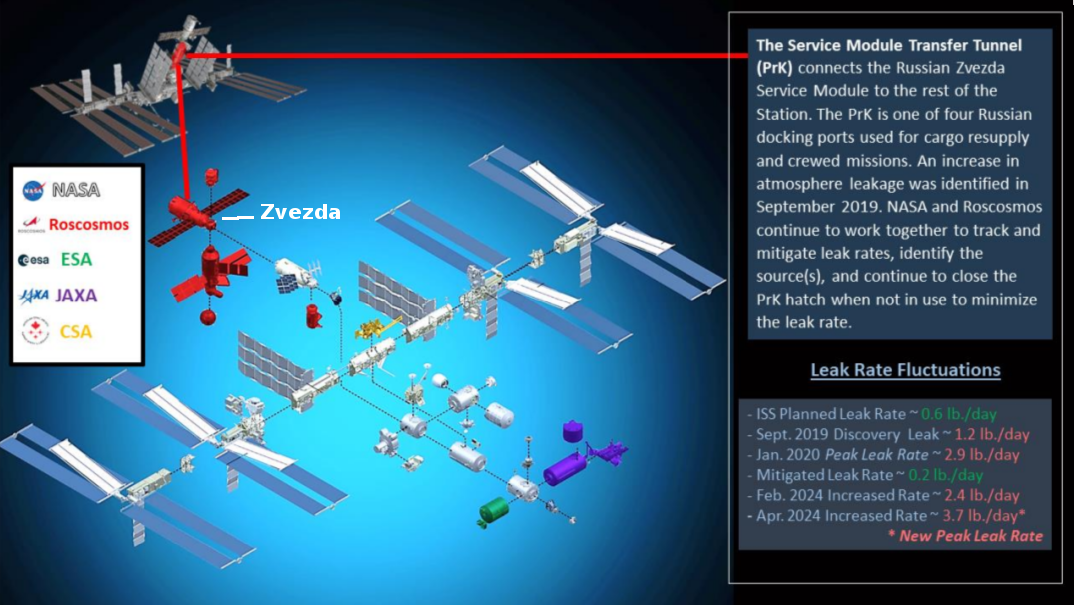
Figure 3 from September Inspector General report, showing Zvezda’s location on ISS.
According to a press update today by NASA, the launch of the commercial Ax-4 manned mission to ISS has been further delayed due to work by the Russians attempting to seal new leaks in the station’s Zvezda module.
NASA and Axiom Space are postponing the launch of Axiom Mission 4 to the International Space Station. As part of an ongoing investigation, NASA is working with Roscosmos to understand a new pressure signature, after the recent post-repair effort in the aft most segment of the International Space Station’s Zvezda service module.
Cosmonauts aboard the space station recently performed inspections of the pressurized module’s interior surfaces, sealed some additional areas of interest, and measured the current leak rate. Following this effort, the segment now is holding pressure.
In other words, the Russians had recently detected an increase in leakage in the module, identified several more cracks inside Zvezda, and have been working to seal them.
The graphic above comes from a 2024 NASA inspector general report, which at that time noted a significant increase in the leak rate in 2024 (see the data in the lower right). Since then it has been NASA policy to close the hatch that connects the American and Russian sections of the station whenever anything docks with Zvezda, due to risk that the docking could cause the module to fail entirely.
Zvezda is one of the oldest modules on ISS, built in the late 1980s and launched in 2000. It is believed the leaks are due to stress fractures in its hull due to the many dockings and undockings that have occurred at its aft docking port.
If the NASA press release can be believed, the situation is under control and the repairs have been successful. If so, expect the Axiom mission to be rescheduled shortly.
If not, we could be witnessing the beginning of the end of ISS, five years earlier than planned by bureaucrats in Washington and Moscow.
Embedded below the fold in two parts.
To listen to all of John Batchelor’s podcasts, go here.
» Read more
An evening pause: Performed live 2003.
Hat tip Judd Clark.
Courtesy of BtB’s stringer Jay. This post is also an open thread. I welcome my readers to post any comments or additional links relating to any space issues, even if unrelated to the links below.
Useless: In its first review of Trump’s proposed budget cuts for the Space Force, the House Appropriations Committee, under Republican leadership, immediately moved to not only eliminate those cuts, but to increase the Space Force budget another $300 million.
And these turkeys are adding this money even though they admit, due to Congress’s incompetent budget process, they really have no way to determine exactly how the money will be spent.
The House Appropriations committee took the first step in crafting a FY2026 bill to fund the Department of Defense today, albeit reluctantly. Appropriators from both parties lamented the paucity of data they have about what the money will be used for, but decided to move ahead and mark up their bill at subcommittee level this afternoon. Full committee markup is scheduled for Thursday. President Trump’s request would cut about $2.5 billion from the U.S. Space Force’s budget, but the committee would restore it and add a little more.
According to the new budget put forth by this committee, the Space Force will have a budget of $29 billion, more than even the highest budget figure proposed for NASA.
This is what we can expect now from the Republican leadership in Congress. They will cut nothing, but instead restore all the spending that Trump attempts to eliminate, even money that is expressly designed to help leftist causes. They are worse than useless.
What these idiots don’t realize that if the country goes bankrupt, it will become impossible to accomplish anything. A smart person would realize it is better to only get part of what you want now (so you can maybe get the rest later) than to try to get it all immediately and instead end up with nothing at all.
But then, these are Congressmen. The word “smart” is the last word I would use to describe them.
It now appears that one Chinese robotic servicing satellite, Shijian-25, is now approaching another Chinese servicing satellite, Shijian-21, and it is expected that the two will eventually dock in order to test refueling technology.
Shijian-25 was launched in January to test on-orbit refueling and mission extension technologies, while Shijian-21 was launched in October 2021.
Shijian-21 has already executed its primary mission, docking with the defunct Beidou-2 G2 navigation satellite and towing it into a graveyard orbit above GEO. It had been passively drifting westward in GEO for much of the last year, according to COMSPOC, suggesting it may have run out of fuel, but it recently initiated maneuvers taking it towards Shijian-25.
Shijian-21 has since parked at 127.5 degrees East. Now, Shijian-25 is drifting eastwards towards Shijian-21. The two satellites are in a phased orbit, meaning their key orbital elements—such as semi-major axis, eccentricity, inclination, right ascension of the ascending node and argument of perigee—are nearly identical, but remain separated by a distance along the same path. This minimizes fuel required for a future rendezvous. The pair are expected to meet June 11 at current rate of approach, though Shijian-25 will likely slow down as it closes in.
In other words, China used the older satellite to test docking and tug operations, and now plans to use the new satellite to refuel it for further operations.
Nor are these the only satellites that are maneuvering into the area. Two American military surveillance satellites have moved in, are flying in parallel, and are likely there to observe the Chinese operations.