Proposed exclusion zone restrictions revealed for new Sutherland spaceport in Scotland

A map of the proposed 50-square-kilometer exclusion zone that will be required for launches at the new Sutherland spaceport in Scotland has now been obtained by the Northern Times, which appears to be a local newspaper.

The zone would cover much of Melness Crofters’ Estate, and ironically it would also include a significant part of the neighbouring Eriboll Estate, owned by Danish entrepreneur Anders Holch Polvsen, who launched a failed legal challenge against the spaceport. Highland Council is in the process of finalising the details of the proposed restrictions which will then be put out for a 12-week public consultation and go before Highland councillors for final approval.

Ramblers Scotland, which promotes access to the outdoors, has said it will “carefully study” the final proposals.

Only during the launches does it appear the zone would be this large. Between launches the zone would be limited to a radius of 1.8 kilometers around the launchpads.

With twelve launches planned per year, this zone could seriously impact local activities, though how much is not clear. Not many people live in the area, and the land inside the zone is mostly used as grazing land or for recreational activities, many apparently organized by Ramblers Scotland. We should therefore expect some opposition to this plan when this zone is discussed during that 12-week public consultation time period.

1 comment

Scientists release infrared image of the Ring nebula, taken by Webb

The Ring Nebula, in false color by Webb
Click for original image.

Scientists yesterday released the first false-color infrared image of the Ring nebula taken by the Webb Telescope. That image, cropped to post here, is to the right. From the press release, which is heavy with platitudes but little information:

Approximately 2,600 lightyears away from Earth, the nebula was born from a dying star that expelled its outer layers into space. What makes these nebulae truly breath-taking is their variety of shapes and patterns, that often include delicate, glowing rings, expanding bubbles or intricate, wispy clouds. These patterns are the consequence of the complex interplay of different physical processes that are not well understood yet. Light from the hot central star now illuminates these layers.

Just like fireworks, different chemical elements in the nebula emit light of specific colours. This then results in exquisite and colourful objects, and furthermore allows astronomers to study the chemical evolution of these objects in detail.

It appears this image was produced using Webb’s near infrared instrument. Further data from its mid-infrared instrument has not yet been released. For a Hubble image of the Ring Nebula, in optical light that the human eye sees, go here.

1 comment

Genesis cover

On Christmas Eve 1968 three Americans became the first humans to visit another world. What they did to celebrate was unexpected and profound, and will be remembered throughout all human history. Genesis: the Story of Apollo 8, Robert Zimmerman's classic history of humanity's first journey to another world, tells that story, and it is now available as both an ebook and an audiobook, both with a foreword by Valerie Anders and a new introduction by Robert Zimmerman.

The print edition can be purchased at Amazon or any other book seller. If you want an autographed copy the price is $60 for the hardback and $45 for the paperback, plus $8 shipping for each. Go here for purchasing details. The ebook is available everywhere for $5.99 (before discount) at amazon, or direct from my ebook publisher, ebookit. If you buy it from ebookit you don't support the big tech companies and the author gets a bigger cut much sooner.


The audiobook is also available at all these vendors, and is also free with a 30-day trial membership to Audible.
 

"Not simply about one mission, [Genesis] is also the history of America's quest for the moon... Zimmerman has done a masterful job of tying disparate events together into a solid account of one of America's greatest human triumphs."--San Antonio Express-News

NASA agrees to let Axiom fly a fourth private manned mission to ISS

NASA and Axiom have now signed a new agreement allowing Axiom to fly a fourth private manned mission to ISS, tentatively scheduled for no earlier than August 2024.

Through the mission-specific order, Axiom Space is obtaining from NASA crew supplies, cargo delivery to space, storage, and in-orbit resources for daily use. The order also accommodates up to seven contingency days aboard the space station. This mission is subject to NASA’s pricing policy for the services that are above space station baseline capabilities.

The order also identifies capabilities NASA may obtain from Axiom Space, including the return of scientific samples that must be kept cold and other cargo, and the capability to use the private astronaut mission commander’s time to complete NASA science or perform tasks for the agency.

The company has already hired SpaceX to provide the transportation to and from ISS, using its Falcon 9 rocket and one of its fleet of four manned Dragon capsules.

1 comment

Despite good first images from Euclid, the orbiting telescope has a problem

Even though the first light images from Euclid have been sharp and exactly what astronomers want, the orbiting telescope designed to make a 3D map of billions of galaxies has an issue that will likely put some limits to that map.

When the telescope started booting up, ESA observers were concerned by the appearance of light markings on the first images relayed to Earth. This, it confirmed, was due to sunlight filtering into the telescope, “probably through a tiny gap”.

A correction to Euclid’s position was able to offset this issue. It means that while the ESA is confident Euclid will be fine to proceed with its mapping mission, particular orientations for the telescope may not be possible.

A limitation like this means that the telescope will not being able to look in some directions and get mapping images. Thus, the overall map will have gaps, though it appears at this moment that the scientists think those gaps will not seriously impact the telescope’s overall work. We shall see.

1 comment

Conscious Choice cover

Now available in hardback and paperback as well as ebook!

From the press release: In this ground-breaking new history of early America, historian Robert Zimmerman not only exposes the lie behind The New York Times 1619 Project that falsely claims slavery is central to the history of the United States, he also provides profound lessons about the nature of human societies, lessons important for Americans today as well as for all future settlers on Mars and elsewhere in space.

 
Conscious Choice: The origins of slavery in America and why it matters today and for our future in outer space, is a riveting page-turning story that documents how slavery slowly became pervasive in the southern British colonies of North America, colonies founded by a people and culture that not only did not allow slavery but in every way were hostile to the practice.  
Conscious Choice does more however. In telling the tragic history of the Virginia colony and the rise of slavery there, Zimmerman lays out the proper path for creating healthy societies in places like the Moon and Mars.


“Zimmerman’s ground-breaking history provides every future generation the basic framework for establishing new societies on other worlds. We would be wise to heed what he says.” —Robert Zubrin, founder of the Mars Society.


All editions are available at Amazon, Barnes & Noble, and all book vendors, with the ebook priced at $5.99 before discount. All editions can also be purchased direct from the ebook publisher, ebookit, in which case you don't support the big tech companies and the author gets a bigger cut much sooner.


Autographed printed copies are also available at discount directly from the author (hardback $29.95; paperback $14.95; Shipping cost for either: $6.00). Just send an email to zimmerman @ nasw dot org.

Update on the technical progress at Boca Chica, preparing for the next Starship/Superheavy orbital test

Link here. Lots of progress had been made in getting the pad and the rocket ready for that next orbital test flight, with the first static fires tests of Superheavy using the launchpad’s new water deluge system are now expected in the coming week.

The company is also preparing additional prototypes of Superheavy and Starship for later orbital tests. even as it upgrades the assembly facilities, replacing temporary tents with actual buildings. More details, including videos, at the link.

Meanwhile, the only word from the FAA about SpaceX’s application for a launch permit has been a warning that it will not issue that permit until it is good and ready, suggesting the company should not expect to launch in August, as I have been predicting for months.

12 comments

Leaving Earth cover

Leaving Earth: Space Stations, Rival Superpowers, and the Quest for Interplanetary Travel, can be purchased as an ebook everywhere for only $3.99 (before discount) at amazon, Barnes & Noble, all ebook vendors, or direct from my ebook publisher, ebookit.

If you buy it from ebookit you don't support the big oppressive tech companies and I get a bigger cut much sooner.


Winner of the 2003 Eugene M. Emme Award of the American Astronautical Society.

 
"Leaving Earth is one of the best and certainly the most comprehensive summary of our drive into space that I have ever read. It will be invaluable to future scholars because it will tell them how the next chapter of human history opened." -- Arthur C. Clarke

August 3, 2023 Quick space links

Courtesy of BtB’s stringer Jay.

  • Northrop Grumman to upgrade Cygnus freighter
  • The changes will increase its payload capacity, allow it to dock directly to a port rather than being berthed by a robot arm, and — most importantly — refine is ability to raise ISS’s orbit using its engines. This last capability replaces the Russians, and will be a need that future commercial stations will require.


4 comments

Pushback: Student wins against school officials who tried to suppress her first amendment rights

Maggie DeJong
Maggie DeJong, fighting back hard and winning

Bring a gun to a knife fight: In April Maggie DeJong, a student at Southern Illinois University Edwardsville (SIUE), sued [pdf] three of the college’s faculty members for attempting in 2022 to both punish her and well as silence her from her first amendment right to speak, simply because some other leftist students complained they did not like her opinions. As I wrote in April when I first reported this story:

These officials issued three “no contact” orders against DeJong, forbidding her to have any contact with three co-students in her program, simply because she had religious and political opinions they disagreed with and did not wish to hear. This orders essentially blacklisted her from the program, because of its small nature, and were literally a priori gag orders on her right to freely express her opinions. The officials also admitted that DeJong had violated no school policy, nor did they provide her any due process before issuing the orders. When challenged by DeJong’s lawyers, the university quickly realized the utter illegality of these orders, and cancelled them.

Unlike most recent cases of blacklisting, DeJong did not sue the university but the individuals involved, making them personally liable. » Read more

7 comments

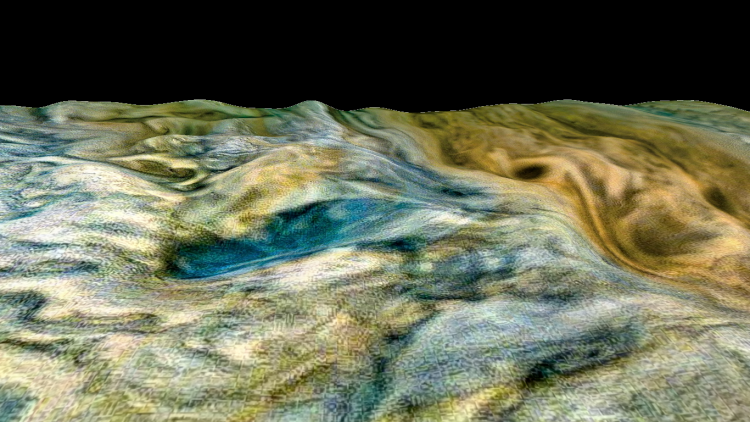
The dry and mountainous terrain west of Jezero Crater

The dry and mountainous terrain west of Jezero Crater
Click for original image.

Since my earlier update today about Perseverance and Ingenuity mentioned the very diverse and strange geology known to exist west of Jezero Crater and where the rover is eventually headed, I thought it worthwhile to post another cool image of that terrain.

The picture to the right, rotated, cropped, reduced and sharpened to post here, was taken on May 22, 2023 by the high resolution camera on Mars Reconnaissance Orbiter (MRO). Labeled a “terrain sample” image, the location was likely chosen by the camera team in order to fill a gap in the camera’s schedule so that they can maintain its proper temperature. Having a gap that put the spacecraft over this region to the west of Jezero was however a great opportunity to get another look at this rocky, mountainous, and very parched terrain, located in Mars’ very dry equatorial regions.
» Read more

0 comments

A grateful thank you to all who contributed during July’s fund-raising campaign

My annual July fund-raising campaign for Behind the Black, celebrating the thirteenth anniversary of my first posts back in 2010, has now ended.

This was the second most successful monthly fund-raising campaign ever. Thank you again to everyone who has who donated or subscribed. I would like to email thanks to you all, but there are too many. Please accept this general thank you instead. It is difficult to explain what your support means to me, as it has raised the earnings so far this year to almost match last year’s numbers.

This thank you notice will remain at the top of the page for the next few days. Scroll down for new stories.

From the original post:
——————————
I sincerely dislike begging for donations and subscriptions, which is why I shortened my February campaign from its normal four weeks to only two. I wanted to spare both my readers and myself some of this pleading.

Sadly, that decision resulted in a total drop in donations, so that at this point in 2023 the website’s income is down 25% from last year, even though my traffic continues to be robust, in the range of four to five million hits per month. I am therefore forced to run this July campaign for the full four weeks, unless the donations and new subscriptions in the next few weeks make up this difference.

Please consider supporting my work, by using one of four methods (Zelle, Patreon, Paypal, or check) described in the tip jar elsewhere on this page. I take no advertisements nor accept any sponsors in order to keep the website clean, easy to read, and to avoid any accusations of conflict of interest. Your support leaves me entirely independent, able to say whatever I think while being free from censorship or reprisals.

21 comments

Perseverance snaps new close-up of Ingenuity

Overview map
Click for interactive map.

Ingenuity as seen by Perseverance on August 2, 2023
Ingenuity as seen by Perseverance on August 2, 2023.
Click for original image.

Cool image time! With Perseverance and Ingenuity in the past week getting close together for the first time in months, the Perseverance team naturally turned its high resolution mast cameras at the helicopter. The picture to the right, cropped, reduced, and sharpened to post here, was taken on August 2, 2023 by the rover’s left mast camera, showing Ingenuity only about two hundred feet away.

The blue dot on the overview map above shows Perseverance’s present location, with the green dot marking Ingenuity’s. The picture to the right is therefore looking almost due south. The red dotted line indicates the rover’s planned route, moving towards Neretva Vallis, the gap in the rim of Jezero Crater from which the delta had flowed, eons ago. The rover’s goal is to eventually enter that gap and explore the very diverse and strange geology known to exist outside the crater to the west.

We should also expect even better images of Ingenuity in the next week. Its 54th flight is scheduled for today, in which the engineering team wants to send the helicopter on a simple straight up and down hop of sixteen feet in order to better “localize” the helicopter. With Perseverance less than two hundred feet away, its cameras should be able to assemble a great movie of that flight.

1 comment

New software detects its first potentially dangerous asteroid

New software designed to detect asteroids, developed for use with the Rubin Observatory presently being built in Chile, has successfully discovered its first potentially hazardous asteroid (PHA) using data from another smaller operational ground-based telescope.

The discovered asteroid is 600 feet long, large enough to pose a real threat should it ever hit the Earth. Fortunately, the data says that though its orbit can take it as close as 140,000 miles there is no impact likely in the foreseeable future.

When the Rubin telescope begins its planned ten year survey of the entire night sky in 2025, this software is expected to almost triple the number of known potentially-hazardous-asteroids, from 2,350 to almost 6,000.

Funded primarily by the U.S. National Science Foundation and the U.S. Department of Energy, Rubin’s observations will dramatically increase the discovery rate of PHAs. Rubin will scan the sky unprecedentedly quickly with its 8.4-meter mirror and massive 3,200-megapixel camera, visiting spots on the sky twice per night rather than the four times needed by present telescopes. But with this novel observing “cadence,” researchers need a new type of discovery algorithm to reliably spot space rocks.

Thus, the development of this new software.

3 comments
1 526 527 528 529 530 2,928