
SpaceX about to break ground on launchpad and hanger for Falcon Heavy
SpaceX is about to break ground on launchpad and hanger for Falcon Heavy.
SpaceX is about to break ground on launchpad and hanger for Falcon Heavy.
On Monday China successfully launched its second data relay satellite, expanding its space communications network in preparation for before its first unmanned rendezvous and docking attempt later this year.
James McLane points out that the shuttle shape is not the only way to build a spaceship.
In an email to me Jim noted that he “is still trying to save NASA.” My response to him was that trying to save NASA right now is more hopeless than Don Quixote chasing a windmill. However, the engineering ideas he outlines in his essay are just the kind of innovative thinking required by the new private companies. And the more ideas the merrier!
The shuttle mission has been extended one day.
An evening pause:
The real future: “We’re building spacecraft, not bizjets.”
The space shuttle docks with ISS, for the last time.
After a very short hold at 31 seconds, the space shuttle Atlantis has launched and reached orbit without any obvious hitches.
The highest water level in a decade is expected at Lake Powell by August.
Lake Powell’s rising water level is a result of the long and wet winter this year. An above-average snowpack, with late snows and unseasonably cold weather has lead to a slower melt than usual. As of May, the snowpack that feeds Lake Powell was 30 percent higher than average, with only 50 percent of the accumulated snowpack melted. [emphasis mine]
I thought Al Gore told us this wasn’t going to happen anymore.
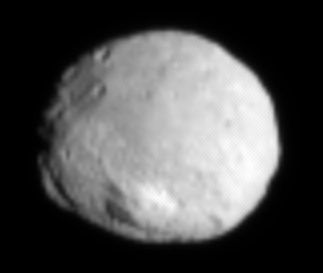
Dawn continues to approach the large asteroid Vesta. Below is an image taken July 1st from about 62,000 miles. The image has a resolution of 5.8 miles per pixel.
Despite Vesta’s large size, 330 miles in diameter, it is nonspherical. This fact, combined with data that says it is differentiated with a core and mantle, suggests that it is the remains of a larger object that subsequently broke up.
The transition to private space: Sierra Nevada hires former NASA engineers and astronauts.