Russia to launch commercial space station by 2016
A Russian company says it plans to launch its own commercial space station by 2016.
A Russian company says it plans to launch its own commercial space station by 2016.
New world speed record — 96.5 miles per hour — for lawnmowers.
NASA climate scientist James Hansen was arrested yesterday in a Washington, D.C. protest against mountaintop mining.
Richard Branson of Virgin Galactic said today that his company is on schedule to begin flying the first tourist flights in eighteen months.
New details about the Chilean miner rescue.
After a 24 hour delay due to an undocking problem, the Soyuz capsule with its three astronauts landed safely last night without a hitch.
The scheduled return of three astronauts on a Soyuz spacecraft has been delayed tonight because of a malfunction in the docking port.
Update: The return to Earth has definitely been canceled for tonight. The problem was caused when latches on the Soyuz, designed to secure it safely to ISS, refused to release on command. As of 12:43 am the plan was to recycle and try to land on Friday evening.
Who says space exploration is dead? Sometime in November researchers will conduct the first zero gravity tests of the world’s first beer to be certified for drinking in space. The tests will take place during suborbital flights of what is commonly known as the Vomit Comet. Key quote:
Sampling the beer during weightless parabolas, the flight researcher will record both qualitative data on beverage taste and drinkability and biometric data on body temperature, heart rate, and blood alcohol content.
Check out the first do-it-yourself satellite. It is 60 cubic inches in size and cost only $500 to build.
SpaceX has delayed the second Falcon 9 test launch, which includes the first test of the Dragon capsule, until November 8, at the soonest.
Who da thunk it? Internal combustion engine wins fuel efficiency contest, beating out both hybrids and electric cars.
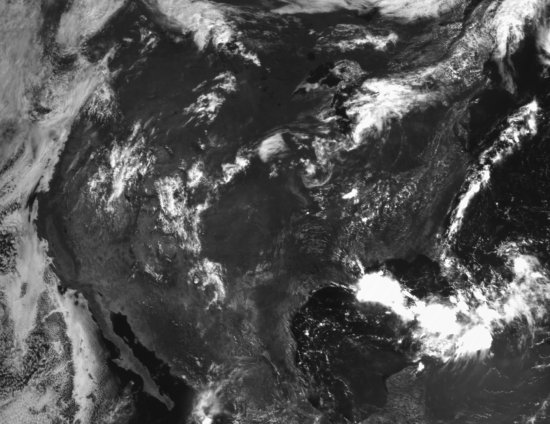
On August 9, 2010 the camera on Lunar Reconnaissance Orbiter took some routine calibration images and captured the Earth from lunar orbit, showing the western hemisphere with relatively little cloud cover. The picture below is a tiny piece from that global image, cropped to show the United States. The details are pretty remarkable, considering the distance. You can explore the full global image in detail here.