Tag: history
EAA – Warbird From Scratch: A Homebuilt Spitfire
$2 bill that Gene Cernan carried on three missions sells for more than $90K
The $2 bill that astronaut Gene Cernan carried on all three of his space missions in 60s and 70s has now sold at auction for $91,519.
Signed and flight-certified by Cernan, the bill is encapsulated and graded by Paper Money Guaranty (PMG) as Choice Fine 15. The holder notes its provenance as having been flown aboard Gemini 9A (1966), Apollo 10 (1969), and Apollo 17 (1972), and traces its origin to Cernan’s personal collection.
A signed letter of provenance from Cernan states that the bill was originally owned by his father and later carried by the astronaut on each of his spaceflights. The letter documents its presence during low Earth orbit on Gemini 9A, lunar orbit on Apollo 10, and on the lunar surface during Apollo 17.
This auction was space-focused and realized a total of $1,764,603. It included items from a number of other Gemini and Apollo missions, including an American flag that astronaut Dave Scott flew on Gemini 8, the mission that achieved the first docking in space but then had to due an emergency splashdown because a thruster began firing uncontrollably. It sold for $47,406.
Hat tip reader Wayne DeVette.
The $2 bill that astronaut Gene Cernan carried on all three of his space missions in 60s and 70s has now sold at auction for $91,519.
Signed and flight-certified by Cernan, the bill is encapsulated and graded by Paper Money Guaranty (PMG) as Choice Fine 15. The holder notes its provenance as having been flown aboard Gemini 9A (1966), Apollo 10 (1969), and Apollo 17 (1972), and traces its origin to Cernan’s personal collection.
A signed letter of provenance from Cernan states that the bill was originally owned by his father and later carried by the astronaut on each of his spaceflights. The letter documents its presence during low Earth orbit on Gemini 9A, lunar orbit on Apollo 10, and on the lunar surface during Apollo 17.
This auction was space-focused and realized a total of $1,764,603. It included items from a number of other Gemini and Apollo missions, including an American flag that astronaut Dave Scott flew on Gemini 8, the mission that achieved the first docking in space but then had to due an emergency splashdown because a thruster began firing uncontrollably. It sold for $47,406.
Hat tip reader Wayne DeVette.
Who really was Jay Gould?
To get to the point, right at the start, Jay Gould was not a “Robber Baron”, nor was he the worst “Robber Baron,” as many journalists of his time as well as many historians in the next century liked to slander him, implying he was unethical, cruel, and routinely used under-handed tactics to destroy others while making himself wealthy. In fact, he was no more a robber baron then the entire class of hard-nosed businessmen who in the 1800s became America’s first generation of today’s billionaires, using the free enterprise system to gather wealth to themselves while building vast industries that employed millions and made the lives of everyone better and more prosperous.
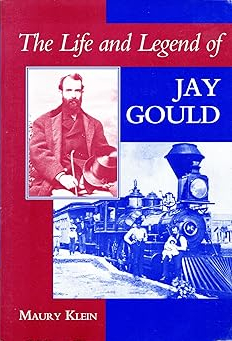
I have just finished reading Maury Klein’s 1997 fine biography of Jay Gould, the Life and Legend of Jay Gould, and was not surprised to learn that Gould was never the evil personification of worst sort of capitalist, as routinely portrayed by our leftist academia for the past century. Instead, I discovered he was no different then all the other leading businessmen of his time, hard-nosed and ruthless when it came to cutting deals, but strongly committed to making the businesses he ran profitable and successful, providing the public a useful product they would be eager to use.
You see, in a free capitalist society, you can’t succeed unless you are willing to be ruthless at times. This doesn’t necessarily mean you routinely use violence, or break the law, or go out of your way to hurt others, but it does mean you defend yourself from attack, and retaliate quickly using legal means when under attack. These rules apply today as they did in Gould’s time. Nothing has changed.
Gould was no different than Cornelius Vanderbilt (whose life I reviewed here). Nor does he differ from John D. Rockefeller, or Elon Musk, or Jeff Bezos, or any one of the thousands and thousands of American businessmen, who from the founding of this country used its free but legal framework to build a nation while enriching themselves.
Gould’s most famous area of success involved his ownership of many railroads, both in the American west as well as the first elevated subways in New York City. He also gained full control over Western Union, and for more than a decade ran a system that provided the entire country and even the world its first instantaneous method of communications. To gain control over these venues involved many battles, some of which required tactics that were harsh, even a bit under-handed, and clever. Sometimes it required payoffs to politicians, or tricky stock deals that once completed left many others sinking in the wake.
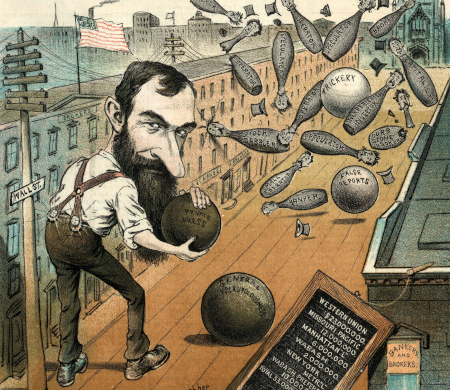
A typical anti-Gould newspaper cartoon from 1882
Gould’s tactics however were never much different than those of others of his ilk. And like those others, his overall good management of his companies he controlled, as well as the good treatment of the people who worked under him, garnered strong loyalty and support across these industries. Gould wanted control, but always when he had it he used it to make his product better and more useful.
When he died, it was the people who knew him who had good things to say about him, and it was the journalists who did not who continued to spread the slanders, because it made good copy and sold newspapers. And sadly, for the decades that followed, historians used those news reports — mostly wrong — as their primary sources of information, and thus the legend of an evil Gould was created.
Klein’s biography is a worthy effort to counter this bad history. More Americans should read it, if only to realize their past history was far more admirable than what they have been taught for the past few generations.
Gould’s tactics — and his success — were things he learned very earlier on in life, when he went out on his own.
» Read more

Lorne Greene – Describes working on Bonanza
Emma Kok & Matheu Hinzen – You’re The One that I Want
An evening pause: Performed live c2025. From the musical Grease.
Hat tip Judd Clark, who notes that this performance is “Quite different than from the last time you showed Emma Kok,” when she was only fifteen.
A military pilot’s perspective on downed pilot rescue in Iran Easter weekend
An evening pause: The details of the amazing search & rescue effort to recover a downed American pilot in Iran last weekend has been covered quite thoroughly in the media, especially the alternative press. This video gives us the compelling perspective of the men and women who made that rescue happen. Even if you oppose Trump’s present actions against Iran, Steeve’s reveals a fundamental aspect of the American way of war that illustrates again the best part of America. The key quote, “Will you be worth the trip?”
Hat tip Mike Nelson.
America’s first foreign war on “the shores of Tripoli” has apparently never ended
I have just finished two books that very nicely recount America’s first foreign war in the first decade of the 1800s, following its independence from Great Britain. The war was President Thomas Jefferson’s effort to stop the piracy of American ships by the three Islamic nations on the north coast of Africa — Algeria, Tunis, and Tripoli (now in Libya) — then called the Barbary coast.
These Arab nations had for decades made it policy to hold all Mediterranean shipping hostage, demanding tribute from everyone or else they would attack ships, steal their goods, and either enslave their crew and passengers or hold them for ransom. The European nations paid, endlessly, rather than fight. The U.S. initially paid, but by 1800 and the election of Jefferson as president, it was tired of paying — especially because the payments were never enough to stop the raiding, nor were they enough to free those already captured and enslaved. When the ruler of Tripoli declared war against the U.S., Jefferson was glad to oblige.
The war that followed was the first in which American troops fought on foreign soil and planted the American flag in victory. It was also the first in which joint operations by American naval and land forces led to that victory. And finally, it was the first battle for the U.S. Marines, thus establishing firmly that branch of the military.
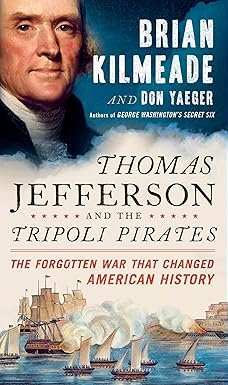
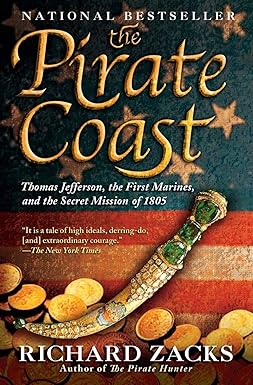
The two books to the right tell this story most effectively, but in very different ways.
First there is The Pirate Coast: Thomas Jefferson, the first Marines, and the secret mission of 1805 by Richard Zacks. Published in 2005, it is a very rich and well-researched work, while being remarkably readable because it tells the story from the point of view of the individuals involved. There is much triumph and tragedy in this story, and Zacks captures both.
Then we have Thomas Jefferson and the Tripoli Pirates, written by Brian Kilmeade and Don Yaeger and published ten years later in 2015. Unlike Zacks’ book, it does not delve as deeply into the lives of the many players, Instead, it is a fast-reading short but very thorough overview of this war.
Both books are worth reading, though The Pirate Coast is the better history. I strongly recommend you read both, however, beginning with the Kilmeade/Yaeger book.
» Read more
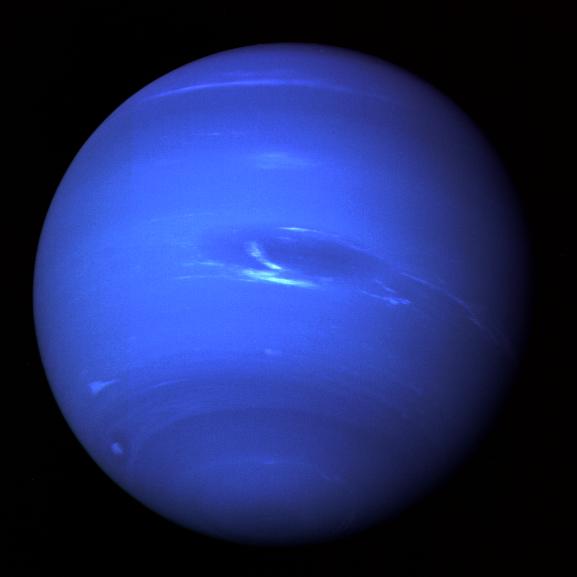
Neptune as seen by Voyager-2 in 1989, four days before closest approach
Cool image time! In two earlier posts I highlighted the pictures taken by Voyager-2 of Neptune’s two largest moons, Triton and Proteus, when it made its close fly-by of Neptune in 1989. Other than a very distant low resolution picture of 105-mile-wide Nereid, Voyager-2 took no other good images of Neptune’s other known moons.
So today, let’s begin a tour of some of Voyager-2’s imagery of Neptune itself. The picture to the right, reduced slightly to post here, was taken on August 20, 1989 as the spacecraft was beginning its approach to Neptune. It shows the full daylight hemisphere of the gas giant. From the caption:
The images were taken at a range of 4.4 million miles from the planet, 4 days and 20 hours before closest approach. The picture shows the Great Dark Spot and its companion bright smudge; on the west limb the fast moving bright feature called Scooter and the little dark spot are visible. These clouds were seen to persist for as long as Voyager’s cameras could resolve them. North of these, a bright cloud band similar to the south polar streak may be seen.
Next week I will post some of the other good shots taken of Neptune, as well as one or two close-ups of Triton that need highlighting. Sadly, at that point we will have more or less reviewed most of the best data now available of this distant world. Astronomers have used the Hubble Space Telescope in subsequent years to attempt to track its weather patterns, but even Hubble really can’t provide enough resolution to really make that research substantive.
But stay tuned. The Voyager-2 images to come are worth viewing.
Cool image time! In two earlier posts I highlighted the pictures taken by Voyager-2 of Neptune’s two largest moons, Triton and Proteus, when it made its close fly-by of Neptune in 1989. Other than a very distant low resolution picture of 105-mile-wide Nereid, Voyager-2 took no other good images of Neptune’s other known moons.
So today, let’s begin a tour of some of Voyager-2’s imagery of Neptune itself. The picture to the right, reduced slightly to post here, was taken on August 20, 1989 as the spacecraft was beginning its approach to Neptune. It shows the full daylight hemisphere of the gas giant. From the caption:
The images were taken at a range of 4.4 million miles from the planet, 4 days and 20 hours before closest approach. The picture shows the Great Dark Spot and its companion bright smudge; on the west limb the fast moving bright feature called Scooter and the little dark spot are visible. These clouds were seen to persist for as long as Voyager’s cameras could resolve them. North of these, a bright cloud band similar to the south polar streak may be seen.
Next week I will post some of the other good shots taken of Neptune, as well as one or two close-ups of Triton that need highlighting. Sadly, at that point we will have more or less reviewed most of the best data now available of this distant world. Astronomers have used the Hubble Space Telescope in subsequent years to attempt to track its weather patterns, but even Hubble really can’t provide enough resolution to really make that research substantive.
But stay tuned. The Voyager-2 images to come are worth viewing.
The battle of Gettysburg as seen by those who lived it
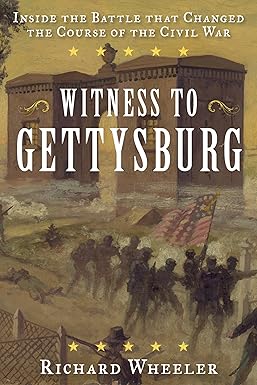
I just finished one of the best histories I have ever read, and want to recommend enthusiastically to my readers. It is called Witness to Gettysburg, and was written by Richard Wheeler. My version was the 1987 edition, but a new edition was published in 2021.
Why was it so good? To understand this we need to look at the nature of the material historians use to construct their work. Some of this source material is more important than others. In the case of Wheeler’s book, he used the best material in the most vivid way possible, and put aside other materials that could have distracted from the story.
In writing my own histories of space exploration in the 20th century, I quickly learned there were two types of sources I needed to depend on. First there are what historians call original or primary sources. These are the testimonies of the actual participants, the individuals who actually did the deed and thus knew better than anyone what really happened. In the case of space, astronauts, their families, and the engineers and managers of NASA at the time made up this group.
Primary sources can also include others who were not actually participants but lived at the time and witnessed the events as they occurred. For example, news articles written by reporters as events unfolded fall into this group. So can the historian himself, if he or she was alive during those events. In the case of my own books, that made me this kind of primary source. I was alive when the space age began, and saw it unfold in real time, with my own eyes.
Any history that does not rely on these original sources, or gives them short shrift, should not be taken seriously.
Next come secondary sources, books and academic articles written after the fact by historians, economists, sociologists, or researchers from any number of academic fields. Such works are of great value for any historian, as they can give you a wider context and alternative interpretations of the long term consequences of what happened. They can also be invaluable for tracking down more original sources.
There is however a danger if you rely too much on these secondary sources. Often academics begin treating their analysis of events as more important than that of the primary sources, even though they weren’t there and only know of the events secondhand. When I got my masters degree in early colonial history in the 1990s I discovered this tendency to be a very big problem in academia. My history teachers wanted me to learn early colonial history from what past historians thought about it. I wanted to learn that history from the people who lived it. My teachers didn’t like that, and constantly challenged my conclusions because I was contradicting those other historians. I countered that I had read the original sources, and discovered those other historians were simply wrong.
In the end, I found I actually knew more about that history than my teachers, as they were seeped in arguing the analysis of their compatriots rather than studying the real data.
Now, back to Wheeler’s book, which focuses entirely on the battle of Gettysburg, from the moment Robert E. Lee began his invasion north to the end of the battle when he was retreating in defeat.
What made this book so good is Wheeler’s approach. To quote him in his introduction:
» Read more
Gregory Peck – Harper Lee while filming To Kill a Mockingbird
Continuing our tour of Uranus’ five biggest moons: Ariel
In preparing my cool image last week focused on the best Voyager-2 image of Uranus’ moon Miranda, I came to a realization that was somewhat startling. Voyager-2 is the only time a human spacecraft has gotten close to Uranus, and it was only close for a few days. Thus, the data and images it obtained of the gas giant and its moons is remarkable more sparse than I had ever realized.
You see, when these images were first released in 1986 they were exciting because they gave us that first look. Suddenly, a light was shined on something that had always been shrouded in darkness. It was a flood of data that needed processing.
It is now forty years later. No spacecraft has been there since, and thus we have gotten no more close-up information about Uranus or its moons. Data from Hubble and Webb has helped increase our knowledge of the planet itself, but of the moons nothing really new has been gleaned from this distance.

And so, to highlight how little we know, for the rest of this week I am going give my readers a tour of the few images Voyager-2 gave us of Uranus’ five biggest moons, the five that early astronomers had discovered prior to the space age and shown in the five pictures above, taken by Voyager-2 as it was approaching Uranus from a distance of about three million miles. They are, in order going from closest to farthest from Uranus, Miranda, Ariel, Umbriel, Titania and Oberon, with the images above designed to show their approximate relative sizes.
I already highlighted the strange, patchwork surface of Miranda last week, the smallest of these moons. Below is a mosaic made from the four highest resolution images of 720-mile-wide Ariel, the next out from Uranus, taken from a distance of about 80,000 miles.
» Read more
In preparing my cool image last week focused on the best Voyager-2 image of Uranus’ moon Miranda, I came to a realization that was somewhat startling. Voyager-2 is the only time a human spacecraft has gotten close to Uranus, and it was only close for a few days. Thus, the data and images it obtained of the gas giant and its moons is remarkable more sparse than I had ever realized.
You see, when these images were first released in 1986 they were exciting because they gave us that first look. Suddenly, a light was shined on something that had always been shrouded in darkness. It was a flood of data that needed processing.
It is now forty years later. No spacecraft has been there since, and thus we have gotten no more close-up information about Uranus or its moons. Data from Hubble and Webb has helped increase our knowledge of the planet itself, but of the moons nothing really new has been gleaned from this distance.

And so, to highlight how little we know, for the rest of this week I am going give my readers a tour of the few images Voyager-2 gave us of Uranus’ five biggest moons, the five that early astronomers had discovered prior to the space age and shown in the five pictures above, taken by Voyager-2 as it was approaching Uranus from a distance of about three million miles. They are, in order going from closest to farthest from Uranus, Miranda, Ariel, Umbriel, Titania and Oberon, with the images above designed to show their approximate relative sizes.
I already highlighted the strange, patchwork surface of Miranda last week, the smallest of these moons. Below is a mosaic made from the four highest resolution images of 720-mile-wide Ariel, the next out from Uranus, taken from a distance of about 80,000 miles.
» Read more
History of Everything – The Freshwater Paddle Carriers
Who fired “the shot heard round the world”?
In just a few months we will be celebrating the 250th anniversary of the signing of the Declaration of Independence. That signing occurred because a little over a year previously a troop of British soldiers went into the heart of Massachusetts to seize weapons and ammunition that the British government did not want Americans to possess, and ended up getting involved in a firefight with the local militia in the town of Lexington, what became known as “the shot heard round the world. That shot started the American Revolution, and eventually forced the members of the Continental Congress to declare their independence from that British government.
As with all history, though that firefight sparked vast changes in politics, history, and culture across the globe and across centuries, the event itself was the act of just one or a few individuals, in a specific moment and place, under very specific circumstances created by those greater movements of politics, history, and culture.
One man fired the gun. A few others fired back. And then a war started.
But who was that man?
In one of the best histories I have ever read, historian David Hackett Fischer attempts to answer this question. His 1994 book, Paul Revere’s Ride, centers the story on Paul Revere and that man’s actions to warn the citizens throughout Concord and Lexington of the British invasion, so that they could be prepared to fight, if necessary.
» Read more
WFAA – The mystery of the stolen de Kooning painting worth $165M
An evening pause: There are some mysteries that will always remain unsolved. And this one is one of the strangest.
Hat tip Cotour.
The American Revolution, as seen from across the Atlantic
As this year is the 250th anniversary of the signing of the Declaration of Independence, it seems fitting to review a history about the Revolutionary War. In fact, I intend to do a few more such reviews in the coming months.
Let’s start however with a book that looks at that Revolution from a very different perspective.
Historian Barbara Tuchman is most well known for her early classic, The Guns of August, a book that was made famous when John Kennedy repeatedly referred to it during the Cuban missile crisis. Kennedy’s recommendation not only brought the book to the attention of the general public, it made Tuchman’s career. From that day forth, her work has always been received with accolades and enthusiasm and uncritical respect.
I am here however to break that bubble, though only partly. I just finished reading The First Salute, Tuchman’s 1988 history of the Revolutionary War. Rather than tell the tale from the point of view of the Americans, as done by most historians, Tuchman’s work looks at the war from the point of view of Europe, and thus gives us a much larger and very worthwhile context.
For this I compliment Tuchman highly. Though it is well known that the arrival of the French fleet off the coast of Virginia was crucial in forcing the British army to surrender to Washington at Yorktown, the background behind that arrival has generally been given short shrift by historians. Tuchman does not, describing in detail the political maneuvering necessary between the American envoys in France and France’s government to make that fleet happen. She also describes the attitudes of the Dutch and Spain to the war, and how and why they eventually moved to support America, even though there were many reasons for them to stay out.
Her book also gives us the British perspective, revealing the amazing and continuous failures of its government and generals to wage the war with any enthusiasm or skill. It appears almost from the start that the British had no great desire to win, and that malaise and overconfidence more than anything resulted in their eventual defeat.
For example, the British never took Washington or his army seriously. » Read more
MIT – Quicker than a Wink
An evening pause: This 1940 short film won an Academy Award for best one-reel short. It provides a nice and witty demonstration of the first technology that allowed very high speed slow motion movies to be made.
Hat tip Wayne DeVette.
Family Tree Nuts – Annie Moore, Ellis Island’s first immigrant
Early notes of Galileo discovered in margins of Ptolemy’s most famous book
A researcher reviewing the text of a 16th century printing of Claudius Ptolemy’s most famous book, The Almagest (in which he outlined his theory that the Earth stood at the center of the universe), was astonished this January to discover previously unidentified notes in the handwriting of Galileo in the book’s margins.
As [historian Ivan Malara flipped through the pages, he spotted something out of place. Someone had transcribed Psalm 145 on an otherwise blank page—in handwriting reminiscent of a very, very famous Tuscan astronomer.
That book, Malara came to realize, had been extensively annotated by none other than Galileo Galilei. Malara’s discovery, described in a paper now under review at the Journal for the History of Astronomy, promises new insights into one of the most famous ideological transitions in the history of science: the moment when Earth was thrust from the center of our universe.
The article at the link tries to makes the absurd and false claim that “many historians’ typical portrayal of Galileo as being motivated by philosophy or even political savvy, not careful math. ‘He has been presented as a big-picture sort of guy—not interested in the nitty-gritty technical details of astronomy,’ says James Evans, a historian of astronomy at the University of Puget Sound.” The article does this to suggest these newly discovered notes will profoundly change that interpretation.
That interpretation is wrong however. Anyone who has read any histories or biographies of Galileo (as I have) knows this portrayal is false. It is very clear from all his work that Galileo was very evidence-based, focused on the data and facts — the nitty-gritty technical details — to determine the larger picture. And these newly discovered notes confirm this:
Galileo’s notes, perhaps written around 1590, or roughly 2 decades before his groundbreaking telescope observations of the Moon and Jupiter, reveal someone who both revered and critically dissected Ptolemy’s work. And they imply, Malara argues, that Galileo ultimately broke with Ptolemy’s cosmos because his mastery of the traditional paradigm’s reasoning convinced him that a heliocentric system would better fulfill Ptolemy’s own mathematical logic.
Fascinating stuff. I can’t wait to read the final paper.
A researcher reviewing the text of a 16th century printing of Claudius Ptolemy’s most famous book, The Almagest (in which he outlined his theory that the Earth stood at the center of the universe), was astonished this January to discover previously unidentified notes in the handwriting of Galileo in the book’s margins.
As [historian Ivan Malara flipped through the pages, he spotted something out of place. Someone had transcribed Psalm 145 on an otherwise blank page—in handwriting reminiscent of a very, very famous Tuscan astronomer.
That book, Malara came to realize, had been extensively annotated by none other than Galileo Galilei. Malara’s discovery, described in a paper now under review at the Journal for the History of Astronomy, promises new insights into one of the most famous ideological transitions in the history of science: the moment when Earth was thrust from the center of our universe.
The article at the link tries to makes the absurd and false claim that “many historians’ typical portrayal of Galileo as being motivated by philosophy or even political savvy, not careful math. ‘He has been presented as a big-picture sort of guy—not interested in the nitty-gritty technical details of astronomy,’ says James Evans, a historian of astronomy at the University of Puget Sound.” The article does this to suggest these newly discovered notes will profoundly change that interpretation.
That interpretation is wrong however. Anyone who has read any histories or biographies of Galileo (as I have) knows this portrayal is false. It is very clear from all his work that Galileo was very evidence-based, focused on the data and facts — the nitty-gritty technical details — to determine the larger picture. And these newly discovered notes confirm this:
Galileo’s notes, perhaps written around 1590, or roughly 2 decades before his groundbreaking telescope observations of the Moon and Jupiter, reveal someone who both revered and critically dissected Ptolemy’s work. And they imply, Malara argues, that Galileo ultimately broke with Ptolemy’s cosmos because his mastery of the traditional paradigm’s reasoning convinced him that a heliocentric system would better fulfill Ptolemy’s own mathematical logic.
Fascinating stuff. I can’t wait to read the final paper.
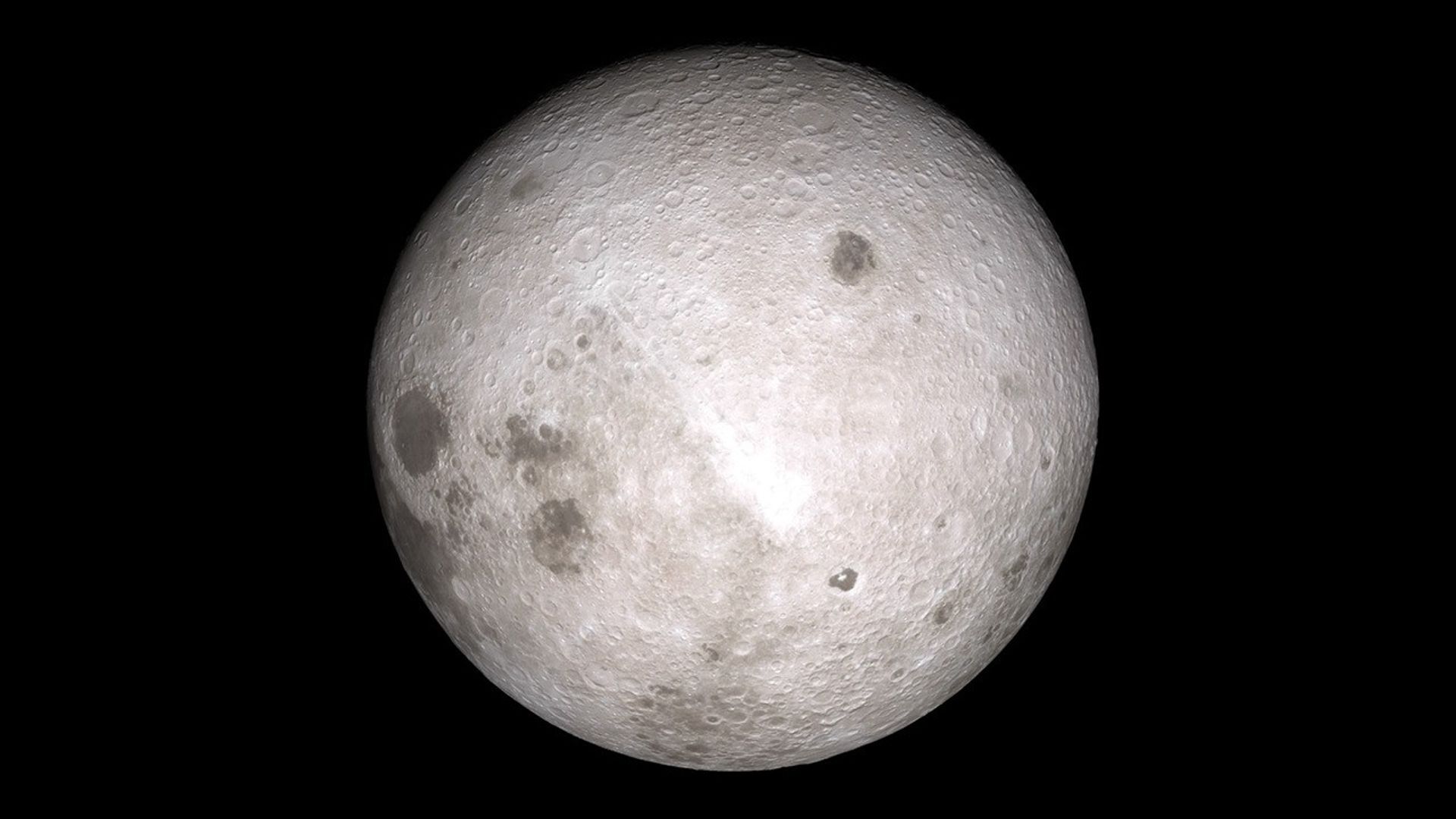
New analysis suggests Moon’s magnetic field shifted multiple times from weak to strong to weak
The uncertainty of science: A new analysis of Apollo lunar samples suggests that the Moon’s magnetic field actually shifted back and forth from strong to weak, with it being weak most of the time.
The problem scientists have had since the Apollo missions is that the Apollo samples, which all came from the relatively flat mare regions, tended to exhibit evidence of a strong past magnetic field, even though the Moon’s size and make-up suggested its field should have always been weak. This new research offers a solution:
The research team analysed the chemical makeup of a type of lunar rock – known as the Mare basalts – and found a new correlation between their titanium content and how strongly magnetised they are. Every lunar sample which had recorded a strong magnetic field also contained large amounts of titanium – and the samples containing less than 6 wt.% titanium were all associated with a weak magnetic field.
This suggests that the formation of high-titanium rocks and the generation of a strong lunar magnetic field are linked. The researchers believe that both were caused by melting of titanium-rich material deep inside the Moon, temporarily generating a very strong magnetic field.
Because the Mare basalts were an ideal landing site for the Apollo missions, due to being relatively flat, the astronauts brought back far more of the titanium-rich basalts (containing evidence for a strong magnetic field) than are representative of the lunar surface. As a result, large numbers of these rocks have been analysed by scientists back on Earth, and this was previously interpreted to mean that the lunar magnetic field was strong for long periods of its history.
Instead, the limited number of samples, all from the same regions, biased the conclusions. The scientists predict that future missions to more places on the Moon will confirm their findings.
The uncertainty of science: A new analysis of Apollo lunar samples suggests that the Moon’s magnetic field actually shifted back and forth from strong to weak, with it being weak most of the time.
The problem scientists have had since the Apollo missions is that the Apollo samples, which all came from the relatively flat mare regions, tended to exhibit evidence of a strong past magnetic field, even though the Moon’s size and make-up suggested its field should have always been weak. This new research offers a solution:
The research team analysed the chemical makeup of a type of lunar rock – known as the Mare basalts – and found a new correlation between their titanium content and how strongly magnetised they are. Every lunar sample which had recorded a strong magnetic field also contained large amounts of titanium – and the samples containing less than 6 wt.% titanium were all associated with a weak magnetic field.
This suggests that the formation of high-titanium rocks and the generation of a strong lunar magnetic field are linked. The researchers believe that both were caused by melting of titanium-rich material deep inside the Moon, temporarily generating a very strong magnetic field.
Because the Mare basalts were an ideal landing site for the Apollo missions, due to being relatively flat, the astronauts brought back far more of the titanium-rich basalts (containing evidence for a strong magnetic field) than are representative of the lunar surface. As a result, large numbers of these rocks have been analysed by scientists back on Earth, and this was previously interpreted to mean that the lunar magnetic field was strong for long periods of its history.
Instead, the limited number of samples, all from the same regions, biased the conclusions. The scientists predict that future missions to more places on the Moon will confirm their findings.
Abraham Lincoln – a tragic and heroic life
An evening pause: To celebrate the birthday today one of America’s greatest man, a short biography.
The video below does a really fine job in a very short time. Lincoln’s life was filled with heart-breaking tragedy, far more than most Americans today realize. Yet the man endured, so that he ended up changing his nation so that it finally honored fully its founding documents. As he said so eloquently in 1863:
It is for us the living, rather, to be dedicated here to the unfinished work which they who fought here have thus far so nobly advanced. It is rather for us to be here dedicated to the great task remaining before us – that from these honored dead we take increased devotion to that cause for which they gave the last full measure of devotion – that we here highly resolve that these dead shall not have died in vain – that this nation, under God, shall have a new birth of freedom – and that government of the people, by the people, for the people, shall not perish from the earth.
Tom Goes Nomad – How Victorians Built This Lighthouse at Sea
An evening pause: Built fast and cheaply, despite real cutting edge engineering challenges, at the turn of the 19th century.
Hat tip Cotour.
What life was really like in the American wild west
Though I read a lot of good, detailed, and well-researched histories, I repeatedly find that if I really want to get a sense of the reality of times past, it is necessary to read something that was written by a person who lived at the time, and was an actual witness to great events.
When you do this you instantly cut through the political narratives that color all histories, whether sincere or not. Historians writing generations later bring their own viewpoint to the subject, colored by subsequent history shaped by what the original players did. So, to really understand those original players fairly, you really need to hear their side of the story, from their own lips.
Thus, I was thrilled recently when I came across a used copy of Vanished Arizona: Recollections of the Army life of a New England Woman by Martha Summerhayes. The book covers her memories from 1870 to 1900 as the wife of Jack Summerhayes, an officer in the American military stationed in the western United States, with the bulk of the story centered in Arizona.
This is an amazingly readable book. More important, it tells this story of army life from the perspective of the women who lived it. Most histories cover the battles and important events that Summerhayes’s husband Jack participated in, from defeating the Apaches and Geronimo to establishing the first settlements in early Arizona. Martha Summerhayes instead tells the story from her perspective as a woman living in an isolated fort in the hot desert wilderness of Arizona. The story is riveting, and revealing as well.
In reading her work now, 150 years later during the first half of the 21st century, I noted two important things.
» Read more
FAKE Chandrayaan-2 images of the Apollo 11 and 12 landing sites
The pictures to the right are fake, as are the two stories I had linked to in the now crossed-out post below. Both stories included pictures of the Apollo 11 and Apollo 12 landing sites that were fake and did not match the actual pictures taken earlier by Lunar Reconnaissance Orbiter.
I seem to remember that Chandrayaan-2 had taken pictures of these Apollo landing sites, but I have not been able to find those originals. Either way, the stories below as well as the pictures to the right are fake, and for that reason I have deleted the links to both.
For reasons I don’t understand, two different news outlets in the past two days decided to highlight the 2021 images taken by India’s Chandrayaan-2 lunar orbiter of the Apollo 11 and 12 landing sites, with both outlets claiming these pictures provided third-party verification that those manned lunar landings actually happened.
Those pictures are to the right. They aren’t new, but they are so good I decided they were cool enough to post again.
As for proving the lunar landing happened, that is pure anti-American silliness, sadly too often pushed by ignorant Americans. They should be ashamed. The Apollo landings were possibly the greatest single achievement Americans have ever accomplished. And if not the greatest, the landings rank near the top, and above all they certainly were among our noblest achievement.
The pictures to the right are fake, as are the two stories I had linked to in the now crossed-out post below. Both stories included pictures of the Apollo 11 and Apollo 12 landing sites that were fake and did not match the actual pictures taken earlier by Lunar Reconnaissance Orbiter.
I seem to remember that Chandrayaan-2 had taken pictures of these Apollo landing sites, but I have not been able to find those originals. Either way, the stories below as well as the pictures to the right are fake, and for that reason I have deleted the links to both.
For reasons I don’t understand, two different news outlets in the past two days decided to highlight the 2021 images taken by India’s Chandrayaan-2 lunar orbiter of the Apollo 11 and 12 landing sites, with both outlets claiming these pictures provided third-party verification that those manned lunar landings actually happened.
Those pictures are to the right. They aren’t new, but they are so good I decided they were cool enough to post again.
As for proving the lunar landing happened, that is pure anti-American silliness, sadly too often pushed by ignorant Americans. They should be ashamed. The Apollo landings were possibly the greatest single achievement Americans have ever accomplished. And if not the greatest, the landings rank near the top, and above all they certainly were among our noblest achievement.
DW News – Mining the world’s most precious marble
Stephen Sondheim – Someone in a Tree
An evening pause: For my birthday, a repost of a 2010 evening pause of one of my favorite Broadway songs, from Stephen Sondheim’s Pacific Overtures, which I only recently learned was his favorite song as well.
It tells the story of a significant moment in history, the moment when Japan’s leaders signed their first international treaty in 1852 with the United States, but from the point of view of outside witnesses. Its point is profound, that history is not just made by the leaders who sign the deals, but by every individual who makes up the whole of human society.
It’s the fragment, not the day
It’s the pebble, not the stream
It’s the ripple, not the sea
That is happening.
Not the building but the beam
Not the garden but the stone
Only cups of tea
And history
And someone in a tree.
Uncovered Past – Traditional charcoal making
An evening pause: It always amazes me the level of engineering sophistication that one finds in all human endeavor, even from centuries past.
Hat tip Cotour.
Lawrence of Arabia: Truth is sometimes stranger than fiction
One of the 20th century’s greatest movies is David Lean’s 1962 epic Lawrence of Arabia. The story it tells — of the clash of cultures, of war, and of colonization — combined with the personal story of T.E. Lawrence during World War I, is one of high drama that is unforgettable to anyone who has ever seen it.
Yet, the events it tells seem too dramatic to be believed. Did Lawrence actually rescue a man in the desert, by himself and against the advice of his Arab allies who knew better? Did he actually later execute that man coldly to prevent a tribal war that would have destroyed the Arab revolt against the Ottoman Empire? Did he actually lead those Arab tribes across a deadly desert to take the town of Aqaba from the rear?
And did he actually lead that Arab revolt so successfully that it took Damascus ahead of the British, only to lose it because that medieval tribal culture knew nothing about modern technology?
For years I wondered about these questions and tried to find out. I read T.E. Lawrence’s own memoir of his time there, The Seven Pillars of Wisdom, and found it to be unclear and obscure, answering none of my questions. Other histories about World War I merely touched upon these events, treating them as a minor side show. And histories about the Middle East during that time seemed uninterested in telling this part of the story.
So, the questions remained: Did these events really happen? They seemed too good to be true.
I have now discovered that these stories are not only largely true, the reality of T.E. Lawrence’s life and his time in Arabia was even stranger than I could suppose. I learned this from Scott Anderson’s fine biography of Lawrence, Lawrence in Arabia: War, Deceit, Imperial Folly, and the Making of the Modern Middle East. Anderson not only unveiled Lawrence in all his inexplicable glory in this book, he made clear the complex political background that shaped the Middle East, and made it as we know it today.
» Read more
General Electric – Conquest of the Cascades
An evening pause: According to this website, this documentary was “made by General Electric between 1928 and 1929 to commemorate the completion of this monumental [8-mile-long] tunnel which took 1800 workers and three years to construct.”
Three years! Today that’s how long it would take just to get the environmental assessment written and approved.
Hat tip Blair Ivey.
An evening pause: According to this website, this documentary was “made by General Electric between 1928 and 1929 to commemorate the completion of this monumental [8-mile-long] tunnel which took 1800 workers and three years to construct.”
Three years! Today that’s how long it would take just to get the environmental assessment written and approved.
Hat tip Blair Ivey.