Rocket Lab gets a new 10-launch contract from Japanese satellite company

Rocket Lab yesterday signed a new 10-launch contract with the Japanese satellite company Synspective, with the launches scheduled for the 2025-2027 timeframe.

Rocket Lab has been Synspective’s sole launch provider since 2020, having already launched four of its satellites, with two other launches already under contract. Thus, the satellite company has bought sixteen total launches from Rocket Lab. Its constellation is designed to provide surface data in any weather condition, using radar.

2 comments

SpaceX and Rocket Lab complete successful launches

This evening both SpaceX and Rocket Lab completed launches only about an hour apart but on opposite sides of the world.

First, SpaceX this evening successfully launched another 20 Starlink satellites, its Falcon 9 rocket lifting off from Cape Canaveral.

The first stage completed its 20th flight, landing safely on a drone ship in the Atlantic.

Next, Rocket Lab completed the second to two launches for NASA, placing the second Prefire climate satellite into orbit, following the first launch on May 25, 2024. Its Electron rocket lifted off from Rocket Lab’s launchpad in New Zealand.

The leaders in the 2024 launch race:

59 SpaceX
26 China
8 Russia
7 Rocket Lab

American private enterprise now leads the world combined in successful launches, 68 to 40, while SpaceX by itself leads the entire world, including other American companies, 59 to 49.

5 comments

Engineers lose contact with Japan’s Akatsuki Venus orbiter

According to a terse announcement by Japan’s space agency JAXA on May 29, 2024, engineers from its Institute of Space and Astronautical Science (ISAS) have lost contact with Japan’s Akatsuki Venus orbiter.

ISAS has lost contact with Akatsuki after an operation in late April due to an extended period of low attitude stability control mode, and is currently making efforts to reestablish communication with the spacecraft.

Akatsuki has had a spotty and complex life. It was launched in 2010, but failed to enter Venus orbit as planned in two attempts in 2010 and 2011 because of a failure in its main engine. Engineers then improvised and — after orbiting the Sun for several years — were able to get it into Venus orbit in 2015 using only its attitude thrusters. Its primary mission ended in 2018, but it continued to study Venus’ atmosphere since.

Assuming Akatsuki is not recovered, as of now there are no operating orbiters at Venus. A mission by the private company Rocket Lab is expected to launch before the end of this year, followed by an orbiter from India in 2026. A NASA mission meanwhile is in limbo and will likely never fly, due to budget decisions at the agency, which took its funding and gave it to the troubled Mars Sample Return mission.

1 comment

Rocket Lab delays first launch of new Neutron rocket

Rocket Lab has delayed the first launch of its new larger Neutron rocket from late 2024 to mid-2025 in order to complete the testing of that rocket’s new methane-fueled Archimedes engine.

Many component, subsystem, and all-up system tests will be conducted throughout the test campaign. These tests will validate Archimedes’ transient start-up, steady-state, and shut down performance. The engine test and development campaign is a key driver of the schedule for Neutron’s first launch, which the Company today confirmed is now expected to take place no earlier than mid-2025.

That testing will also certify it for use in as many as twenty flights, as the Neutron rocket is being designed from the get-go to be reusable.

0 comments

SpaceX and Rocket Lab complete launches

Both SpaceX and Rocket Lab successfully completed launches today. First SpaceX launched another 23 Starlink satellites, its Falcon 9 rocket lifting off from Cape Canaveral. The first stage completed its ninth flight, landing on a drone ship in the Atlantic.

Shortly thereafter, Rocket Lab’s Electron rocket lifted off from one of its launchpads in New Zealand, placing two technology demonstration satellites in orbit, one testing a solar sail from NASA and the other from South Korea testing a cubesat doing optical observations of Earth. Though the first stage had the markings of a stage designed for resuse, there was no indication in the company’s live stream of any attempt to recover it.

The leaders in the 2024 launch race:

42 SpaceX
16 China
6 Russia
5 Rocket Lab

American private enterprise now leads the rest of the world combined in successful launches 49 to 28, while SpaceX by itself still leads the rest of the world, including other American companies, 42 to 35.

6 comments

Rocket Lab to refly a recovered first stage

Electron 1st stage floating in the water

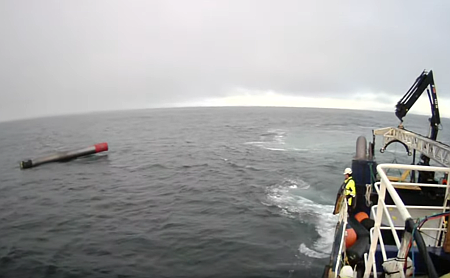
Rocket Lab today announced that a first stage used on a launch in January and recovered successfully from the ocean, as shown to the right, has now been moved into its normal production line for preparation for a reflight on an upcoming launch.

The stage was successfully launched and recovered as part of the ‘Four of a Kind’ mission on 31 January 2024 and has already passed more acceptance tests than any other recovered Electron stage, including:

  • Tank pressurization test – a process that filled the carbon composite tank with inert gas and held it in excess of maximum operating pressure for more than 20x longer than the standard Electron flight duration
  • Helium leak check – a stringent process that determines there are no leaks in the tank
  • Carbon fiber structural testing – including ultrasonic assessment and other non-destructive tests to confirm no delamination of the carbon composite tank fibers.

The stage will now undergo final fit out and rigorous qualification and acceptance testing to the same standard as a brand-new Electron tank to determine the recovered stage’s suitability for reflight.

No actual launch date has been set. The company first wants to complete its final testing. If successful and the stage flies again, Rocket Lab will join a very elite club, becoming only the second entity anywhere — after SpaceX capable of reusing a significant part of its rockets. That capability will allow it to drop prices, and better compete.

This success also underlines the lack of creativity from more than a half century of managers and rocket engineers, who repeatedly insisted such reuse was impractical, or impossible. The idea of recovering a stage from the ocean and reusing it was considered crazy, so no one ever tried it. Rocket Lab is about to prove more than a half century of managers and rocket engineers wrong.

Hat tip to BtB’s stringer Jay.

1 comment

Six launch companies give updates on the status of their rockets

Link here. The event was a panel at a conference where officials from SpaceX, ULA, Mitsubishi, Arianespace, Relativity, and Rocket Lab gave presentations.

Based on what is reported at the link, the Mitsubishi update was the most significant:

Mitsubishi Heavy Industries (MHI) successfully launched its H3 rocket Feb. 16 after the rocket’s inaugural launch failed nearly a year earlier, a setback that Iwao Igarashi, vice president and general manager at MHI, called a “nightmare.” “There were no major problems with the rocket” on its second flight, he said.

We will have to see. Though everything worked as planned on the second flight, the true test on whether Mitsubishi has overcome the issues from the first launch will be the rocket’s third launch, presently scheduled for sometime next year.

A Relativity official said their Terran-R rocket is still targeting a first launch in 2026, while Rocket Lab was hopeful that the first launch of its larger Neutron rocket would occur by the end of this year.

0 comments

Rocket Lab launches classified smallsat for National Reconnaissance Office

Rocket Lab in the early morning hours of March 21, 2024 successfully launched a classified payload for the National Reconnaissance Office, its Electron rocket lifting off from Wallops Island in Virgina.

For this launch Rocket Lab made no attempt to recover its first stage. As of posting the payloads had not yet been deployed.

A Chinese Long March 2D launch was also scheduled to occur just prior to the Rocket Lab launch, but as of posting there was no word on whether that launch had taken place.

The leaders in the 2024 space race:

27 SpaceX
11 China
4 Rocket Lab
3 Russia

American private enterprise presently leads the rest of the world combined in successful launches 32 to 20, while SpaceX leads the entire world, including American companies, 27 to 25.

2 comments

Rocket Lab launches radar satellite

Rocket Lab today successfully launched the fourth radar satellite for the commercial company Synspective, its Electron rocket lifting off from its spaceport in New Zealand.

On this flight Rocket Labt did not attempt to recover its first stage.

The leaders in the 2024 launch race:

24 SpaceX
10 China
3 Russia
3 Rocket Lab

American private enterprise now leads the rest of the world combined in successful launches 28 to 19. SpaceX by itself leads the rest of the world combined 24 to 23.

0 comments

Rocket Lab unveils a family of four different service modules for all kinds of satellites

Rocket Lab continues to expand its product line beyond just rockets, today unveiling a family of four different types of service modules, designed to provide maneuvering, communications, and power to satellites.

The four service modules, dubbed Photon, Lightning, Pioneer, and Explorer, are each designed to serve different types of satellites, from low orbit to geosynchronous. The company is also developing a larger rocket, Neutron, in addition to its Electron rocket.

Presently only Electron and Photon are operational, both having serviced multiple customers. Neutron is still scheduled for a first launch later this year, though a delay into 2025 is expected. It is not clear when Lightning, Pioneer, and Explorer will make their first flights.

0 comments

Rocket Lab successfully launches Japanese commercial space junk demo satellite

Rocket Lab today successfully launched a commercial test mission of commercial space junk removal satellite, dubbed ADRAS-J and built by the Japanese company Astroscale, in partner with Japan’s space agency JAXA. It is designed to demonstrate the ability to make a close rendezvous of a large piece of space junk and then photograph and inspect it closely to determing it precise condition to facilitate later removal efforts.

The leaders in the 2024 launch race:

15 SpaceX
8 China
2 Iran
2 Russia
2 Japan
2 India
2 Rocket Lab

A lot of launch entities grouped at 2. Expect Iran and Japan to fall away as Russia, India, and Rocket Lab continue to launch regularly this year, with Russia and Rocket Lab eventually outpacing India.

American private enterprise now leads the entire world combined in successful launches 18 to 16, with SpaceX still trailing the entire world combined (excluding American companies) 15 to 16.

2 comments

Rocket Lab begins maneuvers to bring Varda’s capsule back to Earth

With the FAA finally giving its okay (six months late), Rocket Lab has now begun the orbital maneuvers required to bring Varda’s small manufacturing capsule back to Earth at the Utah test range.

For more than eight months in space, Rocket Lab’s 300kg-class spacecraft has successfully provided power, communications, ground control, and attitude control to allow Varda’s capsule to grow Ritonavir crystals, a drug commonly used as an antiviral medication for HIV and hepatitis C.

Due to the initial planned reentry date being adjusted from late 2023, Rocket Lab’s spacecraft has been required to operate for more than double its intended orbital lifespan, which it has done without issue.

If all goes as planned, the capsule will land on February 21, 2024. Whether those drugs are still viable and sellable remains unknown. The delay due to government red-tape might have made them useless.

Nonetheless, a success in recovering those samples, viable or not, would establish Varda’s business plan. With three more missions planned, all to be launched and controlled by Rocket Lab, it will be positioned well for the future, its capsule a method for manufacturing a number of products in weightlessness that are needed on Earth but can only be made in space.

9 comments

Rocket Lab launches four commercial satellites

Electron 1st stage floating in the water

Rocket Lab today successuflly launched four satellites as part of a commercial constellation designed to track all objects in orbit, its Electron rocket lifting off from one of its two New Zealand launchpads.

The company also successfully recovered the first stage using a parachute system to slow it down for a soft splashdown in the Pacific where a ship picked it up. The image to the right is a screen capture shortly after the recovery ship reached the stage, which can be seen floating in the water on the left. As of posting the ship was in the process of pulling the stage from the water. Once completed, the stage will be returned to Rocket Lab’s rocket factory for refurbishment and tests to see if it can fly again.

The 2024 launch race:

10 SpaceX
6 China
2 Iran
1 India
1 ULA
1 Japan
1 Rocket Lab

0 comments

Military awards satellite contracts worth $2.5 billion to three companies

The Pentagon’s Space Development Agency (SDA) today announced the award of contracts to Sierra Space, Lockheed Martin, and L3Harris for the construction of 54 reconnaissance satellites, with a total value of $2.5 billion.

The 54 satellites will form part of the SDA’s Proliferated Warfighter Space Architecture, a massive missile detection and tracking constellation in low Earth orbit that’s being built and launched in “tranches.” The trio of contracts announced today is for 18 satellites each in the Tranche 2 Tracking Layer: L3Harris’s award is worth $919 million; Lockheed Martin, $890 million; and Sierra Space, $740 million.

Last week SDA had awarded Rocket Lab its own 18-satellite contract for this constellation, worth $515 million.

The contract awards signal several major changes in the Pentagon’s space strategy. First, it is farming the work out to multiple companies, two of which (Rocket Lab and Sierra Space) are new. In the past the military relied on a very limited number of companies, all well established, with most contracts going to only one vender. New companies had great difficulties getting in the door.

Second, it is building a constellation of smallsats rather than single large satellites. Smallsats are cheaper to build and replace, and are much harder military targets to hit.

Third, though it appears the military is designing these satellites, it appears it is still shifting much of the work from it to the private sector. In other words, the Pentagon is becoming a customer instead of a builder. The result will be a healthy space industry capable of doing more for itself and the military.

0 comments

Rocket Lab gets contract to build 18-satellite constellation for U.S. military

Rocket Lab was yesterday awarded a half billion dollar contract to build the next set of eighteen satellites of the U.S. military’s Tranche communications satellite constellation.

Rocket Lab will act as prime contractor for the $515 million USD firm-fixed price agreement, leading the design, development, production, test, and operations of the satellites, including procurement and integration of the payload subsystems. The contract establishes Rocket Lab’s position as a leading satellite prime contractor, providing supply chain diversity to the Department of Defense (DoD) through vertical integration. The contract comprises $489 million base plus $26 million of incentives and options and will be carried out by Rocket Lab National Security (RLNS), the Company’s wholly owned subsidiary created to serve the unique needs of the U.S. defense and intelligence community and its allies.

The plan is for these satellites to launch in 2027. It does not appear that the contract includes the launches itself. Rocket Lab can do some, but it is likely the military will award some to SpaceX and others.

This deal continues the military’s shift from designing and building its own satellites that usually cost too much and are years behind schedule to buying the product from the private sector. It also continues the shift from large unwieldly and very exposed single satellites to constellations of many small satellites that are difficult to destroy..

1 comment

Rocket Lab returns to flight, successfully launching a Japanese commercial radar satellite

Rocket Lab today successfully launched a Japanese commercial radar satellite, its Electron rocket lifting off from one of its two New Zealand launchpads.

This was the company’s first launch since September, when its Electron rocket experiened a failure in its upper stage.

No attempt was made to recover the first stage, likely because it was decided to keep this return to flight as simple as possible.

The leaders in the 2023 launch race:

91 SpaceX
59 China
16 Russia
8 Rocket Lab
7 India

American private enterprise now leads China in successful launches 104 to 59, and the entire world combined 104 to 93. SpaceX still trails the rest of the world combined (excluding American companies) 91 to 93.

1 comment

Rocket Lab schedules next launch, plans 22 launches in 2024

Rocket Lab has completed its investigation into a September 2023 launch failure and has now scheduled its next Electron launch for the end of November.

More significant, it says it has 22 booked launches scheduled for 2024, a pace that would more than double its previous annual record of 9 launches in 2022.

In its third quarterly report it also revealed that it lost just over $40 million in that quarter, more than last year’s third quarter by 17%. The September launch failure impacted those numbers, though the company’s revenue in the third quarter still grew by 7% from the previous year.

To achieve 22 launches next year will require the company to launch twice a month. With three launchpads (two in New Zealand and one in the U.S.) this is possible, but challenging. Of those launches, nine will attempt to recover and reuse the first stage, and two will not be orbital but suborbital hypersonic tests for the military.

0 comments

Rocket Lab expects to resume Electron launches before end of year

Following September 2023 launch failure of its Electron rocket, Rocket Lab now says it has obtained a launch approval from the FAA, and expects to resume Electron launches before end of year.

In the company’s October 25, 2023 press release, it stated the following:

The FAA, the federal licensing body for U.S. launch vehicles, has now confirmed that Rocket Lab’s launch license remains active, which is the first step to enable launches to resume. Rocket Lab is now finalizing a meticulous review into the anomaly’s root cause, a process that involves working through an extensive fault tree to exhaust all potential causes for the anomaly, as well as completing a comprehensive test campaign to recreate the issue on the ground. The FAA is providing oversight of Rocket Lab’s mishap investigation to ensure Rocket Lab complies with its FAA-approved mishap investigation plan and other regulatory requirements. In addition, the National Transportation Safety Board (NTSB) was granted official observer status to the investigation. The full review is expected to be completed in the coming weeks, with Rocket Lab currently anticipating a return to flight later this quarter with corrective measures in place.

Though the FAA is apparently not trying to slow things down, this release gives us a hint at how the new so-called streamlined regulations established this year are actually making things harder. These regulations force the FAA to get more involved in making sure the company has done all due diligence, something the FAA really isn’t qualified to do. To meet these demands, companies now apparently have to jump through many new hoops to satisfy the new regulations.

2 comments

Electron rocket fails during launch

Rocket Lab tonight (September 19, 2023 in New Zealand) experienced a launch failure during a launch of its Electron rocket from its New Zealand spaceport.

The failure occurred right after separation of the first stage from the upper stage. From that point all video from the rocket ceased, and the data indicated it was losing velocity, suggesting some failure of the second stage when its engines should have ignited.

This launch was to have been the second in a four-launch contract with the American company Capella Space, aimed at launching its constellation of commercial radar satellites for Earth observation.

The leaders in the 2023 launch race remain unchanged:

65 SpaceX
43 China
13 Russia
7 Rocket Lab
7 India

American private enterprise still leads China in successful launches 76 to 43, and the entire world combined 76 to 69. SpaceX by itself still trails the rest of the world combined (excluding American companies) 65 to 69.

6 comments

Rocket Lab launches a satellite reusing one rocket engine from previous flight

Rocket Lab not only successfully launched a satellite tonight (August 24 in New Zealand), its first stage used a rocket engine that had flown previously.

In addition, the first stage was designed to be reused, and was quickly recovered after it splashed down in the Pacific. The plan is to refly either this or another recovered first stage in one of the company’s upcoming launches in the coming months, making Rocket Lab the second private company in the world, after SpaceX, to reuse a first stage.

The leaders in the 2023 launch race:

57 SpaceX
36 China
12 Russia
7 Rocket Lab

In the national rankings, American private enterprise now leads China in successful launches 66 to 36. It also leads the entire world combined, 66 to 59. SpaceX by itself still trails the rest of the world (excluding American companies) 57 to 59 in successful launches.

11 comments
1 2 3 4 5 6 14