Orbital ATK’s Pegasus launches successfully

Orbital ATK’s Pegasus rocket was successfully launched today from the bottom of its L-1011 airplane, placing in orbit a NASA constellation of eight smallsat satellites designed to study hurricanes.

he use of an eight-satellite constellation will allow for more frequent observations, allowing for a better characterization of the early stages in a cycloneโ€™s formation and of the stormโ€™s eventual decay. Once in orbit, the satellites will be spaced evenly around their orbital plane, achieving an angular separation of around 45 degrees from each other. The CYGNSS satellites were built by the Southwest Research Institute and the University of Michigan, while their deployer was developed by Sierra Nevada Corporation. Each satellite has a mass of 28.9 kilograms (63.7 lb), with an overall payload mass of 345.6 kilograms (761.8 lb) including the deployer. The CYGNSS mission is expected to last a minimum of two years.

This was the first Pegasus launch since 2013. I’m not sure why it has not been getting more business, but it does have another launch now scheduled for June.

1 comment

Flying over Occator Crater on Ceres

Cool movie time! Using data from Dawn the German Aerospace Center (DLR) has produced a short animation that gives a 3D flyover of Occator Crater on Ceres.

The animated flyover includes topographic and enhanced-color views of the crater, highlighting the central dome feature. The central area has been named Cerealia Facula. Occator’s secondary group of bright spots is called Vinalia Faculae.

The movie is definitely worth watching, especially the sections that show in close-up the bright areas near the crater’s center.

0 comments

Lots of ice on Ceres

New data from Dawn now suggests that Ceres contains a large amount of ice on or near its surface.

“On Ceres, ice is not just localized to a few craters. It’s everywhere, and nearer to the surface with higher latitudes,” said Thomas Prettyman, principal investigator of Dawn’s gamma ray and neutron detector (GRaND), based at the Planetary Science Institute, Tucson, Arizona. Researchers used the GRaND instrument to determine the concentrations of hydrogen, iron and potassium in the uppermost yard (or meter) of Ceres. GRaND measures the number and energy of gamma rays and neutrons coming from Ceres. Neutrons are produced as galactic cosmic rays interact with Ceres’ surface. Some neutrons get absorbed into the surface, while others escape. Since hydrogen slows down neutrons, it is associated with a fewer neutrons escaping. On Ceres, hydrogen is likely to be in the form of frozen water (which is made of two hydrogen atoms and one oxygen atom).

Rather than a solid ice layer, there is likely to be a porous mixture of rocky materials in which ice fills the pores, researchers found. The GRaND data show that the mixture is about 10 percent ice by weight.

6 comments

Back from Vandenberg

In my trip to Vandenberg Air Force Base yesterday to give a lecture to their local AIAA chapter, I got a quick drive around the southern parts of the base where the Atlas 5, Delta, and SpaceX launchpads are located. This is the same area I toured when I last visited the base back in March 2015.

I had been curious to see the fire damage from the fall wildfires. Unfortunately, a fog bank had rolled in and made it impossible to see the hills behind the launchpads where the fires had raged. I did see some fire damage within several hundred feet of a liquid nitrogen storage facility, but otherwise the clouds prevented me from seeing any of the wildfire damage.

The one item of interest that I did see was at the SpaceX launchpad. While we could not enter the facility, we could see in plain sight the first stage of the next planned Falcon 9 launch. They had hoped to lift off this week, but delayed the launch last week until January to complete the investigation into the September 1 launchpad explosion. Nonetheless, the first stage was there, lying horizontal out in the open air. Several nozzles were removed from the engine array at the stage’s base. Whether they were removed as part of the investigation, or as part of standard maintenance, I do not know.

3 comments

Obamacare subsidies to go up almost $10 billion next year

Finding out what’s in it: According to a new report, the Obamacare subsidies that are paid to large number of Americans so that they can afford the costly Obamacare health insurance policies will cost taxpayers almost $10 billion in 2017.

The new study estimates that the cost of premium subsidies under the Affordable Care Act will increase by $9.8billion next year, rising from $32.8billion currently to $42.6billion. The average monthly subsidy will increase by $76, or 26 per cent, from $291 currently to $367 in 2017, researchers found.

Currently more than eight in ten consumers buying private health insurance through HealthCare.gov and state markets receive tax credits from the government to help pay their premiums.

Not only can’t we can’t afford the Obamacare premiums, we can’t afford the subsidies either.

12 comments

NASA begs out of first SpaceX’s Mars mission

NASA has decided to hold off contributing any science instruments for SpaceX’s first Dragon mission to Mars.

NASA wants to wait untilย SpaceXย proves it can pull off a soft landing on the Red Planet before committing millions of dollars’ worth of equipment to the spaceflight company’s “Red Dragon” effort, said Jim Green, head of the agency’s Planetary Science Division. “Landing on Mars is hard,” Green said during a talk Tuesday (Dec. 13) here at the annual fall meeting of the American Geophysical Union (AGU). “I want to wait this one out.”

15 comments

Rocket Lab rocket ready for first test flights

The competition heats up: Rocket Lab announced Monday that their new rocket, Electron, is on schedule for its first test flights early in 2017.

Launch startup Rocket Lab says it is ready to begin test flights of its Electron launch vehicle early next year, having concluded flight qualification and acceptance of the first stage booster.

Rocket Lab announced completion of these final milestones Dec. 12, saying in a press release that the company is waiting on international launch licensing before kicking off full vehicle testing. Spokesperson Catherine Moreau-Hammond told SpaceNews the company is imminently anticipating licenses from the U.S. and New Zealand โ€” a requirement due to its status as a U.S. company launching out of New Zealand.

It appears right now that this company is in the lead to be the first smallsat rocket company in operation. I would guess that Vector Space Systems is second.

1 comment

Juno completes third Jupiter flyby

On December 11 Juno successfully completed its third close flyby of Jupiter.

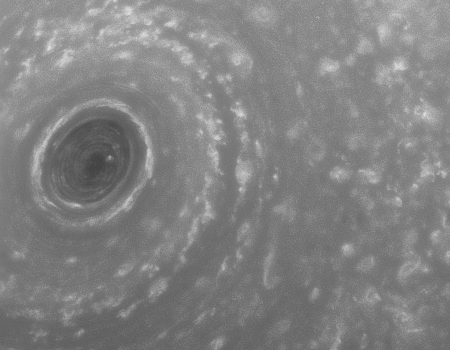
They have released one quite spectacular image taken during the close approach. Expect more to follow soon.

Though they continue to say that they are still considering firing the spacecraft’s main engine to lower and shorten the orbit, I am getting the impression that they are increasingly leaning to leaving things as they are. While this longer orbit will produce larger gaps in their data of the gas giant’s atmosphere (53 days between close approaches versus 14 days), it will also allow them to tract changes over a much longer time period. Considering the risk of a catastrophic failure should they fire the questionable engine, this choice seems quite reasonable.

15 comments

In Santa Barbara

I am now in Santa Barbara, California. Tomorrow I drive up to Vandenberg Air Force to give a lecture for the local chapter of the AIAA. This is why posting today and tomorrow will be light. I might get some posts in later tonight, but don’t expect a lot. When I return I plan on an essay on the subject of squealing pigs.

I will let my readers guess as to the subject matter. I suspect many of you will be able to.

3 comments
1 6 7 8 9 10 171