
Yanni – Aria: Ode to Humanity
An evening pause: I posted an earlier performance of this in 2016, but that is no longer available on youtube. This is newer performance is without doubt as magnificent.
Hat tip Alton Blevins.
An evening pause: I posted an earlier performance of this in 2016, but that is no longer available on youtube. This is newer performance is without doubt as magnificent.
Hat tip Alton Blevins.
Except for the first, all are courtesy of Jay, BtB’s stringer, who trolls Twitter so I don’t have to.
Quub is the smallsat company created by long time BtB reader Joe Latrell, whose satellite work I featured previously here. The article at the link includes a detailed interview of Latrell.
This is how OneWeb will compete with Starlink. While Starlink sells its service directly to rural customers, OneWeb can sell its service to the internet providers that already exist on the ground, allowing them to expand and improve their business in those rural areas.
This balloon suggests China is significantly ahead of the U.S. in developing this high altitude balloon technology.
The assessment will apparently be entirely engineering in nature, and will tell the Putin government whether these engineers think ISS will be safe to occupy until 2028, or require leaving sooner. Regardless of what they determine, it is very unlikely Russia can launch its own replacement by 2028.
The global map at the link provides an excellent overview of present and future spaceports worldwide
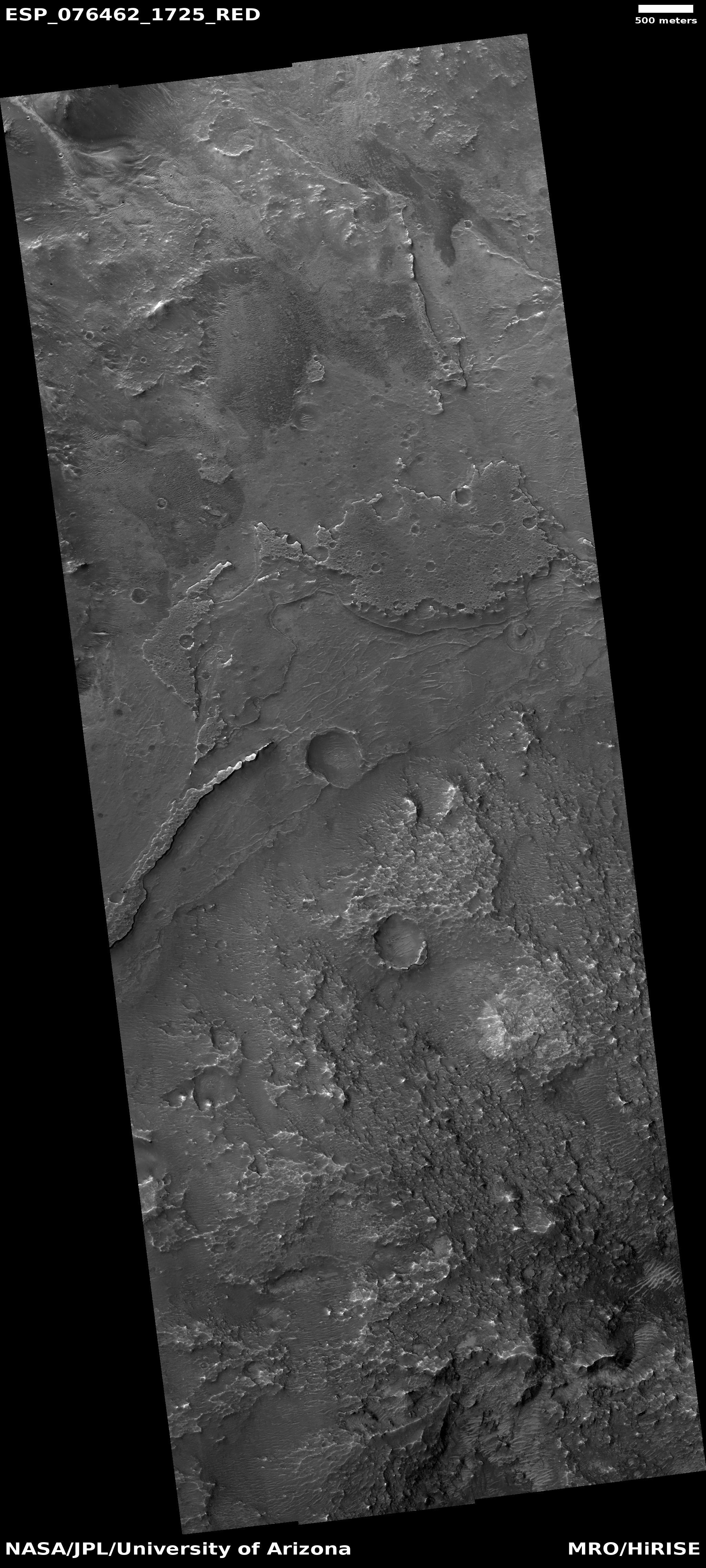
Click for original image.
Cool image time! The picture to the right, cropped, reduced, and sharpened to post here, was taken on November 18, 2022 by the high resolution camera on Mars Reconnaissance Orbiter (MRO). The science team labeled this image “Inverted Channel and Possible Lake Deposits.” The sharp razor-like butte, which I estimate is about 200 to 400 feet high, is an example of the several inverted channels in the full image. The serrated-edged flat plateau at the top of this picture, one of several in the full image, is an example of those possible lake deposits.
Why do the scientists think a lake might have once been here? Located at 8 degrees north latitude in the dry equatorial regions of Mars, there is almost certainly no near surface ice here now.
As always, the overview map provides the context, and a possible explanation.
» Read more
NOAA this week updated its monthly graph that tracks the number of sunspots on the Sun’s Earth-facing hemisphere. Below is that updated graph, with January’s numbers added to the timeline. As I have done monthly for the past dozen years here on Behind the Black, I have added some additional details to that graph to provide context.
Just as in December, the number of sunspots in January 2023 shot up to the highest amount since September 2014, which was during the previous solar maximum. Unlike December, however, January’s numbers came only a hairs-breath from topping that 2014 number. In fact, except for that one 2014 month, January 2023 saw the most sunspots on the Sun since November 2002, twenty years ago. In 2002 the Sun was ramping down from what had been a relatively strong double-peaked solar maximum, and was about to begin an extremely long period of little or no activity, followed by a very weak double-peaked solar maximum in 2013.
That period of little activity also corresponded with a long twenty-year period in which the Earth’s climate appeared to stop warming.
» Read more

They’re coming for you next: Long established comic book writer Mike Baron and his projects have now been blacklisted from a variety of sites, including having his most recent Kickstarter starter campaign shutdown, because of slanderous social media comments as well as a defamatory article on Daily Kos.
After a scathing article from a Daily Kos mouthpiece, Baron’s colleagues and fans realized they could not find his campaign on Kickstarter. The post smeared “Thin Blue Line” – a story about two police officers riding out a long night of rioting – along with “Private American.” The author, a person named Starr Mignon, called the comic a “diatribe of racist propaganda” and “stochastic terrorism disguised as a funny book.”
Prior to Kickstarter shutting his campaign down, it had also been banned from Twitter, as well as shadow-banned on Indiegogo.
A detailed blow-by-blow description of the slanderous attacks, based on no knowledge of these works, as well as the cowardly blackballing by others in response to those attacks, can be found here. This writer, who was helping Baron’s campaign, notes the following:
» Read more
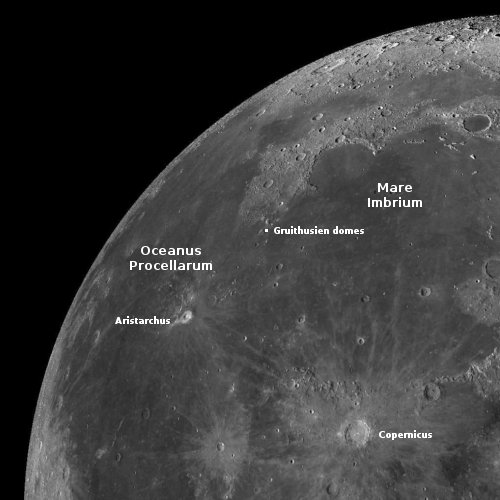
NASA today announced that it has changed the planned landing site on the Moon for Astrobotic’s Peregrine lunar lander, presently scheduled for launch at the end of March on the first flight of ULA’s new Vulcan rocket.
The original landing site for Astrobotic’s flight within Lacus Mortis, which is in the northeast quadrant of the lunar nearside of the Moon, was chosen by Astrobotic to suit its lander performance and safety, as well as Astrobotic’s preferences. However, as NASA’s Artemis activities mature, it became evident the agency could increase the scientific value of the NASA payloads if they were delivered to a different location. The science and technology payloads planned for this delivery to the Moon presented NASA scientists with a valuable opportunity, prompting the relocation of the landing site to a mare – an ancient hardened lava flow – outside of the Gruithuisen Domes, a geologic enigma along the mare/highlands boundary on the northeast border of Oceanus Procellarum, or Ocean of Storms, the largest dark spot on the Moon.
The white dot on the map to the right shows this location. The original location was to the west of Atlas Crater in the northeast quadrant of the Moon’s near side, where Ispace’s Hakuto-R lunar lander plans to touch down in April.
This decision by NASA was apparently prompted by the decision to send Intuitive Machines Nova-C lander to Vallis Schröteri in Oceanus Procellarum, which is the rill that flows west out of the crater Aristarchus. Gruithuisen Domes had been a potential landing site for Nova-C, and NASA probably did not want to lose an opportunity to go there.

Click for original image.
Curiosity appears to have identified a foot-wide rock on the surface of Mars that is likely a meteorite.
While the JPL press release at this link is certain this is a meteorite, the Curiosity science team is properly more circumspect:
The rock we are parked in front of is one of several very dark-colored blocks in this area which seem to have come from elsewhere, and we are calling “foreign stones.” Our investigations will help determine if this is a block from elsewhere on Mars that just has been weathered in an interesting way or if it is a meteorite.
The image to the right surely does look like a meteorite. If so, this would be one of the largest found so far on Mars by any rover.
Teruel airport in Spain, located about 200 miles east of Madrid, has announced plans to expand its operations to make itself a rocket spaceport.
At a recent conference, it was announced that PDL Space plans to operate satellite micro launchers from the little-known airport, located some 300km east of the capital Madrid.
Another company, Sceye, plans to install stratospheric spacecraft at the airport, which, since coming into commission ten years ago, has been used primarily as a maintenance centre for large aircraft.
The airport is located in the eastern interior of Spain. Any orbital launches will have to cross considerable parts of the country, as well as other European and African countries. This however might not be a problem for the moment, as PDL at present appears to be building suborbital rockets.
The city of Yuma in Arizona has provided $250 million to fund the cost for applying for an FAA license for a building a spaceport there.
The city hopes to build the spaceport just east of San Luis on a plot of land it owns, which is near the border, and right next to the Arizona State Prison complex. The spaceport itself would be a concrete slab, with aerospace companies bringing their own launching equipment.
Something however is fishy about this story. It doesn’t cost $250 million to put together such a license, unless Yuma also expects serious opposition that it will need to fight in court. And it should, as any launches from Yuma will have to cross parts of Mexico, and without that country’s permission such a spaceport will likely be blocked.
According to a report on China’s state-run press that has now been deleted, China plans to build satellite ground stations in Antarctica for use by its ocean-observation satellites.
Official space industry newspaper China Space News reported Feb. 2 that a subsidiary of the China Aerospace Science and Industry Corporation (CASIC), a giant state-owned defense and space contractor, won a bid to construct a ocean observation satellite ground system. The project is being overseen by the National Satellite Ocean Application Service (NSOAS) and is stated to be part of a long-term marine economic development plan.
Renders of the 43.95 million yuan ($6.52 million) project show four radome-covered antennas at Zhongshan in East Antarctica. It is unknown if these are new and additional to antennas already established at the base. The antennas will assist data acquisition from Chinese satellites that orbit in polar and near-polar orbits. Satellites in these orbits are visible near the poles multiple times a day, allowing more frequent opportunities for downlink than with stations at lower latitudes.
Such ground stations could of course do many other things, including aiding military satellite surveillance.
Researchers have discovered a new kind of water ice that appears to match the density and structure of liquid water.
he ice is called medium-density amorphous ice. The team that created it, led by Alexander Rosu-Finsen at University College London (UCL), shook regular ice in a small container with centimetre-wide stainless-steel balls at temperatures of –200 ˚C to produce the variant, which has never been seen before. The ice appeared as a white granular powder that stuck to the metal balls. The findings were published today in Science.
The abstract for the paper can be read here.
Not only does this discovery suggest that there are many possible states of water ice, with a range of properties, this new type of ice could help explain many of the features we see on planets like Mars that appear to have been caused by flowing water. Mars has a lot of glacial ice, much of which might not be ice as we assume.
An evening pause: That’s Cindy Cashdollar playing behind him.
Hat tip Judd Clark.