Redwire developing a satellite designed to fly in extremely low orbits

The orbital manufacturing company Redwire is now developing a satellite, dubbed SabreSat, to fly for long periods in extremely low orbits where the atmosphere would normally cause the orbit to quickly decay.

SabreSat, Redwire Spaceโ€™s satellite for very low Earth orbit, looks more like a dart than a traditional spacecraft. โ€œAs you think about aerodynamics, you want the dart to be skinny and long, not stubby and fat,โ€ Spence Wise, Redwire senior vice president for missions and platforms, told SpaceNews.

Redwire is designing SabreSat for government intelligence, surveillance and reconnaissance missions.

The satellite would fly in orbits from 55 to 200 miles altitude. By flying so low it will get far better images and ground data than spacecraft in higher orbits. It will also be less vulnerable to attack compared to high altitude aerial reconnaissance balloons or airplanes.

Its dart-like shape will meanwhile reduce friction so that less fuel will be required to maintain its orbit.
4 comments

Orbital tug startup Starfish Space wins $37.5 million contract from Space Force

Even though problems with another company’s deployment system prevented a docking test in orbit last month of its Otter Pup tug, the orbital tug startup Starfish Space has won a $37.5 million contract from Space Force to further develop its autonomous rendezvous and docking system.

The newly announced $37.5 million Space Force contract will support the development of an Otter demonstration spacecraft over the course of the next four years. In its announcement of the fixed-price contract โ€” which was awarded through the Strategic Funding Increase program, or STRATFI โ€” the Department of Defense said the projectโ€™s goal is to โ€œimprove maneuverability on-orbit and enable dynamic space operations docking and maneuvering of Department of Defense assets on-orbit.โ€

Though the docking test was prevented when the tug deploying Otter Pup (owned by a different tug company, Launcher) went into an unplanned spin, Otter Pup was deployed and brought under control. Those maneuvers however used up most of its fuel. Engineers were still able to work with another orbital tug company, D-Orbit, to maneuver and rendezvous with that company’s ION tug and thus succeed in demonstrating Pup’s rendezvous technolgoy.

0 comments

Chang’e-6 enters lunar orbit

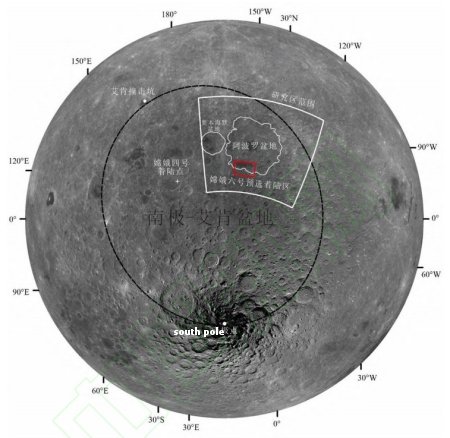
Chang'e-6 landing zone

China’s Chang’e-6 sample return spacecraft successfully entered lunar orbit today, in preparation for its mission to land and bring back material from the the far side of the Moon. The landing zone is indicated by the red box on the map to the right, on the southern rim of Apollo Crater in the southern hemisphere. That crater is inside South Aitkin Basin, one the Moon’s largest impact basins.

The spacecraft will next adjust its orbit to prepare for sending its lander-ascender sections down to the surface. If the landing goes well, it will drill into the surface, place some material into the ascender section, which will then lift-off and dock with the orbiter-return section in orbit. The material will be transferred into the return section, which will separate and bring the material back to Earth, sometime in late June.

0 comments

Launch of first manned flight of Starliner rescheduled for May 17, 2024

Because ULA engineers have decided they need to replace the valve that forced a launch scrub on May 8th, the first manned launch of Boeing’s Starliner capsule to ISS has now been rescheduled to May 17, 2024.

The oscillating behavior of the valve during prelaunch operations, ultimately resulted in mission teams calling a launch scrub on May 6. After the ground crews and astronauts Butch Wilmore and Suni Williams safely exited from Space Launch Complex-41, the ULA team successfully commanded the valve closed and the oscillations were temporarily dampened. The oscillations then re-occurred twice during fuel removal operations. After evaluating the valve history, data signatures from the launch attempt, and assessing the risks relative to continued use, the ULA team determined the valve exceeded its qualification and mission managers agreed to remove and replace the valve.

Replacing the valve is a somewhat routine procedure, but it will take a few days, causing the two-week delay.

2 comments

TESS resumes science operations

Engineers have corrected the issue that put the space telescope TESS into safe mode on April 8, 2024 and have resumed science operations.

The operations team determined this latest safe mode was triggered by a failure to properly unload momentum from the spacecraftโ€™s reaction wheels, a routine activity needed to keep the satellite properly oriented when making observations. The propulsion system, which enables this momentum transfer, had not been successfully repressurized following a prior safe mode event April 8. The team has corrected this, allowing the mission to return to normal science operations. The cause of the April 8 safe mode event remains under investigation.

As for that April 8th safe mode, though engineers were able to return the spacecraft to normal operations after about a week, that they still do not know what caused it remains a concern.

TESS takes high resolution survey images of 93% of the sky about once per month. By comparing the data from each scan, scientists have discovered so far more than 300 transiting exoplanets as well as many supernovae and other phenomenon related to variable stars.

0 comments

May 7, 2024 Quick space links

Courtesy of BtB’s stringer Jay. This post is also an open thread. I welcome my readers to post any comments or additional links relating to any space issues, even if unrelated to the links below.


3 comments

Sweden’s Esrange spaceport gets its first orbital customer

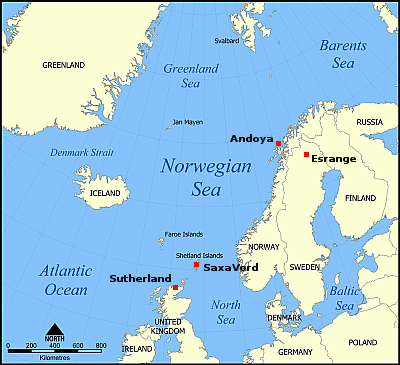
Proposed spaceports surrounding Norwegian Sea

Sweden’s Esrange spaceport today announced it has signed its firs orbital rocket customer, Perigee Aerospace from South Korea.

In its 7 May announcement, SSC explained that Perigee Aerospace expected to launch the first Blue Whale 1 mission from Esrange no earlier than 2025 following a successful maiden flight from South Korean soil.

…Blue Whale 1 is a two-stage rocket that will stand approximately 21 metres tall and feature a reusable first stage.

Esrange was originally built by an earlier version of the European Space Agency in 1964, then transferred to Sweden in 1972. Until until a orbital launchpad was installed 2023 it was solely dedicated to suborbital flights. It now is attempting to attract the new commercial rocket industry, as well as compete with the other new nearby spaceports, as shown on the map.

This new rocket from South Korea is also news, as it indicates that the fever for capitalism in space has even reached that country.

0 comments

Swirls of layers and dunes at the bottom of Valles Marineris

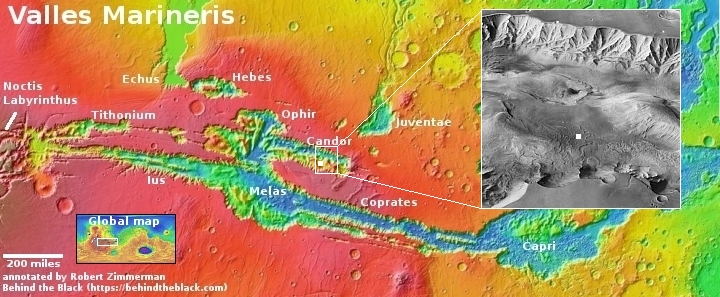
Overview map

Swirls of layers and dunes
Click for original image.

Cool image time! The picture to the right, cropped, reduced, and sharpened to post here, was taken on February 25, 2024 by the high resolution camera on Mars Reconnaissance Orbiter (MRO). It shows a small spot of the floor of Mars’ giant canyon Valles Marineris, the largest such canyon known in the solar system, as indicated by the white dot on the overview map above.

This location is not actually at the very bottom of the canyon, but on a very large mountainous bench extending out about 20 miles from the canyon’s south rim. It seems there is a lot of dust and sand on this bench, producing many miles of swirling dunes. It also appears there are many terraced layers in the region as well, which also swirl in curves going in many different directions. Though it appears that most of the swirls in this picture are from layers in the bedrock, this conclusion is not certain. For example, are the curves on the top of the mesa dunes or bedrock layers? The answer is hardly clear.

For scale, the canyon at this location is about 80 to 90 miles wide. The northern rim rises five miles from the bottom to the top, while the south rises seven miles. And yet, though five to ten times larger than Earth’s Grand Canyon, this is only a small side spur of Valles Marineris.

0 comments

Apparently rioting in support of murderous terrorists does not win the hearts and minds of the public

Hamas vs Israel
Do the protesters really believe that behaving like
Hamas will get the public to support Hamas?
Courtesy of Doug Ross.

Good news: The student protests and riots on college campuses as well as at a variety of other public events in the past month in support of the terrorist organization Hamas has apparently succeeded in only one thing: tarnishing the reputations of their universities while disqualifying their own job prospects.

It appears the public really doesn’t support anti-Semitism and the killing of all Jews in Israel. Nor have the violent riots by the protesters to destroy libraries while illegally taking over campuses done anyting to change the public’s mind.

Who wudda thought it?

Instead, the public is appalled, and is showing its disgust in the past week in very public ways. For example, yesterday thirteen federal judges announced they will no longer hire law clerks from Columbia.
» Read more

27 comments

Scientists: Restrict all exploration on Mars to protect our future work!

In a paper just published, planetary scientists Australia have proposed strict guidelines for any future exploration on Mars in order to prevent future colonists from doing anything that might interfere with any future research the scientists might want to do.

The thrust of the paper, they comment, is to ensure that locales of geological significance on Mars do not suffer the same damage as many sites on Earth have faced. Sites on the Red Planet can be practically conserved while still allowing science and exploration to continue, they say.

“Geoconservation allows humanity to protect Earthโ€™s story and geological history,” the researchers observe, “so that present and future generations can experience Earthโ€™s aesthetic beauty, conduct scientific research, connect with various cultures, adequately protect and ensure the functioning of Earth’s biology and ecosystems, and learn about the history of our planet.”

Let me translate: “We academics fear allowing others the freedom to explore. We come first. Let’s create rules that will allow us to do what we want, while forcing others to ask us for permission to do what they want.”

Sadly, this mentality now rules throughout all of western civilization’s intellectual community, and its not much different than the totalitarian top-down attitudes of the Russians and Chinese. Those in charge or better educated simply know better than everyone else, and are hell bent on telling everyone what they can and cannot do.

The first few generations of colonists on Mars, the Moon, and the asteroids are going to find their hands badly tied. Freedom will not exist.

19 comments

Musk: SpaceX and Starlink don’t use artificial intelligence

During an interview at a recent conference Elon Musk admitted that both SpaceX and Starlink have found artificial intelligence (AI) lacking, and don’t use it at all.

The irony was that prior to this admission, Musk had been extolling AI’s potential, predicting it would someday do wonderful things.

Musk, who answered questions during 27th annual Milken Institute Global Conference on Monday, spent a sizable portion of his talk extolling the benefits of artificial intelligence. At one point, he said a “truth-seeking” AI could “foster human civilization” when asked about the role the technology would play in human’s everyday lives.

But when asked whether AI could “accelerate” his efforts in space exploration, he seemed less excited about the technology. …”I mean, oddly enough, one of the areas where there’s almost no AI used is space exploration,” Musk replied. “So SpaceX uses basically no AI, Starlink does not use AI. I’m not against using it. We haven’t seen a use for it.”

Musk continued, saying that he’s been testing improved AI language models by asking them questions about space โ€” and the results have been disappointing. “With any given variant of or improvements in AI, I mean, I’ll ask it questions about the Fermi paradox, about rocket engine design, about electrochemistry โ€” and so far, the AI has been terrible at all those questions,” Musk said.

Here we see the visionary meet the practical engineer/businessman. Musk always looks to the future with grand visions, but when it comes time to build those visions, he never allows his vision to interfere with practicality. AI is still essentially garbage-in-garbage-out. The rush by businesses and tech-firms to blindly use has resulted in more than a few disasters.

Musk doesn’t do anything blindly. He tested AI first, found it wanting, and thus put it aside, despite believing it will someday do wonderful things.

If only more companies used this approach. If they had, they might not have blindly pushed DEI and ESG requirements that have done nothing but harm to their companies, their work forces, and their bottom lines.

9 comments
1 124 125 126 127 128 191