Indian satellite thruster manufacturer opens American factory

Capitalism in space: The Indian satellite company Bellatrix, which up-to-now has manufactured electrical attitude thrusters for satellites built by India’s space agency, has now opened a factory in Delaware in order to attract business from American satellite companies.

Bellatrix hired Chris MacDonald, a former business development director at rocket developer Astra and satellite provider Terran Orbital, to lead its recently created U.S. subsidiary, headquartered in Delaware. The manufacturing facility would support localized production, testing and delivery of propulsion systems to enable faster turnaround times and closer collaboration with U.S.-based customers, MacDonald said via email.

Founded in 2015, Bellatrix’s electric hall effect thruster has been used in a handful of missions for India’s space agency in recent years.

Bellatrix is not the only foreign space company to open offices in the U.S. for similar reasons. The Japanese startups Astroscale and Ispace have done the same, as well as several other companies listed in the article at the link. It appears the new American launch industry, which has significantly lowered the cost to orbit, is attracting orbital business from across the world.

3 comments

Vast signs three more customers to fly payloads on its first space station

Haven-1 with docked Dragon capsule

The space station startup company Vast has now signed up three more customers to fly payloads on its first space station, Haven-1, due to launch now in the spring of 2026 on a 30-day-long private commercial manned mission.

Vast announced April 8 that Japan Manned Space Systems Corporation (JAMSS), Interstellar Lab and Exobiosphere will fly research payloads on the Haven-1 station launching no earlier than May 2026. They join Redwire and Yuri as payload partners for the station.

JAMSS, which has supported research on Japan’s Kibo module on the International Space Station, will provide a multi-purpose payload facility for microgravity research on Haven-1. Interstellar Lab, a French company, will provide an advanced life sciences research facility called Eden 1.0 that will be used for experiments such as plant growth. Exobiosphere, based in Luxembourg, will fly a biotechnology payload to perform pharmaceutical and healthcare experiments.

The company says it still has one or two payload racks available for additional customers, suggesting that it is finding enough demand to justify profitable commercial operations.

Below are the four private space stations presently under development, with those I consider the most advanced in development ranked first:

  • Haven-1, being built by Vast, with no NASA funds. The company is moving fast, with Haven-1 to launch and be occupied in 2026 for a 30 day mission. It hopes this actual hardware and manned mission will put it in the lead to win NASA’s phase 2 contract, from which it will build its much larger mult-module Haven-2 station..
  • Axiom, being built by Axiom, has launched three tourist flights to ISS, with a fourth scheduled for this spring, carrying passengers from India, Hungary, and Poland. Though there have been rumors it has cash flow issues, development of its first module has been proceeding more or less as planned.
  • Orbital Reef, being built by a consortium led by Blue Origin and Sierra Space. Though Blue Origin has apparently done little, Sierra Space has successfully tested its inflatable modules, including a full scale version, and appears ready to start building the station’s modules for launch.
  • Starlab, being built by a consortium led by Voyager Space, Airbus, and Northrop Grumman. It recently had its station design approved by NASA.
10 comments

China launches another technology test communications satellite payload

China today successfully launched a test technology satellite for doing “multi-band and high-speed communication technology validation tests, possibly for future large internet/communications constellations, its Long March 3B rocket lifting off from its Xichang spaceport in southwest China.

No word on where the rocket’s lower stages and four strap-on boosters, all using very toxic hypergolic fuels, crashed inside China.

The leaders in the 2025 launch race:

40 SpaceX
19 China
5 Rocket Lab
5 Russia

SpaceX still leads the rest of the world in successful launches, 40 to 33.

0 comments

April 10, 2025 Quick space links

Courtesy of BtB’s stringer Jay. This post is also an open thread. I welcome my readers to post any comments or additional links relating to any space issues, even if unrelated to the links below.

1 comment

Congress: Let’s throw some more astronaut lives away so we can preen for the camera!

Jared Isaacman
Jared Isaacman

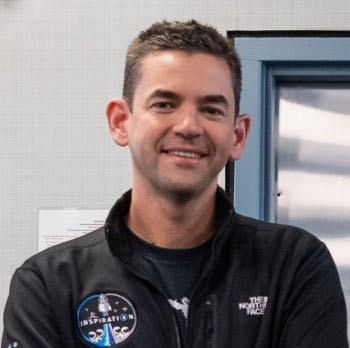
Here we go again: As I noted yesterday, the hearing this week of Jared Isaacman, Donald Trump’s nomination to become NASA’s next administrator, revealed almost nothing about what Isaacman plans to do once confirmed by the Senate. He very carefully kept his options open, even while he strongly endorsed getting Americans on the Moon as fast as possible in order to beat the Chinese there. When pressed by senators from both parties to commit to continuing the SLS, Orion, and Lunar Gateway projects to make that happen, Isaacman picked his words most cautiously. He noted that at the moment that plan seemed the best for getting to the Moon first. He also noted repeatedly that this same plan is years behind schedule and overbudget.

Like any smart businessman, Isaacman knows he cannot make any final decisions about SLS, Orion, or Gateway until he takes office and can aggressively dig into the facts, as administrator. He also knew he could not say so directly during this hearing, for to do so would antagonize senators from both parties who want those programs continued because of the money it pours into their states. So he played it coy, and the senators accepted that coyness in order to make believe they were getting what they want.

But what do these senators want? It appears our politicians (including possibly Trump) want NASA to launch humans to the Moon using SLS and Orion and do so as quickly as possible, despite knowing that both have real engineering issues of great concern. Instead, our elected officials want politics to determine the lunar flight schedule, instead of engineering, the same attitude that killed astronauts on Apollo 1 in 1967, on Challenger in 1986, and on Columbia in 2003. The engineering data then said unequivocally that things were not safe and that disaster was almost guaranteed, but NASA and Congress demanded the flights go on anyway, to serve the needs of politics.

With SLS and Orion it is now the same foolishness all over again. » Read more

20 comments

Curiosity climbs into a new Martian canyon

Curiosity looking south
Click image for full resolution panorama. Click here, here, and here for original images.

Overview map
Click for interactive map.

Cool image time! The Curiosity science team has finally completed the rover’s climb up one canyon on the flanks of Mount Sharp and crossed over into a second, switch-backing up through a gap they have dubbed Devil’s Gate.

The panorama above, created from three pictures taken by Curiosity’s left navigation camera on April 9, 2025 (here, here, and here) looks south from that gap. On the horizon about 20-30 miles away can be seen the rim of Gale Crater. From this position the floor of the crater is almost out of side, blocked by the foothills on the lower flanks of Mount Sharp.

Though the ground in this new canyon (on the left of the panorama) continues to be amazingly rocky and boulder strewn, it is actually more benign that the canyon Curiosity has been climbing for the past six weeks.

The blue dot on the overview map to the right marks Curiosity’s present position, with the yellow lines indicating the approximate direction of the panorama. The rover’s next major geological goal is the boxwork to the southwest. In order to get to it quickly the science team decided to abandon its original planned route, indicated by the dotted red line, and climb upward through these canyons.

4 comments

Chinese scientists say the lunar far side appears drier than the near side

Map of water measurements of lunar samples
Click for original image.

Based on a comparison of samples brought back by two Chinese unmanned lunar landers, Chinese scientists believe the lunar far side contains far less water in its mantle than the near side.

…the research team focused on analyzing water content and hydrogen isotopes in melt inclusions and apatite within [Chang’e-6] mare basalts—the first samples returned from the farside SPA Basin.

The team’s results indicate that the parent magma of these basalts contain 15–168 μg.g⁻¹ of water. Additionally, the team estimated that the mantle source of the CE6 basalts has a water content of 1–1.5 μg.g⁻¹, significantly lower than that of the nearside mantle. This disparity points to a potential hemispheric dichotomy in the Moon’s internal water distribution, mirroring many of the asymmetrical features observed on the lunar surface.

The map to the right, figure 1 in the scientists’ paper, shows the water content from the samples that have so far been brought back from the Moon. Note how the Chang’e-6 sample shows far less water content than all the near side samples.

Note however also that this is just one data point from the far side. To confirm these conclusions will require many more samples.

3 comments

Lunar Outpost unveils its proposed “Eagle” manned lunar rover

In the bidding competition to win the full NASA contract to build the manned lunar rover the astronauts will use in the Artemis program, the startup Lunar Outpost this week unveiled its proposed “Eagle” manned lunar rover at a conference in Colorado.

In the configuration shown here at the symposium, the Eagle vehicle features two seats for crew, each with its own redundant and mirrored controls, meaning either astronaut can control the rover. The steering controls on each side consist of a single handle that controls four individual motors that drive each wheel. Each wheel can turn independently of the other three, allowing the Eagle rover to turn on its center axis or “crab walk” sideways, Gerner said.

The rover can also be operated unmanned remotely, providing an method for sending it places the astronauts might prefer to avoid, for safety reasons.

Lunar Outpost is competing with Intuitive Machines and Venturi Astrolab for the main contract.

1 comment

Anti-Musk terrorists damage Musk statue in Brownsville

In another demonstration of their intolerance and willingness to commit violence and vandalism, anti-Musk terrorists have damaged a bust of Elon Musk in Brownsville that had been placed there by a French entrepreneur.

A 9-foot-tall statue depicting a bust of tech billionaire Elon Musk has been vandalized in South Texas. According to multiple posts across social media, the statue of the SpaceX CEO was vandalized not far from where the company’s Starbase facility sits near Boca Chica Beach.

“The recently installed Elon Musk statue, known as ‘Elonrwa,’ has been damaged. Visible patches of the outer layer appear to have been peeled off the face,” a Facebook user who goes by RGV.me said in an April 8 Facebook post. The Facebook post is accompanied by a photograph showing two areas where it appears a top layer of material has been stripped from the statue, revealing a white or pale gray layer underneath.

This senseless hate of Musk, almost certainly committed by supporters of the Democratic Party — which has been encouraging this violence because it sees Musk as an opponent — must end. And if the fools perpetrating this vandalism don’t come to their senses and stop voluntarily, they should be stopped by force and imprisonment. Just because you disagree with someone on policy does not give you the right to break the law.

And if you doubt this vandalism isn’t being spurred on eagerly by the leadership of the now vile and wholly evil Democratic Party, you need only watch that party’s Senate leader, Senator Charles Schumer (D-New York), practically endorse it when asked:
» Read more

6 comments

Juno enters and then recovers from safe mode

During its most recent close fly-by of Jupiter on April 4, 2025 — its 71st — the orbiter Juno went into safe mode two different times, causing its science instruments to shut down.

The mission operations team has reestablished high-rate data transmission with Juno, and the spacecraft is currently conducting flight software diagnostics.The team will work in the ensuing days to transmit the engineering and science data collected before and after the safe-mode events to Earth.

Juno first entered safe mode at 5:17 a.m. EDT, about an hour before its 71st close passage of Jupiter — called perijove. It went into safe mode again 45 minutes after perijove. During both safe-mode events, the spacecraft performed exactly as designed, rebooting its computer, turning off nonessential functions, and pointing its antenna toward Earth for communication.

Since arrival in its present Jupiter orbit in 2016 Juno has operated almost perfectly, having experienced only two other safe mode events, once in 2016 and a second in 2022. The two recent events on this most recent fly-by suggest however that the harsh environment surrounding Jupiter might be beginning to impact the spacecraft.

1 comment
1 130 131 132 133 134 182