
Average White Band – Pick Up The Pieces
An evening pause: Performed live 1977.
Hat tip Judd Clark.
An evening pause: Performed live 1977.
Hat tip Judd Clark.
Courtesy of BtB’s stringer Jay. This post is also an open thread. I welcome my readers to post any comments or additional links relating to any space issues, even if unrelated to the links below.
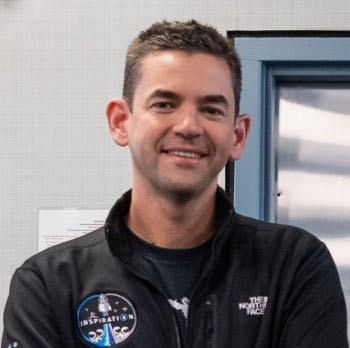
Jared Isaacman
The Senate committee on commerce, science, and transportation has just concluded its hearing on the nomination of Jared Isaacman as NASA administrator. Several take-aways:
First, there was little opposition to Isaacman on either side of the aisle. He will be confirmed easily.
Second, Isaacman was very careful to say nothing that might commit him to keeping all present Artemis programs (such as SLS, Orion, or Gateway) unchanged. He instead made it clear his goal is for NASA to attempt a parallel programs to establish a permanent American presence on both the Moon and Mars. This enthusiasm suggests he sees Starship as the vehicle capable of making those parallel programs possible.
In other words, he kept his options open. His goal is to get the Artemis program functioning more efficiently, and will do whatever is necessary to do so. He repeatedly made it clear that too many of NASA’s projects, including specifically Artemis, are routinely overbudget and behind schedule, and this must be fixed.
At the same time he said his goal is to get Americans back to the Moon ahead of the Chinese, and suggested that the present plan using SLS and Orion is likely the fastest way to do so. The technical issues that might make that program very unsafe for the astronauts however were never mentioned.
We shall see whether Isaacman as administrator will be so sanguine about sending Americans around the Moon within an Orion capsule with a questionable heat shield.
An evening pause: Hat tip Doug Johnson.
Courtesy of BtB’s stringer Jay. This post is also an open thread. I welcome my readers to post any comments or additional links relating to any space issues, even if unrelated to the links below.
Firefly yesterday announced it has been awarded a Space Force contract to use its Elytra space tug to test orbital maneuvers designed for military purposes.
As part of the mission, Elytra will host a suite of government payloads, including optical visible and infrared cameras, a responsive navigation unit, and a universal electrical bus with a payload interface module. Firefly’s Elytra Dawn configuration will utilize common components from the company’s launch vehicles and lunar landers, including the avionics, composite structures, and propulsion systems, to enable on-demand mobility, plane changes, and maneuvers with high delta-V capabilities and reliability.
Though unstated, the inclusion of cameras suggests the Pentagon wants to test Elytra’s ability to maneuver close to other satellites and photograph them.
This contract further illustrates Firefly’s effort to diversify its space products. Like Rocket Lab, it is not relying solely on its rocket division to make money, but is also developing and selling a range of space products, from lunar landers to orbital tugs to satellite equipment.
Using new data from ground-based telescopes, astronomers now believe that the potentially dangerous asteroid 2024 YR4 originally came from main asteroid belt and is a stony solid body, not a rubble pile.
The study reveals YR4 is a solid, stony type that likely originated from an asteroid family in the central Main Belt between Mars and Jupiter, a region not previously known to produce Earth-crossing asteroids. “YR4 spins once every 20 minutes, rotates in a retrograde direction, has a flattened, irregular shape, and is the density of solid rock,” said Bryce Bolin, research scientist with Eureka Scientific and lead author of the study.
You can read the paper here [pdf].
At present calculations suggest it has an almost zero chance of hitting the Earth in 2032, though during that close approach the chances of it hitting the Moon range from 2% to 4%, depending on which scientist you ask.
In a tweet posted yesterday, Senator Ted Cruz (R-Texas) revealed that in his private interview with Jared Isaacman, nominee for the post of NASA administrator, Isaacman “committed to having American astronauts return to the lunar surface ASAP.”
During our meeting, Mr. Isaacman committed to having American astronauts return to the lunar surface ASAP so we can develop the technologies needed to go on to Mars.
The moon mission MUST happen in President Trump’s term or else China will beat us there and build the first moonbase.
Artemis and the Moon-to-Mars Program are critical for American leadership in space!
It appears Cruz is trying to apply pressure on Isaacman and the Trump administration to not cancel SLS, as has been rumored for months. Though SLS and Orion have numerous issues, being too costly and cumbersome with risky designs that threaten the lives of any astronauts on board, cancelling them would likely delay any American manned mission to the Moon for several years, possibly allowing China to get there first.
We shall get a better idea of this situation at Isaacman’s nomination hearing, scheduled for tomorrow.
For the second time in less than a year, the Space Force has taken a launch away from ULA and given the payload to SpaceX to launch.
The GPS III SV-08 satellite, the eighth in the GPS III constellation, is now scheduled to launch no earlier than late May aboard a SpaceX Falcon 9 rocket from Cape Canaveral Space Force Station, Florida, the Space Systems Command announced April 7.
This marks the second time in recent months that the Space Force has reassigned a GPS launch from ULA to SpaceX. Last year, the GPS III SV-07 satellite was moved from a planned ULA Vulcan rocket launch in late 2025 to a SpaceX Falcon 9, which successfully launched on December 16 in a mission called Rapid Response Trailblazer.
Both switches were apparently triggered because of the delay in getting ULA’s new Vulcan rocket certified by the military, resulting in all of ULA’s launches in 2025 being pushed back significantly. That certification finally occurred a few weeks ago, but it appears the Space Force has decided that ULA won’t be able to get all those launches off this year as planned. It therefore decided to shift this launch to SpaceX.
This situation once again highlights the importance of private companies to move fast in the open competition of private enterprise. SpaceX has always done this, and thus it gets contracts and business that other companies that move with the speed of molasses lose.
Bangladesh today became the 54th nation to sign the Artemeis Accords, and the first to do so during Donald Trump’s second term.
The full list of nations now part of this American space alliance: Angola, Argentina, Armenia, Australia, Austria, Bahrain, Bangladesh, Belgium, Brazil, Bulgaria, Canada, Chile, Colombia, Cyprus, Czech Republic, Denmark, Dominican Republic, Ecuador, Estonia, Finland, France, Germany, Greece, Iceland, India, Israel, Italy, Japan, Liechtenstein, Lithuania, Luxembourg, Mexico, the Netherlands, New Zealand, Nigeria, Panama, Peru, Poland, Romania, Rwanda, Saudi Arabia, Singapore, Slovakia, Slovenia, South Korea, Spain, Sweden, Switzerland, Thailand, the United Kingdom, the United Arab Emirates, the Ukraine, the United States and Uruguay.
Based on NASA’s press release, it appears that Trump has not yet addressed the changes created by the Biden administration to the accords’ basic goals. The release still touts the accords as being “grounded in the Outer Space Treaty,” as if the accords were created to strengthen that treaty.
This is exactly the opposite of the accords’ original goals. Trump initiated the Artemis Accords as a way to create a large international alliance strong enough to either force changes in the Outer Space Treaty’s limitations on private property, or to bypass it completely.
At some point in the next three years, expect Trump’s eye to turn to the accords, and demand changes to the Outer Space Treaty. And don’t expect those demands to be mild and gentle. Right now the Outer Space Treaty forbids any nation from claiming any territory on the Moon, Mars, or the asteroids, thus forbidding western nations that believe in private property and citizens’ rights from establishing their legal law there. Either that limitation is going to be removed, or Trump is going to use the combined strength of the Artemis Accords alliance to bypass it entirely.
Russia early on April 8, 2025 successfully launched two Russians and one American to ISS on a six month mission, its Soyuz-2 rocket lifting off from its Baikonur spaceport in Kazakhstan.
They will dock with ISS after only two orbits, three hours after launch.
The leaders in the 2025 launch race:
40 SpaceX
18 China
5 Rocket Lab
5 Russia
SpaceX still leads the rest of the world in successful launches, 40 to 32.
SpaceX today successfully placed 27 Starlink satellites into orbit, its Falcon 9 rocket lifting off from Vandenberg in California.
The first stage completed its first flight, landing on a drone ship in the Pacific. In the past three years SpaceX has been launching about one to two new first stages per year in order to sustain its fleet, and this launch follows that pattern.
The leaders in the 2025 launch race:
40 SpaceX
18 China
5 Rocket Lab
4 Russia (with a manned Soyuz launch scheduled for the early morning hours)
SpaceX now leads the rest of the world in successful launches, 40 to 31.