Blue Ghost instrument proves Earth-orbiting GPS-type satellites can be used to track location from the Moon

Having now reached lunar orbit in preparation for its landing on March 2, 2025, an engineering test instrument on Firefly’s Blue Ghost lunar lander has now proven that even from that distance spacecraft can use the multiple GPS-type satellites in Earth orbit to track their position.

The Lunar GNSS Receiver Experiment (LuGRE) acquired and tracked Global Navigation Satellite System (GNSS) signals for the first time in lunar orbit – a new record! This achievement, peaking at 246,000 miles, suggests that Earth-based GNSS constellations can be used for navigation in transit to, around, and potentially on the Moon. It also demonstrates the power of using multiple GNSS constellations together, such as GPS and Galileo, to perform navigation. After lunar landing, LuGRE will operate for 14 days and attempt to break another record – first reception of GNSS signals on the lunar surface.

This test is a very big deal. It tells us that operations on the Moon, at least those on the near side, will likely not require a GPS-type infrastructure in lunar orbit, thus allowing a lot of difficult missions to proceed sooner while saving a lot of money and time.

5 comments

China and SpaceX complete launches

Two more launches today. First China launched a communications satellite into orbit, its Long March 3B rocket lifting off from its Xichang spaceport in the southwest of China. No word on where the rocket’s core stage and four side boosters crashed inside China. Nor has China released much information about the satellite itself.

Next SpaceX placed another 22 Starlink satellites, its Falcon 9 rocket lifting off from Vandenberg in California. The first stage completed its eleventh flight, landing on a drone ship in the Pacific.

The leaders in the 2025 launch race:

23 SpaceX
8 China
2 Rocket Lab

At this moment SpaceX’s 23 launches in 2025 is not far short of being twice as much as the 14 launches completed by rest of the entire world combined. It certainly is outpacing everyone else quite handily.

4 comments

Alison Balsom – Introducing the Baroque Trumpet

An evening pause: Another music history lesson to start the weekend. As she says, listening to baroque music played on this instrument explains a great deal about that music, and definitely tells you what that music was expected to sound like when composed, compared to playing it on modern instruments. Far more haunting, a word I would never have used to describe Baroque music before.

Hat tip Judd Clark.

0 comments

February 21, 2025 Quick space links

Courtesy of BtB’s stringer Jay. This post is also an open thread. I welcome my readers to post any comments or additional links relating to any space issues, even if unrelated to the links below.

11 comments

A Martian glacier of dust

A Martian glacier of dust
Click for original image.

Cool image time! The picture above, rotated, reduced, and sharpened to post here, was taken on September 2, 2024 by the high resolution camera on Mars Reconnaissance Orbiter (MRO).

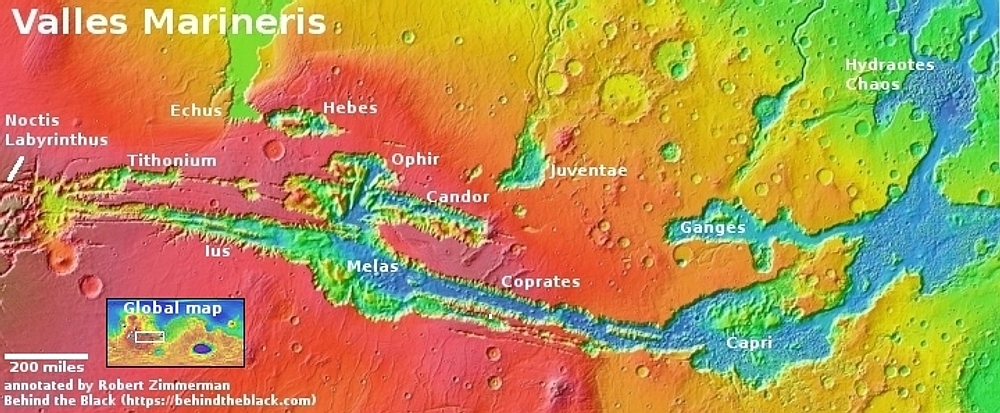
The tiny white dot near the lower center of the overview map below marks the location, on the northern wall of the smaller parallel canyon to the much larger part of Valles Marineris dubbed Coprates Canyon.

The scientists label this a “slope deposit.” What I see is a dust glacier flowing down hill in that long hollow (indicated by the arrows), with the ripple dunes actually acting almost like waves. Nor is this description unreasonable. On Mars the dust will gather in the hollows of these slopes and over time, with no rain and little wind to disturb them, will begin to flow down much like a glacier.

In this case, the descent is gigantic, considering the size of Valles Marineris. From the top to bottom of this image the elevation drop is about 14,000 feet over a distance of 11 miles.

Overview map

1 comment

Musk: ISS should be de-orbited quickly! And he may be right.

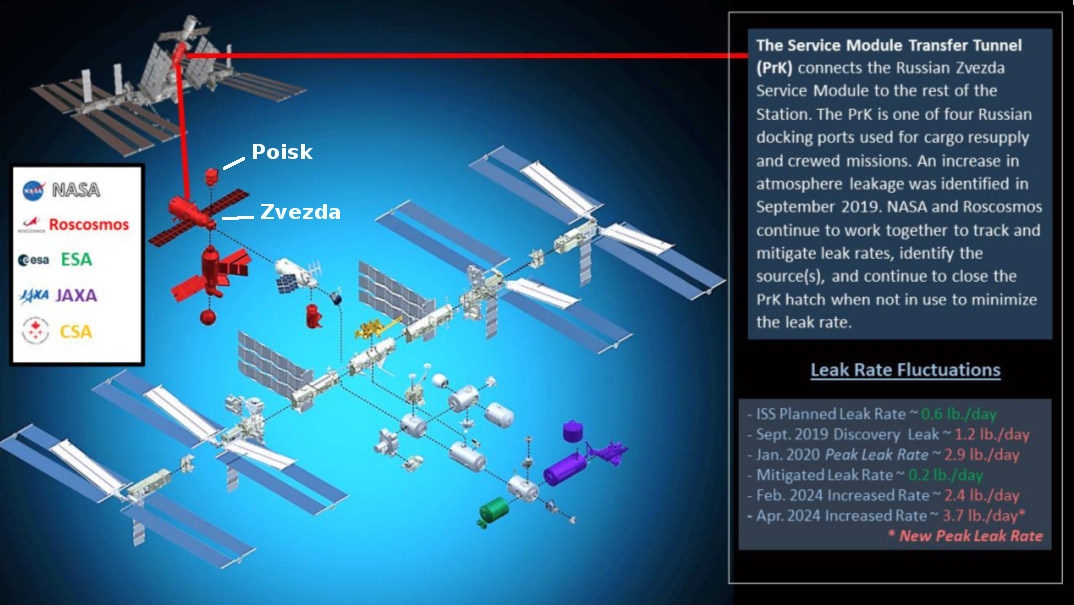
Figure 3 from September Inspector General report
Figure 3 from September Inspector General report, showing ISS and outlining the airlieak annotated to show Zvezda and Poisk locations.

Food fight! Yesterday Elon Musk did a Donald Trump, issuing a bunch of tweets that are likely causing some heads to explode inside NASA, Congress, and Europe.

First — and far less significant — Musk got into a war of insults with European Space Agency astronaut Andreas Mogensen over his comments in recent days accusing the Biden administration of delaying the return of the two Starliner astronauts “for political reasons.” Mogensen accused Musk lying about this, and Musk responded by calling Mogenson “fully retarded” and an “idiot,” adding that “SpaceX could have brought them back several months ago. I OFFERED THIS DIRECTLY to the Biden administration and they refused. Return WAS pushed back for political reasons.”

Since Musk was there and Mogensen was not, it seems Musk won that battle. NASA meanwhile issued a mild statement saying everything it has done has been to maximize safety, a statement that matches the facts quite accurately.

Then Musk — on a far more important topic — stirred the pot more by tweeting his belief that ISS should be retired now.

It is time to begin preparations for deorbiting the Space_Station. It has served its purpose. There is very little incremental utility. Let’s go to Mars.

In a second tweet he recommended the de-orbit should occur “two years from now.”

Left unstated by Musk was what might be his most important reason for retiring ISS so quickly: the fragile condition of the Russian-built Zvezda module. » Read more

26 comments

Airbus writes off $314 million for unnamed space program losses

Airbus on February 20, 2025 announced that it has written off $314 million due to issues in an unnamed program in its space division, adding to an almost billion dollar write-off in June 2024.

Airbus said Feb. 20 it took the 300-million-euro charge in the fourth quarter of 2024 as it completed reviews of a final, unnamed program in its space portfolio. The company had hinted in late October that it could take additional charges on that program as it completed a comprehensive review. “We had to go through the program in detail, bottom up, to fully review what we had in our portfolio, and that we have done,” Thomas Toepfer, chief financial officer of Airbus, said in a call with analysts. He did not identify that program.

The company took 900 million euros in charges in June 2024, and the company said the total charges against earnings on its space business in 2024 was 1.3 billion euros. Toepfer said that the company does not anticipate additional charges as it’s completed the review of all its space programs.

There are some hints that the program involved bad bids for satellite contracts and with suppliers. I can’t help wondering if it is also related to the overall failure of Ariane-6 to garner customers. Airbus builds and owns it in partnership with Safran.

1 comment

Billionaire who fought Sutherland spaceport now owns at least half of competing Saxavord spaceport

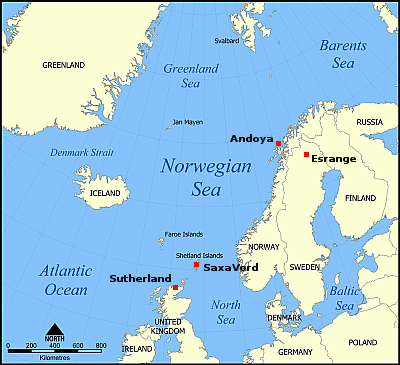
Proposed spaceports surrounding Norwegian Sea

Anders Povlsen, the Danish billionaire who aggressively fought the establishment of the Sutherland spaceport on the north coast of Scotland, where he owns lots of land, has increased his holding of the competing Saxavord spaceport on one of the Shetland Islands, raising his share of ownership there to at least 50%.

Danish billionaire Anders Povlsen has increased his stake in Shetland Space Centre via his company, Wild Ventures Ltd, which now owns more than half of its shares. New filings with Companies House also show that Lise Kaae, the chief executive of Mr Povlsen’s investment firm, Heartland, has been appointed as a director at the spaceport.

Mr Povlsen, who made his fortune in retail fashion and is reported to be Scotland’s largest landowner, has been involved in the spaceport since 2020 when Wild Ventures Ltd invested £1.5m.

Povlsen had for years aggressively opposed Sutherland, expressing that opposition with repeated lawsuits that caused years of regulatory delays. Those delays in turn impacted Sutherland’s biggest customer, the rocket startup Orbex, which had a fifty year lease on a launchpad and had hoped to start launches of its Prime rocket in 2022. In December 2024, with no sign it would get a launch license from the UK’s Civil Aviation Authority anytime soon, Orbex essentially gave up on Sutherland, announcing suddenly it was switching launch operations to Saxaford.

It now appears Povlsen’s lawfare effort has born fruit, which I think explains why he has now suddenly increased his ownership share in Saxavord

0 comments

New observations reduce odds of asteroid 2024 YR4’s 2032 Earth impact to practically zero

The uncertainty of science: According to a short update from NASA late yesterday, new ground-based observations have now reduced the odds that asteroid 2024 YR4’s will hit the Earth in 2032 to only 0.28 percent.

Observations made overnight on Feb. 19 – 20 of asteroid 2024 YR4 have further decreased its chance of Earth impact on Dec. 22, 2032, to 0.28%. NASA’s planetary defense teams will continue to monitor the asteroid to improve our predictions of the asteroid’s trajectory. With this new data, the chance of an impact with the Moon increased slightly to 1%.

Expect these numbers to change again in March, when the Webb telescope tracks the asteroid. And do not assume Webb will confirm these numbers. There remains great uncertainty in all these calculations, especially because there is great uncertainty about the size, mass, and make-up of 2024 YR4. It could be anywhere from 130 feet to 320 feet in diameter, and that difference makes these calculations uncertain.

In other words, it remains essential that work should begin on putting together a mission to visit and study this asteroid, now. Though it isn’t large enough to cause a worldwide extinction, it is big enough to do very significant damage, depending on where it hits.

5 comments

Justice Department drops absurd Biden-era discrimination lawsuit against SpaceX

As expected, the Justice Department now under Donald Trump’s presidency yesterday filed papers to end the insane Biden-era discrimination lawsuit against SpaceX that demanded it hire refugees and even illegal aliens, even though State Department rules forbid it to do so.

In an unopposed motion filed with the U.S. District Court for the Southern District of Texas, the Justice Department said it intended to file a notice of dismissal with prejudice, which means prosecutors would not be able to file these charges again.

Of all the lawfare initiated against Musk and SpaceX by the Biden administration, this lawsuit was by far the stupidest and most ridiculous. SpaceX doesn’t discriminate against non-American citizens. If they meet State Department rules and also have the qualifications, it hires them. And has done so. For one federal agency, Justice, to demand that SpaceX violate the rules of another agency, State, proves the lawsuit’s real purpose was harassment only.

That harassment has ended with the arrival of Trump.

3 comments

German rocket startup Isar Aerospace completes ground testing of Spectrum rocket

Proposed spaceports surrounding Norwegian Sea

The German rocket startup Isar Aerospace today announced that it has completed its static fire engine test program for both stages of its new Spectrum rocket, and is now readying that rocket for its first orbital launch “as soon as possible”.

Satellite launch service company Isar Aerospace is preparing for its first test flight, having successfully completed static firings of both stages of its launch vehicle ‘Spectrum’. The first flight will take place from Andøya Spaceport in Norway as soon as possible following Norwegian Civil Aviation Authority (NCAA) approval and licensing.

Based on how fast Norway’s bureaucracy has moved so far, that licensing process should not take that long. Expect this first launch to take place within months, even weeks. If so, Isar will have won the race to reach orbit among the half-dozen or so new European rocket startups that have popped up in the past three years, while Norway’s Andoya Spaceport will have won the race to initiate orbital spaceport operations, beating out the spaceports in the United Kingdom and Sweden.

Isar also notes that its next two rockets are already in production, which means it wants its orbital test program to move quickly to operational commercial flights.

0 comments
1 154 155 156 157 158 182