
Curiosity looks closely at the broken slab that had been stuck on its drill bit
Click for original image.
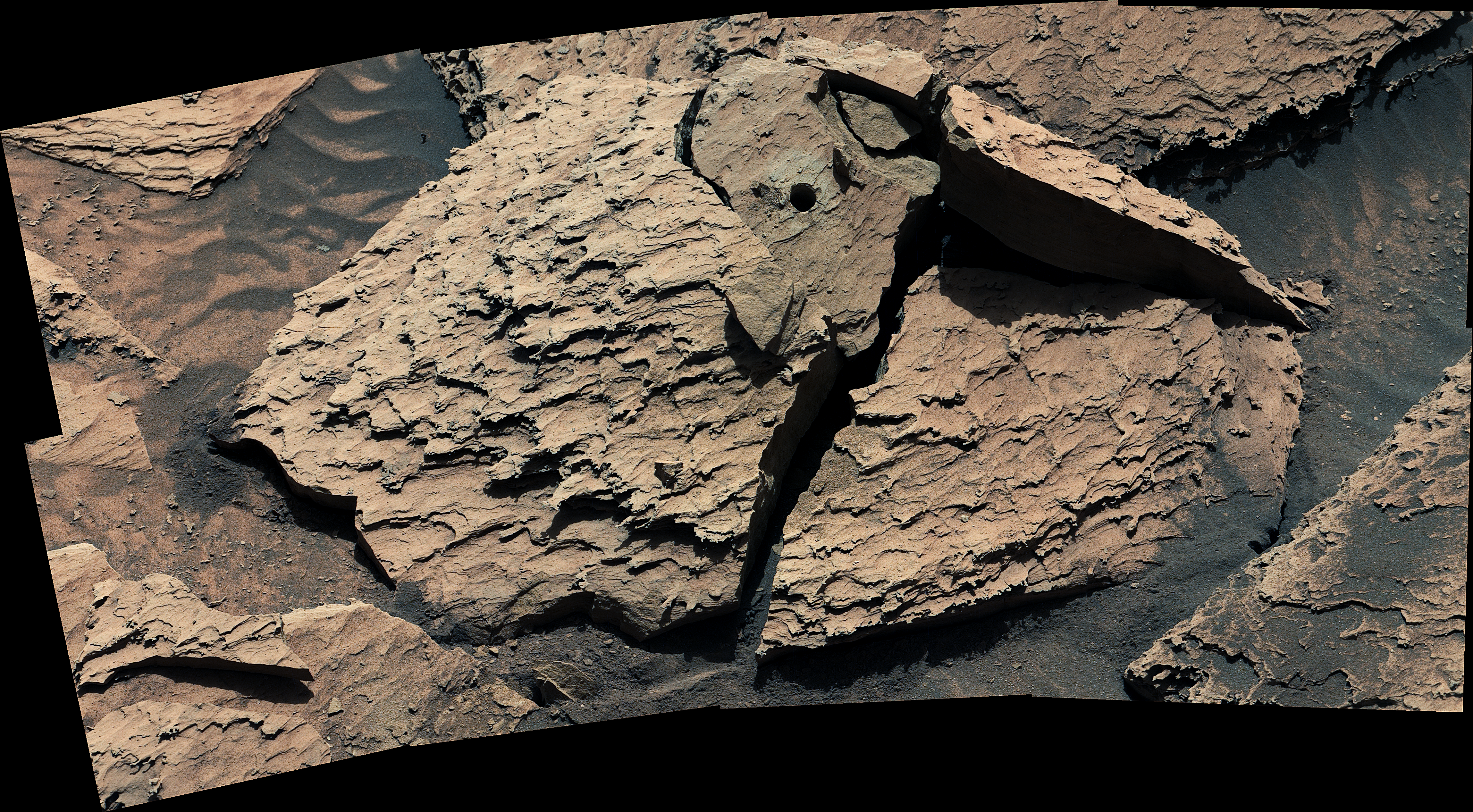
As expected, the science team for the Mars rover hasdecided before moving on it would take a close look at the 28 pound slab of rock that had been stuck on its drill bit and when finally dropped free broken into several pieces when it hit the ground.
The top picture to the right, cropped and reduced to post here, shows that entire rock, labeled Atacama by the science team. The two insets below are close-ups of the delicate layering at the rock’s left edge as well as the drill hole itself. From team’s update today:
The highest-priority activities after liberating the drill included imaging the drill with Mastcam and ChemCam RMI, and imaging into the now-empty drill hole with MAHLI (the image above). The science team made the most of the freshly-broken surfaces created when Atacama fell back to Mars, and the freshly-exposed sand once hidden underneath Atacama.
The exposed sand is off camera, to the right. Expect a paper published about that sand, buried likely for millions of years, sometime in the next year or so.
The delicate flutes at the rock’s left edge are somewhat common rock features seen by Curiosity, made possible by Mars’ thin atmosphere and its one-third Earth gravity. On Earth the gravity and weather generally destroys such things. On Mars the lack of violent weather and light gravity allows them to form, and the thin wind even helps in their formation.

On Christmas Eve 1968 three Americans became the first humans to visit another world. What they did to celebrate was unexpected and profound, and will be remembered throughout all human history. Genesis: the Story of Apollo 8, Robert Zimmerman's classic history of humanity's first journey to another world, tells that story, and it is now available as both an ebook and an audiobook, both with a foreword by Valerie Anders and a new introduction by Robert Zimmerman.
The print edition can be purchased at Amazon or from any other book seller. If you want an autographed copy the price is $60 for the hardback and $45 for the paperback, plus $8 shipping for each. Go here for purchasing details. The ebook is available everywhere for $5.99 (before discount) at amazon, or direct from my ebook publisher, ebookit. If you buy it from ebookit you don't support the big tech companies and the author gets a bigger cut much sooner.
The audiobook is also available at all these vendors, and is also free with a 30-day trial membership to Audible.
"Not simply about one mission, [Genesis] is also the history of America's quest for the moon... Zimmerman has done a masterful job of tying disparate events together into a solid account of one of America's greatest human triumphs."--San Antonio Express-News
Wait a minute, that rock looks more like 75 lbs to me, what are they trying to pull on us?