
Firefly’s delays launch of its Eclipse rocket to 2027
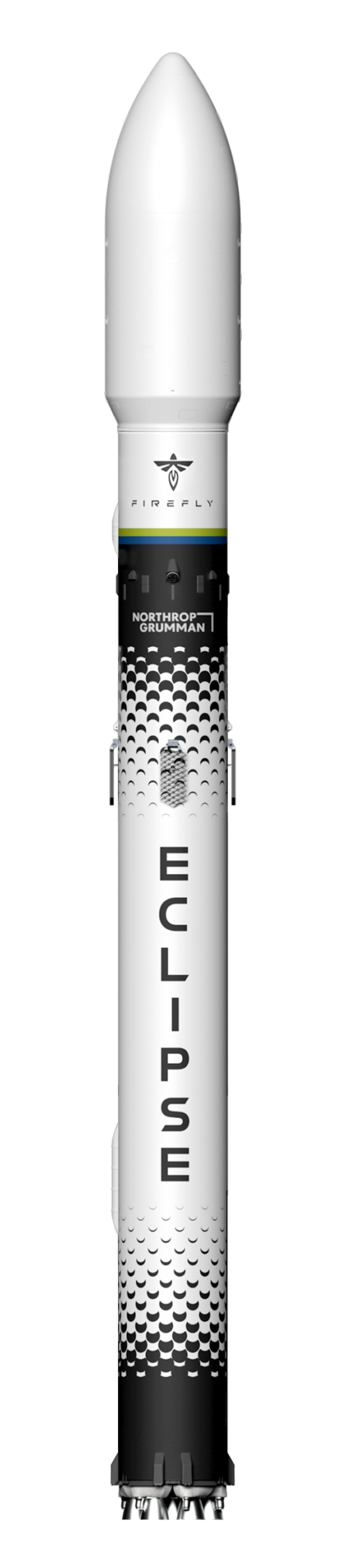
Click for original image.
It appears that Firefly has delayed the first launch of its new more powerful Eclipse rocket — being built in partnership with Northrop Grumman — to 2027.
The company made no specific announcement, but in a tweet today touting the rocket’s “fresh look”, with no details, the company linked to its Eclipse webpage (in the first link above) that describes the rocket in detail. In the last paragraph adds that the first launch is now scheduled for “no earlier than 2027”, a delay from the 2026 launch date both companies were originally targeting.
This guarantees that SpaceX’s Falcon 9 is going to get more launch contracts taking Northrop Grumman’s Cygnus capsule to ISS.
Firefly says Eclipse is being built for re-usability, but the graphics of the rocket, as shown above, are puzzling in that they show grid fins but no landing legs.

On Christmas Eve 1968 three Americans became the first humans to visit another world. What they did to celebrate was unexpected and profound, and will be remembered throughout all human history. Genesis: the Story of Apollo 8, Robert Zimmerman's classic history of humanity's first journey to another world, tells that story, and it is now available as both an ebook and an audiobook, both with a foreword by Valerie Anders and a new introduction by Robert Zimmerman.
The print edition can be purchased at Amazon or from any other book seller. If you want an autographed copy the price is $60 for the hardback and $45 for the paperback, plus $8 shipping for each. Go here for purchasing details. The ebook is available everywhere for $5.99 (before discount) at amazon, or direct from my ebook publisher, ebookit. If you buy it from ebookit you don't support the big tech companies and the author gets a bigger cut much sooner.
The audiobook is also available at all these vendors, and is also free with a 30-day trial membership to Audible.
"Not simply about one mission, [Genesis] is also the history of America's quest for the moon... Zimmerman has done a masterful job of tying disparate events together into a solid account of one of America's greatest human triumphs."--San Antonio Express-News
Great catch, Bob. Unfortunate to see the delay, but not really too surprised, I guess….
Two items:
1. “Firefly says Eclipse is being built for re-usability, but the graphics of the rocket, as shown above, are puzzling in that they show grid fins but no landing legs.”
Don’t know if you saw it but Eric Berger followed up on that tweet you linked asking if they were really serious about reusability. The Firefly team responded: “Yes! Eclipse will have a reusable first stage. We’re taking an iterative approach and will be testing capabilities on the initial flights.” It could be that they might just test the grid fins on initial flights, and then install legs when they’re ready try go for a full on hard landing?
2. “This guarantees that SpaceX’s Falcon 9 is going to get more launch contracts taking Northrop Grumman’s Cygnus capsule to ISS.”
I think this seems inevitable, too, though some readers might not grok that the reason is a little more complicated: Eclipse is not going to be launching Cygnus cargo ships, but the rocket that will be, NG’s Antares 330, employs the same first stage as Eclipse. So if the first stage is indeed experiencing development delays….the Antares 330 will, too. Alas.
So it seems, at minimum, the Cygnus mission this fall (NG-22) and, likely, the one next spring (NG-25) will have to contract launches on Falcon 9’s, and I wouldn’t be surprised if this has already been quietly done and just not announced yet. Indeed, I suspect that Northrop most likely already had some sort of contingency contract with SpaceX right from the start, as a hedge against development delays in the Antares 330….
EDIT: Jeff Foust had a story back on March 23 that was based on an interview with Firefly CEO Jason Kim, which I missed at the time. Kim says there, too, that Eclipse is pushed back to 2027, but says that a first stage is being shipped to Northrop later this year for use in the first Antares 330 mission, and it’s more ambiguous what that means for the Antares timeline (but, likely safe to assume it’s being delayed as much as Eclipse, I suspect):
https://archive.is/2026.03.23-100559/https://spacenews.com/lunar-lander-developers-say-they-are-ready-to-meet-anticipated-increased-nasa-demand/
Lieutenant Dan is offended
A wire/trapeze might be more manageable and save still more weight.
Might Firefly be going after a capture landing like SpaceX uses for Superheavy and (soon) Starship? They could shed the weight of landing legs.
Richard M asked: “It could be that they might just test the grid fins on initial flights, and then install legs when they’re ready try go for a full on hard landing?”
SpaceX did this for both Falcon 9 and Starship. I would not be surprised that they will test their accuracy in finding the landing point before trying to land on one. This makes sense, because Blue Origin’s first landing attempt ended in a crash.
“So it seems, at minimum, the Cygnus mission this fall (NG-22) and, likely, the one next spring (NG-25) will have to contract launches on Falcon 9’s, and I wouldn’t be surprised if this has already been quietly done and just not announced yet.”
RocketLaunch.Live already shows that CRS2 NG-22 (Cygnus) is scheduled for a Falcon 9 later this year, But the month is unspecified. They list no other future Cygnus launches, though.
“Might Firefly be going after a capture landing like SpaceX uses for Superheavy and (soon) Starship?”
If they are, there’s no sign of it in anything we’ve seen built or planned so far.
I think it’s unlikely for now. Losing the legs saves mass, but it requires software, comms, and org experience that Firefly just is not in a position to supply easily right now.
Hello Edward,
“RocketLaunch.Live already shows that CRS2 NG-22 (Cygnus) is scheduled for a Falcon 9 later this year, But the month is unspecified. They list no other future Cygnus launches, though.”
Interesting. Good catch.
Development schedule slippage is endemic in the rocket patch. So no real surprise here.