
Rocket Lab gets big launch contract for both its Electron and new Neutron rocket
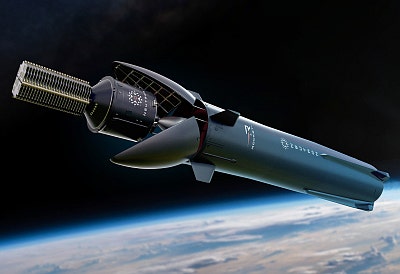
Artist’s rendering of Neutron’s first stage fairings opening
to deploy the payload with the second stage engine.
Rocket Lab announced yesterday that it has won a big new launch contract with an undisclosed customer for three launches of its Electron rocket and five launches of its new Neutron rocket.
The multi-launch agreement includes five dedicated Neutron launches and three dedicated Electron launches baselined to launch between 2026 and 2029. The missions will lift-off from both Rocket Lab Launch Complex 1 in New Zealand and Rocket Lab Launch Complex 3 in Virginia. Pricing for these launches aligns with Rocket Lab’s average selling price for Neutron and Electron. The remaining terms of the deal are undisclosed.
Based on the known average launch prices for these rockets, this deal is likely worth somewhere between $250 million to $300 million. That a customer was willing to purchase five launches of Neutron before the rocket has even launched is also a strong statement of confidence in Rocket Lab itself. The company hopes to do the first test launch of Neutron before the end of this year.
Rocket Lab also made a slew of other announcements yesterday. The company will be partnering with Anduril as part of its 20-launch contract with the War department to use its suborbital HASTE version of its Electron first stage for hypersonic testing. The deal involves three of those twenty launches.
The company also announced a partnership with Raytheon to “demonstrate advanced capabilities for the United States Space Force’s Space Based Interceptor program.” Rocket Lab also revealed it is acquiring the California robotic company Motiv Space Systems that has built equipment used on the Mars rover Perseverance.
Rocket Lab might not be as big as SpaceX, but it has unquestionably been as successful in its own way.

On Christmas Eve 1968 three Americans became the first humans to visit another world. What they did to celebrate was unexpected and profound, and will be remembered throughout all human history. Genesis: the Story of Apollo 8, Robert Zimmerman's classic history of humanity's first journey to another world, tells that story, and it is now available as both an ebook and an audiobook, both with a foreword by Valerie Anders and a new introduction by Robert Zimmerman.
The print edition can be purchased at Amazon or from any other book seller. If you want an autographed copy the price is $60 for the hardback and $45 for the paperback, plus $8 shipping for each. Go here for purchasing details. The ebook is available everywhere for $5.99 (before discount) at amazon, or direct from my ebook publisher, ebookit. If you buy it from ebookit you don't support the big tech companies and the author gets a bigger cut much sooner.
The audiobook is also available at all these vendors, and is also free with a 30-day trial membership to Audible.
"Not simply about one mission, [Genesis] is also the history of America's quest for the moon... Zimmerman has done a masterful job of tying disparate events together into a solid account of one of America's greatest human triumphs."--San Antonio Express-News
“That a customer was willing to purchase five launches of Neutron before the rocket has even launched is also a strong statement of confidence in Rocket Lab itself.”
I’m tempted to say that’s an understatement, Bob!
I can’t wait to see Neutron launch.
Rocket Lab (RKLB) was one of the top gainers in the stock market today closing up +34.22% and closing at $105.47.
Makes sense, Beck wants to do one thing well—launch payloads. The market appreciates that, apparently.
In many ways, this is the first true, private answer to R-7.
Early ICBMs and their EELV replacements have the stink of the Air Farce on them—so they don’t count…and Falcon is a private Proton.
Jeff Wright wrote, “Makes sense, Beck wants to do one thing well—launch payloads.”
Except that you are completely wrong. Beck has set up Rocket Lab to do a wide range of things in addition to launching payloads.
1. It makes service modules for orbital and interplanetary missions. Varda has been one of its main customers.
2. It plans an interplanetary mission to Venus.
3. It revised the Electron first stage into HASTE to do suborbital testing, for the military.
4. Its purchase of Motiv allows it to now build robotic instrumentation for interplanetary missions.
5. Its contract with Raytheon gets it into the military Golden Dome contracting world.
And that’s just to name a few. Beck is a very successful businessman. He never lets himself limit his vision and thus miss opportunities (as you Jeff Wright do constantly in your blind love of SLS). Instead he grabs those opportunities, and thus makes money. This is why the market is buying Rocket Lab stock.
Jeff Wright,
What? There wasn’t just one R-7 rocket, it’s a whole family. Same with Proton. Neutron’s LEO payload is more than any R-7/Soyuz variant, about fifty percent larger. The R-7 itself was originally an ICBM, so accepting your premise, Atlas is the American equivalent, USAF ‘stink’ or no. Why does any of this matter anyway? Payload size is less important than launch cost.
Richard M,
Likewise! Three separate companies launching partially reusable rockets is encouraging and beneficial for the rest of the industry. As Rocket Lab is attempting to counter Falcon 9, and it will be a few years before Starship is launching non-SpaceX/NASA payloads in any number, I’m curious if that will put real pressure on F9 pricing.
Robert Zimmerman,
“And that’s just to name a few.”
I am eager to add to the list:
6. Satellite components.
7. Satellites.
8. Software.
9. Operating satellites for customers.
Indeed, the income from Electron is currently a minor part of Rocket Lab’s revenue. I would have been surprised that investors were so impressed with seemingly small orders for Neutron launches, except that they likely expect Neutron to be very successful. I think that they are right.
The expected coming communication constellations, orbital data centers, and orbital AI are going to need a whole lot of launches, and Neutron is positioned in a good place to receive plenty of orders for these launches. The revenues of the unmanned space economy is heating up, due to and causing increased interest in the space business. It currently seems to be an upward spiral, searching for a level to plateau at.
The loss of Bigelow has prevented as much expansion of the manned space economy during this decade as I had expected, but there are plenty of other uses that are coming online, and I expect the revenues for manned space to become impressive in the 2030s.
I can’t wait for Rocket Lab and other launch providers to enter the manned space industry. The coming commercial space stations are going to need more manned transportation than the current manned spacecraft can provide.
At least he isn’t bogged down making electric cars. Or buying Twitter
Edward,
Re: satellites. Ever since Beck announced their flatpack satellite design, I’ve wondered if they’ll build their own constellation. The production rate of most of their subsidiaries doesn’t seem to allow for something the size of Starlink, but they could certainly build one with hundreds in orbit, and have a captive market for Neutron in case Starship prices put pressure on everyone else.
Re: manned spacecraft; they did say they were looking into it. With Dream Chaser and Starliner unlikely to ever fly much, or affordably, the market is wide open. Starship will be too big to easily dock with most of the currently planned stations, though I could see SpaceX building a much bigger station down the line.
Jeff Wright,
Nothing Elon does seems to bog him down – certainly not Tesla and X. He is building the future. All of his enterprises contribute to that and the synergies among them continue to evolve.
Yeah, whatever else is true of Rocket Lab, it has worked very aggressively to diversify its space services into a remarkable set of different markets. Launch is almost a secondary (albeit still important) revenue source for them now.
Peter Beck is a smart chap.
He’s not too far off from being the fellow selling shovels to the gold miners.
I couldn’t sell heaters to Eskimos.
Elon, as an aspie, seems to have insights others lack.
Beck is one of the guys who just seems to have great timing—lots of advances in carbon fiber for wiring:
https://techxplore.com/news/2026-05-copper-biggest-rival-carbon-nanotube.html
This keeps up, he might one day field a rocket without an ounce of metal in it ;)
Some folks just have a charmed life.
I wonder why Kevin O’Leary is having such a hard time with Utah in terms of server farms.
Even Redder states have gone NIMBY on this.
I good business, if it can, provides what their customers ask for.
I have seen businesses completely change their services and products because they found their customers wanted something different than what they were first offering.
Jeff Wright,
My own attempts at entrepreneurship “gang aft agley” as Robert Burns said. That has given me a real appreciation of people who can not only conceive ideas, but execute on them.
Musk may be “on the spectrum” but not by much to all appearances. Frankly, if one is looking for a billionaire who always seems to be a puppet trying to be a real boy, Zuckerberg is your guy.
Musk’s touch of Asperger’s may or may not have anything to do with his ability to conceive ideas but it might well have more than a little to do with his far less common ability to execute on and instantiate those ideas.
Zuckerberg likely couldn’t pass a Turing Test.
Wozniak is my favorite Tech-bro….he at least seems nice.
I hear he suffers from face blindness…which explains his dating Kathy Griffin.
China is stepping up the composite game:
https://www.nanowerk.com/nanotechnology-news3/newsid=69375.php
They have made graphene tough!
Dick Eagleson wrote: “My own attempts at entrepreneurship “gang aft agley” as Robert Burns said. That has given me a real appreciation of people who can not only conceive ideas, but execute on them.”
It appears that many socialists think that running a company consists largely of sitting in an office watching the gold coins roll in. They have no idea of what it takes to run a company, much less the extraordinary effort needed to start it in the first place, but they think that they deserve as much money as the owner. After all, they are the ones — they think — who do all the work.
Making payroll every week means revenue, which means satisfied customers, which means service, quality, and, availability at a low price. None of these is easy for the owners to assure, but the combination of all four is very difficult.
https://www.youtube.com/watch?v=3xq-q6a9tCM#t=112 (1 ½ minutes, Ben Shapiro, capitalism vs socialism)
Oh, I forgot the compliance aspect. Literal bookcases of laws must be complied with every day, and the entrepreneur is the one who loses if an employee screws up. Being the guy who can put a piece of lead into a piece of wood is easy, and just about anyone can do that.
The important part isn’t just the financial risk that the owner takes, it is the ability to juggle a wide variety of complex intellectual tasks without dropping a single one.
We heard from a stupid U.S. president that business owners didn’t build that — but they did. Their teachers didn’t do the work, the road layers didn’t do the work,
We have recently heard Ocasio-Cortez declare that “you just can’t earn” a billion dollars. Another socialist fantasy. Sticking lead into wood is not the only way to earn a living, earn wealth, or create prosperity. The leader who creates the idea deserves a great deal more than the guy making the pencil, and if he hires thousands of people, then he deserves — by virtue of creating the idea — a great deal more than the dime-a-dozen guy sticking the lead into the wood.
Socialists complain that the guy with the talent to run the company should not earn more than a hundred times more that the lowest-paid grunt on the factory floor. But if we do not reward the talent, then why shouldn’t the talent risk any more than the grunt? Why should he work more or harder than that grunt? And if all the talented people only do the grunt work, then who will come up with the innovations that cause the grunts to be hired? Without the innovators, how do we prosper?
Dick,
Thank you for your attempts at entrepreneurship. We are a prosperous people because talented people like you are willing to take the risks and to do the hard work. Hopefully, your next attempt will be wildly successful.