
February 4, 2026 Zimmerman/Batchelor podcast
Embedded below the fold.
To listen to all of John Batchelor’s podcasts, go here.
» Read more
Embedded below the fold.
To listen to all of John Batchelor’s podcasts, go here.
» Read more
An evening pause: It always amazes me the level of engineering sophistication that one finds in all human endeavor, even from centuries past.
Hat tip Cotour.

On Christmas Eve 1968 three Americans became the first humans to visit another world. What they did to celebrate was unexpected and profound, and will be remembered throughout all human history. Genesis: the Story of Apollo 8, Robert Zimmerman's classic history of humanity's first journey to another world, tells that story, and it is now available as both an ebook and an audiobook, both with a foreword by Valerie Anders and a new introduction by Robert Zimmerman.
The print edition can be purchased at Amazon or any other book seller. If you want an autographed copy the price is $60 for the hardback and $45 for the paperback, plus $8 shipping for each. Go here for purchasing details. The ebook is available everywhere for $5.99 (before discount) at amazon, or direct from my ebook publisher, ebookit. If you buy it from ebookit you don't support the big tech companies and the author gets a bigger cut much sooner.
"Not simply about one mission, [Genesis] is also the history of America's quest for the moon... Zimmerman has done a masterful job of tying disparate events together into a solid account of one of America's greatest human triumphs."--San Antonio Express-News
SpaceX is presently asking for changes in the Broadband Equity Access and Deployment (BEAD) program that awards grants to companies that provide internet in rural areas and has already awarded the company $733 million in grants.
BEAD was part of the Biden administration’s bipartisan infrastructure act – originally a $42 billion program to bring broadband internet to areas of the country with little or no broadband access. The Trump administration eliminated other infrastructure act programs, and cut BEAD outlays to $21 billion, along with rule changes to allow satellite providers.
SpaceX applied for BEAD funds in 2025. The company won $733 million worth of BEAD projects nationwide, including $109 million in Texas.
Initially the Biden administration awarded SpaceX almost a billion dollar grant, because its Starlink constellation was the only broadband outlet actually doing the job. Then Musk began to campaign for Republicans, and suddenly the Biden administration pulled that grant, saying absurdly that SpaceX was failing to provide its service to rural areas, when that was exactly what it was doing.
Now SpaceX wants BEAD to ease some of its requirements, and wants these grant funds upfront.
I say, this whole BEAD program is a waste of taxpayer money and a perfect example of crony capitalism. I’m glad Trump cut it in half, but that wasn’t good enough. It should be shut down entirely. SpaceX doesn’t need this handout. It is making money hand-over-fist on its own.
Courtesy of BtB’s stringer Jay. This post is also an open thread. I welcome my readers to post any comments or additional links relating to any space issues, even if unrelated to the links below.

Now available in hardback and paperback as well as ebook!
From the press release: In this ground-breaking new history of early America, historian Robert Zimmerman not only exposes the lie behind The New York Times 1619 Project that falsely claims slavery is central to the history of the United States, he also provides profound lessons about the nature of human societies, lessons important for Americans today as well as for all future settlers on Mars and elsewhere in space.
“Zimmerman’s ground-breaking history provides every future generation the basic framework for establishing new societies on other worlds. We would be wise to heed what he says.” —Robert Zubrin, founder of the Mars Society.
All editions are available at Amazon, Barnes & Noble, and all book vendors, with the ebook priced at $5.99 before discount. All editions can also be purchased direct from the ebook publisher, ebookit, in which case you don't support the big tech companies and the author gets a bigger cut much sooner.
Autographed printed copies are also available at discount directly from the author (hardback $29.95; paperback $14.95; Shipping cost for either: $6.00). Just send an email to zimmerman @ nasw dot org.
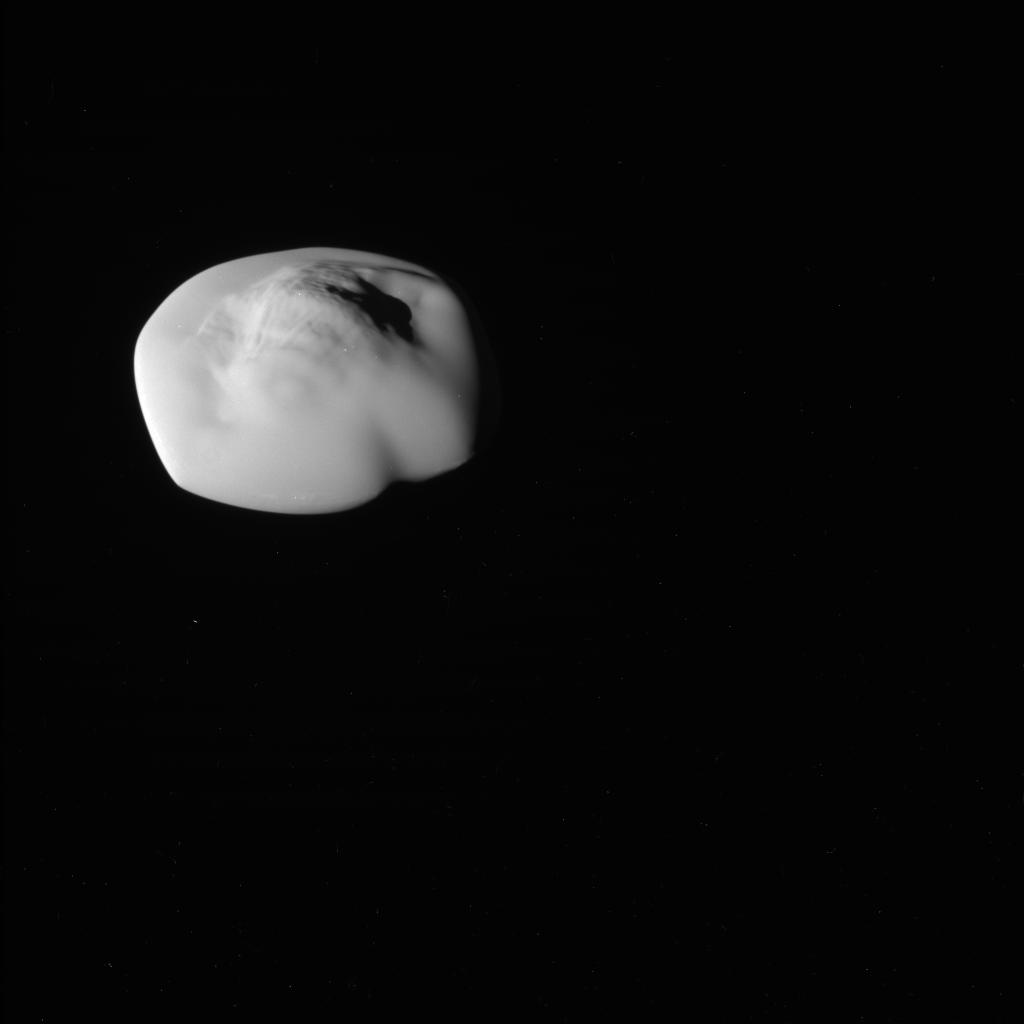
Click for original image.
Cool image time! The picture to the right, cropped and reduced to post here, was taken on April 13, 2017 by the orbiter Cassini as it began it last close loops around Saturn before diving into its atmosphere to burn up.
Those close loops allowed it to get good close-up images of a few of the tiny moons that orbit in or close to the gas giant’s rings. On the right is one of those pictures, of the moon Atlas, taken from a distance of about 10,000 miles.
The moon’s weird ravioli shape is thought to be caused by the accretion of dust and ice from the nearby rings along Atlas’s equator.
Scientists also found the moon surfaces to be highly porous, further confirming that they were formed in multiple stages as ring material settled onto denser cores that might be remnants of a larger object that broke apart. The porosity also helps explain their shape: Rather than being spherical, they are blobby and ravioli-like, with material stuck around their equators. “We found these moons are scooping up particles of ice and dust from the rings to form the little skirts around their equators,” Buratti said. “A denser body would be more ball-shaped because gravity would pull the material in.”
Atlas itself is about 25 miles wide and about 11.5 miles thick, at its thickest point. I suspect if you tried to walk on it you would sink into the accumulated dust and ice, as it is likely no more dense as newly fallen snow.

Click for original.
Link here to the press release. The paper itself can be read here.
The paper is an excellent summary of practically all the research that has been done in space and on the ground studying the impact of the harsh environment of space on reproduction. It notes above all that we really know very little despite this research, because the risks to the newborn have precluded direct study. From the paper’s abstract:
Despite over 65 years of human spaceflight activities, little is known of the impact of the space environment on the human reproductive systems during long-duration missions. Extended time in space poses potential hazards to the reproductive function of female and male astronauts, including exposure to cosmic radiation, altered gravity, psychological and physical stress, and disruption to circadian rhythm.
This review encapsulates current understanding of the effects of spaceflight on reproductive physiology, incorporating findings from animal studies, a recent experiment on sperm motility, and omics-based insights from astronaut physiology. Female reproductive systems appear to be especially vulnerable, with implications for oogenesis and embryonic development in microgravity. Male reproductive function reveals compromised DNA integrity, even when motility appears to be preserved. This review examines the limited embryogenesis studies in space, which show frequent abnormal cell division and impaired development in rodents.
In the paper’s conclusion, these academics sadly revert to type, and propose the establishment of an international regulatory framework for controlling this issue, as shown in the graphic to the right. This is empty foolishness, because such regulations will only do more harm than good, stifling research while failing to accomplish anything.
Leaving Earth: Space Stations, Rival Superpowers, and the Quest for Interplanetary Travel, can be purchased as an ebook everywhere for only $3.99 (before discount) at amazon, Barnes & Noble, all ebook vendors, or direct from my ebook publisher, ebookit.
If you buy it from ebookit you don't support the big oppressive tech companies and I get a bigger cut much sooner.
"Leaving Earth is one of the best and certainly the most comprehensive summary of our drive into space that I have ever read. It will be invaluable to future scholars because it will tell them how the next chapter of human history opened." -- Arthur C. Clarke

The French Guiana spaceport. The Diamant launchsite is labeled “B.”
Click for full resolution image. (Note: The Ariane-5 pad is now the
Ariane-6 pad.)
Once France’s space agency CNES regained control of its spaceport in French Guiana several years ago from the European Space Agency’s (ESA) commercial pseudo-company Arianespace, it has moved aggressively to make that spaceport attractive to the new European rocket startups.
Beginning in 2022, it began to sign deals with every one of those rocket startups to allow them to establish launch facilities at the spaceport using several long abandoned pads, including the French Diamant rocket site not used for decades as well as the Soyuz launch site unused due to Russia’s invasion of the Ukraine.
CNES decided to standardize Diamant for multiple rocket companies, while leasing the Soyuz site to one.
In a news story today, it appears the startup MaiaSpace, a wholly owned subsidiary of the much larger aerospace company ArianeGroupk, has shifted its launch plans at French Guiana. Initially it was going to launch its rocket from the Diamant pad. In 2024 however it won the contract to use the Soyuz pad, and it has now withdrawn its plans to use Diamant entirely.
CNES has therefore put out a call to the European rocket industry to fill this slot at Diamant. At present Isar Aerospace, PLD Space, Rocket Factory Augsburg, and Latitude have agreements to use Diamant, though only Latitude and PLD had done any development work on their facilities there.
As far as I know, these companies comprise the entire cadre of new European rocket startups, so I don’t know what other users CNES hopes to find. Furthermore, CNES had wanted to standardize the launch site for everyone, and the companies had balked at that idea. PLD got a deal to use its own pad at Diamant. I suspect the reason Isar and Rocket Factory have done little there is because they want their own facilities as well.
Either way, French Guiana is moving the direction of supporting competitive commercial operations, and that is a very good thing.
Today I came across this tweet:

Click to see video in tweet.
The comparison between the tactics of the Nazi storm troopers and our modern Antifa thugs is apt. It illustrates the time we now live in. It also immediately made me want to repost my 2020 essay, Genocide is coming to America. That essay sadly remains pertinent, because the same unwillingness of decent Germans to believe the Nazis were a threat is the same unwillingness of too many modern Americans to believe the same thing about Antifa and the Democratic Party (which now enthusiastically uses Antifa as its storm troopers).
Worse, we now have a large minority of Americans who support this violent behavior. To them, violence is wholly justified against those who disagree with them. The proof of this horrible fact was demonstrated in the 2025 elections, where in Virginia a Democrat won his election despite openly wishing death not only on a Republican but on that Republican’s children, while in New York an anti-Semitic communist won election as mayor.
————————-
Genocide is coming to America
In my last visit to Israel in 2018, my brother and sister-in-law took me sight-seeing to the northern parts of Israel near the Sea of Galilee. On our first night, we stayed at the home of one of their older friends, a man in his seventies.
That night we sat around their kitchen table so that they could catch up on family matters. At one point in the conversation our host reminisced about an older woman, now gone, who he had known in his childhood in the 1950s who had lived in Germany before and during World War II and had survived a concentration camp.
» Read more
An evening pause: From the 1944 film, Meet me in St. Louis. I posted this in July 2010 as one of the very first evening pauses. As I wrote then, “The last line of the song says it all, about life and love.”
Hat tip to Judd Clark, who suggested it, which convinced me it was time to post it again.
Courtesy of BtB’s stringer Jay. This post is also an open thread. I welcome my readers to post any comments or additional links relating to any space issues, even if unrelated to the links below.
Though NASA administration Jared Isaacman continues to support unequivocally NASA’s planned Artemis-2 ten-day manned mission around the Moon — presently targeting a March launch date — in a statement today on X he revealed that he also recognizes the serious limitations of the SLS rocket.
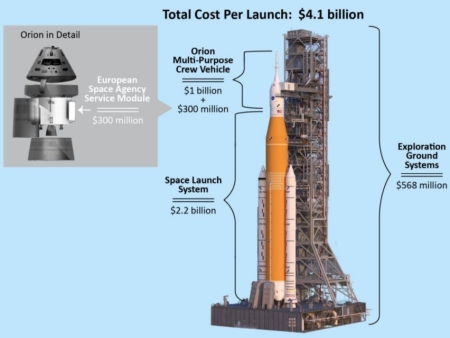
And it also takes two-plus years between launches
The Artemis vision began with President Trump, but the SLS architecture and its components long predate his administration, with much of the heritage clearly traced back to the Shuttle era. As I stated during my hearings, and will say again, this is the fastest path to return humans to the Moon and achieve our near-term objectives through at least Artemis V, but it is not the most economic path and certainly not the forever path.
The flight rate is the lowest of any NASA-designed vehicle, and that should be a topic of discussion. It is why we undertake wet dress rehearsals, Pre-FRR, and FRR, and why we will not press to launch until we are absolutely ready.
These comments were also in connection with the first wet dress rehearsal countdown that NASA performed with SLS/Orion in the past few days, a rehearsal that had to be terminated early because of fuel leaks. NASA now plans to do another wet dress rehearsal, requiring it to push back the Artemis-2 launch until March.
I think there is more going on here than meets the eye.
» Read more

Click for original image.
Cool image time! I have decided to start delving into the archives of some of the older planetary missions, because there is value there that is often forgotten now years later, that should not be forgotten.
In looking through the archive of images from the main camera on New Horizons as it sped past Pluto in July 2015, I found the picture to the right, taken on July 10, 2015 when New Horizons was still about three million miles away.
This is the raw image from that camera, cropped, reduced, and sharpened to post here. It is also the first time in human history we had a sharp look at these two planets that sit at the outer fringes of the solar system. The science team that day released a version that they enhanced to bring out the details, which I immediately posted. They then noted the following:
A high-contrast array of bright and dark features covers Pluto’s surface, while on Charon, only a dark polar region interrupts a generally more uniform light gray terrain. The reddish materials that color Pluto are absent on Charon. Pluto has a significant atmosphere; Charon does not. On Pluto, exotic ices like frozen nitrogen, methane, and carbon monoxide have been found, while Charon’s surface is made of frozen water and ammonia compounds. The interior of Pluto is mostly rock, while Charon contains equal measures of rock and water ice. “These two objects have been together for billions of years, in the same orbit, but they are totally different,” said Principal Investigator Alan Stern of the Southwest Research Institute (SwRI), Boulder, Colorado.
This difference is quite clear in the raw image, with Charon markedly dimmer than Pluto even though they are getting the same amount of light from the Sun.
More than any other objects in the solar system, the double planet system of Pluto-Charon demonstrates how uniquely different every object in the solar system is from every other object. Even when formed together, as these two planets were, they formed in a manner that made them drastically different.

One of the 20th century’s greatest movies is David Lean’s 1962 epic Lawrence of Arabia. The story it tells — of the clash of cultures, of war, and of colonization — combined with the personal story of T.E. Lawrence during World War I, is one of high drama that is unforgettable to anyone who has ever seen it.
Yet, the events it tells seem too dramatic to be believed. Did Lawrence actually rescue a man in the desert, by himself and against the advice of his Arab allies who knew better? Did he actually later execute that man coldly to prevent a tribal war that would have destroyed the Arab revolt against the Ottoman Empire? Did he actually lead those Arab tribes across a deadly desert to take the town of Aqaba from the rear?
And did he actually lead that Arab revolt so successfully that it took Damascus ahead of the British, only to lose it because that medieval tribal culture knew nothing about modern technology?
For years I wondered about these questions and tried to find out. I read T.E. Lawrence’s own memoir of his time there, The Seven Pillars of Wisdom, and found it to be unclear and obscure, answering none of my questions. Other histories about World War I merely touched upon these events, treating them as a minor side show. And histories about the Middle East during that time seemed uninterested in telling this part of the story.
So, the questions remained: Did these events really happen? They seemed too good to be true.
I have now discovered that these stories are not only largely true, the reality of T.E. Lawrence’s life and his time in Arabia was even stranger than I could suppose. I learned this from Scott Anderson’s fine biography of Lawrence, Lawrence in Arabia: War, Deceit, Imperial Folly, and the Making of the Modern Middle East. Anderson not only unveiled Lawrence in all his inexplicable glory in this book, he made clear the complex political background that shaped the Middle East, and made it as we know it today.
» Read more
Stupidity on display: According to researchers using data from the Jupiter orbiter Juno, Jupiter is a tiny bit thinner at the equator and flatter at the poles than previously measured.
Leading an international team from Italy, the United States, France and Switzerland, Weizmann Institute of Science researchers [Israel] have produced more precise measurements of Jupiter’s size and shape than ever before, using new data from NASA’s Juno spacecraft.
The peer-reviewed research, published today in Nature Astronomy, shows that the radius of Jupiter is about four kilometers (2.5 miles) thinner at its equator and 12 kilometers (7.5 miles) flatter at the poles than believed in earlier assessments. The scientists determined the planet has a radius of 71,484 kilometers (44,418 miles). Earlier data measured it at 71,492 kilometers (44,423 miles).
The absurdity of this research is galling. The revision they claim is tiny, a mere 0.0028% difference at the equator, and 0.0084% at the poles. These numbers are insignificant. Moreover, Jupiter is a gas giant. It has no precisely known surface. Instead, it has an atmosphere that gradually thins as you go up. To claim any precise diameter is absurd, especially because seasonally and over time that atmosphere will expand and shrink.
And of course, at least two mainstream news outlets, Scientific American and The Times of Israel (linked above), report this story without any skepticism, as if this is a Earth-shaking discovery. All that tells me is that when it comes to science, both are incompetent sources of information.

India’s space agency ISRO,
as transparent as mud
According to a statement by a government minister yesterday, India’s space agency ISRO now knows what caused the January launch failure of its PSLV rocket, and has thus scheduled its next launch for June 2026.
This had been the second PSLV launch failure in a row, both of which occurred with the rocket’s third stage at almost the exact same time. With the first failure, ISRO never outlined publicly the cause, though it claimed it had solved the issue. According to the minister’s statement, the failure of the second launch was unrelated to the first.
The minister also said that the two PSLV missions that had failed—PSLV-C61 in May 2025 and PSLV-C62 in January this year—were unrelated. “It wasn’t the same problem. When the first mission failed, there was a detailed assessment, and the problem was fixed. Both the issues were different,” Singh said.
He also added that separate internal and external failure assessment committees have been set up to analyse what went wrong in each of the missions.
No word however as to the cause of the failure has yet been released. Though he also claimed the PSLV has not lost its customers due to these issues, ISRO’s lack of transparency says otherwise. If it claims the two failures came from different causes, it should provide the details in order to reassure potential customers.

NASA management announced today that it has decided to postpone the launch of the manned Artemis-2 mission around the Moon until March in order to give it time to do a second wet dress rehearsal countdown of the rocket and fix the hydrogen fuel leaks that occurred in yesterday’s rehearsal.
Engineers pushed through several challenges during the two-day test and met many of the planned objectives. To allow teams to review data and conduct a second wet dress rehearsal, NASA now will target March as the earliest possible launch opportunity for the flight test.
Moving off a February launch window also means the Artemis II astronauts will be released from quarantine, which they entered in Houston on Jan. 21. As a result, they will not travel to NASA’s Kennedy Space Center in Florida Tuesday as tentatively planned. Crew will enter quarantine again about two weeks out from the next targeted launch opportunity.
It should be understood that these hydrogen leaks have been systemic to SLS’s core stage rocket engines, which come from the shuttle era. Shuttle launches were routinely delayed due to similar leaks. This was partly because hydrogen is extremely difficult to control, as its atom is so small and light, and partly because of the engine design. This was the first rocket system ever to use hydrogen as fuel, and was thus cutting edge, in the 1970s. We should not be surprised by such issues.
Newer hydrogen-fueled designs have apparently overcome the problem. For example, Blue Origin uses hydrogen as a fuel in the upper stage of its New Glenn rocket, and though it has only launched twice, it has not had such issues on either launch.
In its announcement NASA also noted a bunch of other issues that occurred during this first rehearsal, all of which suggest that a delay is called for. There was a valve issue in the Orion capsule, some audio communication channels kept dropping out, and the cold weather affected some equipment. Waiting until warmer weather will help alleviate some of this.
According to a SpaceX tweet yesterday afternoon, the upper stage of the Falcon 9 rocket that successfully launched 25 Starlink satellites “experienced an off-nominal condition” when it was preparing to do its final de-orbit engine burn.
During today’s Falcon 9 launch of @Starlink satellites, the second stage experienced an off-nominal condition during preparation for the deorbit burn. The vehicle then performed as designed to successfully passivate the stage. The first two MVac burns were nominal and safely deployed all 25 Starlink satellites to their intended orbit.
Teams are reviewing data to determine root cause and corrective actions before returning to flight
It appears that SpaceX has temporarily paused its launch schedule while it reviews this incident, shifting a launch that was supposed to occur last night back three days to February 5th. While the launch itself was successful, the company likely wants to get a handle on what went wrong before resuming launches.
Two hydrogen fuel leaks during today’s Artemis-2 dress rehearsal countdown forced an early termination of the count as well as the cancellation of a second practice countdown.
The Artemis II wet dress rehearsal countdown was terminated at the T-5:15 minute mark due to a liquid hydrogen leak at the interface of the tail service mast umbilical, which had experienced high concentrations of liquid hydrogen earlier in the countdown, as well. The launch control team is working to ensure the SLS (Space Launch System) rocket is in a safe configuration and begin draining its tanks.
An earlier leak of hydrogen in the count forced a hold and a recycling of the count, though it did not stop the rehearsal.
The initial plan had been to do two terminal counts. First they would run the countdown down to T-33 seconds, hold for a few minutes, then recycle back to T-10 minutes and do it again. Because of that first leak delay the launch director canceled the second count. And because of the second leak they were unable to run that one count all the way to T-33 seconds.
The wise action would be for NASA to review their data, figure out what caused the leaks, correct it, and then do another dress rehearsal countdown. This being NASA, do not be surprised if they review the data, figure out what caused the leaks, and decide they can go ahead with the launch on February 8, 2026.
Why not? They are already launching this manned 10-day mission around the Moon with an untested life support system and a questionable heat shield. Might as well try a launch when you haven’t worked out all the fueling kinks.
<An evening pause: Performed live 1982.
Hat tip Rex Ridenoure.
Elon Musk today announced that he has merged the company xAI (which includes X) with SpaceX, because in his mind the needs of the two companies interlace perfectly.
The requirement to launch thousands of satellites to orbit became a forcing function for the Falcon program, driving recursive improvements to reach the unprecedented flight rates necessary to make space-based internet a reality. This year, Starship will begin delivering the much more powerful V3 Starlink satellites to orbit, with each launch adding more than 20 times the capacity to the constellation as the current Falcon launches of the V2 Starlink satellites. Starship will also launch the next generation of direct-to-mobile satellites, which will deliver full cellular coverage everywhere on Earth.
While the need to launch these satellites will act as a similar forcing function to drive Starship improvements and launch rates, the sheer number of satellites that will be needed for space-based data centers will push Starship to even greater heights. With launches every hour carrying 200 tons per flight, Starship will deliver millions of tons to orbit and beyond per year, enabling an exciting future where humanity is out exploring amongst the stars.
The basic math is that launching a million tons per year of satellites generating 100 kW of compute power per ton would add 100 gigawatts of AI compute capacity annually, with no ongoing operational or maintenance needs. Ultimately, there is a path to launching 1 TW/year from Earth.
My estimate is that within 2 to 3 years, the lowest cost way to generate AI compute will be in space. This cost-efficiency alone will enable innovative companies to forge ahead in training their AI models and processing data at unprecedented speeds and scales, accelerating breakthroughs in our understanding of physics and invention of technologies to benefit humanity.
Many sources online are speculating that this new merged company will make the company’s initial public offering (IPO) now rumored for this summer even more sky high. I remain puzzled however why Musk would want to do it, and this merger today illustrates why. He controls both SpaceX and xAI completely, as both are privately owned. He didn’t need to convince government regulators of anything. Once the company is public, with publicly traded stock, that will change. He will no longer have such freedom of action.

