
NASA and Boeing complete ground static fire tests of Starliner

According to a press announcement tonight from NASA, the agency and Boeing have now completed the static fire tests using a Starliner ground capsule to duplicate the engine burns required to bring the in-space capsule back to Earth, carrying its two astronauts.

Teams completed ground hot fire testing at White Sands and are working to evaluate the test data and inspect the test engine. The ongoing ground analysis is expected to continue throughout the week. Working with a reaction control system thruster built for a future Starliner spacecraft, ground teams fired the engine through similar inflight conditions the spacecraft experienced on the way to the space station. The ground tests also included stress-case firings, and replicated conditions Starliner’s thrusters will experience from undocking to deorbit burn, where the thrusters will fire to slow Starliner’s speed to bring it out of orbit for landing in the southwestern United States.

Engineers now need to complete a review of those tests, followed by a full review leading to a decision as to when the astronauts will return on Starliner. No dates have yet been set, but expect these reviews to be completed within two weeks, and that Starliner will likely be scheduled for return in early August, prior to the scheduled launch of the next Dragon manned mission in mid-August.

All this assumes the FAA will clear SpaceX to resume launches before then. SpaceX is apparently ready to resume this week, but we have no indication the FAA will go along.

4 comments

Update on Cape Canaveral work by multiple launch companies

Link here. The article provides a nice summary of the construction work by Blue Origin, Stoke Space, and SpaceX at the cape, all leading to future launches and greater capabilities.

Blue Origin is still pushing for a September 29, 2024 first launch of its New Glenn orbital rocket. SpaceX is continuing work on its new Starship/Superheavy facilities as well as installing upgrades to its Falcon launchpads. The most interesting tidbit however is was about Stoke Space and its proposed Nova rocket:

The first two flights of Nova are planned for 2025, while 10 flights are planned for both 2026 and 2027. Initial flights of Nova will be expendable, with full reusability of the first and second stages coming later.

Stoke’s primary goal has been to make this rocket entirely reusable. It apparently plans to begin launching and do recovery tests as it goes until it achieves that reusability later.

0 comments

CEO of Firefly removed

The board of directors of the rocket startup Firefly announced yesterday that the company’s CEO, Bill Weber, “will no longer serve” in that position and has been replaced by an interim CEO.

This change is likely related to a news story the day prior about allegations that Weber had had an “inappropriate relationship” with a female employee.

Firefly has an interesting history when it comes to its CEOs. The company’s first CEO, Tom Markusic, was first sued by Virgin Galactic (his former employer) for stealing proprietary information, and then by his first Firefly investors when he got the company out of bankruptcy by making a deal with a Ukrainian billionaire. That billionaire was later forced to divest from the company by the State Department. The new investors that Markusic found then forced him out in 2022.

Who will take over now remains unknown.

4 comments

NASA cancels its VIPER payload on Astrobotic’s Griffin lunar lander

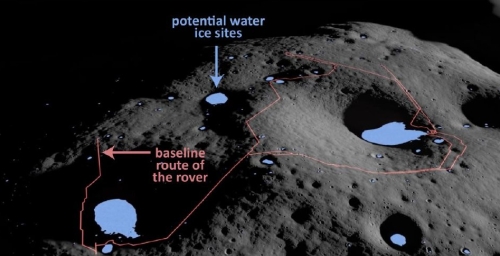
VIPER's planned route on the Moon
VIPER’s now canceled planned route at the Moon’s south pole

Late yesterday NASA announced it was canceling the VIPER rover that was the primary payload on Astrobotic’s Griffin lunar lander, scheduled for launch in the fall of 2025.

NASA stated cost increases, delays to the launch date, and the risks of future cost growth as the reasons to stand down on the mission. The rover was originally planned to launch in late 2023, but in 2022, NASA requested a launch delay to late 2024 to provide more time for preflight testing of the Astrobotic lander. Since that time, additional schedule and supply chain delays pushed VIPER’s readiness date to September 2025, and independently its CLPS (Commercial Lunar Payload Services) launch aboard Astrobotic’s Griffin lander also has been delayed to a similar time. Continuation of VIPER would result in an increased cost that threatens cancellation or disruption to other CLPS missions. NASA has notified Congress of the agency’s intent.

Knowing a bit of history is important to understand this decision. In the first half of the 2010s VIPER was called Resource Prospector, and was intended as an entirely NASA-built lunar lander and rover mission with a budget of about billion dollars. In 2018 however the Trump administration cancelled it as part of its decision to shift from missions designed, built, and owned by NASA to making NASA simply a customer buying products from private sector. Rather than spend a billion on one lunar lander/rover mission, NASA would use that money to buy multiple lunar landers from private companies, and put its instruments on those.

NASA then decided to repurpose the rover portion of Resource Prospector, turning it into VIPER to launch on Astrobotic’s Griffin lander. However, that project still carried with it all the problems that curse all government-designed, government-built, and government-owned projects. It had no fixed price contract but instead had the typical government unlimited checking account, and thus its costs kept rising with repeated delays in construction.

When then-NASA Administrator Jim Bridenstine revealed the project at the 2019 International Astronautical Congress, the estimated cost was $250 million. By the time NASA was ready to make a cost commitment to Congress, that grew to $433.5 million with landing in 2023. That landing date slipped to 2024 with a cost of $505.4 million. Now it has slipped again to 2025 and with a cost of $609.6 million, more than 30 percent above the commitment. That triggered an automatic cancellation review, Kearns said, which took place last month.

Some of the cause of the 2023 delay was because Astrobotic’s Griffin lander wasn’t ready either. Now however it appears VIPER still won’t be ready for the 2025 launch, even though the lander will be ready.

NASA has therefore decided to stop throwing good money after bad, and kill the rover. It however has not killed its funding for Astrobotic’s Griffin, and the mission will go forward, with the company offering its now open payload space to others. It also may use this space to fly a demonstration mission of its own proposed LunarGrid solar power system.

1 comment

SpaceX to FAA: Allow launches to resume before completion of July 11th launch failure investigation

SpaceX on July 15, 2024 submitted a request to the FAA to quickly determine that the July 11th Falcon-9 launch failure posed no threat to public safety, and thus allow the company to resume Falcon 9 launches before the investigation of that failure is completed.

The FAA has two means of allowing a rocket to return to flight operations following a mishap. The first is that it approves a launch operator-led mishap investigation final report, which would include “the identification of any corrective actions.” Those actions need to be put in place and all related licensing requirement need to be met.

The other option is for a public safety determination to be issued. This would be an option if “the mishap did not involve safety-critical systems or otherwise jeopardize public safety,” according to the FAA.

“The FAA will review the request, and if in agreement, authorize a return to flight operations while the mishap investigation remains open and provided the operator meets all relevant licensing requirements,” the FAA wrote on its website.

SpaceX is apparently expecting the FAA to quickly approve this request, as it has now scheduled its next Falcon 9 launch for July 19, 2024, at the end of this week.

The lower level workers at the FAA probably want to get out of the way, but they have to obey orders from above, and it is my suspicion that the White House is applying pressure to make life hard for SpaceX. As I have noted, the FAA has not required the same level of due diligence from either NASA and its SLS rocket, or Boeing’s Starliner capsule.

5 comments

Musk: SpaceX is moving its headquarters from California to Texas

Because of the bill signed into law this week by California governor Gavin Newsom that allows schools to groom little kids sexually and hide that fact from their parents, Elon Musk announced today that SpaceX is moving its headquarters from California to Texas. From Musk’s tweet:

This is the final straw.

Because of this law and the many others that preceded it, attacking both families and companies, SpaceX will now move its HQ from Hawthorne, California, to Starbase, Texas.

Musk also noted that X will also relocate from California to Texas.

If you establish a government that oppresses and encourages insane behavior, you will discover that people will flee your tyranny enthusiastically. The Democrats who run California have achieved this goal quite skillfully. May they enjoy their enduring bankruptcy.

17 comments

ESA announces asteroid mission to Apophis

Apophis' path past the Earth in 2029
A cartoon showing Apophis’s path in 2029

The European Space Agency (ESA) today announced that is beginning work on an asteroid mission, dubbed Ramses, to the potentially dangerous asteroid Apophis when it makes its next close-fly of the Earth in 2029.

Ramses needs to launch in April 2028 to allow for an arrival at Apophis in February 2029, two months before the close approach. In order to meet this deadline, ESA requested permission to begin preparatory work on the mission as soon as possible using existing resources. This permission has been granted by the Space Safety programme board. The decision whether to commit to the mission in full will take place at ESA’s Ministerial Council Meeting in November 2025.

Using a suite of scientific instruments, the spacecraft will conduct a thorough before-and-after survey of the asteroid’s shape, surface, orbit, rotation and orientation. By analysing how Apophis changes during the flyby, scientists will learn a lot about the response of an asteroid to external forces as well as asteroid composition, interior structure, cohesion, mass, density, and porosity.

Based on the track record of European space projects, which appear to always proceed at a glacial pace with late problems that cause the missions to miss their launch window (with the launch of the Franklin Mars rover as the poster child), the project is getting started far too late to meet its launch date of April 2028. We shall see if Europe surprises us this time and gets the project off the ground as planned.

Right now the only confirmed mission to Apophis is OSIRIS-APEX, which was redirected to the asteroid after it delivered its samples from Bennu to Earth. Many others have been proposed, including a commercial mission, but none appear to be confirmed or under construction.

2 comments

More delays for first test hops of Europe’s Themis reusable first stage

Par for the course: The first test hops of Europe’s Themis demonstrator reusable first stage, first proposed in 2018, have now been delayed until 2025.

In a May 2024 presentation given at the International Civil Aviation Organization offices in Paris, the Swedish Space Corporation (SSC) announced that initial Themis hop tests would only begin next year. SSC is in charge of the operation of Esrange Space Centre in Sweden, where these initial tests of an integrated Themis demonstrator will begin. Once ArianeGroup moves onto higher altitude flights, the testing will be moved to the Guiana Space Centre.

The demonstrator itself is being built by a partnership of the private company ArianeGroup (Airbus and Safran) and the French space agency CNES, and was originallly supposed to begin test hops in 2022. These delays are typical of European government-run space operations. Note too that this is not a usable first stage, merely a demonstrator. For it to become operational it will have to be rebuilt.

None of this should be a surprise, since the man who runs Arianespace and is likely a key player in all this work, Stephan Israel, said in 2023 this stage would not become operational until the 2030s. Israel has been hostile to reusability from day one, and apparently is having some influence in slowing or blocking this development.

By the time this reusable first stage flies, it will be entirely obsolete and an utter waste of money, at least from a business and profit point of view. It will however have served these bankrupt companies and space agencies well as an empty jobs program, accomplishing little but make-work.

3 comments
1 161 162 163 164 165 898