Nova Scotia spaceport wins $10 million credit line from Canadian government

Proposed Canadian spaceports

Maritime Launch Services, the startup that has been trying to establish a spaceport in Nova Scotia since 2016, without any success, was this week awarded a $10 million credit line from Canadian government’s Export Development agency (EDC).

EDC is Canada’s export credit agency, established in 1944 to help Canadian businesses of all sizes grow globally through trade financing, insurance, and market expertise. As part of its corporate strategy, EDC is committed to allocating strategic risk capital to developing trade-enabling infrastructure to help Canada become a more resilient, competitive, and secure global trading nation. EDC’s support of Maritime Launch as it develops Spaceport Nova Scotia will significantly strengthen Canada’s position in the defence and security sector, where space is an increasingly vital domain.

….The terms of the agreement provide development funding for Spaceport Nova Scotia’s next phase of construction, including launch pad and infrastructure development required to support future orbital missions.

This award is a bit puzzling, as Maritime has done nothing in the past decade to instill any confidence it is going to fulfill any of its promises. Its original plan, to offer satellite companies a launchpad and a rocket (made by a Ukrainian company) failed in 2022 when Russian invaded the Ukraine. Since the Maritime has struggled to get any other rocket companies interested in launching from Spaceport Nova Scotia.

Meanwhile, a second Canadian commercial spaceport, the Atlantic Spaceport in Newfoundland, was proposed only three years ago. It is developing its own rocket, and has already signed contracts with other companies for its mission control center and tracking stations. In addition, it twice attempted a suborbital test launch of a smaller rocket, though both attempts were scrubbed due to fuel leaks in ground systems.

Whether this grant can jump start Maritime’s spaceport remains an open question. Very clearly, the Canadian government hopes so.

4 comments

SpaceX launches 28 Starlink satellites, sets new annual launch record

SpaceX this morning successfully launched another 28 Starlink satellites, its Falcon 9 rocket lifting off from Vandenberg Space Force Base in California. The first stage completed its 19th flight, landing on a drone ship in the Pacific.

With this launch SpaceX set a new record by a private company for the most successful launches in a single year, beating the record it set last year. In fact, this is the sixth year in a row that SpaceX has reset this particular record. Where once it was difficult for the world’s entire launch industry to complete 100 launches in a year — using government controlled rockets — SpaceX has shown that much greater things can happen if private enterprise, pursing profit, is given its head and allowed to run freely.

This launch also brought the U.S. launch total to 157, which matches the country’s record from last year. Expect a new record to be set before the week is out.

The leaders in the 2025 launch race:

138 SpaceX
64 China
13 Russia
13 Rocket Lab

SpaceX now leads the rest of the world in successful launches, 138 to 105. Japan has a launch scheduled for later today, its H3 rocket carrying Japan’s upgraded HTV-X1 cargo freighter on a mission to ISS.

3 comments

SpaceX launches communications satellite for the Spanish government

SpaceX tonight successfully placed a Spanish communications satellite into orbit, its Falcon 9 rocket lifting off from Cape Canaveral in Florida.

The satellite will provide communications for Spain’s military and government. The first stage completed its 22nd flight, but because of the needs of the payload, there was not enough fuel left for it to land on a drone ship. This was its last flight, the stage falling into the Atlantic. The two fairings completed their 16th and 28th flights respectively.

The leaders in the 2025 launch race:

137 SpaceX
64 China
13 Russia
13 Rocket Lab

SpaceX now leads the rest of the world in successful launches, 137 to 105.

SpaceX has now matched the annual launch record it set last year, and done it with more than two months left to go in 2025. Whether it can reach its goal of about 180 launches this year seems doubtful, but it will definitely come close. It is averaging about 14 launches per month, which means it could complete about 28 to 30 before the end of December.

7 comments

China launches a “communication technology test” satellite

Using its most powerful rocket, the Long March 5, China today placed in orbit what its state-run press called a “communication technology test satellite”, the rocket lifting off from China’s coastal Wenchang spaceport.

Though the rocket’s flight path over the ocean meant its lower stages would not crash on land, China did warn the Philippines that some of the drop zones were within its fishing regions, and that fishermen should stay out for about an hour this morning.

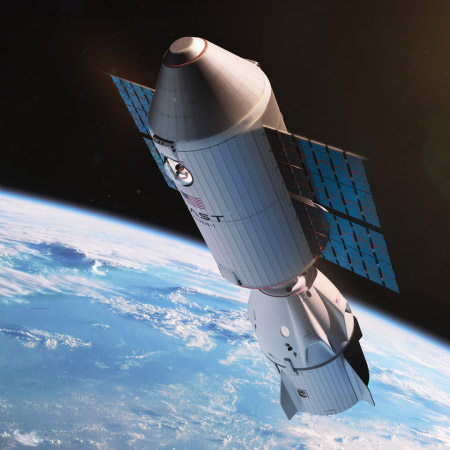
China’s state-run press provided no details about the satellite. That it needed a very powerful rocket suggests it is some variation of AST SpaceMobile’s very large Bluebird satellites for providing direct phone-to-satellite service. If so, this is just another example of China copying the work of a private company in the west.

The leaders in the 2025 launch race:

136 SpaceX
64 China
13 Russia
13 Rocket Lab

SpaceX still leads the rest of the world in successful launches, 136 to 105.

4 comments

European companies Airbus, Leonardo, and Thales merge their satellite divisions

The three European aerospace companies Airbus, Leonardo, and Thales today confirmed previous rumors and announced they are merging their satellite divisions into a new company, dubbed Project Bromo, in order to better compete with the giant satellite constellations in the U.S. and China.

The preliminary deal wraps up months of three-way talks and clears the path to create a single company with annual revenue of about €6.5 billion ($7.5 billion). Airbus will own 35% of the group, with the other two partners each holding 32.5% stakes, according to a joint release.

The alliance, dubbed Project Bromo, is seen as a key litmus test for Europe to consolidate its fragmented defense and space industries to better compete with US and Chinese competitors. It aims to unify Europe’s satellite efforts and provide more autonomy in a segment that has become commercially and geopolitically vital.

These companies are coming to this competition very late in the game. SpaceX already has more than 8,000 satellites in orbit, and new constellations by Amazon and several Chinese pseudo-companies have already begun launching satellites. Moreover, this smacks more of a consolidation resulting from these three companies inability to compete, rather than an effort to establish a new company capable of doing so.

1 comment

Lockheed Martin invests in rotating detonation rocket engine startup Venus Aerospace

The venture capital division at Lockheed Martin, which has previously invested in a number of aerospace startups, has now invested in the rocket engine startup Venus Aerospace, which is developing a new radical design called a rotating detonation rocket.

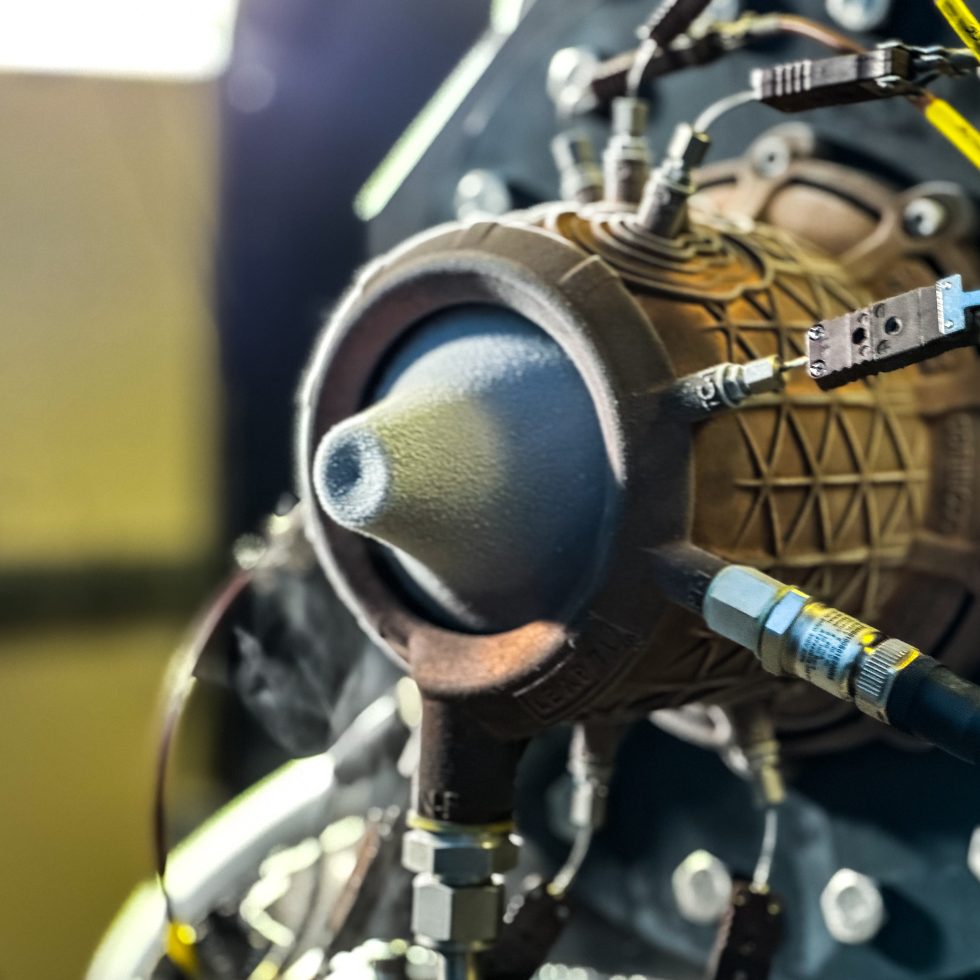
Venus Aerospace, based in Houston, Texas, has developed a rotating detonation rocket engine (RDRE) — a propulsion system that uses a continuously rotating detonation shockwave to generate thrust, promising more efficiency than conventional rocket engines. The company completed the first U.S. flight test of a 2,000-pound-thrust RDRE in May, launching the engine on a small rocket at Spaceport America in New Mexico. This engine could be used to replace solid rocket motors to power munitions and rockets, Sassie Duggleby, co-founder and chief executive of Venus Aerospace, said at Axios “Future of Defense” conference.

The amount of Lockheed Martin Ventures’ investment was not disclosed. Duggleby said the funding will “advance our capabilities to deliver at scale and deploy the engine.”

Venus Aerospace has already raised more than $100 million in private investment capital. This new influx from an established big space player will certainly strengthen its financial position.

Lockheed Martin has previously invested in rocket startups Rocket Lab, ABL, Orbex, and X-Bow. It has also invested in the orbital tug startup Orbit Fab, the orbital capsule company Inversion Space, and the satellite startup Terran Orbital, which it ended up buying entirely.

1 comment

SpaceX launches 28 Starlink satellites

SpaceX this morning successfully placed another 28 Starlink satellites into orbit, its Falcon 9 rocket lifting off from Vandenberg Space Force Base in California.

The first stage completed its 21st flight, landing on a drone ship in the Pacific.

The leaders in the 2025 launch race:

136 SpaceX
63 China
13 Russia
13 Rocket Lab

SpaceX now leads the rest of the world in successful launches, 136 to 104.

4 comments

Fake blather from NASA administrator Sean Duffy to hide more Artemis delays

Sean Duffy
Sean Duffy: “Look at the shiny object!”

During a press interview yesterday, interim NASA administrator Sean Duffy revealed almost as an aside that NASA’s mid-2027 launch for the first Artemis manned lunar landing is no longer realistic, and that NASA is now targeting a 2028 launch date instead.

Duffy managed to hide this revelation by also announcing that he is re-opening the bidding for the manned lunar lander NASA will use on that third Artemis mission. To quote Duffy:

Now, SpaceX had the contract for Artemis III. By the way, I love SpaceX and it’s an amazing company, but the problem is, they are behind. They pushed their timelines out and we are in a race against China. The president and I want to get to the moon in this president’s term. So, I’m going to open up the contract and I’m going let other space companies compete with SpaceX, like Blue Origin. Whatever one gets us there first to the moon, we are going to take. If SpaceX is behind and Blue Origin can do it before them, good on Blue Origin.

By the way we might have two companies that can get us back to the Moon in 2028.

The propaganda press of course is going wild about this SpaceX announcement, making believe it signifies something of importance. “SpaceX is behind! Elon Musk can’t do it! Duffy is giving Jeff Bezos the job!” And as I think Duffy intended, everyone is ignoring the fact that NASA has now admitted it won’t meet that 2027 launch target.

The irony is that Duffy’s decision to re-open bidding on that manned mission is utterly meaningless. » Read more

34 comments

Debris from suspected Chinese rocket discovered in western Australia

Though it has not yet been confirmed, a burned tank has been found in western Australia that is thought to come from the fourth stage of China’s solid-fueled Smart Dragon-3 rocket that lifted off from an ocean platform on September 24, 2025.

Suspected space junk that crashed near an iron ore mine in remote WA has been linked to a Chinese rocket launch, as authorities continue to probe the object’s origin. The smoking [sic] piece of debris was found on Saturday about 30 kilometres east of Newman, on a BHP mine access track.

The Australian Transport Safety Bureau and WA Police are investigating, but Flinders University space archaeologist Alice Gorman said she believed the debris was from the fourth stage of a Chinese rocket called Jielong [Smart Dragon].

If that debris is from the September launch, there is no where it was “smoking” when found two days ago. The images of the object simply show it to be well-blackened from its trip. It is also not clear when the object fell to Earth, making pinpointing its source more difficult.

If it is from China’s Smart Dragon-3 rocket, it suggests China has more work to do to keep its rockets’ stages from falling on land. Smart Dragon-3’s launch from an ocean platform just off China’s northeast coast, so one would think the lower stages would all fall in the ocean. In this case it appears the problem is similar to what has happened to some parts of the service module from de-orbiting SpaceX Dragon cargo capsules. The company found that if it allowed the service module to fall on its own, some parts would hit the ground. It has since changed its de-orbit procedures to guarantee this won’t happen any longer.

China needs to do the same. Based on its past record, it is not clear it will make any effort to do so.

3 comments

The three launches completed today including two major new achievements

The beat goes on: There were three launches globally today, repeating a pattern we’ve seen several times in the past few weeks, with China completing one launch and SpaceX completing two.

First, China’s solid-fueled Kinetica-1 (Lijian-1) rocket placed three Pakistani satellites into orbit, one of which is what Pakistan’s state-run press claimed was its first multi-spectral environmental satellite. China’s press also provided no information about where Kinetica-1’s lower stages crashed inside China, having launched from its Jiuquan spaceport in the country’s northwest. The rocket itself is supposedly commercial, but it is built by a government agency, the Chinese Academy of Sciences, and the government state-run press illustrated this by making no mention of this agency in reporting the launch.

Next, SpaceX set a new record for the reuse of a Falcon 9 first stage in placing 28 Starlink satellites into orbit, the rocket lifting off from Cape Canaveral in Florida. The first stage, B1067, completed its 31st flight, a new record for a Falcon 9 first stage, landing on a drone ship in the Atlantic. The updated rankings for the most reflights of a rocket:

39 Discovery space shuttle
33 Atlantis space shuttle
31 Falcon 9 booster B1067
29 Falcon 9 booster B1071
28 Columbia space shuttle
28 Falcon 9 booster B1063
27 Falcon 9 booster B1069

Sources here and here.

Finally, less than two hours later, SpaceX launched another 28 Starlink satellites, its Falcon 9 rocket lifting off from Vandenberg Space Force Base in California. The first stage completed its 11th flight, landing on a drone ship in the Pacific.

With these two launches, SpaceX has now placed more than 10,000 Starlink satellites into orbit, though a large percentage have been de-orbited over the years as the company has upgraded the satellites. Nonetheless, the number of Starlink satellites presently in orbit far exceeds all the satellites now in orbit for every other planned constellation, combined.

The leaders in the 2025 launch race:

135 SpaceX
63 China
13 Russia
13 Rocket Lab

SpaceX now leads the rest of the world in successful launches, 135 to 104.

In the coming days the global rocket industry will also achieve a number of additional milestones. SpaceX is just two launches short of its record of 137 launches achieved last year, while the U.S. is just three launches short of its own record of 157 launches, also set last year. Similarly, China is just three launches short of its own record of 66 set in 2023.

Globally, the world has presently completed 239 successful launches in 2025, a number only exceeded by the 2024 record of 256. Expect this record also to fall before the end of the year.

11 comments

China launches 18 satellites

China today successfully placed 18 more Spacesail or Qianfan satellites in orbit, its Long March 6A rocket lifting off from Taiyuan spaceport in northeast China. No word on where the rocket’s lower stages crashed inside China.

This was the sixth launch for this internet satellite constellation, intended to provide Chinese citizens service similar to Starlink, but controlled by the Chinese government. At present it has 119 satellites in orbit, out of a planned 648 in the constellation’s first phase. That phase was supposed to be completed by the end of this year, something that now seems very unlikely. The constellation’s final configuration could have as many as 10,000 satellites.

The leaders in the 2025 launch race:

133 SpaceX
62 China
13 Russia
13 Rocket Lab

SpaceX still leads the rest of the world in successful launches, 133 to 103.

0 comments

ESA awards contract to Italian company to provide an ocean landing platform

Avio's proposed reusable upper stage
Click for original.

The European Space Agency (ESA) has awarded the Italian company Ingegneria Dei Sistemi (IDS) a contract to build an ocean vessel for recovering the planned reusable test upper stage being built by the Italian rocket company Avio, as shown in the graphic to the right.

In late September, ESA awarded a €40 million contract to Avio for the design of a reusable rocket upper stage. The project scope encompasses preliminary design work, including system requirements and technological solutions, for both the launch system and the ground segment. According to the agency, the project has a number of potential applications, including as an evolution of Avio’s Vega family of rockets.

On 15 October, IDS announced that it had been awarded the contract to design the project’s recovery vessel, which falls under the systems ground segment. The company has subcontracted Italian naval systems consultancy Cetena and Norwegian shipbuilder Vard to assist with the project.

ESA very clearly is trying to encourage the development of reusable rockets by Europe’s private sector, but the nature of this particular program seems badly thought out. Rather than have Avio design the system in its entirety, in order to make it as efficient and profitable as possible, it appears ESA is micromanaging the design process, and thus bringing other subcontractors in who are outside Avio’s control. As a result, the final demo might work, but it is not likely it will be competitive with the private reusable rockets being built in the U.S. and elsewhere. Too many cooks in the kitchen.

1 comment

South African red tape will likely delay Starlink there for years to come

According to an article in South Africa yesterday, regulatory red tape and political demands in South Africa will likely block approval of Starlink in that country for years to come, if not forever.

Minister of Communications and Digital Technologies Solly Malatsi gazetted a draft policy direction on the role of EEIPs [Equity Equivalent Investment Programme] in the Information and Communication Technologies (ICT) sector on 23 May 2025. He explained that rules requiring electronic communications service providers to have 30% historically disadvantaged ownership prevented some companies from contributing to the country’s transformation in ways other than traditional ownership.

The Broad-Based Black Economic Empowerment (B-BBEE) Act and the ICT Sector Code supported the use of EEIPs to allow qualifying multinationals to meet empowerment obligations through alternatives. These can include investing in local suppliers, enterprise and skills development, job creation, infrastructure support, research and innovation, digital inclusion initiatives, and funding for small businesses.

However, the Independent Communications Authority of South Africa’s (Icasa) ownership regulations do not provide for EEIPs.

In other words, the laws contradict each other, and to make it possible to issue any licenses for a foreign company like SpaceX, the government needs to resolve this conflict. That is expected to take years of political maneuvering.

Even if this issue is resolved, SpaceX has already said it would not agree to the racial quota system proposed. It has offered to instead provide Starlink for free to 5,000 schools. It is not clear if politicians in South Africa will consider that sufficient.

6 comments

Thailand studying feasibility of establishing its own commercial spaceport

Thailand
Click for source.

Thailand’s government has begun a study to find out whether it makes financial and technical sense to establish its own commercial spaceport in that country.

The Geo-Informatics and Space Technology Development Agency (Public Organisation), or GISTDA, organised a seminar titled “Thailand’s Future Opportunities for Spaceport Development” on October 15 at iConsiam. The seminar aimed to establish a platform for exchanging views and gathering suggestions from all sectors regarding the future of a “Spaceport” in Thailand, underscoring a critical juncture for the country to elevate its presence on the global space stage fully.

Pakorn Apaphant, GISTDA Director, revealed that GISTDA is currently conducting a feasibility study for establishing a Spaceport in Thailand, in collaboration with the business consulting firm KPMG Phoomchai Business Advisory Ltd. The comprehensive study covers economic aspects, business strategy, environmental and social impacts, as well as a nationwide survey of potential sites to evaluate the most suitable location for future development.

As the map to the right shows, Thailand’s geography is not perfect. It has plenty of coast, in the country’s south, but at any location the trajectory of most launches would almost have to cross land of Thailand or other countries. Nonetheless, with the advent of reusable lower stages, such considerations will eventually become less of a concern.

1 comment

Three launches since yesterday

The beat goes on. Since yesterday there were three launches, one by China and two by SpaceX.

First, China’s Long March 8A rocket placed the twelfth set of satellites in the Guowang internet constellation, eventually aiming to be 13,000 satellites strong. China’s state-run press did not specify the exact number of satellites. Based on previous launches using the Long March 8A, the number was likely nine, bringing the number of this constellation’s satellites now in orbit to 96.

The launch was from China’s coastal Wenchang spaceport, and had a flight path that dumped the lower stages of the rocket near islands in the Philippines.

Next, SpaceX placed 21 satellites into orbit for the Pentagon, its Falcon 9 rocket lifting off from Vandenberg in California. This was the second launched by SpaceX for this military communication constellation, dubbed Tranche-1, intended to be 158 satellites total. The first stage completed its seventh flight, landing on a drone ship in the Pacific. The fairing halves completed their third and fourth flights respectively.

Finally, SpaceX launched another 28 Starlink satellites, its Falcon 9 rocket lifting off from Cape Canaveral in Florida. The first stage completed its third flight, landing on a drone ship in the Atlantic.

The leaders in the 2025 launch race:

133 SpaceX
61 China
13 Russia
13 Rocket Lab

SpaceX now leads the rest of the world in successful launches, 133 to 102.

0 comments

Indian rocket startup Skyroot hires Exolaunch to handle satellite integration and deployment

The Indian rocket startup Skyroot yesterday signed a partnership agreement with the company Exolaunch to handle the integration and deployment of satellites once its Vikram smallsat rocket begins launching.

Through this agreement, Exolaunch will integrate and deploy customer satellites on Skyroot’s Vikram series of launch vehicles, beginning with the Vikram-1 orbital missions. Exolaunch will provide its flight-proven deployment technologies for Skyroot customers across dedicated and rideshare launches. The partnership also includes the use of Exolaunch’s EXOtube payload stacks, designed to optimize multi-payload rideshare configurations, streamline constellation launches, increase mission flexibility, and enhance vehicle utilization.

While Skyroot has not yet launched, Exolaunch is very well established, having “a decade of flight heritage and 582 satellites launched across 39 missions to date.” Since Skyroot has no experience yet in these matters, having Exolaunch do it makes satellite companies more likely to buy space on its rocket.

Until recently Skyroot had been targeting a first launch before the end of this year. That schedule has now changed. According to the company’s webpage, that first launch is now scheduled sometime in 2026.

0 comments

New Morgan Stanley report reflects Wall Street’s generally optimistic view of Rocket Lab

Rocket Lab's stock in 2025
Click for source.

Though Rocket Lab is still not in the black, a new positive analysis of the company this week from Morgan Stanley reflects Wall Street’s generally optimistic view of Rocket Lab during the past year.

Rocket Lab (NASDAQ:RKLB) had its price target raised by equities researchers at Morgan Stanley from $20.00 to $68.00 in a research report issued on Monday, Benzinga reports. The brokerage presently has an “equal weight” rating on the rocket manufacturer’s stock. Morgan Stanley’s price target would suggest a potential upside of 1.63% from the company’s current price.

The article at the link also notes that Morgan Stanley is not alone in giving Rocket Lab a positive report, and in fact in the past year it shows that the recommendations from many analysts to buy its stock have risen considerably. These positive reviews have been reflected in a steady rise in the company’s stock price in 2025, as shown by the graph on the right.

Nor are these reports written in a vacuum. In recent weeks Rocket Lab has signed a bunch of new launch contracts, some extending deals with old customers, some with new customers of some note.

Buying the stock of a startup like Rocket Lab always carries risk, but it appears Wall Street is beginning to see the future of this particular startup as very promising.

3 comments
1 30 31 32 33 34 472