Deep well inspection
An evening pause: Let’s take a strange journey, down 275 feet deep into a well. No sound, but fascinating nonetheless.
An evening pause: Let’s take a strange journey, down 275 feet deep into a well. No sound, but fascinating nonetheless.
NASA is about to decide on its shuttle heavy-lift replacement, and it looks like it will be almost entirely shuttle-derived.
As I have said previously, this rocket will almost certainly never fly. NASA has to start over after spending billions and years developing Constellation, and is being given less money and time to do it.
And even if I am wrong and this rocket does fly, I bet it will do only one flight and then be retired as too costly.
Turf war: SpaceX has sued a NASA safety expert (with ties to the Ares rocket program) who questioned the safety of the Falcon 9 rocket.
This ain’t good. One of the reasons ESA controllers recently put the comet probe Rosetta into hibernation for two and a half years was in order to buy time to solve a serious technical problem.
Mission managers said the hibernation will permit Rosetta to rest its four reaction wheels, two of which have shown signs of degradation. The satellite needs three to function, and one of the two problem wheels will be used only as a spare when the satellite is awakened in January 2014 in preparation for its approach to a comet.
During a tanking test of the space shuttle Atlantis today a valve to the main engines leaked, requiring replacement and raising questions whether the July 8 launch date can be met.
Second X-51 hypersonic flight crashes prematurely.
After what the US Air Force described as a ‘flawless’ flight to the launch point aboard a Boeing B-52 mothership, the X-51 was successfully boosted to Mach 5.0 by a rocket booster. The Pratt & Whitney Rocketdyne scramjet engine successfully ignited using its initial fuel, ethylene. During the immediate transition to JP-7, the conventional fuel that makes the X-51 unique, an inlet unstart occurred. A subsequent attempt to restart and reorient to optimal conditions was unsuccessful.
SpaceShipTwo completes two glide test flights within twenty-four hours.
The world’s oldest functioning light bulb: 110 years old.
Don’t bet on it: A memo signed today by a senior NASA official marks the end of the Constellation program.
All this does is make the name change of the program-formerly-called-Constellation official. The pork continues nonetheless!
A testbed for testing the robotic refueling of satellites will be installed on ISS on last shuttle flight.
This whole testbed is the brainchild of Frank Cepollina, the man behind all of the Hubble Space Telescope repair missions. Until recently it was doubtful there was room for this project on any shuttle mission. That he nonetheless managed to get it on the last flight is another testament to Cepollina’s incredible ability to get things done. And if the tests work on ISS, NASA will then consider launching operational systems for refueling several perfectly usable climate satellites now in orbit.
SpaceX gets another launch contract for its Falcon 9.
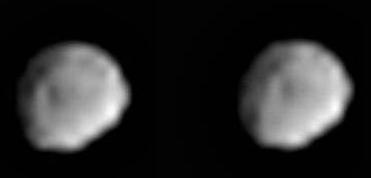
The asteroid Vesta is beginning to come into focus as the space probe Dawn approaches.