
Russia and China launch satellites

Two launches today in Russia and China.

First China used its Long March 2C rocket to launch a “remote sensing satellite” into orbit. No other information about the satellite was released. Nor was any information about whether the rocket’s first stage landed near habitable areas.

Next Russia used its Proton rocket to launch a classified satellite, likely a military surveillance satellite, into orbit. Like China Russia launches from an interior spaceport, with its first stage falling “in Karaganda Region of Kazakhstan,” with the second stage landing in drop zones in Russia. Russia, which has been doing this regularly for more than a half century, has always done a good job either avoiding habitable areas with the first stage crash, or keeping such stories out of the international press.

The 2023 launch race:

16 SpaceX
9 China
4 Russia
1 Rocket Lab
1 Japan
1 India

American private enterprise still leads China 17 to 9 in the national rankings, and the entire world combined 17 to 15. SpaceX alone is now tied with the entire world, including all other American companies, 16 all.
2 comments

China’s Long March 4C rocket launches two Earth observation satellites

China today used its Long March 4C rocket to launch two Earth observation satellites from one of its interior spaceports.

No word on whether the expendable first stage landed near habitable areas. In related news the upper stage of a Long March 2D rocket, launched in June 2022, burned up over Texas on March 8, 2023. Such upper stage uncontrolled de-orbits are not unusual, and the effort by this news outlet to make a big deal about it is just politics. Unlike the lower stages of China’s rockets that hit the ground right after launch, it is very unlikely any pieces reached the surface, and any that did were small and posed a small risk.

The 2023 launch race:

16 SpaceX
8 China
3 Russia
1 Rocket Lab
1 Japan
1 India

American private enterprise still leads China 17 to 8 in the national rankings, and the entire world combined 17 to 13. SpaceX alone still leads the entire world, including American companies, 16 to 14.

0 comments

China places classified satellite into orbit using Long March 2C rocket

From one of its interior spaceports China today successfully launched a classified “remote sensing” satellite using its Long March 2C rocket.

No information about the payload was released by China, not even a satellite name. Nor was there any word on whether the expendable first stage landed near habitable areas.

The 2023 launch race:

12 SpaceX
7 China
3 Russia
1 Rocket Lab
1 Japan
1 India

American private enterprise still leads China 13 to 7 in the national rankings, and the entire world combined 13 to 12. SpaceX on its own is now tied with the entire world 12 to 12.

0 comments

China completes two launches today

China today continued its normal fast pace of winter launches, launching twice from two different spaceports.

First, a Long March 2C rocket launched a communications satellite from the Xichang Satellite Launch Center in southwest Sichuan Province. Then, a Long March 2D rocket launched three classified technology test satellites from the Jiuquan Satellite Launch Center in northwest China.

As I noted in yesterday’s quick space links, the drop zones for both were in China. No word as yet on whether anything fell near habitable area.

At present the 2023 launch race consists entirely of China with four launches, and SpaceX with two.

0 comments

China launches Earth observation radar satellite

Using its Long March 2C rocket, China today successfully launched a new Earth observation radar satellite.

As is usual for Chinese launches from interior spaceports, the rocket dumped its lower stages somewhere within China.

The leaders in the 2022 launch race:

46 SpaceX
44 China
14 Russia
8 Rocket Lab
7 ULA

American private enterprise still leads China 66 to 44 in the national rankings. It is now tied with the entire world combined 66 each.

3 comments

China launches nine satellites for commercial data constellation

China today used its Long March 2C rocket to launch the first nine satellites in a commercial data collection constellation.

Owned by GeeSpace, a subsidiary of Geely Technology Group, the satellite constellation will be mainly used to research and validate technologies, such as travel services of intelligent connected vehicles, and vehicle/mobile phone and satellite interaction. It will also provide data support for marine environmental protection.

The leaders in the 2022 launch race:

22 SpaceX
17 China
7 Russia
3 Rocket Lab
3 ULA

The U.S. still leads China 31 to 17 in the national rankings, and the entire world combined 31 to 27.

0 comments

China’s Long March 2C rocket launches two Earth observation satellites

China yesterday successfully launched two Earth observation satellites using its Long March 2C rocket.

Since these were launched from one of China’s interior spaceports, the rocket’s first stage fell somewhere in China. No word if it used parachutes or grid fins to control that landing. Also, weather yesterday forced the scrub of a launch of China’s Long March 11 solid rocket from a sea-based launch platform. That launch has been rescheduled for tomorrow.

The leaders in the 2022 launch race:

16 SpaceX
12 China
5 Russia
2 ULA
2 Rocket Lab.

The U.S. presently leads China 23 to 12 in the national rankings. Since there are two U.S. launches scheduled for later today, as well as a Russian and Chinese launch pending, these numbers will change in the next 24 hours.

1 comment

China launches seven satellites with Long March 2C rocket

China today successfully launched six communication satellites and one remote sensing satellite using its Long March 2C rocket lifting off from its Xichang spaceport inside the Chinese interior.

No word on if the first stage crashed near habitable area, or whether it carried grid fins or parachutes to better control where it crashed.

The leaders in the 2022 launch race:

9 SpaceX
5 China
2 Russia
2 ULA

The U.S. now leads China 14 to 5 in the national rankings.

1 comment

China’s Long March 2C rocket places two earth observations satellites in orbit

China today successfully launched two Earth observation satellites using its Long March 2C rocket.

This was China’s 39th successful launch in 2021, breaking China’s previous yearly high of 38 set in 2018.

The leaders in the 2021 launch race:

39 China
23 SpaceX
18 Russia
4 Northrop Grumman
4 ULA
4 Arianespace (Europe)

China now leads the U.S. 39 to 36 in the national rankings.

1 comment

China completes two launches

China today successfully completed two launches, using from different spaceports its Long March 2C and Long March 3B rockets.

The 2C launched a two demo internet communications satellites designed to eventually be used in a large constellation similar to the constellations of SpaceX and OneWeb. The launch also included a third unidentified communications satellite.

The 3B placed in orbit what is believed to be a military reconnaissance satellite.

Both rockets dumped their first stages somewhere in the interior of China. No word on whether those stages carried parachutes or grid fins to better control their landing, or crashed near habitable regions.

The leaders in the 2021 launch race:

29 China
20 SpaceX
13 Russia
4 Northrop Grumman

The U.S. still leads China 31 to 29 in the national rankings.

3 comments

Deleted

This post incorrectly reported a Chinese launch as occurring today when it had actually occurred (and was reported previously. I have therefore deleted it. Sorry about the error.

The leaders in the 2021 launch thus remain as follows:

23 China
20 SpaceX
12 Russia
3 Northrop Grumman

The U.S. still leads China 29 to 24 in the national rankings.

3 comments

China successfully lands rocket fairings softly

China’s state press today revealed that during the July 19th launch of its Long March 2C rocket it was able to successfully use parachutes and a control system in the rockets discarded fairings to guide them back to Earth more precisely and to land softly.

The technology tested in the fairing was a parachute-control electrical and parachute system to monitor the status of the reentry flight in real-time. With the new technology, when a fairing falls to a certain height and meets the conditions suitable for parachute deployment, the parachute opens to decelerate the fairing.

At a certain height of descent, a fairing will discard its drag chute, open its parafoil, and initiate deceleration a second time. During its slowdown, it will land in a safe area in a controlled manner.

CALVT [China Academy of Launch Vehicle Technology] said the technology was able to reduce the fairing’s original projected landing area by more than 80 percent, which significantly improved safety and reduced evacuation pressure in the area.

Does this technology remind you of anything? To me, it appears that China has watched what SpaceX has done and attempted to copy it.

The news release did not say if the fairing was damaged in landing. I suspect that it was damaged, or they would have told us otherwise.

Combined with the previously attempts to use parachutes and grid fins (also very similar to SpaceX’s) to control the landing of abandoned Long March 2C and 3B first stages, China is clearly trying to make their launches from within their country less dangerous to their own citizens. Even if they have not yet succeeded in bringing this rocket debris back intact so it can be reused, they are still gaining control of its re-entry so that they can not only predict more precisely where it will land, they can pick the spot.

0 comments

China launches four satellites

Using its Long March 2C rocket, China today successfully launched four satellites, three military reconnaissance satellites and one data communications satellite.

While the first stage crashed inside China (no word on whether it landed near habitable areas), China also claimed it attempted a recovery of the fairings for reuse. At this time no information has been released on what was achieved.

The leaders in the 2021 launch race:

23 China
20 SpaceX
11 Russia
3 Northrop Grumman

The U.S. still leads China 29 to 23 in the national rankings.

8 comments

China’s Long March 2C rocket launches three military satellites

China today used its Long March 2C rocket to launch three military reconnaissance satellites into orbit.

The rocket’s first stage uses highly toxic hypergolic fuels, and is expendable. Since it is launched from the interior of China, that stage always crashes on land, sometimes near residential areas. No word on where it crashed today.

The leaders in the 2021 launch race:

19 SpaceX
18 China
8 Russia
3 Northrop Grumman

The U.S. still leads China 27 to 18 in the national rankings.

4 comments

China Long March 2C rocket launches military satellite

China today used its Long March 2C rocket to put in orbit what it calls a “remote-sensing” satellite that is likely for use by its military.

Launched from an interior spaceport, this rocket’s first stage (using very toxic hypergolic fuels) will fall to Earth somewhere in China’s Guizhou Province. This has been China’s standard operating procedure for decades, sometimes resulting in such stages landing near residential areas.

The leaders in the 2021 launch race:

13 SpaceX
12 China
7 Russia
2 Rocket Lab

The U.S. still leads China 18 to 12 in the national rankings.

2 comments

Chinese launch and Rocket Lab scrub

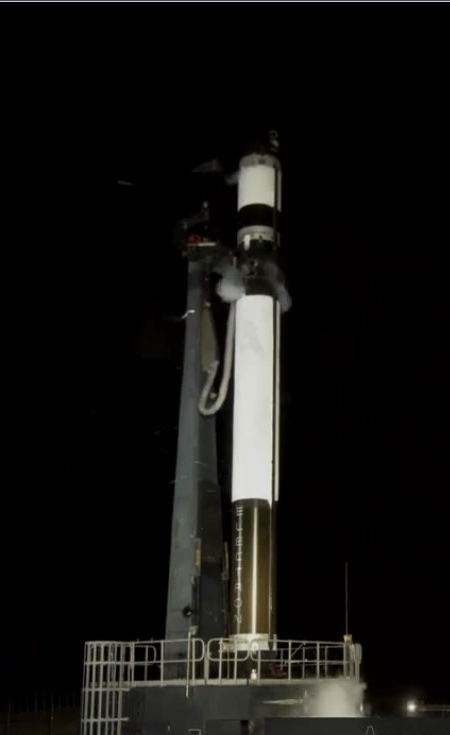
Electron on launchpad, June 11, 2020

Yesterday China used its Long March 2C rocket to launch an ocean observation satellite, while also testing both grid fins and a revamped fairing. The goal of the grid fins is to control the first stage’s return to Earth so that it won’t crash on top of any homes. The fairing change is to hopefully lead to their capture and reuse sometime in the future.

Late today, or actually early on June 11th, Rocket Lab tried to do its twelve commercial launch, but after three launch tries the high winds won out and they had to scrub. The image to the right shows the Electron rocket on the launchpad. If you look close, you can see the wind whipping the LOX evaporating off the rocket.

The leaders in the 2020 launch race:

11 China
8 SpaceX
7 Russia
3 ULA

The U.S. continues to lead China 13 to 11 in the national rankings.

0 comments

China launches three satellites with its Long March 2C rocket

China today successfully placed three military surveillance satellites into orbit, using its Long March 2C.

This rocket uses toxic hypergolic fuels, and is designed for placing satellites in low Earth orbit. Its first stage will likely fall somewhere in the Chinese interior, where the government will warn residents of the danger.

The leaders in the 2020 launch race:

6 China
5 SpaceX
4 Russia
2 Europe (Arianespace)

The U.S. still leads China 8 to 6 in the national rankings.

0 comments
1 2 3