Another “What the heck?!” image on Mars

Another
Click for original image.

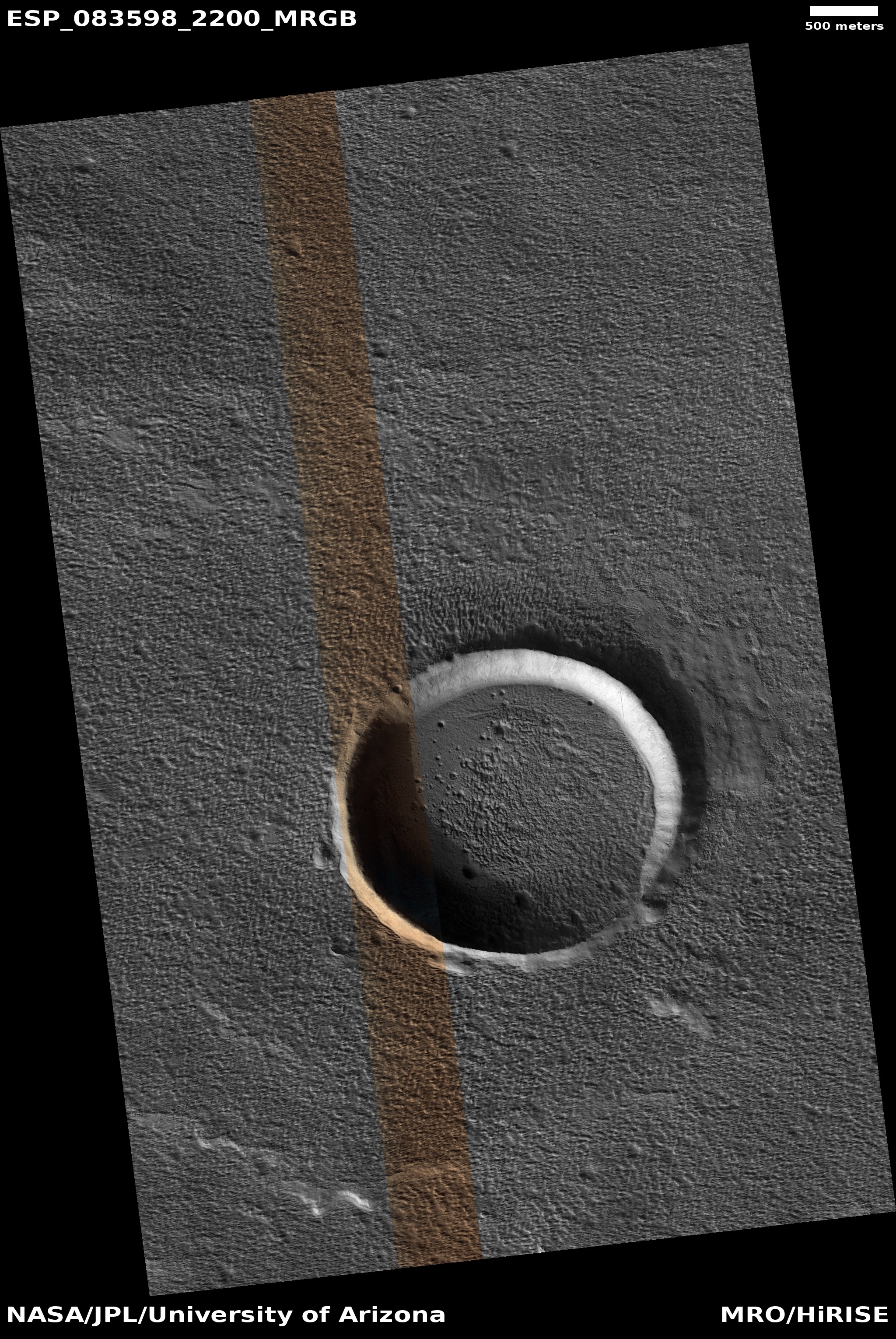
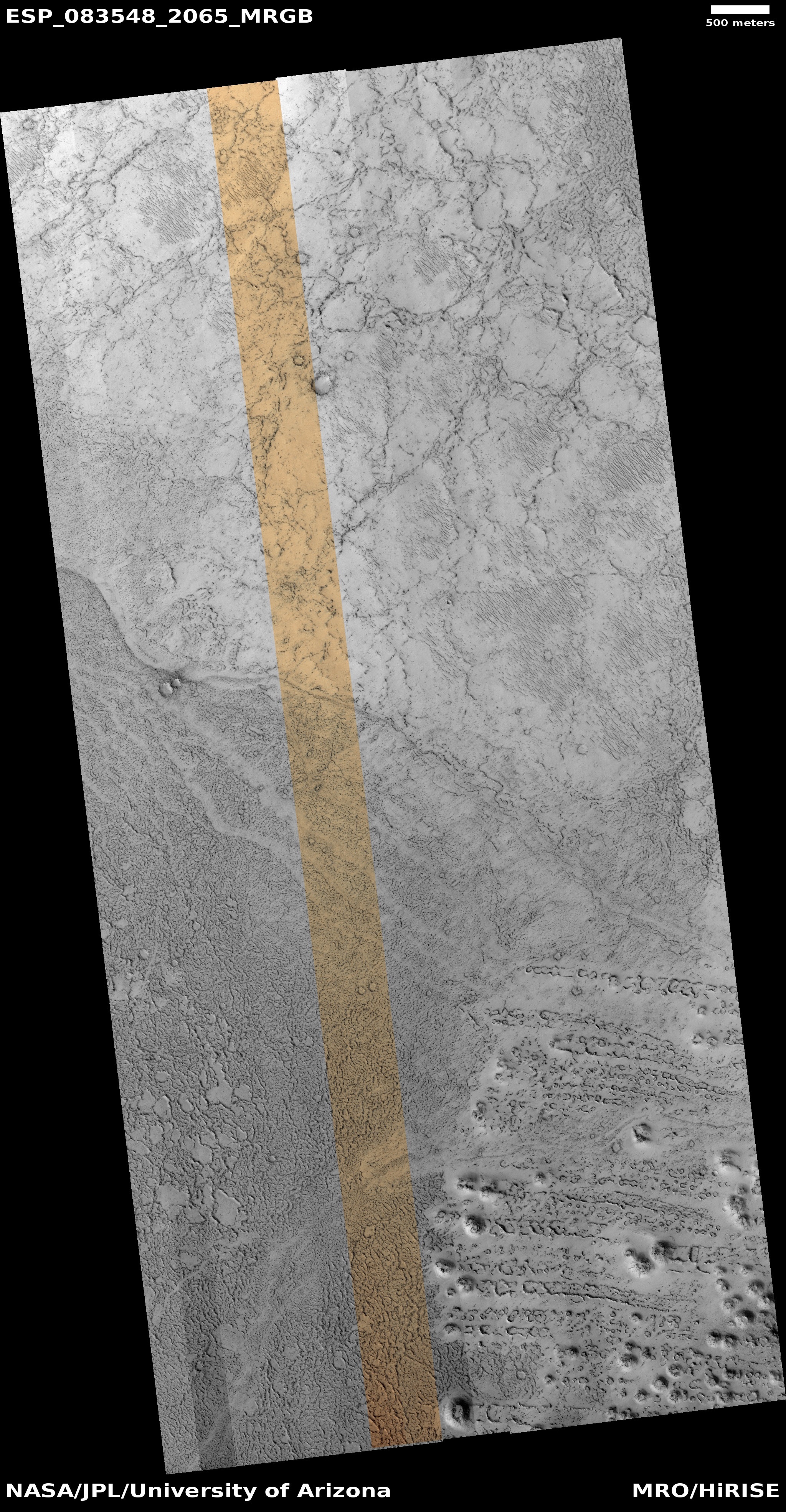
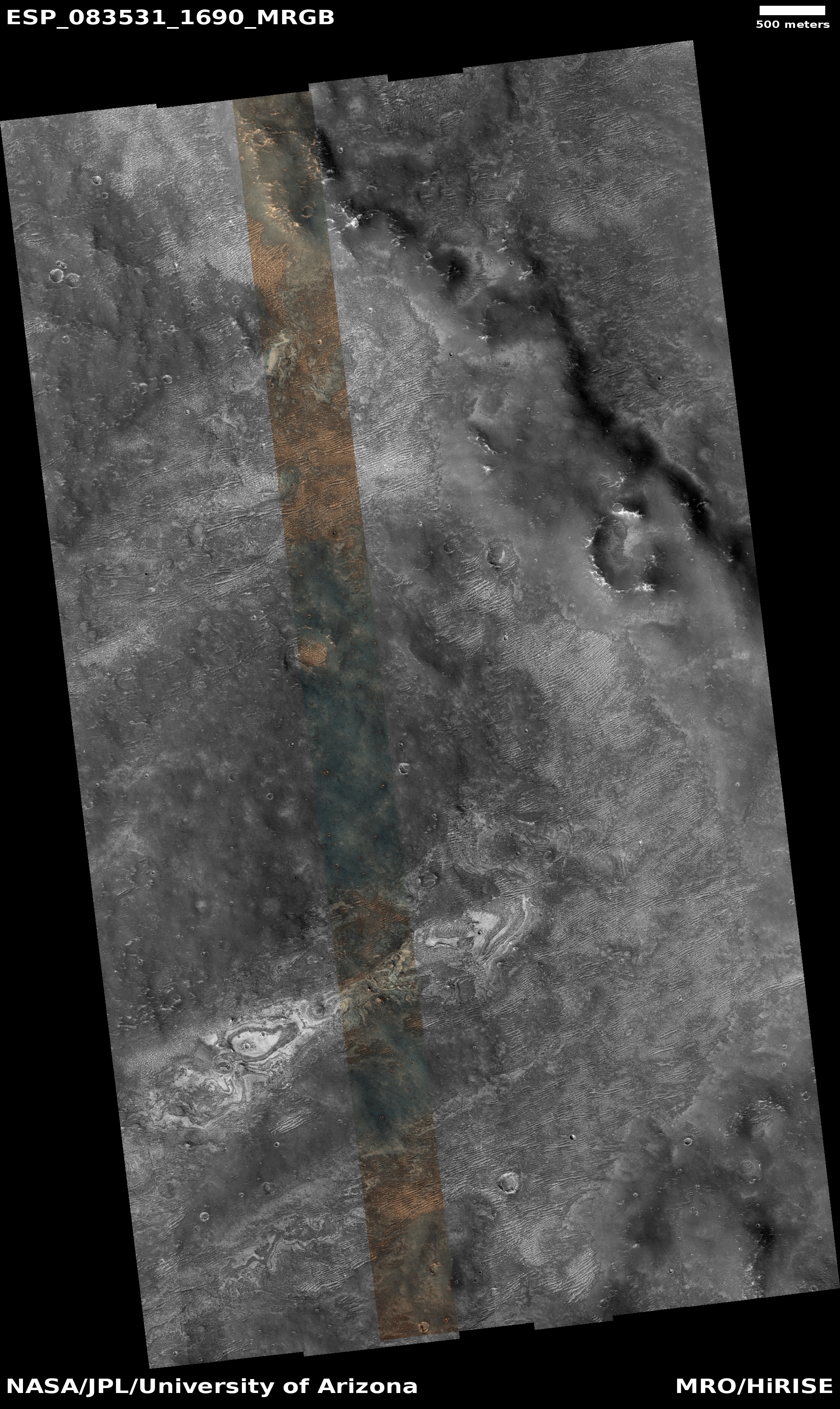
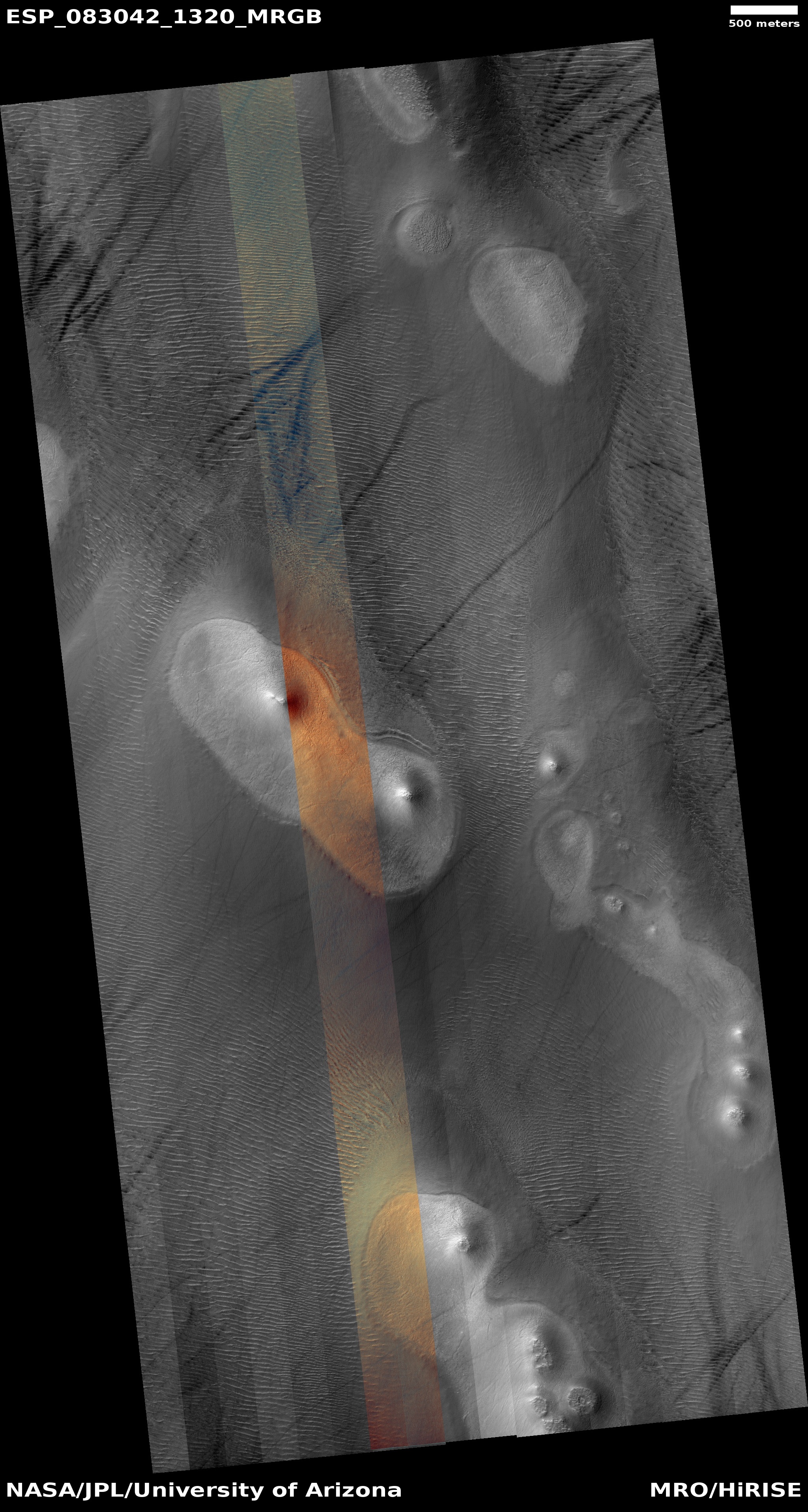
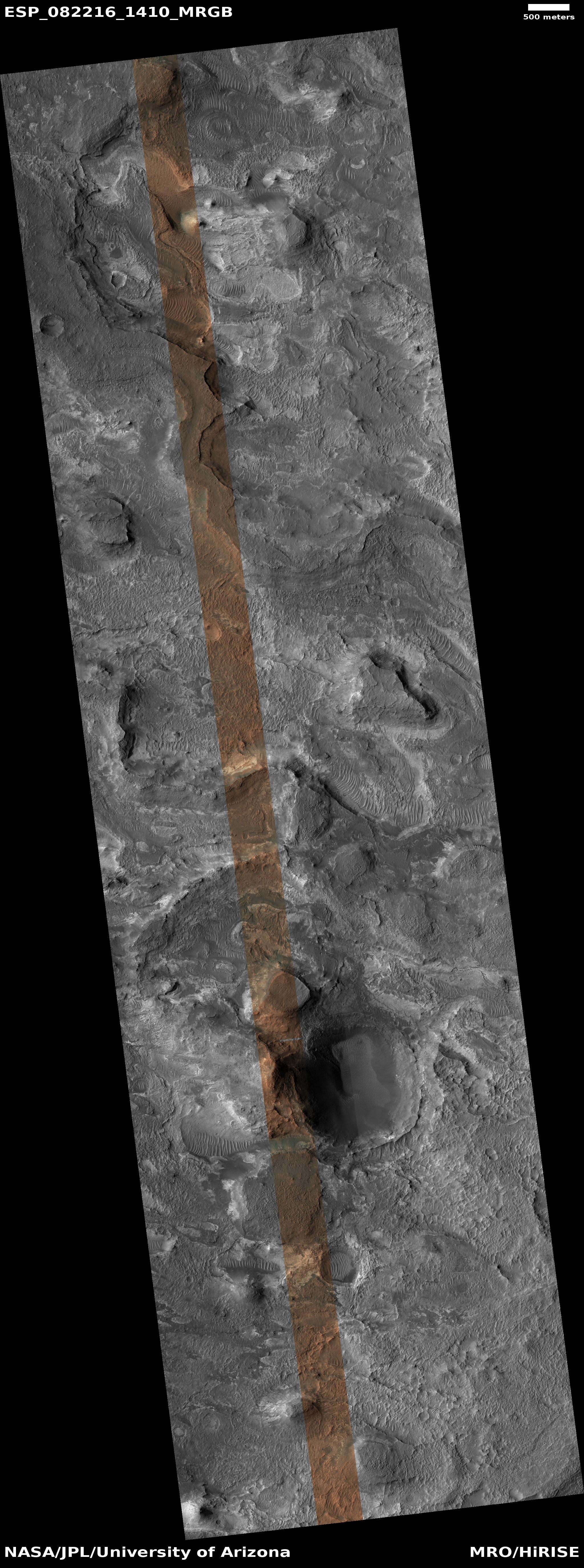
Cool image time! The picture to the right, cropped, reduced, and sharpened to post here, was taken on March 2, 2025 by the high resolution camera on Mars Reconnaissance Orbiter (MRO).

The scientists label this “Monitoring Irregular Terrains in Western Arabia Terra.” I label it more bluntly as another one of MRO’s “What the heck?!” images. For all I know, this is nothing more than a discarded Vincent Van Gogh painting, thrown out because even he couldn’t figure out what he was painting.

The best guess I can make, just from the picture alone, is that some of the dark spots are vents from which the white stuff vented at some point, either as small lava or mud volcanoes. As the location is close to the equator, near surface ice is almost certainly not a factor in what we see.

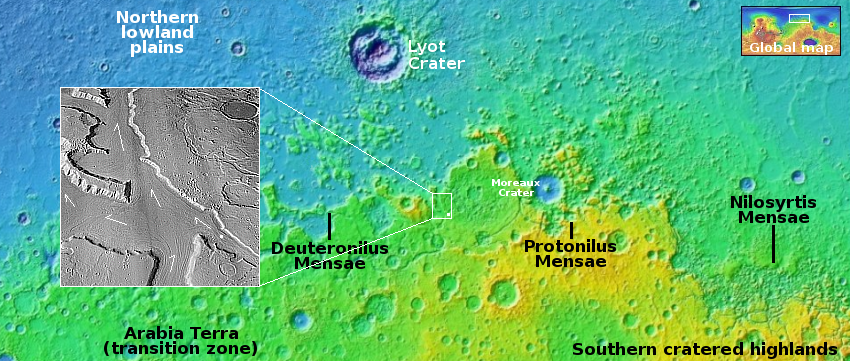
In any case there is no way to reasonably decipher this picture, just by looking at the picture. It is necessary to take a wider view.
» Read more

1 comment

Terraces within one of Mars’ giant enclosed chasms

Overview map

Terraces within Hebes Chasma

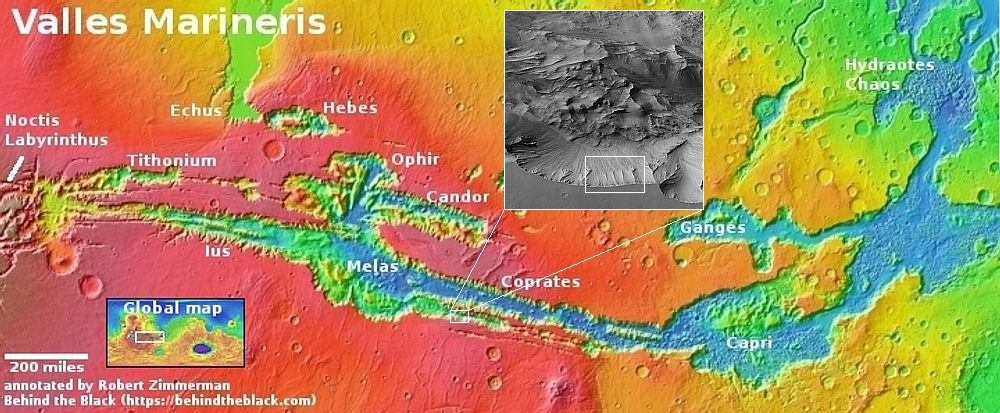
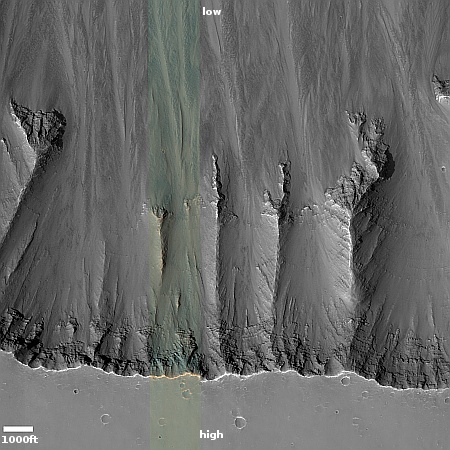
Cool image time! The picture to the right, rotated, cropped, reduced, and sharpened to post here, was taken on January 27, 2025 by the high resolution camera on Mars Reconnaissance Orbiter (MRO). It shows the terraced layers descending down a 7,000-foot-high ridgeline within Hebes Chasma, one of several enclosed chasms that are found to the north of Mars’s largest canyon system, Valles Marineris.

The white dot on the overview map above marks this location, inside Hebes. The rectangle in the inset indicates the area covered by the picture, which only covers the lower 5,000 feet of this ridge’s southern flank.

The ridgeline might be 7,000 feet high and sixteen miles long, but it is dwarfed by the scale of the chasm within which it sits. From the rim to the floor of Hebes is a 23,000 foot drop, comparable to the general heights of the Himalaya Mountains. Furthermore, this ridge is not the highest peak within Hebes. To the west is the much larger mesa dubbed Hebes Mensa, 11,000 feet high and 55 miles long.

The terraces indicate the cyclical and complex geological history of Mars. Each probably represents a major volcanic eruption, laying down a new bed of flood lava. With time, something caused Hebes Chasm to get excavated, exposing this ridge and these layers.

The excavation process itself remains unclear. Some scientists think the entire Valles Marineris canyon was created by catastrophic floods of liquid water. Others posit the possibility of underground ice aquifers that sublimated away, causing the surface to sink, eroded further by wind. Neither theory is proven, though the former is generally favored by scientists.

0 comments

Another example of the weird taffy terrain in Mars’ death valley

More taffy terrain

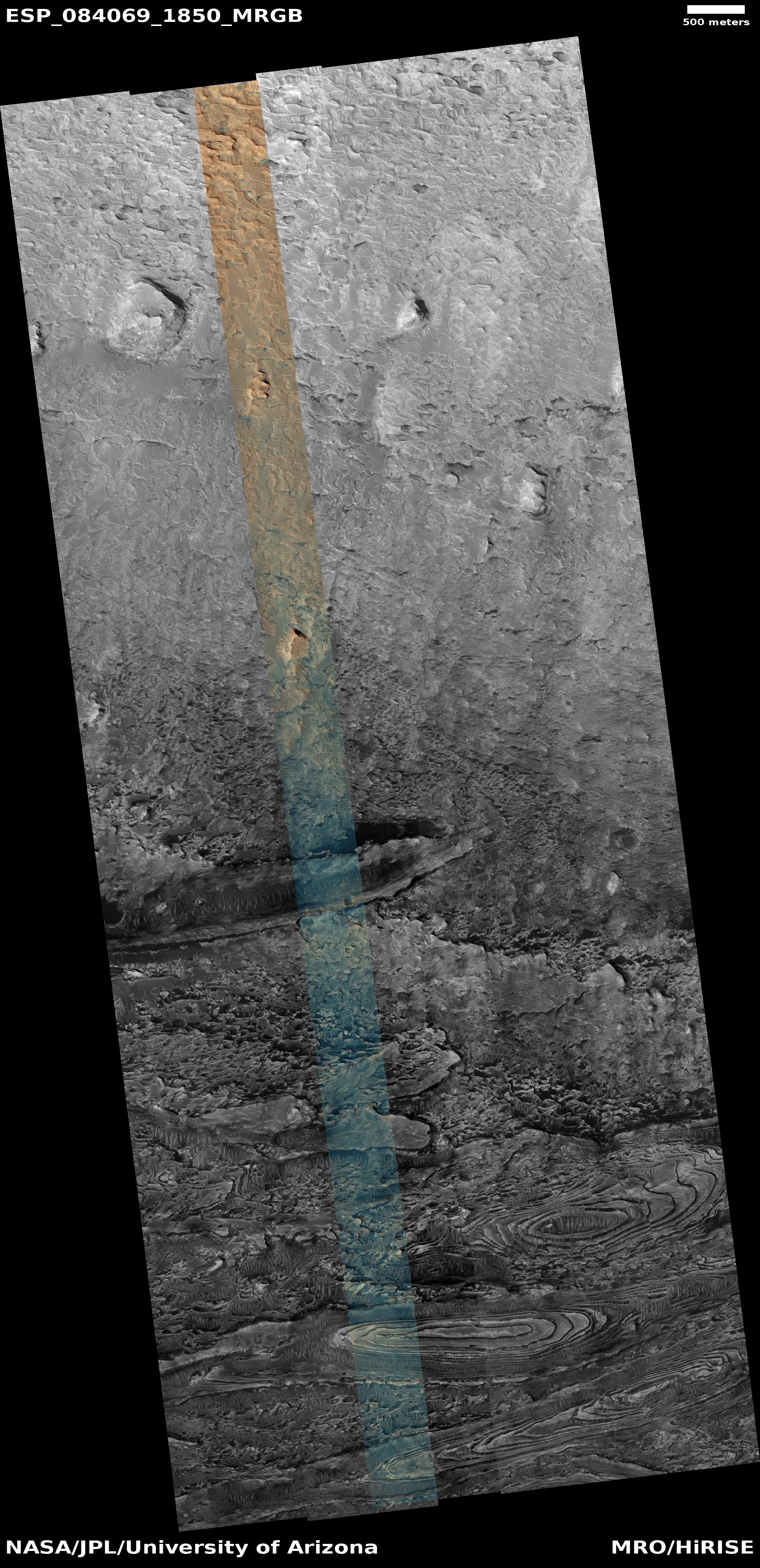
Cool image time! The picture to the right, rotated, cropped, reduced, and enhanced to post here, was taken on January 30, 2025 by the high resolution camera on Mars Reconnaissance Orbiter (MRO).

The scientists label it dimply as “layers in Helles Planitia.” Other scientists have given this strange landscape a much more interesting label, “taffy terrain.” It is found only in the Hellas Basin, the basement of Mars, having the lowest elevation found anywhere on the red planet. According to a 2014 paper, the scientists posit that this material must be some sort of “a viscous fluid,” naturally flowing downward into “localized depressions.” Because of its weird nature I have posted many cool images of it in the past (see here, here, here, here, and here).

Is taffy terrain still viscous, or has it become solidified? That question I think remains unanswered, though pictures taken of the same spot over time do not yet appear to show changes.
» Read more

0 comments

Martian stucco

Martian stucco
Click for original image.

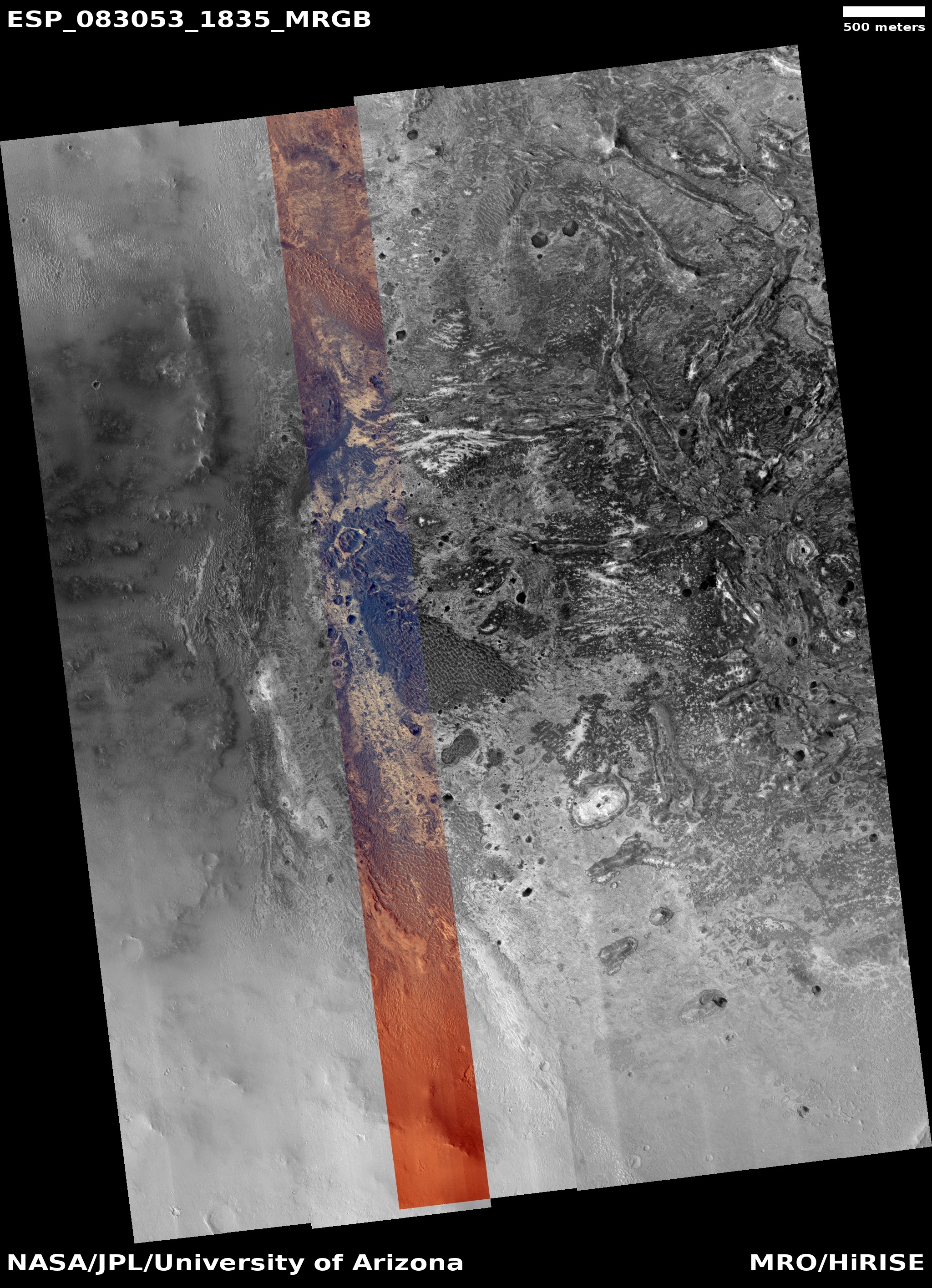
Cool image time! The picture to the right, cropped, reduced, and sharpened to post here, was taken on January 24, 2025 by the high resolution camera on Mars Reconnaissance Orbiter (MRO). Labeled simply as a “terrain sample,” it was likely taken not as part of any specific research request but to fill a gap in the schedule in order to maintain the camera’s proper temperature.

In this case the camera team got something quite intriguing. The entire terrain is reminiscent of stucco found on the outside walls of southwest homes. What makes even more intriguing is that the stucco appears to be material that has covered the terrain, based on the two craters that appear half-buried by it. Moreover, this picture only captures a small portion of this landscape, which extends like this over an area approximately 40 miles squared.

What caused this strange terrain? As always, the overview map below provides a clue, though no firm answers.
» Read more

0 comments

High ridge down the center of a big Martian crack

High ridge down the middle of a Martian canyon
Click for original image.

Cool image time! The picture to the right, rotated, cropped, reduced, and sharpened to post here, was taken on January 27, 2025 by the high resolution camera on Mars Reconnaissance Orbiter (MRO). Labeled simply as a “terrain sample,” it was likely taken not as part of any specific research project but to fill a gap in the schedule in order to maintain the camera’s proper temperature.

Whenever the camera team needs to do this, they try to find an interesting object to photograph, and often succeed. In this case they focused on the geology to the right. I suspect that at first glance my readers will have trouble deciphering what they are looking at. Let me elucidate: This this a 2.5-mile-wide canyon, about 1,000 feet deep, that is bisected by a ridge about 500 feet high.

On the sunlight walls of this canyon you can see boulders and debris, with material gathered on the canyon floor. The smoothness of the floor suggests also that a lot of Martian dust, likely volcanic ash, has become trapped there over the eons.
» Read more

0 comments

The next time someone tells you Mars lacks water, show them this picture

Lots of near surface ice on Mars
Click for original image.

In the past decade orbital images from Mars have shown unequivocally that the Red Planet is not the dry desert imagined by sci-fi writers for many decades prior to the space age. Nor is it the dry desert that planetary scientists had first concluded based on the first few decades of planetary missions there.

No, what the orbiters Mars Reconnaissance Orbiter (MRO) and Mars Express have clearly shown is that, except for the planet’s equatorial regions below 30 degrees latitude, the Martian surface is almost entirely covered by water ice, though it is almost always buried by a thin layer of protective dust and debris. Getting to that ice will be somewhat trivial, however, as it is almost always near the surface.

The picture to the right, rotated, cropped, reduced, and sharpened to post here, is a perfect example. It was taken on January 31, 2025 by the high resolution camera on MRO. At the top it shows part of a small glacial-filled crater surrounded by blobby ground clearly impregnated with ice. That crater in turn sits on the rim of a much larger very-eroded ancient 53-mile-wide crater whose floor, also filled with glacial debris, can be seen at the bottom of this picture. The wavy ridge line at the base of the rim appears to be a moraine formed by the ebb and flow of the glacial ice that fills this larger crater.

None of these glacial features is particularly unique on Mars. I have been documenting their presence now at Behind the Black for more than six years. Yet, I find still that most news organizations — including many in the space community — remain utterly unaware of these revelations. Any new NASA or university press release that mentions the near-surface ice that covers about two-thirds of the planet’s surface results in news stories claiming “Water has been found on Mars!”, as if this is a shocking new fact from a place where little water is found.

It is very shameful that so many reporters and news organizations are so far out of touch with the actual state of the research on Mars.
» Read more

11 comments

Graceful isolated dunes at the edge of the sea of dunes that surrounds Mars’ north ice cap

Graceful isolated dunes on the edge of the dune sea that surrounds Mars' north pole
Click for original image.

Cool image time! The picture to the right cropped, reduced, and sharpened to post here, was taken on January 29, 2025 by the high resolution camera on Mars Reconnaissance Orbiter (MRO). I have also rotated it so north is up. Labeled simply as a “terrain sample,” it was likely taken not as part of any specific research request but to fill a gap in the schedule in order to maintain the camera’s proper temperature.

In this case the timing allowed the camera team to capture this breath-taking picture of these graceful arching dunes sitting in what is likely the near-surface ice sheet that covers much of the red planet’s high latitudes. That sheet is not pure ice, but a complex mixture of ice, dirt, dust, and sand, covered during the winter by a thin mantle of dry ice.

The isolated dunes appear to be ridges sticking up from that flat terrain, but this impression is probably incorrect, based on the location.
» Read more

1 comment

Perseverance looks to the far west

Panorama taken by Perservance, February 28, 2025
Click for original image.

Overview map
Click for interactive map.

Cool image time! The panorama above, rotated, cropped, and enhanced to post here, was taken today by the left navigation camera on the Mars rover Perseverance. It gives us the first really good high elevation view of the mountainous terrain to the west of Jezero Crater

The overview map to the right provides the context. The blue dot marks the rover’s present position, with the white dotted line its past travels and the red dotted line its future planned route. The yellow lines are my approximate guess as to the area covered by the panorama above.

Neither the rover team nor the team running Mars Reconnaissance Orbiter (MRO) that provides the high resolution images of this region have as yet updated the interactive map to show this western region in high resolution. My guess as to why is that the planned route is not yet heading that way (as indicated by the red dotted line). When Perseverance has finished its exploration of the outer slopes of the rim of Jezero Crater and heads west, this fuzzy area on this map will likely be replaced with high resolution data, similar to the rest of the map.

Nonetheless, if you look close, you can distinguish several geological features seen in the panorama, such as the large crater to the right and the ridge line to the left. Beyond are mountain chains and valleys, as well as many additional craters. This is truly a barren and alien place, though it has enormous potential for eventually becoming a friendlier environment.

All that is required is for humans to live there, with the natural desire to make it so.

6 comments

Exploring the canyons and plateaus of Valles Marineris

Overview map

The canyons inside Valles Marineris
Click for original image.

Cool image time! The picture to the right, rotated, cropped, reduced, and sharpened to post here, was taken on November 2, 2024 by the high resolution camera on Mars Reconnaissance Orbiter (MRO). It shows just one small section of a ridge that descends deep into the giant canyon Valles Marineris, the largest known canyon in the solar system.

On the overview map above, the white dot inside the rectangle marks the location, in the westernmost section of the part of Valles Marineris dubbed Ius Chasma.

For scale, the nose of this ridge descends about 7,300 feet from the top to the bottom, about half the total descent from the small isolated plateau shown in the inset. That plateau, located in the mountainous region between Ius Chasma and Tithonium Chasma, rises to approximately the same elevation as the canyon’s rims to the north and south.

What this picture shows us is that Valles Marineris on its western end is both more shallow and broken up, forming several canyons and plateaus. As the catastrophic floods that are theorized to have carved this canyon pushed their way east, they carved a deeper gorge, so that about 1,500 miles to the east the canyon walls are considerable higher, from 20,000 to 30,000 feet in some places.

As always, the tourist in me can’t help look at this terrain and envision inns and hiking trails. Imagine homesteading that plateau where you build a hotel and trails. Since I expect much transportation on Mars will be by air, your guests would fly in, land at a heliport, and spend their visit hiking down into the canyons that surround them.

Damn! The future is going to so grand!

1 comment

Bumpy frozen lava on Mars

Bumpy frozen lava on Mars
Click for original image.

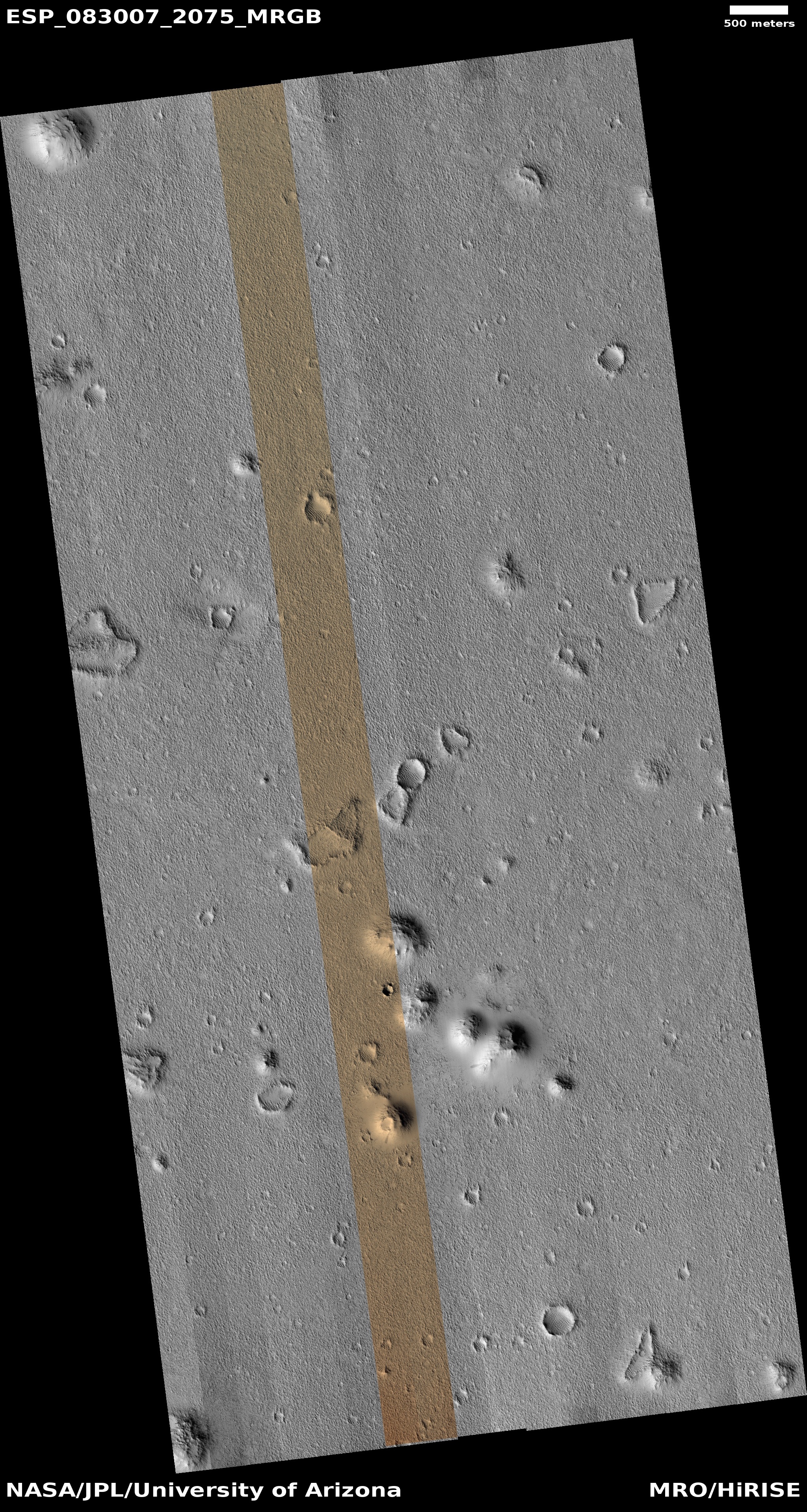
Cool picture time! The photo to the right, cropped, reduced, and sharpened to post here, was taken on September 30, 2024 by the high resolution camera on Mars Reconnaissance Orbiter (MRO). Labeled simply as a “terrain sample,” it was most likely taken not as part of any specific research project but to fill a gap in the schedule in order to maintain the camera’s temperature.

The image is fascinating nonetheless, as the landscape is typically alien for Mars. What caused the many random ridges and knobs? Why are there oblong areas that are smooth and have no ridges? And why is there dark material inside that crater that appears to have been blown out to the northeast? If you click on the image to see the full image, not all the craters look this way. One has a similar dark feature, but others are as bland as the entire terrain.

The overview map below only increases these mysteries, even if it does provide some further data.
» Read more

0 comments

A Martian glacier of dust

A Martian glacier of dust
Click for original image.

Cool image time! The picture above, rotated, reduced, and sharpened to post here, was taken on September 2, 2024 by the high resolution camera on Mars Reconnaissance Orbiter (MRO).

The tiny white dot near the lower center of the overview map below marks the location, on the northern wall of the smaller parallel canyon to the much larger part of Valles Marineris dubbed Coprates Canyon.

The scientists label this a “slope deposit.” What I see is a dust glacier flowing down hill in that long hollow (indicated by the arrows), with the ripple dunes actually acting almost like waves. Nor is this description unreasonable. On Mars the dust will gather in the hollows of these slopes and over time, with no rain and little wind to disturb them, will begin to flow down much like a glacier.

In this case, the descent is gigantic, considering the size of Valles Marineris. From the top to bottom of this image the elevation drop is about 14,000 feet over a distance of 11 miles.

Overview map

1 comment

The broken edge of Mars’ largest volcanic ash field

The broken edge of Mars' largest volcanic ash field
Click for original image.

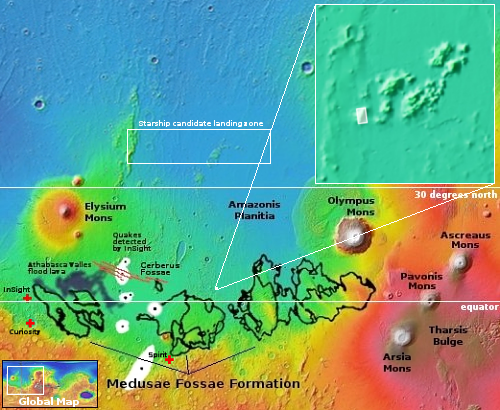
Overview map

Cool image time! The picture above, reduced and rotated to place north to the left, was taken on November 5, 2024 by the high resolution camera on Mars Reconnaissance Orbiter (MRO).

The science team labeled it “Stepped Features in Tartarus Skopulus”. The white dot on the overview map to the right marks the location, right at the equator on the northern edge of the Medusae Fossae Formation, the largest volcanic ash field on Mars, about the size of the subcontinent of India. As I wrote in a post in 2024:

It is believed that most of the planetโ€™s dust comes from this ash field. It is also evident that the ash is a leftover from the time period more than a billion years ago when the giant volcanoes that surround this field were erupting regularly. The eruptions laid down vast flood lava plains that coat the surface for thousands of miles.

The ash either came from the eruptions themselves, or was created as the thin Martian wind eroded those flood lava plains, slowly stripping ash from the top. The ash then gathered within the black-outlined regions on the map.

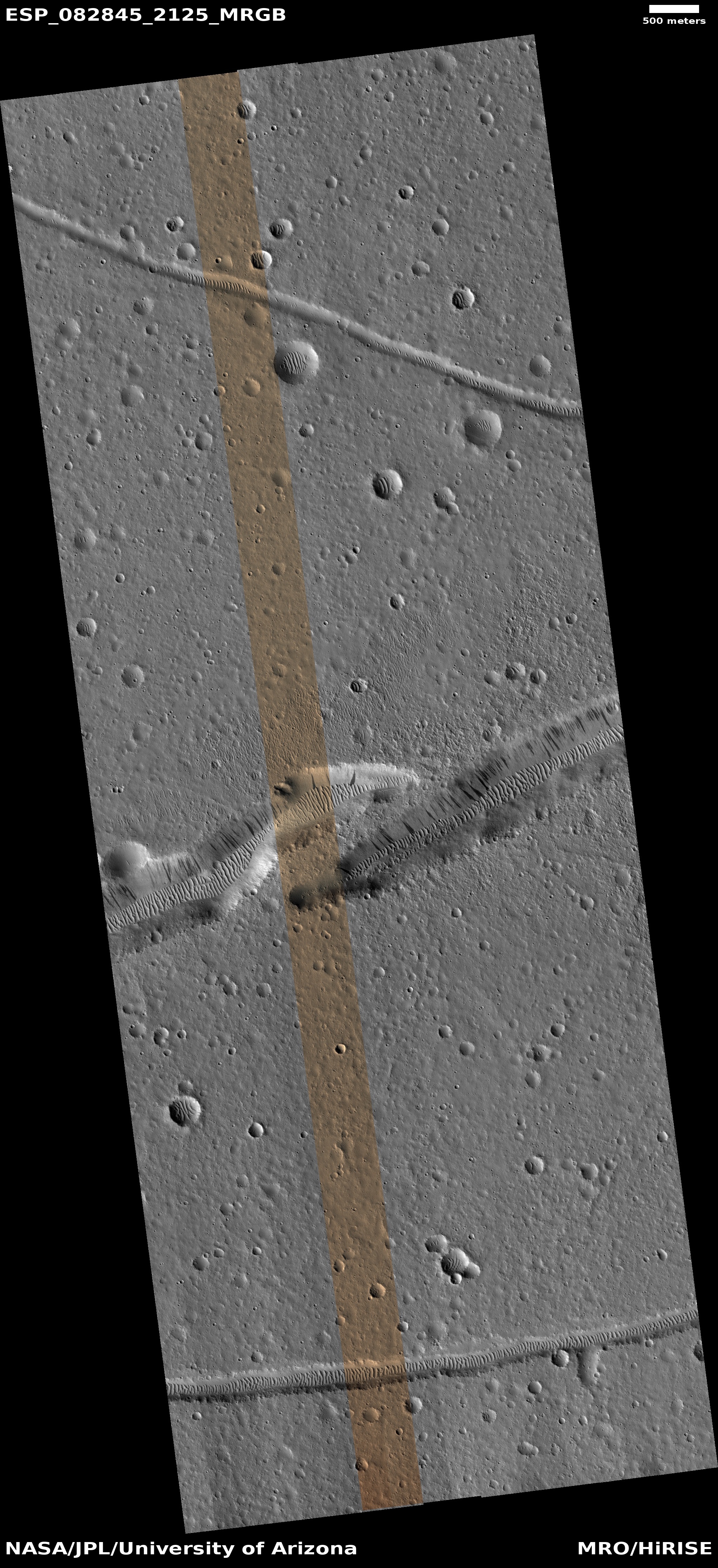
In that 2024 post the cool image showed another location on the north edge of Medusae. In that case the prevailing wind had carved long parallel ridges as it pulled ash from the field.

Here, the wind appears to play no part, or if it did, it produced a very different terrain. At first glance it appears the stepped terraces formed as the ash field began to slide downhill to the north, spreading to crack along the curved lines. The inset especially suggests this explanation.

A closer look instead suggests these terraces each represent a different layer of ash placed down by a sequence of eruptions. Over time the prevailing winds, which here appear to generally blow to the south, stripped off the top of each layer, creating this stair-step landscape.

I however have no guess as to why the terraces are curved. Regardless, it is all strange, but quite beautiful in its own way.

0 comments
1 8 9 10 11 12 90