Senators lambast Administration for SLS budget numbers

The space war heats up: Two senators have issued a statement lambasting the Obama Administration for its budget numbers for building the program-formerly-called-Constellation.

All of this is fantasy and foolishness. These senators might succeed in forcing NASA to spend money on the heavy-lift rocket that Congress has mandated, but there is no way the space agency will ever get enough funding or time to finish it. Even if the lower estimates are right, the cost is exorbitant, many times that of what the private companies have spent for their rockets and ships. And if construction does begin in earnest, it cannot be finished before the arrival of a new President in 2016 (at the latest), who, like all new Presidents, will have his own plans and will not want to build something started by the previous administration.

Much better to end this farce and save the money, especially considering the debt of federal government.

More Progress freighter crash investigation results

More Progress freighter crash investigation results: it appears there was something that blocked the fuel supply.

“The exposed production defect was accidental,” [the investigation] said, adding the reason may be qualified as an isolated case only after checking all available engines.

This suggests that the problem was an isolated error and that, once they have cleared the available engines, they can start flying relatively quickly.

Virgin Galactic hosts an industry day at New Mexico spaceport

Virgin Galactic announced today that it will co-host an industry day at Spaceport America in New Mexico on October 18 in order to locate suppliers for its space tourism business.

“This is a fantastic opportunity for companies ranging from local New Mexico firms to national corporations to understand our unique needs for goods and services, including our requirements in building and servicing multiple commercial spaceships as the market further develops,” said Virgin Galactic’s President and CEO George Whitesides. “Our intention is to establish these relationships and emphasize our desire to hire locally as much as possible.”

The dangerous environment of space

A just released report from the National Academies, Preparing for the High Frontier: the role and training of NASA astronauts in the post-space shuttle era, describes the challenges that NASA faces in staffing its astronaut corps in the coming years. More important, however, is some new information buried in the report about the hazards of long term exposure to weightlessness.

For example, it seems a significant number of astronauts have come back from spending months at ISS with serious vision problems, caused by a newly discovered condition dubbed papilledema, the swelling of the optic disk.
» Read more

Sticker shock over Congressionally designed rocket

The Obama administration has discovered that the cost to build the program-formerly-called-Constellation, required by Congress, is going to be far more than they can stomach.

White House budget officials increasingly are concerned that some of NASA’s manned-exploration plans may be unaffordable, especially as the space agency weighs options that would raise the cost by billions of dollars by speeding up the development of rockets and spacecraft, according to people familiar with the issue.

The cost concerns are coming to a head, these people said, as the White House Office of Management and Budget ratchets up questions about NASA’s proposed program in light of the current emphasis on deficit reduction.

None of this surprises me.
» Read more

New images of Apollo landing sites on the Moon

The Lunar Reconnaissance Orbiter team have released new images of the Apollo 12, 14, and 17 landing sites on the Moon. Below is a cropped image of the Apollo 12 site, showing the trails left by astronauts Pete Conrad and Alan Bean when they walked from their lunar module to Surveyor 3, an unmanned lunar lander that had soft landed there two years earlier. The full image shows some incredible detail.

Apollo 12 landing site

Some suggestions for keeping ISS occupied

Some suggestions for keeping ISS occupied.

I especially like Harman’s suggestion that the Russians consider landing in the U.S. during the winter, thereby allowing them to extend one crew’s occupancy of ISS into December, January, or even February. Also, he proposes the Russians send an unmanned Soyuz to ISS during testing of the rocket, thereby providing the crews onboard a fresh lifeboat. This is something they have done in the past on their previous space station Mir.

The space shuttle program officially ended on Wednesday

The space shuttle program officially ended on Wednesday. Note however:

Closeout of the shuttle program is an enormous effort expected to take two years. The program occupied 640 facilities and used more than 900,000 pieces of equipment with a value exceeding $12 billion, according to NASA. Much of the work will take place at Kennedy Space Center, where orbiters have been maintained and prepared for launch. NASA requested $89 million for shuttle transition and retirement work in the 2012 fiscal year that begins Oct. 1, but Congress has not yet approved a budget.

Orbital Sciences gets its launch license for first test of Taurus 2 rocket

Orbital Sciences has gotten its launch license from the FAA for the first test launch of the Taurus 2 rocket, scheduled for later this year.

This rocket is Orbital’s version of the Falcon 9. It is a new rocket, never before flown, yet after this test it is scheduled to fly the Cygnus capsule on its first flight only two months later. Talk about cutting things close!

Ground controllers replace a failed circuit box on ISS, using the robot Dextre

Ground controllers successfully replaced a failed circuit box on ISS this weekend, using the two-armed Dextre robot.

Up to now, exchanging the boxes was done by spacewalkers, which always carries a certain level of risk. Dextre was designed to reduce the need for astronauts to conduct spacewalks for routine maintenance, therefore freeing up the crew’s time for more important activities, like conducting science.

Progress freighter launch fails

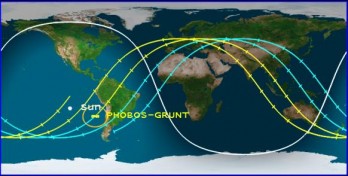
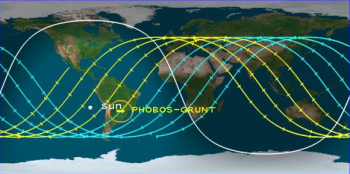
The launch of a Progress freighter to ISS today has failed, with the freighter ending up crashing into Siberia.

This is very bad news for the station. Everyone in the space industry knows that with the shuttle gone, it will be a challenge to maintain supplies to the station’s the six-person crew. Losing just one supply ship will strain the station’s supplies, if not now in the long run for sure.

Worse, this is the first launch failure of the Soyuz rocket that puts both Progress and manned Soyuz capsule into orbit in more than eleven years. The next manned crew is scheduled for launch on September 21. Whether this failure will delay that launch remains unknown.

Bigelow in negotiations to supply privately-built modules to ISS

Bigelow Aerospace is in negotiations with both NASA and Japan to supply ISS with privately-built modules

The module could be rented out as an ISS storage unit, making the station less dependent on frequent resupply flights, says Hiroshi Kikuchi of JAMSS. To show that the modules are capable of safe, crewed operation, Bigelow is also negotiating with NASA to attach one to a US-owned ISS module.

.

NASA announces awards for three technology demonstration space missions

NASA has announced three awards for technology demonstration space missions, all set to fly within four years. More details here.

The three missions are:

  • A solar sail demonstration mission, flying a sail 38 by 38 meter sail.
  • A demonstration of in-space laser/optical communications technologies.
  • The use of a high-precision atomic clock in space.

I especially like the solar sail mission because of its long range possibilities, though the other technologies would probably be put to practical use more quickly.

The new commercial space companies question NASA contracting policies

The new commercial space companies are challenging NASA’s new contracting policy.

The article covers the conflict that I described in this post, whereby NASA is abandoning the more flexible contracting approach used for the commercial cargo contracts of SpaceX and Orbital Sciences and going instead with the contracting system it used for all past NASA subcontracts.

The article is errs badly when it calls the new contracting approach that NASA wants to use “non-traditional.” It is instead the way NASA has been doing things for decades, whereby the agency takes full control of everything and requires contractors to fill out so much paperwork that the costs double and triple.

Space Boat: A Nautical Mission to an Alien Sea

The Titan Mare Explorer: A nautical mission to an alien sea.

If [NASA] green-lights the mission, the capsule will lift off in 2016. By 2023, TiME will be about 800 million miles away in Titan’s north-polar region, home to its biggest lakes and seas. The capsule will take photographs, collect meteorological data, measure depth, and analyze samples. TiME will have no means of propulsion once it is on Titan, so it will float, carried by breezes across the sea’s surface. Then, by the mid-2020s, it will enter a decade-long winter of darkness as the moon’s orbit takes it to the dark side of Saturn, away from the sun and communication. It won’t have a line of sight to Earth to beam back more data until 2035.

1 490 491 492 493 494 515