Three launches today from three continents and three nations

The global launch pace continues, with three launches today. First, Russia launched a new Progress cargo capsule to ISS, its Soyuz-2 rocket lifting off from its repaired launchpad at Baikonur. That launchpad had experienced serious damage to an access platform during the previous launch in November 2025, and since it was the only pad that Roscosmos could launch payloads and crews to ISS, Russia committed heavy resources to get it fixed quickly.

Once Progress reached orbit, however, one of the antennas used by its Kurs automatic docking system failed to deploy. If engineers can’t get it opened by the time of docking, scheduled for March 24, 2026, the Russian astronauts on ISS will use the back-up TORU system, whereby they control the spacecraft manually from inside ISS.

Next, SpaceX placed another 29 Starlink satellites into orbit, its Falcon 9 rocket lifting off from Cape Canaveral Space Force station in Florida. The first stage (B1078) completed its 27th flight, landing on a drone ship in the Atlantic, only 20 days after its previous flight. This flight also moved the booster up to just behind the space shuttle Columbia in the rankings of the most reused launch vehicles, tying it with SpaceX booster B1077:

39 Discovery space shuttle
33 Atlantis space shuttle
33 Falcon 9 booster B1067
32 Falcon 9 booster B1071
31 Falcon 9 booster B1063
30 Falcon 9 booster B1069
28 Columbia space shuttle
27 Falcon 9 booster B1077
27 Falcon 9 booster B1078

Sources here and here.

At the pace SpaceX is reusing its fleet of Falcon 9 boosters, expect Columbia to drop off this list in about two months.

Finally, China launched 10 smallsats, according to China’s state-run press, for a planned 160-satellite GPS-type constellation, its Smart Dragon-3 rocket (also called Jielong-3) lifting off from an ocean platform off the northeast coast of China. Video here of launch.

The leaders in the 2026 launch race:

37 SpaceX
13 China
4 Rocket Lab
3 Russia

SpaceX continues to lead the entire world combined in total launches, as it did in both ’24 and ’25.

2 comments

ESA to rent SpaceX Dragon capsule to do a European manned mission to ISS

ESA logo

Capitalism in space: At a European Space Agency (ESA) this week in Switzerland, agency officials announced that it is purchasing use of a Dragon capsule from SpaceX in order to do an extended manned mission to ISS in 2028.

Member states endorsed the concept of EPIC — short for ESA Provided Institutional Crew — a proposed mission intended to provide a medium-duration stay for ESA astronauts aboard the ISS.

The plan foresees acquiring a Crew Dragon mission in the first quarter of 2028 in collaboration with “interested international partners.” Crew Dragon is the crew spacecraft built by US company SpaceX.

According to those officials, this mission will be for at least one month, and include astronauts from ESA and some as yet undetermined international partner astronauts.

This contract illustrates the fundamental shift in power and control in manned space in the past decade. Until 2011, all manned missions were flown on government-built rockets and spacecraft. The agencies controlled everything, and actually acted to stymie competition from the private sector.

Now, those agencies are dependent on that private sector for their manned missions. They are instead merely customers, buying services from competing commercial companies that own the rockets and spacecraft, and rent them out for profit. That SpaceX at present is the only one capable of doing these manned missions for hire makes no different. Soon others will enter the fray.

Moreover, this capitalism model actually gives these agencies more flexibility. Beforehand, ESA had to go through NASA to do such a manned mission, and that would involve a lot of negotiations. Now it simply buys the mission from SpaceX, and flies it when ready.

7 comments

India negotiating a possible Gaganyaan docking at ISS

India's Bharatiya Antariksh Station as outlined in 2024
India’s Bharatiya Antariksh Station as outlined in 2024.
Click for original image.

The head of India’s space agency ISRO, it is negotiating with NASA about doing a variety of manned space operations in conjunction with NASA, including a possible Gaganyaan docking to ISS.

According to a presentation by Isro chairman V Narayanan reviewed by TOI [Times of India], the future cooperation areas span three key areas of collaboration between the two nations’ space agencies.

The first involves comprehensive training of ISRO personnel, including astronauts, at NASA facilities across multiple domains, including robotics systems, extravehicular activity (EVA), extravehicular mobility unit (EMU) systems, resource management, space medicine and spaceflight operations, LEO and lunar mission control operations, rendezvous and docking procedures, and payload and science operations.

An important initiative outlined is the uncrewed docking demonstration of India’s Gaganyaan Orbital Module with the US Orbital Segment of the ISS — this would mark a significant technological milestone for India’s human spaceflight programme.

The third area focuses on cooperation in docking, berthing, and inter-operability systems.

It is clear ISRO wishes to get training from NASA for its manned missions. It also makes sense for it to make sure its Gaganyaan’s docking systems are compatible with ISS, Dragon, Starliner, Soyuz, and even China’s station.

Doing a test unmanned docking at ISS would also provide ISRO valuable experience in preparation for its own Bharatiya Antariksh Station (BAS). Its first module is presently scheduled for launch in 2028, with the entire station assembled by 2035.

None of this however has been finalized. If India were to do a docking at ISS, it would like have to wait until 2029, after the two tourist missions assigned to Axiom and Vast. ISS has a limited number of available ports, and I suspect a port really won’t be available until after those missions.

8 comments

NASA on Starliner: Too much freedom caused the failure!

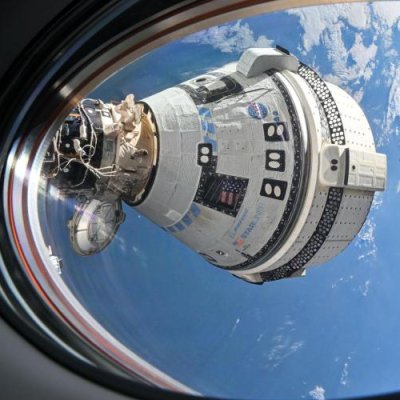
Starliner docked to ISS
Starliner docked to ISS in 2024.

NASA today released its final investigation report on the causes behind the Starliner thruster issues during that capsule’s only manned mission in ISS, issues that almost prevented the spacecraft from docking successfully and could have left it manned and out-of-control while still in orbit.

You can read the report here [pdf]. NASA administrator Jared Isaacman made it clear in his own statement that the Starliner incident was far more serious than originally let on.

“To undertake missions that change the world, we must be transparent about both our successes and our shortcomings. We have to own our mistakes and ensure they never happen again. Beyond technical issues, it is clear that NASA permitted overarching programmatic objectives of having two providers capable of transporting astronauts to-and-from orbit, influence engineering and operational decisions, especially during and immediately after the mission. We are correcting those mistakes. Today, we are formally declaring a Type A mishap and ensuring leadership accountability so situations like this never reoccur. We look forward to working with Boeing as both organizations implement corrective actions and return Starliner to flight only when ready.”

A Type A mishap is one in which a spacecraft could become entirely uncontrollable, leading to its loss and the death of all on board. Though Starliner was NOT lost, for a short while as it hung close to ISS that result was definitely possible. Its thrusters were not working. It couldn’t maneuver to dock, nor could it maneuver to do a proper and safe de-orbit. Fortunately, engineers were able to figure out a way to get the thursters operational again so a docking could occur, but until then, it was certainly a Type A situation.

The report outlines in great detail the background behind Starliner’s thruster issues, the management confusion between NASA and Boeing, and the overall confused management at Boeing itself, including its generally lax testing standards.

The report’s recommends that NASA impose greater control over future commercial contracts, noting that under the capitalism model that NASA has been following:
» Read more

50 comments

Vast wins sixth ISS slot for tourist mission

Haven-2
Vast’s full Haven-2 station once completed

NASA today announced that it has awarded the space station startup Vast its sixth slot for a manned commercial mission to ISS, scheduled for 2027.

The mission is expected to spend up to 14 days aboard the space station. A specific launch date will depend on overall spacecraft traffic at the orbital outpost and other planning considerations.

…Vast will submit four proposed crew members to NASA and its international partners for review. Once approved and confirmed, they will train with NASA, international partners, and SpaceX for their flight. The company has contracted with SpaceX as launch provider for transportation to and from the space station.

Vast already intends to fly four two-week missions to its single module Haven-1 demo station, scheduled to launch in the first quarter of 2027. This new ISS mission will demonstrate to NASA directly that Vast can handle manned missions. In both cases, the company is hoping its actions will convince NASA to award it a full construction contract to build its Haven-2 full-sized station, as shown in the graphic to the right.

Below are my rankings of the five private commercial space stations being developed. At this point the first three (Haven, Axiom, Starlab) are essentially tied, while the fourth (Thunderbird) is only trailing because it came late to the game. The fifth, Orbital Reef, seems practically out of the game.
» Read more

10 comments

Voyager wins four-year $24.5 million ISS management contract from NASA

The space station startup Voyager Technologies yesterday won a four-year $24.5 million contract from NASA to apparently manage the agency’s missions to ISS.

Under the task-order contract, Voyager will deliver end-to-end mission services spanning payload integration, mission operations, safety and compliance, and post-mission closeout. NASA may add options that extend the scope and value of the agreement over its life, providing Voyager with a multi-year framework for recurring mission execution. Voyager anticipates onboarding three payload missions over the next quarter, reflecting near-term demand and a steady pipeline of task orders supporting ongoing ISS operations.

The company has been doing similar ISS work for NASA at the Johnson Space Center in Texas, though this contract appears to expand that work considerably. This deal provides the company further experience operating space station missions, crucial for the Starlab station that Voyager is listed as the consortium’s lead company.

Of the five stations under development, Axiom has run tourist missions to ISS to demonstrate this capability, Vast is launching its own demo single module station to demonstrate this capability, and now Voyager is doing this work for NASA to demonstrate this capability.

Max Space, which only entered this race late last year, has no such contract or experience, but it has recently partnered with Voyager in other work, and plans to launch its own demo station module in ’27.

The last proposed space station, Orbital Reef, has no such deal as far as I know. Led by Blue Origin (partnered with Sierra Space), this station project continues to show no progress of any kind.

0 comments

Axiom wins slot for next tourist mission to ISS

NASA yesterday announced that it awarded the space station startup Axiom the next slot for a tourist mission to ISS.

NASA and Axiom Space have signed an order for the fifth private astronaut mission to the International Space Station, targeted to launch no earlier than January 2027 from the agency’s Kennedy Space Center in Florida.

…Axiom Mission 5 is expected to spend up to 14 days aboard the space station. A specific launch date will depend on overall spacecraft traffic at the orbital outpost and other planning considerations.

Both Axiom and the space station startup Vast had been bidding for the fifth and sixth tourist slots. That Axiom had already done this four times previously was probably NASA’s reasons for choosing it. The agency has not yet decided on who will get the sixth slot, targeting a mission likely in 2028. My bet is that it will give to Vast, because by then Vast’s own demo station Haven-1 will have launched and been visited, thus giving that company some of the experience Axiom already has.

4 comments

Expedition-11 crew splashdowns safely

SpaceX’s Endeavour capsule has safely splashed down and been recovered off the coast of California, returning the four Expedition-11 astronauts several weeks early from ISS due to an as-yet undisclosed medical issue with one astronaut.

Crew-11 returned home about a month earlier than planned because of a medical concern teams are monitoring with one of the crew members, who remains stable. Due to medical privacy, it is not appropriate for NASA to share more details about the crew member. Prior to return, NASA previously coordinated for all four crew members to be transported to a local hospital for additional evaluation, taking advantage of medical resources on Earth to provide the best care possible.

Following the planned overnight hospital stay, the crew members will return to NASA’s Johnson Space Center in Houston and undergo standard postflight reconditioning and evaluations.

This hospital visit for all four astronauts is simply a cover to hide which astronaut has the medical issue. At some point this information must be revealed, simply because it impacts how future space travel will be planned.

7 comments

Endeavour undocks from ISS, carrying the Expedition-11 crew

SpaceX’s Endeavour Dragon capsule undocked from ISS late this afternoon, carrying its four Expedition-11 crew who are coming home a few weeks early because of a medical issue with one crew person.

Live return coverage will resume at 2:15 a.m. Thursday, Jan. 15 on NASA+, Amazon Prime, and the agency’s YouTube channel until Dragon splashes down at approximately 3:41 a.m. off the coast of California and crew members are safely recovered.

It has been speculated by several sources, based on several NASA updates, that the crewman with the medical issues is Mike Finke, 58, who had flown in space three times previously.

Note that the only reason most major news sources are covering this crew return is because of the medical emergency. Normally, SpaceX has made this process so routine few pay attention any longer.

0 comments

Axiom has delayed the launch of its first space station module to ’28

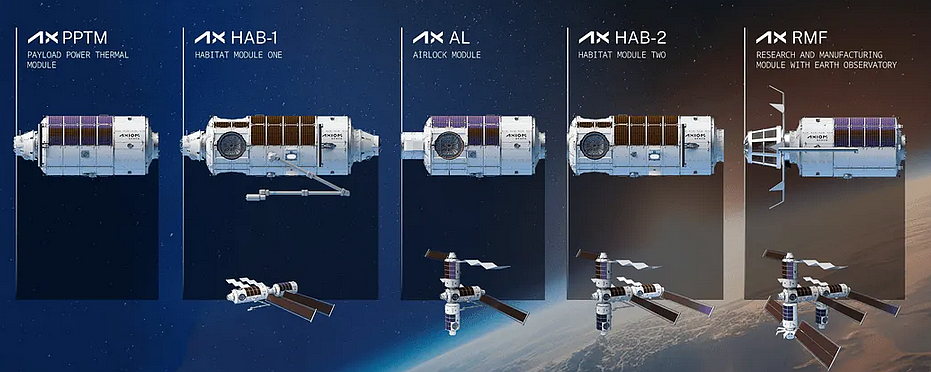
Axiom's module assembly sequence
Axiom’s module assembly sequence

When Axiom announced in September 2025 that Redwire would be building the solar panels for the first module of its space station, dubbed the PPTM, it also said that module would launch in late 2027, which was a delay of one year from the original launch date of 2026.

That schedule has now apparently been delayed again. In an interview yesterday, the company’s vice president of human spaceflight, former NASA astronaut Peggy Whitson, indicated the launch was now targeting 2028.

Plans call for the initial Axiom Station to be comprised of two modules, the PPTM — short for Payload Power Thermal Module — and a habitat module. The PPTM, which is to be shipped shortly to Houston for final assembly and integration, is slated to be launched in early 2028, with the second module following just months later. From there, Axiom aims to swiftly begin welcoming crew, Peggy Whitson, the company’s vice president of human spaceflight, told me in an interview.

This schedule almost guarantees that the Axiom station will not detach from ISS as quickly as originally intended. PPTM has a large hatch opening connecting it to ISS, allowing for the easy transfer of much of the research racks held on ISS. Before Axiom can become a free-flying station that ISS equipment must be moved, a process that will take time, likely months. To get it done the company will probably have to also attach its second habitation module so that crews can arrive and begin this transfer process.

In other words, Axiom’s schedule margins for getting its station launched, docked to ISS, loaded with ISS equipment, and then separated before ISS retires in 2030 are shrinking. It can ill afford further delays.

Below are my rankings of the five American space stations presently under development. Note that I now consider Axiom and Starlab tied for second.
» Read more

12 comments

ISS crew to return on Wednesday January 14, 2026

The present four-person expedition 11 crew on ISS, which has one member with an undisclosed sudden health issue that needs addressing on the ground, will undock and return to Earth on January 14, 2025 in SpaceX’s Endeavour capsule.

NASA and SpaceX are targeting no earlier than 5 p.m. EST, Wednesday, Jan. 14, for the undocking of the agency’s SpaceX Crew-11 mission from the International Space Station, pending weather conditions. … NASA astronauts Zena Cardman and Mike Fincke, JAXA (Japan Aerospace Exploration Agency) astronaut Kimiya Yui, and Roscosmos cosmonaut Oleg Platonov will splash down off the coast of California at approximately 3:40 a.m. on Thursday, Jan. 15.

Mission managers continue monitoring conditions in the recovery area, as undocking of the SpaceX Dragon depends on spacecraft readiness, recovery team readiness, weather, sea states, and other factors. NASA and SpaceX will select a specific splashdown time and location closer to the Crew-11 spacecraft undocking.

NASA has released no information about the medical issue that canceled a spacewalk and prompted the early return of this crew. We do not even know the name of the impacted astronaut.

7 comments

ISS expedition 11 will return early due to medical issue

Though NASA officials provided no new details on what the medical issue is on ISS nor who it occurred to, in a briefing this afternoon they announced that they have decided to bring the crew home early, and are also looking at launching the next crew earlier than its presently scheduled February launch.

They did say that the medical issue had nothing to do with space operations or the spacewalk the astronauts were getting ready to do. Though NASA’s chief medical officer James Polk was amazingly vague in his comments, he did suggest it was related to the environment of micogravity.

The one comment that struck me during the press briefing was the repeated insistence by all three officials, including NASA administrator Jared Isaacman, that NASA “never compromises safety”. Considering my own op-ed today and the unreasonable risks the agency is taken for the upcoming Artemis-2 mission, as well as its failures with Apollo 1, Challenger, and Columbia, NASA has compromised on safety many times in the past, and is doing it right now.

6 comments
1 2 3 4 124