Two launches today, by China and Russia

Both China and Russia completed launches today. First China put a Pakistani Earth observation satellite into orbit, its Long March 6 rocket lifting off from Taiyuan spaceport in north China. China’s state-run press made no mention of where the rocket’s lower stages, using very toxic hypergolic fuels, crashed inside China.

Next Russia launched a Progress cargo capsule to ISS, its Soyuz-2 rocket lifting off from Baikonur in Kazakhstan. The freighter will dock with ISS in two days.

The leaders in the 2026 launch race:

49 SpaceX
23 China
8 Russia
6 Rocket Lab

For the third straight year SpaceX continues to lead the entire world combined in total launches, 49 to 42.

7 comments

Progress docks with ISS

A Russian astronaut successfully docked a Progress cargo capsule with ISS early today, using the manual TORU joystick system inside the station.

Sergey Kud-Sverchkov manually piloted the spacecraft during docking using the TORU (Telerobotically Operated Rendezvous System) control panel inside the space stationโ€™s Zvezda Service Module after one of the spacecraftโ€™s two KURS automated rendezvous antennas failed to deploy after launch.

Normally each Progress docks autonomously, using the Kurs radar antennas to determine distance and location. With one antenna out Kud-Sverchkoy controlled the capsule remotely. This back-up system has been used successfully a number of times previously, but when it was first being tested on Mir in the 1990s one of those earlier tests resulted in a collision that almost destroyed Mir. It did damage one module badly enough that it leaked from then on, requiring that module to be sealed off for the rest of Mir’s life.

0 comments

Three launches today from three continents and three nations

The global launch pace continues, with three launches today. First, Russia launched a new Progress cargo capsule to ISS, its Soyuz-2 rocket lifting off from its repaired launchpad at Baikonur. That launchpad had experienced serious damage to an access platform during the previous launch in November 2025, and since it was the only pad that Roscosmos could launch payloads and crews to ISS, Russia committed heavy resources to get it fixed quickly.

Once Progress reached orbit, however, one of the antennas used by its Kurs automatic docking system failed to deploy. If engineers can’t get it opened by the time of docking, scheduled for March 24, 2026, the Russian astronauts on ISS will use the back-up TORU system, whereby they control the spacecraft manually from inside ISS.

Next, SpaceX placed another 29 Starlink satellites into orbit, its Falcon 9 rocket lifting off from Cape Canaveral Space Force station in Florida. The first stage (B1078) completed its 27th flight, landing on a drone ship in the Atlantic, only 20 days after its previous flight. This flight also moved the booster up to just behind the space shuttle Columbia in the rankings of the most reused launch vehicles, tying it with SpaceX booster B1077:

39 Discovery space shuttle
33 Atlantis space shuttle
33 Falcon 9 booster B1067
32 Falcon 9 booster B1071
31 Falcon 9 booster B1063
30 Falcon 9 booster B1069
28 Columbia space shuttle
27 Falcon 9 booster B1077
27 Falcon 9 booster B1078

Sources here and here.

At the pace SpaceX is reusing its fleet of Falcon 9 boosters, expect Columbia to drop off this list in about two months.

Finally, China launched 10 smallsats, according to China’s state-run press, for a planned 160-satellite GPS-type constellation, its Smart Dragon-3 rocket (also called Jielong-3) lifting off from an ocean platform off the northeast coast of China. Video here of launch.

The leaders in the 2026 launch race:

37 SpaceX
13 China
4 Rocket Lab
3 Russia

SpaceX continues to lead the entire world combined in total launches, as it did in both โ€™24 and โ€™25.

2 comments

Progress docks safely with Zvezda module at ISS

ISS as of today
ISS as of today. Click for original.

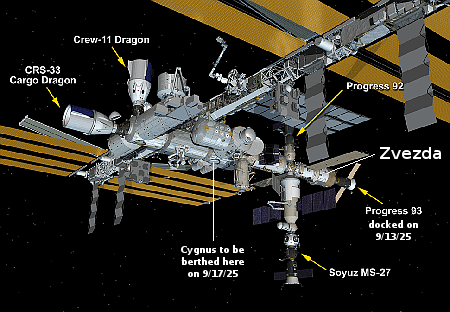
In what is increasingly a worrisome procedure, Russia’s just launched Progress freighter successfully docked with the aft port of the Zvezda module at ISS this past weekend, bringing with it more than 5,000 pounds of supplies and research equipment.

The image to the right, annotated additionally by me, shows the present configuration of spacecraft at ISS. The concerns center on the stress fractures that have been found in the Zvezda hull, fractures that have caused the air leak on ISS and are believed attributable to the many dockings to the module since its launch in the late ’90s, as well as the module’s age. It was first built in the late ’80s, making it almost four decades old.

For recent dockings, NASA now closes the hatch between the Russian and American halves of the stations, just in case Zvezda experiences a catastrophic failure. The Russians seem less concerned, but nonetheless they also take extra care during dockings. It is my understanding their astronauts prepare their Soyuz capsule as a lifeboat and immediately escape during these operations.

11 comments

Russia launches Progress to ISS

Russia today successfully launched a Progress freighter to ISS, its Soyuz-2 rocket lifting off from the Baikonur spaceport in Kazakhstan.

The freighter will dock with the aft port of the Zvezda module in two days. When it does so, expect NASA to require its astronauts to close the hatch between the American and Russia parts of ISS. The agency has real concerns about the stress fractures in Zvezda’s hull that are the cause of the station’s air leaks, and fears it could at some point fail catastrophically during a docking. The odds of this happening are small, but they are larger than they should be.

The leaders in the 2025 launch race:

115 SpaceX
53 China
12 Rocket Lab
12 Russia

SpaceX still leads the rest of the world in successful launches, 115 to 91. The company has another launch scheduled for later today.

3 comments

Russia launches Progress freighter to ISS

Russia today (July 4th in Kazakhstan) successfully launched a new Progress freighter to ISS, its Soyuz-2 rocket lifting off from the Baikonur spaceport in Kazakhstan.

The freighter will dock to ISS in two days, bringing with it almost three tons of cargo and more than a half done of hardware and equipment. Expect NASA to order its astronauts to shut the hatch between the American and Russian sections of ISS due its fear that a docking to the Zvezda module could cause a catastrophic failure because of the stress fractures in that module’s hull. That docking will however not be directly to Zvezda, but to the Poisk module that is itself docked to Zvezda.

The lower stages and strap-on boosters crashed inside Kazakhstan in the normal drop zones that Russia has used for decades.

The leaders in the 2025 launch race:

84 SpaceX
36 China
10 Rocket Lab
8 Russia

SpaceX still leads the rest of the world in successful launches, 84 to 63.

Russia’s launch pace this year is its lowest pace in decades. At this rate Russia might only get about 15-17 launches off in 2025, a count more comparable to what it did in the very early 1960s. This decline can be directly linked to the Russian invasion of the Ukraine. That invasion caused Russia to lose billions in contracts in the international launch market. And it continues to prevent Russia from winning any new international contracts as well. Except for its government launches (which are limited due to government cash shortages), the only other missions Russia flies are those to ISS, and those number about four per year.

2 comments

Russia successfully launches new Progress freighter to ISS

Russia today successfully placed a new Progress freighter into orbit, its Soyuz-2 rocket lifting off from Kazakhstan.

The freighter will dock with ISS on March 2, 2025, docking with the aft port of the Zvezda module, the core module of the Russian half of the station. I guarantee that during that docking the hatch will be closed between the American and Russian segments, as that is now NASA’s policy because of its concern about the stress fractures in Zvezda.

The leaders in the 2025 launch race:

25 SpaceX
9 China
2 Rocket Lab
2 Russia

6 comments

“Toxic smell” at Progress hatch was hypergolic fuel

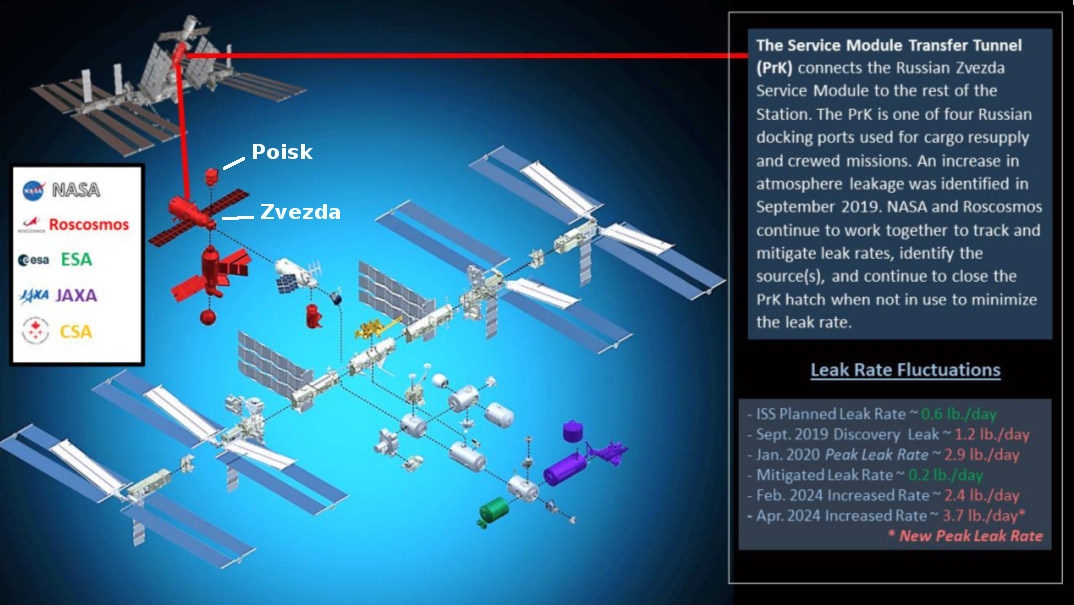
Figure 3 from September Inspector General report
Figure 3 from September Inspector General report, annotated to show Zvezda and Poisk locations.

According to information obtained by Anatoly Zak at RussianSpaceWeb.com, the “toxic smell” detected by Russian astronauts immediately after opening the hatch to unload the newly docked Progress at ISS was actually a small but very dangerous amount of hypergolic fuel left over from the previous Progress freighter.

[T]he working hypothesis was that the ground control failed to perform a routine purging of propellant lines between the station and Progress MS-27 before its undocking. As a result, highly toxic residue of hypergolic propellant remaining in the lines could easily spill into the main cavity of the docking mechanism on Poisk, once Progress MS-27 undocked from the module, an industry source told RussianSpaceWeb.com. After the arrival of Progress MS-29, the interior of the docking mechanism between the space station and the cargo ship was re-pressurized trapping the propellant residue and letting it into the station after opening of the hatches. [emphasis mine]

If true, this incident indicates a shocking level of incompetence, sloppiness, or even malice at Russian mission control. How can mission controllers forget to do a “routine purging” of hypergolic fuel, especially when it is known that this very dangerous fuel — which can dissolve skin if you allow yourself to get in contact with it — can “easily spill” into the docking port where people will travel?

The Russian government pays its top-level engineers very little, even as those engineers watch often bungling managers rake in big bucks through legal deal-making as well as bribery and embezzlement (only rarely caught and punished). These circumstances have been suggested as behind the various suspicious leaks in Soyuz and Progress capsules as well as the new Nauka module. In the case of the Soyuz, it was clearly caused by someone drilling a hole on the ground before launch and then fixing it with a makeshift patch that was certain to fail during the mission in space. Both the Progress and Nauka leaks also suggested a similar cause. The Russians told NASA its investigation discovered who drilled that Soyuz hole, but never revealed what it had found. As for the Progress and Nauka leaks, no investigation results were ever even discussed.

There is something distinctly rotten within Roscosmos, a rottenness that it appears Russia is doing little to fix. More likely it can’t really fix it, because the Putin administration in the late 2000s made Russia’s aerospace industry a remake of the Soviet Union, a single government-run corporation that owns everything and blocks all competition. Since then it has shown a steady decline in its ability to accomplish much and the steady growth of problems such as this.

The sooner Americans no longer have to partner with Russia the better. We must hope that NASA can at least get to 2030 and its planned retirement of ISS without a major failure. This leak occurred within the Poisk docking module that is attached to the larger Zvezda module where air is leaking from the station due to serious stress fractures in its hull. Each docking puts more stress on Zvezda, risking a catastrophic failure, so much so that it is now NASA policy to close the hatch between the American and Russian halves of the station whenever such dockings take place.

17 comments

Unloading of new Progress docked to ISS delayed due to “toxic smell”

The unloading of cargo from the new Progress freighter that docked to ISS on November 23, 2024 halted immediately after hatch opening because of a “toxic smell” detected by the Russian astronauts.

The crew then proceeded with air leak checks in the docking port, but after opening the hatch between Poisk and Progress, it had to be closed immediately due to toxic smell and possible contamination hazard in the form of droplets, according to communications between the US mission control in Houston and the ISS crew in late hours Moscow Time on November 23.

Various systems aboard the ISS were activated to scrub the station’s atmosphere from possible contamination, while the hatch of the Poisk module leading into the pressurized cargo compartment of the Progress M-29 spacecraft remained closed. In particular, the Trace Contaminant Control Sub-assembly, TCCS, was turned on aboard the US Segment. The Russian crew was also reported donning protective equipment and activating an extra air-scrubbing system aboard the Russian Segment, which operated up to a half an hour.

By the end of today mission controllers from both Russian and the U.S. declared the air cleared and normal, and have begun unloading operations.

The cause remains unexplained.

6 comments

Russia and SpaceX complete launches

Both Russia and the American company SpaceX successfully completed launches this morning. First, Russia sent a new Progress freighter on its way to ISS, its Soyuz-2 rocket lifting off from the Baikonur spaceport in Kazakhstan. The cargo ship is planned to dock with ISS in two days.

Next SpaceX put another 24 Starlink satellites into orbit, its Falcon 9 rocket lifting off from Cape Canaveral in Florida. The first stage completed its 20th flight, landing on a drone ship in the Atlantic.

The leaders in the 2024 launch race:

119 SpaceX
53 China
14 Russia
12 Rocket Lab

American private enterprise now leads the rest of the world combined in successful launches 137 to 80, while SpaceX by itself leads the entire world, including American companies, 119 to 98.

0 comments

Russia launches Progress cargo spacecraft to ISS

Russia tonight (August 15th in Russia) successfully launched a Progress freight to ISS, its Soyuz-2 rocket lifting off from the Baikonur spaceport in Kazakhstan.

Rendezvous and docking with ISS scheduled for August 17, 2024 in the early morning.

The leaders in the 2024 launch race:

80 SpaceX
33 China
10 Rocket Lab
9 Russia

American private enterprise still leads the rest of the world combined in successful launches 95 to 50, while SpaceX by itself still leads the entire world combined, including American companies, 80 to 65.

0 comments

Launches by China and Russia

Earlier today both China and Russia successfully completed launches.

First, China launched a Chinese-built Pakistani communications satellite into orbit, its Long March 3B rocket lifting off from its Xichang spaceport from the southwest of China.

No real information was released about the satellite, or the fate of the rocket’s lower stages and four strap-on boosters, all of which use toxic hypergolic fuels and certainly crashed somewhere in China.

Next, Russia successfully launched a new Progress cargo ship to ISS, its Soyuz-2 rocket lifting off from Baikonur in Kazakhstan. The freighter will dock with ISS tomorrow. I have embedded video of the launch below, cued to T-30 seconds.

The rocket’s flight path took it over Kazakstan, Russia, and China, with drop zones for the lower stages in the first two. No word on whether the lower stages and four strap-on boosters crashed near habitable areas.

The leaders in the 2024 launch race:

57 SpaceX
25 China
8 Russia
6 Rocket Lab

American private enterprise still leads the world combined in successful launches, 65 to 39, while SpaceX by itself leads the entire world, including other American companies, 57 to 47.

» Read more

4 comments

Russia launches Progress freighter to ISS

Russia today (February 15th in Kazakhstan) successfully used its Soyuz-2 rocket to launch a Progress freighter to ISS.

As happens on launches from Kazakstan to ISS, the rocket’s core stage and strap-on boosters crashed within Kazakstan inside planned crash zones.

This was supposed to be the third launch today, but SpaceX’s second launch today, this time of 22 Starlink satellites, was scrubbed due to weather and reschduled 24 hours till tomorrow at Vandenberg. There is still one more launch scheduled today, SpaceX launching Intuitive Machines Nova-C lunar lander at 9:57 pm (Pacific).

The leaders in the 2024 launch race:

13 SpaceX
8 China
2 Iran
2 Russia

American private enterprise still leads the entire world combined 15 to 14 in successful launches, with SpaceX by itself now trailing the rest of the world combined (excluding American companies) 13 to 14.

2 comments

Russia launches Progress to ISS

Russia early this morning successfully launched a Progress freighter to ISS, its Soyuz-2 rocket lifting off from Baikonur in Kazakhstan.

The rocket’s core stage, strap-on boosters, and second stage crashed in the standard drop zones the Russians have used since the launch of Sputnik in 1957. It is unclear how close to inhabited areas any of these are.

The leaders in the 2023 launch race:

87 SpaceX
53 China
16 Russia
7 Rocket Lab
7 India

American private enterprise still leads China in successful launches, 99 to 53, and the entire world combined 99 to 85. SpaceX by itself still leads the entire world (excluding other American companies) 87 to 85.

SpaceX however has two launches scheduled for today, one at Vandenberg at 10:04 am (Pacific) and the second at Cape Canaveral at 11 pm (Eastern). The links go to the live streams.

0 comments

Russia launches Progress freighter to ISS

Russia tonight successfully used its Soyuz-2 rocket to launch a new Progress freighter to ISS, lifting off from its Baikonur spaceport in Kazakhstan.

The leaders in the 2023 launch race:

57 SpaceX
36 China
12 Russia
6 Rocket Lab
6 India

In the national rankings, American private enterprise still leads China in successful launches 65 to 36. It also leads the entire world combined, 65 to 59. SpaceX by itself is still in a neck-in-neck race with the rest of the world (excluding American companies), now trailing 57 to 59 in successful launches.

1 comment

Russia launches Progress with cargo to ISS

Russia today used its Soyuz-2 rocket to launch a new Progress freighter to ISS, with its docking to the station to occur shortly.

The leaders in the 2023 launch race:

34 SpaceX
19 China
7 Russia
4 Rocket Lab

The U.S. still leads China 38 to 19 in the national rankings, and the entire world combined 38 to 32. SpaceX by itself now trails the entire world, including American companies, 34 to 36.

0 comments

Russia considering bringing Soyuz launched on February 23rd home earlier

According to unnamed sources in the Russian press, Roscosmos officials are considering bringing the Soyuz capsule launched on February 23rd to ISS back to Earth in June rather than September, while moving up the launch of the next Soyuz manned mission.

As noted by space journalist Anatoly Zak:

The existence of such plans indicated that specialists had still been concerned about the possibility of a critical leak in the thermal control system of the fresh crew vehicle similar to those that hit two previous transport ships. Such change in schedule would also debunk the official explanation of previous two accidents by Roskosmos and NASA as caused by meteors rather than production defects.

The two previous coolant leaks occurred about three months after launch. Bringing the Soyuz home in June would get it home in about three and a half months, suggesting the Russians are no longer confident their Soyuz and Progress spacecraft can withstand six months in space.

If this plan is adopted it will also put less strain on the crew slated to come home on that Soyuz. Their mission has been planned for six months. Extending it to a full year without any prior preparation risks serious health issues.

0 comments

Russians release image of coolant system hole in Progress

Comparing holes in Soyuz and Progress spacecraft

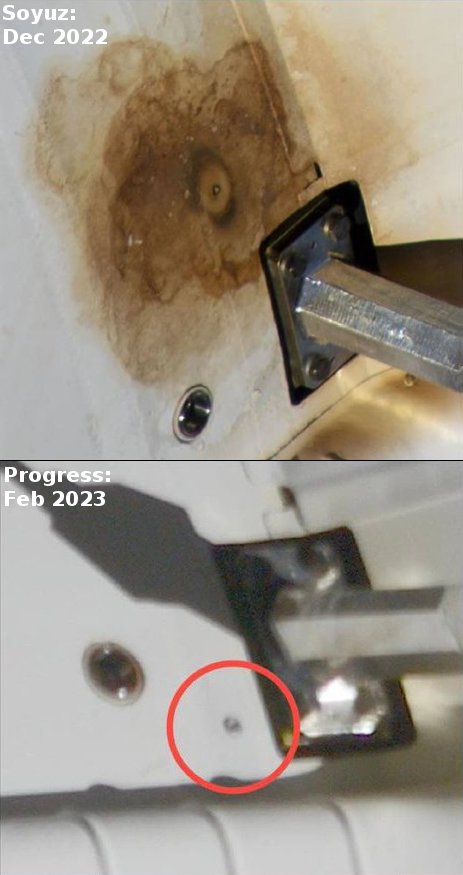
Roscosmos officials today released a close-up image taken on February 17, 2023 of what they think is the hole in the Progress freighter that caused a leak in its coolant system on February 11th.

The picture was taken shortly after the freighter undocked from ISS to be de-orbited over the Pacific. To the right is a comparison of pictures taken of that Progress hole and the hole that occurred in December on the Soyuz spacecraft docked to ISS. The comparison was first created by this Twitter user but rearranged by me to post here. The red circle in the bottom image marks what the Russians identify as the Progress hole. The top image shows the hole that caused an almost identical leak in a Soyuz capsule in December. The Russians say the Progress hole is about 12 millimeters in diameter, and to their mind was caused “by an external influence,” same as the Soyuz hole.

This conclusion however is suspect. If you look at the best resolution version of the picture of the Progress hole (available here), there appears to be material surrounding the hole, as if the hole broke from the inside, not from an outside impact. (Because the resolution is poor, however, this conclusion is uncertain.)

More telling is that, as both pictures show, the two holes are almost in the exact same place on these two spacecraft. As noted by the Twitter user who first made this picture comparison, “I canโ€™t even calculate the odds of 2 spacecraft being struck in almost the same place, within weeks of each other.”

That the Soyuz leak caused so much staining and the Progress leak has none is also puzzling.

Were these leaks both caused by the impact of a micrometeoriod or piece of space junk, as the Russians now claim? Or was one by sabotage or sloppy production work on the ground? Or were both? One impact might make sense, but two at almost the same spot? It defies logic or the percentages for two impacts so similar to occur so close together in time.

Sabotage however in the same area is very conceivable, especially considering that the Russians have never explained the cause of the hole that was drilled in a Soyuz capsule in 2018, a hole that was drilled and then patched, before launch.

13 comments

Inspection of leaking Progress after undocking detects no obvious damage

After undocking the Progress freighter from ISS yesterday, Russian astronauts on the station rolled it so that all sides of its service module could be photographed and inspected in the hope of spotting the leak in its coolant system that sprung on February 11th.

No visual damage has been detected at the Progress MS-21 spacecraft after it undocked from the International Space Station. “After the Progress MS-21 cargo spacecraft undocked from the International Space Stationโ€™s Poisk mini-research module, footage was made of its exterior surface and no visual damage was detected,” the statement [from Roscosmos] reads.

Initially the Russians postponed its de-orbit as they considered the idea of redocking the freighter to another port on the Russian half of ISS in order to inspect it more closely, but eventually they decided to fore-go that plan and de-orbit it on February 19th, one day later.

In watching the live stream of the undocking and the roll maneuver, I thought I saw a partial reddish-orange stain, similar to the stain around the hole that occurred in the Soyuz capsule in December, but it was mostly hidden behind other equipment and the Russians seemed to not consider this significant.

4 comments

Roscosmos will launch unmanned Soyuz to ISS on February 21

Roscosmos today announced that it will launch the unmanned Soyuz to ISS on February 21st, only a two-day delay after doing a quick inspection of its outer surface for possible damage following the coolant leak of a Progress freighter on February 11th.

BtB’s stringer Jay provided me this translation of the announcement at the link:

The Soyuz MS-23 spacecraft has been checked and is beginning to be prepared for launch. The preparations suspended the day before at Baikonur will resume tomorrow or the day after tomorrow.
The launch is scheduled for the 20th of February.

The ship was inspected. No maliciously drilled holes were found. We decided not to wait any longer. In any case, a refueled ship must either be launched or sent to a museum.

Update: removal of the launch vehicle to the launch pad on February 18, launch on February 21″ [emphasis mine]

The highlighted words are truly intriguing. It appears Roscosmos is desperately trying to convince the world that the repeated recent leaks to Soyuz and Progress spacecraft are not related to sabotage on the ground. At the same, Roscosmos has never told us the results of its investigation into the 2018 hole in a Soyuz capsule that someone drilled and then patched before launch. It seems incredibly unlikely that the two recent leaks in the exterior coolant systems of two different spacecrafts were both caused by impact from a micrometeorite or tiny piece of space junk. Two such impacts could of course occur this frequently, but for both to happen to such similar locations on only Russian spacecraft seems beyond improbable.

Either way, the decision makes some sense. The available lifeboats on ISS right now are really insufficient. Better to get this launched. More important, they had already begun fueling it, and once that is done the clock was running. They have to launch by a certain time.

Meanwhile it would be wise for NASA to begin arranging new emergency lifeboat arrangements with SpaceX as well as Boeing (once it finally gets Starliner operational). Depending on the Russians for even part of this responsibility seems ill advised. If preplanned properly, SpaceX could certainly launch one of its Dragon manned capsules quickly in an emergency.

13 comments
1 2 3 5