Engineers determine failed gyroscope caused Gehrels-Swift shutdown

Engineers have now determined that the failure of one of the six reaction wheels that point the orbiting Gehrels-Swift Observatory was the cause of its shutdown into safe mode on January 18th, and are now reconfiguring the space telescope to operate with only five gyroscopes.

The team is currently testing the settings for operating the spacecraft using the five operational reaction wheels. After the tests for these settings have been completed, they plan to upload them to the spacecraft next week.

Swift can fully carry out its science mission with five wheels. After careful analysis, the team has determined that the five-wheel configuration will minimally impact the movements necessary for Swift to make science observations. The team expects the change will slightly delay the spacecraft’s initial response time when responding to onboard gamma-ray burst triggers, but this will not impact Swift’s ability to make these observations and meet its original operational requirements.

Only after getting Gehrels-Swift operating again will the engineers then consider trying to recover the failed reaction wheel.

Gehrels-Swift was one of the key space telescopes that made it possible for astronomers to solve the mystery of gamma ray bursts. It is also used today to help identify the source of mysteries like fast radio bursts and other supernovae events. It was designed to quickly begin observing in multiple wavelengths any spot in the sky where a mystery burst or new supernova has occurred, thus getting astronomers the earliest new data possible.

1 comment

Pushback: Doctor suspended for opposing mandates sues hospital

Dr. Mary Bowden, refusing to bow to the authorities

Pushback: Mary Bowden, a doctor who was suspended from working at Houston Methodist Hospital because she publicly opposed COVID shot mandates and used ivermectin in treating her Wuhan flu patients, has now sued the hospital to get data on the effects, pro and con, of those shots on its own patients.

The hospital had accused her of “spreading dangerous misinformation which is not based on science” because she had successfully treated about 2,000 COVID patients, none of which ever needed hospitalization, with both ivermectin and monoclonal antibodies.

Bowden apparently has publicly advocated choice by both doctors and patients, something the lords at Houston Methodist cannot tolerate.

Bowden added, “We all know that early COVID treatment works, it saves lives, and I’m not going to be silenced, intimidated, or bullied by Houston Methodist, Houston Chronicle, or anyone else who wants to target physicians that question the narrative.”

In November, [her Attorney Steve] Mitby said that Bowden had never peddled disinformation, as a Stanford University-trained physician who has had vast experience in treating coronavirus patients. “She is helping her patients, through a combination of monoclonal antibodies and other drugs, to recover from COVID. Dr. Bowden’s proactive treatment has saved lives and prevented hospitalizations,” he said at the time. “Dr. Bowden also is not anti-vaccine as she has been falsely portrayed. Dr. Bowden has opposed vaccine mandates, especially when required by the government. That is not the same as opposing vaccines.”

Hospitals nationwide have been blocking doctors from considering these other treatments, even though there is building evidence that they work. Bowden’s own success is an example of that evidence.

The lawsuit is not seeking damages. Instead, it wishes to obtain from the hospital its data on its own success at treating the Wuhan flu, as well as what it has gained financially by that treatment.
» Read more

34 comments

Alien and barren Mars

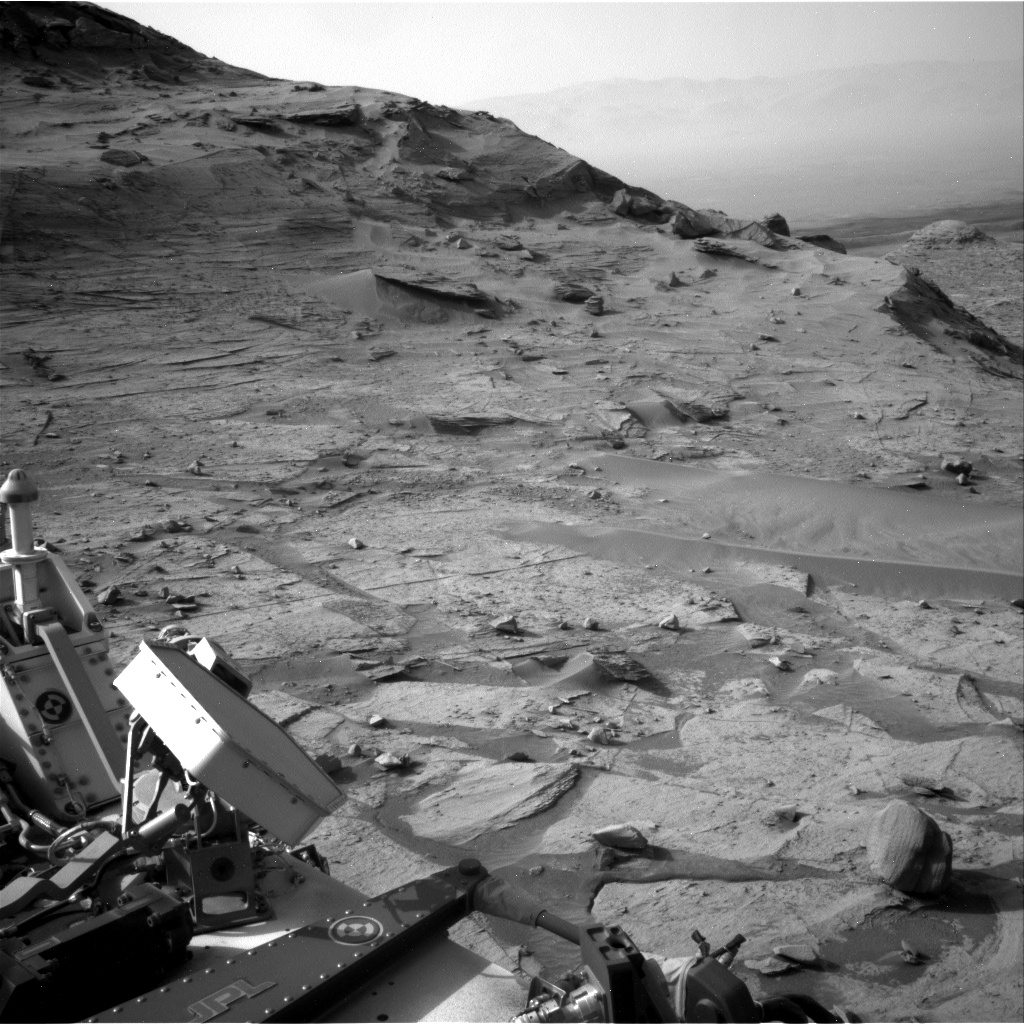
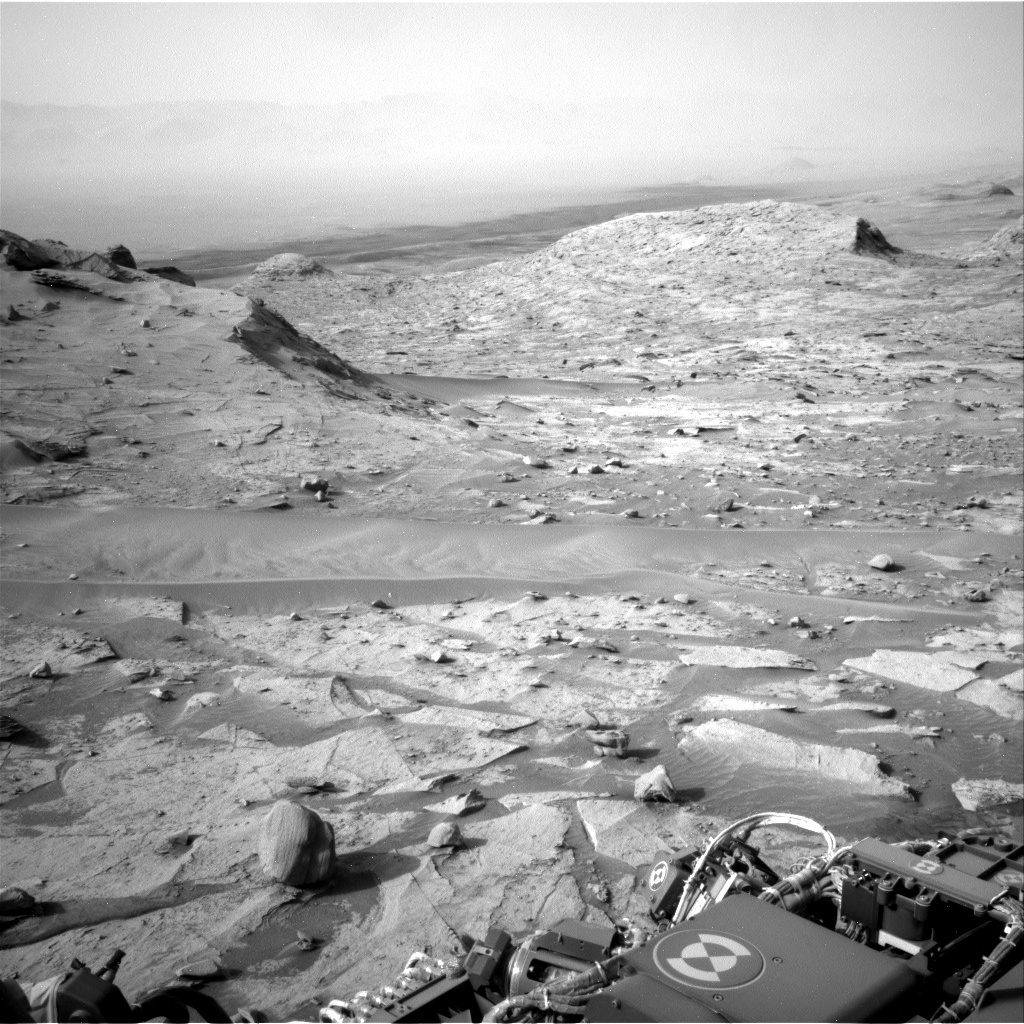
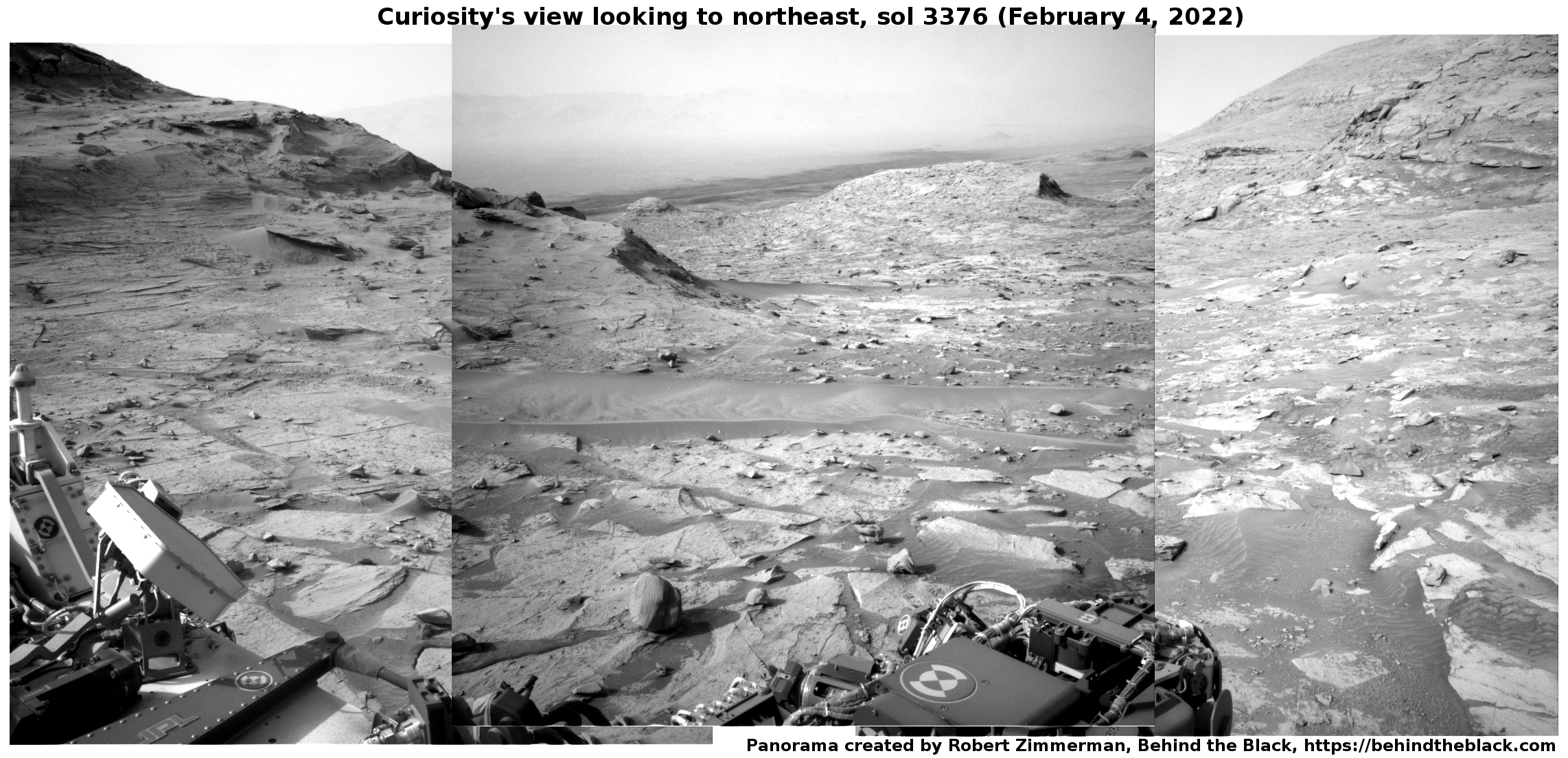
Curiosity's view looking to northeast, sol 3376 (February 4, 2022)
Click for full resolution. Click here, here, and here for original images.

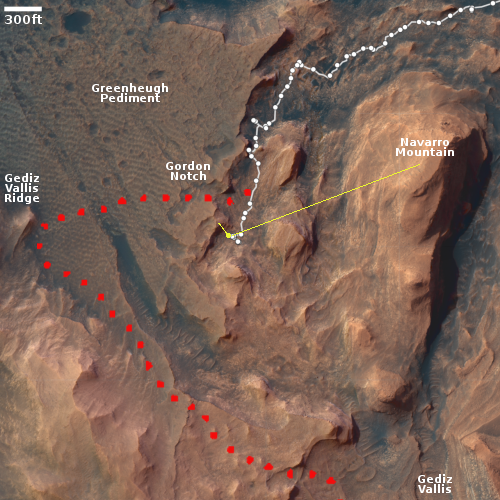
Overview map
Click for interactive map.

Cool image time! The panorama above was created from three photos downloaded today from Curiosity’s right navigation camera. It looks to the northeast of the rover, out across Gale Crater. The crater floor is about 1,750 feet lower.

This is dust season on Mars, which explains the thick haze in the crater. About 25 miles away the crater rim can be faintly seen through the dust haze as a mountain chain. If you look at the full resolution panorama you can see several buttes on the crater floor barely visible through that haze.

The map to the right gives the context. Curiosity’s present location is indicated by the yellow dot, with the yellow lines indicating the area covered by the panorama. The red dotted line indicates the rover’s future planned route.

For the last few weeks Curiosity has been working nestled to the base of a small butte the science team has dubbed “The Prow”, studying its numerous thin layers. I featured the Prow in this January 11th post, though at the time I overestimated its size, which is only about ten feet high. The butte is especially fascinating in that its top layers overhang outward in an unbelievable manner.

The rover is now about to move on, though where must still be decided by the science team. Based on their most recent update it appears they are not ready to leave this barren rocky hollow surrounded with many-layered buttes, and will take the rover to another.

3 comments

Iceye raises $136 million in private investment capital

Capitalism in space: Iceye, which launches commercial Earth observation satellites, has successfully raised another $136 million in private investment capital, bringing its total cash raised to $304 million.

With the latest cash infusion announced Feb. 3, Iceye is expanding manufacturing capacity and upping its launch tempo. Iceye plans to loft 11 satellites in 2022, after launching seven in 2021. Iceye also will devote additional resources toward natural catastrophe monitoring. In 2021, Iceye began working with insurance industry partners including Zurich-based Swiss Re and Tokyo-based Tokio Marine.

With the climate changing and natural catastrophes becoming more frequent, Iceye executives see increasing demand for updated information. SAR satellites are particularly useful for observing floods and other disasters because unlike optical sensors, they gather data at night and through clouds.

Essentially, commercial satellites like Iceye’s are replacing the government satellites that NASA and NOAA have been launching, but with far less frequency and far more cost in the last two decades. In fact, the inability of these agencies to get many new Earth observation satellites launched on time and cheaply has fueled this new private industry.

Like NASA’s manned program, the government will soon depend entirely on privately-built satellites for its climate and Earth resource research. And it will get more for its money and get it faster.

0 comments

Former NASA insiders form commercial company to launch satellites to lunar orbit

Capitalism in space: Two former NASA managers have teamed up with two commercial businessman to form a startup, dubbed Quantum Space, to launch an unmanned platform to lunar space to provide support for NASA’s Artemis program.

The team includes Steve Jurczyk, who spent thirty years at NASA and finished his career there before retiring serving as acting NASA administrator for the first three months of the Biden administration.

Jurczyk is one of the three co-founders of Quantum Space. Another is Ben Reed, former division chief of exploration and in-space services at NASA’s Goddard Space Flight Center and who worked on satellite servicing projects there. He is the chief technology officer of Quantum Space. The third co-founder is Kam Ghaffarian, who also helped start commercial space station company Axiom Space and lunar lander developer Intuitive Machines after selling Stinger Ghaffarian Technologies. They’re joined by Kerry Wisnosky, the co-founder and former principal owner of Millennium Engineering and Integration, who is the chief operating officer of Quantum Space.

Their plan is to launch their platform and robots to the Earth-Moon L1 point, the spot where the gravitational spheres of influence of the Earth and Moon meet, about 40,000 miles from the Moon.

The outpost … would consist of two components. One is a spacecraft bus that serves as a platform for hosting payloads, using modular “plug-and-play” interfaces. The other is a spacecraft that would deliver payloads to the platform and install them using robotic manipulators.

Those payloads could include communications, navigation, remote sensing, space domain awareness and space weather sensors, Jurczyk said. Those payloads would primarily come from customers, but he said the company is looking at developing its own payloads, particularly for imaging of the Earth and moon.

They hope to launch their first satellite by ’25.

Like the insiders who run Axiom, these guys are taking advantage of their experience at NASA to build a private space company that will serve NASA’s needs. They are also recognizing that in the coming years, everything NASA “does” will be done by private companies. This company is their effort to jump on that bandwagon.

2 comments

Webb mirror alignment begins with first photons detected by instrument

With the detection by one instrument of the first photons traveling through all of the mirrors of the James Webb Telescope the alignment of its many mirror segments begins.

This week, the three-month process of aligning the telescope began – and over the last day, Webb team members saw the first photons of starlight that traveled through the entire telescope and were detected by the Near Infrared Camera (NIRCam) instrument. This milestone marks the first of many steps to capture images that are at first unfocused and use them to slowly fine-tune the telescope. This is the very beginning of the process, but so far the initial results match expectations and simulations.

The article at the link provides a very detailed description of the step-by-step process used by engineers to align the eighteen segments of the primary mirror.

12 comments

Hot spot in northern Martian crater?

Hot spot in northern Martian crater?
Click for full image.

Cool image time! The photo to the right, rotated, cropped, and reduced to post here, was taken on September 22, 2021 by the high resolution camera on Mars Reconnaissance Orbiter (MRO). It shows an unnamed four-mile-wide crater in the high northern lowland plains of Mars, at 60 degrees north latitude.

At 60 degrees latitude, it is likely that the crater’s interior is filled with buried glacial ice. A close look at the crater’s interior rim shows that whatever material fills the crater does not quite reach the rim. Furthermore, there are areas in the interior where it appears some slight sublimation has occurred. These features suggest the interior material is buried ice, but do not prove it.

What makes this crater intriguing however is the irregular depression at its center. When craters have a feature at the center, it usually is a central peak, caused at impact. The impact makes the ground act like a pond of water when you drop a pebble into it, with circular ripples (the crater rim) spreading outward and an uplift in the center (the central peak). In the case of a crater, the pond quickly freezes, locking those ripples and uplift in place.

Why a central depression then?
» Read more

8 comments

SpaceX successfully launches another 49 Starlink satellites

Capitalism in space: SpaceX successfully completed its third launch in four days today, launching 49 Starlink satellites into orbit on its Falcon 9 rocket.

At the time of writing, the satellites themselves have not yet deployed. The first stage, flying its sixth mission, landed successfully. The two fairing halves were flying their sixth and fourth flights.

The 2022 launch race:

6 SpaceX
2 China
1 Virgin Orbit
1 ULA

11 comments

Pushback: Cop wins $75K settlement for being punished for praying

A victory for liberty in Louisville

Do not comply: Policeman Matthew Schrenger has won a $75,000 settlement from the city of Louisville, Kentucky, for suspending him after he prayed, while off duty, in front of an abortion clinic.

Officer Matthew Schrenger was off-duty when he stopped to pray with his father on the public sidewalk outside the EMW Women’s Surgical Center nearly a year ago, on Feb. 20, according to the Thomas More Society. Schrenger arrived in the early morning, before the abortion provider opened, as part of 40 Days for Life, an international grassroots campaign dedicated to ending abortion through prayer and fasting.

Matt Heffron, senior counsel for the Thomas More Society, previously said that Schrenger, a 13-year police veteran, was praying the rosary, according to the local Fox affiliate, WDRB News.

For his actions, Schrenger was suspended for more than four months with pay, stripped of his police powers, and placed under investigation.

» Read more

9 comments
1 173 174 175 176 177 192