A Russian Mars airplane?

According to Russia’s state run press, a team of engineers at the Moscow Aviation Institute (MAI), working in partnership with engineers from India, are developing a fixed-wing robotic airplane for use on Mars.

The work on the Marsoplane began in April 2022 after the funding request was approved by the Russian Science Fund. Karpovich believes that the team of scientists will be able to successfully test the technology demonstrator by the end of next year. “By the end of 2024, the Russian side will have to publish ten articles, build and successfully test the technology demonstrator,” she said. [emphasis mine]

It would be nice if this project succeeded but do not get your hopes up. Note the emphasis on the number of papers published. This indicates the goal of this project is not actually building this airplane, but to maintain the careers of its engineers here on Earth. In fact, the whole article has this feel, which by the way is consistent with almost all Russian space projects for the past two decades. Lots of talk, some engineering tests, but nothing real ever gets built that actually flies.


2 comments

Researchers develop liquid nitrogen spray that removes lunar dust

In a significant breakthrough that might solve a problem that has been on on-going threat to future lunar exploration, researchers at Washington State University have developed a liquid nitrogen spray that appears able to remove the Moon dust that sticks to spacesuits and equipment.

The sprayer removed more than 98% of moon dust simulant in a vacuum environment with minimal damage to spacesuits, performing better than any techniques that have been investigated previously.

You can read their paper here.

During the Apollo lunar landings the astronauts found Moon dust to be a serious problem. It is not only abrasive and attaches itself to everything, it caused in some astronauts what they called “lunar hay fever”, suggesting that on longer Moon missions the dust could cause serious health issues.

The process is not yet perfected. For example, it has not yet been tested in lunar gravity. Moreover, techniques for applying this spray practically during actual lunar operations do not yet exist. Nonetheless, this appears to be the first technique found that might work.

8 comments

No resolution in sight for Blue Origin’s investigation into New Shepard flight abort

According to one Blue Origin official, the company’s investigation into the New Shepard flight abort continues without resolution, nearly six months after the incident occurred shortly after launch on a flight in September 2022.

Speaking at the Next-Generation Suborbital Researchers Conference here Feb. 28, Gary Lai, chief architect for New Shepard at Blue Origin, said the company was continuing to investigate the Sept. 12 uncrewed mission, designated NS-23. On that flight, the crew capsule, which had experiments but no people on board, fired its launch escape motor about a minute after liftoff from the companyโ€™s West Texas test site.

The company has provided few updates about the status of the investigation since the incident and has not estimated either when the investigation would be complete or when New Shepard flights would resume. โ€œWe are investigating that anomaly now, the cause of it,โ€ he said after a talk about New Shepard at the conference. โ€œWe will get to the bottom of it. I canโ€™t talk about specific timelines or plans for when we will resolve that situation other than to say that we fully intend to be back in business as soon as we are ready.โ€

The pace of this investigation fits the generally slow manner in which Blue Origin appears to do everything. Six months later and it appears as if its engineers are still unclear about the cause of the abort. Nor is the company able to say when it will resume launches. This slow response matches the very leisurely pace the company set to fix its BE-4 orbital rocket engines, a pace so slow it caused a three year delay in the launch of ULA’s Vulcan rocket, and an even longer delay (with no end in sight) for Blue Origin’s own New Glenn rocket.

Considering that it has customers waiting to fly, this slow pace will not recommend it to future or even present customers. It would not surprise me if several — for both the suborbital and orbital spacecraft — quietly jump ship and arrange launch services elsewhere.

5 comments

February 28, 2023 Quick space links

Courtesy of BtB’s stringer Jay.


  • Another version of China’s heavy lift Long March 9 unveiled
  • Having the ability to change is not in itself a bad thing, but indecisiveness can be a curse. At present it is not clear which it is for this particular Chinese rocket project. Jay’s comment: “Dr. Long [the designer] … can’t decide which plans to steal and build.”

Jay asks forgiveness for the lateness today of these quick links, as he was overwhelmed with work at his real job. I say, no apology required. Thank you Jay!

4 comments

Layers upon layers on Mars

Layers on Mars
Click for original image.

Today’s cool image once again illustrates that the geology of Mars will almost certainly center on a study of layers, as increasingly the orbital and rover images are telling us that the red planet is covered with innumerable layers, one after another, each created by another cycle, some seasonal, some global, and some related to climate and the planet’s fluctuating rotation tilt as well as its orbit around the Sun. And some might also be random volcanic events, unrelated to the cycles.

The picture to the right, rotated, cropped, reduced, and sharpened to post here, was taken on October 10, 2022 by the high resolution camera on Mars Reconnaissance Orbiter (MRO). Labeled by the science team “Layering in western Arabia Terra”, this section only shows a small amount of the layering visible in the full image. From east to west the ground rises in a series of terraces, each representing a different layer of distinct geology.
» Read more

0 comments

Today’s blacklisted American: University tells student it will block her speech, even off campus and on her private time

Elisa Carroll: censored by Villanova
Villanova student Elisa Carroll

They’re coming for you next: Villanova University recently told one of its students, Elisa Carroll, that it has the right to stop her from distributing pro-choice literature or contraceptives, even if she is doing it on a public sidewalk off campus and on her own time.

Carroll, recognizing that as a religious college Villanova would not provide contraceptives for its students, wanted to make them available anyway. She also recognized that she should not do it on campus, in order to respect the university’s stance. Instead, she decided to set up an unaffiliated organization that would offer such things close to but off-campus.

The university decided this was still unacceptable, and moved to forbid it.

Villanova Director of Student Involvement JJ Brown told Carroll the university would prevent her from distributing the contraceptives on a public sidewalk near campus. Brown told her that given the sidewalkโ€™s proximity to campus and because Carroll is a Villanova student, the university could prevent her from promoting any contraceptive advocacy organizations there, including by handing out contraceptives.

In response, Carroll asked for help from the Foundation for Individual Rights and Expression (FIRE), which immediately fired off a letter to Villanova, telling it in no uncertain terms the illegality as well as the immorality of its threat.
» Read more

16 comments

Perseverance snaps picture of its scout Ingenuity

Ingenuity sitting ahead of Perseverance, on the delta
Click for original image.

Overview map
Click for interactive map.

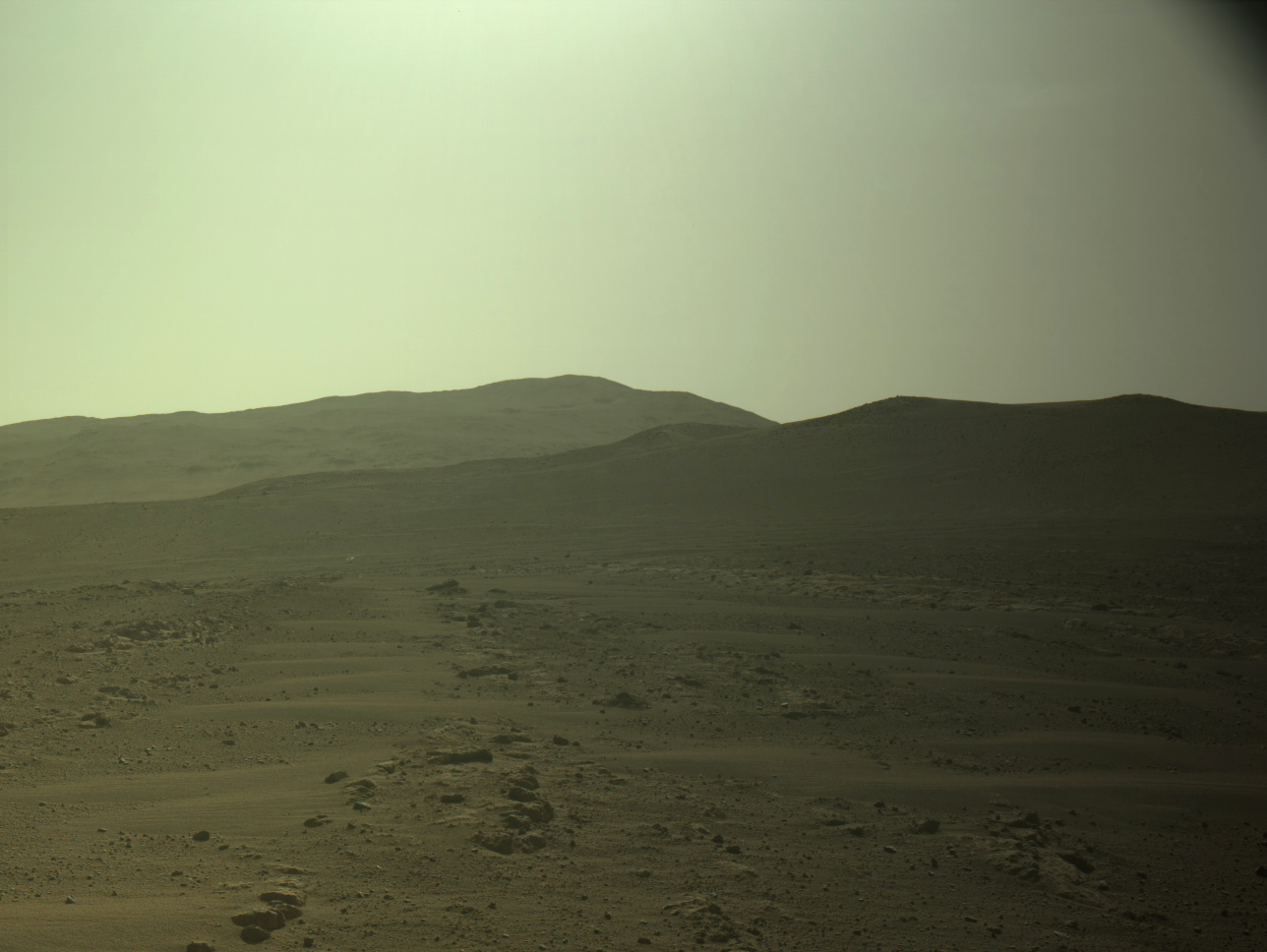
The panorama above, cropped, enhanced, and annotated to post here, was taken by left navigation camera on the Mars rover Perseverance on February 27, 2023, looking ahead at its future path on the delta that flowed into Jezero Crater sometime into the past. The arrow points at Ingenuity, now sitting ahead of the rover after completing its 46th flight sometime this weekend.

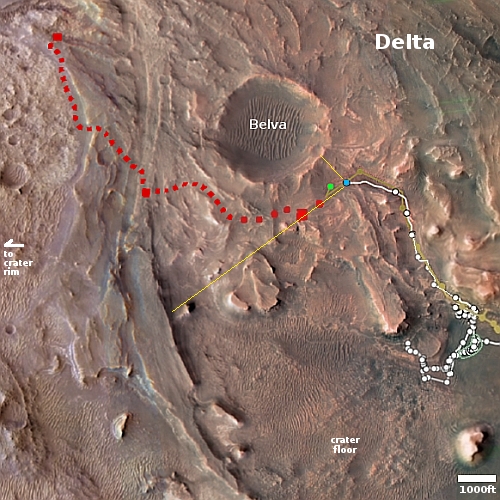
On the overview map to the right, Perservance’s present location is indicated by the blue dot. The green dot marks Ingenuity’s position, and the yellow lines indicate the approximate area viewed by the panorama above. The red dotted line indicates Perseverance planned future route, though it is likely the science team will make many side trips along the way. The bigger dots are points of special interest, where the scientists hope to drill for core samples.

The ridge on the right is the rim of Belva Crater. The higher mountain behind it is likely the rim of Jezero Crater itself, about four miles away. The helicopter sits about 250 feet away.

Unlike the rocky terrain where Curiosity is presently traveling in the foothills of Mount Sharp in Gale Crater, the terrain here in Jezero Crater appears much more benign, almost like a sand desert of dunes. This is not sand, nor are the hills dunes, but wind erosion and dust appear to have smoothed and hidden the geology more than in Gale Crater.

3 comments

ESA invites private companies to build lunar satellites for communications and navigation

Capitalism in space: The European Space Agency (ESA) has now invited European and Canadian companies to build the lunar communications and navigation satellites that will be needed to serve the many future manned and unmanned missions presently being planned by the U.S. and Europe.

Under its Moonlight programme, ESA is inviting space companies to create these lunar services.

By acting as an anchor customer, ESA is enabling space companies involved in Moonlight to create a telecommunication and navigation service for the agency, while being free to sell lunar services and solutions to other agencies and commercial ventures.

Once Moonlight is in place, companies could create new applications in areas such as education, media and entertainment โ€“ as well as inspiring young people to study science, technology, engineering and maths, which creates a highly qualified future workforce.

According to the press release, almost 100 companies have already expressed interest.

It is however unclear how much freedom the companies will have in designing and creating these satellites, based on ESA’s own descriptions of the project. It appears that ESA wants to design them, and is simply looking for private companies to build them. Under this arrangement, ownership will not belong to the companies, even if they are given the freedom to make money selling the capability to others. In fact, past history suggests that in the end, ESA will eventually retract this part of the deal, because of its desire to fully control the satellites it designed.

2 comments

NASA names solar scientist as its new science head

NASA today announced the appointment of solar scientist Nicola Fox as the chief of the agency’s science division, taking over from solar scientist Thomas Zurbuchen.

Fox’s actual qualifications for the job are stellar.

Born in Hitchin, Herefordshire, England, Fox received a B.S. in physics from The Imperial College of Science, Technology and Medicine in London, an M.S. in Telematics and Satellite Communications from the University of Surrey, and returned to Imperial College London for her Ph.D. in Space and Atmospheric Physics. She worked at NASAโ€™s Goddard Space Flight Center before joining APL in 1998.

At NASA Fox has led its the solar science division, as well as been the project scientist for the Parker Solar Probe, presently orbiting the Sun.

For the Biden administration and our modern culture that unfortunately always seems more focused on race and gender, the only thing that really matters about Fox however is her sex, a fact that the linked article seems obligated to mention in this manner:

Only one other woman, Mary Cleave, an environmental research engineer and former astronaut, has headed [the science division] in the agencyโ€™s almost 65-year history.

How evil! Our racist society oppressed women all those years, holding them back!

In fact, it is actually becoming increasing difficult for any white and heterosexual male to get major management jobs anywhere. The race- and gender-baiters always talk about getting rid of the “glass ceiling,” but in their obsession with giving jobs to woman and minorities, they have simply placed it over others.

1 comment

Ispace provides update on its Hakuto-R1 lunar lander on the way to the Moon

Lunar map showing Hakuto-R1's landing spot
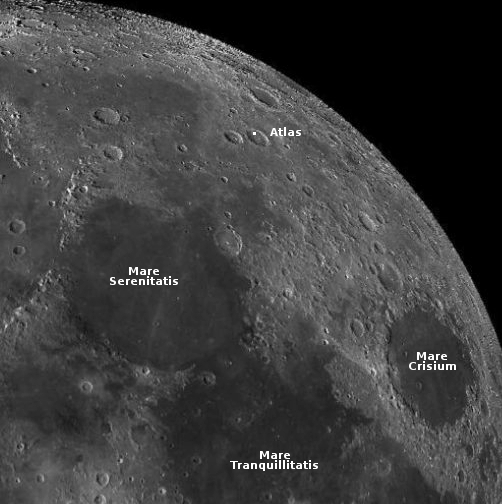
Hakuto-R1’s planned landing site is in Atlas Crater.

The CEO of the Japanese company Ispace yesterday gave a media briefing on the status of its Hakuto-R1 lunar lander, essentially stating that the spacecraft is doing fine and is on target to land on the Moon at the end of April as planned.

Ispace CEO Takeshi Hakamada said during a media briefing Monday that the flight has provided operational data that will inform subsequent missions. โ€œWe have acquired tons of data and know-howโ€ on the lander and its subsystems, he said. โ€œThey are very viable assets for ispace.โ€

That includes information on the landerโ€™s structural performance during launch and deployment, as well as the performance of thermal, communication and power subsystems. โ€œItโ€™s almost impossible to assume everything perfectly before the mission,โ€ Hakamada said. โ€œIt is inevitable to face off-nominal events.โ€ Some off-nominal events in the mission so far include thermal temperatures hotter than the company anticipated and a brief, unexpected issues with communications after the lander deployed from the Falcon 9. The thermal issues have not affected operations.

This mission, while carrying commercial payloads such as the UAE’s Rashid lunar rover, is mainly aimed at finding out these engineering details in order to make the next two missions in ’24 and ’25 more likely to succeed. The ’24 mission is also planned as a test mission, but it will carry commercial payloads for both Japanese and Taiwanese customers. On the ’25 mission, the main customer is NASA.

0 comments
1 164 165 166 167 168 196