Pentagon in discussions with SpaceX about buying a Starship outright for military missions

The Pentagon is negotiating with SpaceX the idea that in certain cases where it deems it legally necessary it will buy outright full ownership of a SpaceX Starship/Superheavy launch rocket in order to fly some military missions.

The idea is similar to how the Air Force moves cargo. At times, the service contracts with private carriers to deliver cargo, but for certain critical missions it uses service “gray tail” aircraft. In this hypothetical case, the military could take a Starship off the line for a specific mission and return it to SpaceX after it is complete.

I suspect such situations involve very risky wartime missions that carry liabilities that a private company cannot accept. The military takes over ownership, relieving the company of risk, and then returns ownership afterward. Such a plan requires the company to agree to it, and the military to pay extra for these temporary rights. According to the article at the link, SpaceX is presently exploring its options.

That the Pentagon is discussing this with SpaceX at all tells us that it sees Starship/Superheavy as having a lot of value. It wants to buy its services, one way or the other.

10 comments

Tank explosion in Shanghai injured three

The supposed test-to-tank failure of a rocket tank being tested by the Chinese pseudo-company Landspace on January 29, 2024 apparently injured three workers, though officials also claimed everything worked as planned.

Three workers were injured and nearby residents reported that “a huge boom” shook their windows during testing of a LandSpace rocket fuel tank in Shanghai on Monday evening. The Chinese start-up – which last year beat its rivals, including US-based SpaceX, to launch Zhuque-2, the world’s first methane-fuelled rocket, into orbit – said there were no abnormalities during the test.

A LandSpace representative told local media on Tuesday that the test “left some glass damaged and three production personnel with minor scratches”. The company and the district government said no explosion occurred.

This explosion was reported on X by nearby residents earlier this week (see the quick links here and here), with no confirmation from the pseudo-company. Even now it is being very coy about what it is telling us. An anonymous source at the link says the test filled the tank with nitrogen, and was intended “to establish the tank’s limits.”

No one however should have gotten injured during such a test, if everything took place as planned.

0 comments

Private company in India aims to build its own manned capsule and astronaut training facility

A private company in India, Astroborne Aerospace, is now developing its own commercial manned capsule as well as a commercial astronaut training facility, targeting as customers Earth-based tourists as well as those hoping to fly in space.

The capsule, dubbed Airawat, will seat six, and will be designed for suborbital flights, similar to Blue Origin’s New Shepard capsule. The training facility will be on a four-acre site the company is presently negotiating either a lease or purchase from the local government.

The company says it has obtained investment capital, but also says that money will arrive next month.

Whether this deal is real or not is actually irrelevant. Its existence illustrates the underlying enthusiasm in India for private commercial space, now that the Modi government has ended the monopoly on all space activities by its space agency ISRO.

1 comment

China’s Chang’e-7 lunar mission will target the rim of Shackleton Crater

The Moon's south pole, with landers

China’s Chang’e-7 lunar mission, which will include an orbiter, lander, rover, and “mini-flying” probe, will land in 2026 on the rim of Shackleton Crater, one of the same candidate landing zones for NASA’s manned Artemis program.

The map to the right shows the lander’s approximate landing site, on the illuminated rim of thirteen-mile-wide Shackleton Crater at the Moon’s south pole. The candidate landing zone for NASA is also on this rim, but the location might not be precisely the same. From the abstract of the published paper [pdf] outlining the project’s science goals:

The lander will land on Shackleton crater’s illuminated rim near the lunar south pole, along with the rover and mini-flying probe. The relay satellite (named Queqiao-2) will be launched in February 2024 as an independent mission to support relay communication for ongoing scientific exploration of Chang’E-4 (CE-4), the upcoming Chang’E-6 (CE-6) in 2024, and subsequent lunar missions.

Though the abstract states the target is Shackleton’s rim, the paper is less specific, showing a map with a much wider “candidate landing region”. It is unclear if China as yet has the ability to land with the pinpoint accuracy necessary to hit the rim as stated. The paper is also devoid of any technical details about the lander, rover, or its mini-flyer. It lists the science instruments and their science goals, but describes nothing more specific. For example, will the flyer bounce or use small rockets to lift off? Or will it simply be released prior to landing with no capability of taking off again?

The big story here is the race to get to Shackleton first. NASA presently hopes its first Artemis manned mission to land on the Moon, Artemis-3, will arrive in September 2026, with its stated goal landing at or near the south pole. That schedule is certainly tentative, based on NASA’s recent track record. China is now targeting that same year, but its recent track record for its lunar program has been far more reliable.

The Outer Space Treaty forbids both countries from claiming any territory, but possession is always nine-tenths of reality. Expect China to touch down first, and hold what it touches.

2 comments

Rocket Lab launches four commercial satellites

Electron 1st stage floating in the water

Rocket Lab today successuflly launched four satellites as part of a commercial constellation designed to track all objects in orbit, its Electron rocket lifting off from one of its two New Zealand launchpads.

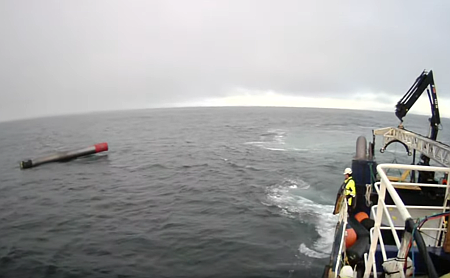
The company also successfully recovered the first stage using a parachute system to slow it down for a soft splashdown in the Pacific where a ship picked it up. The image to the right is a screen capture shortly after the recovery ship reached the stage, which can be seen floating in the water on the left. As of posting the ship was in the process of pulling the stage from the water. Once completed, the stage will be returned to Rocket Lab’s rocket factory for refurbishment and tests to see if it can fly again.

The 2024 launch race:

10 SpaceX
6 China
2 Iran
1 India
1 ULA
1 Japan
1 Rocket Lab

0 comments

January 30, 2024 Quick space links

Courtesy of BtB’s stringer Jay. This post is also an open thread. I welcome my readers to post any comments or additional links relating to any space issues, even if unrelated to the links below.


2 comments

Today’s blacklisted American: U.S. Court rules against coach fired for simply stating a fact in a casual conversation

Vermont: Where you are only allowed to say things that support the queer agenda
Vermont: Where the only speech allowed must
support the queer agenda

If you are depending on the federal courts to defend your fundamental rights, as outlined very bluntly in the Bill of Rights, you are being very naive. On December 28, 2024 the U.S. Court of Appeals for the 2nd Circuit ruled against David Bloch, who had been fired in February 2023 without due process as the snowboarding coach at Woodstock Union High School in Vermont — a team that he had founded in 2011 — because he had simply mentioned in a casual and very civil conversation with two of his students that men and women are genetically different.

He was fired the next day, even though no investigation into the incident had been done, and no one involved in the conversation had complained. School officials made it clear that Bloch was being fired for daring to have an opinion they did not like.

The notice accused Bloch of violating Windsor Central Supervisory Union Board’s Harassment, Hazing, and Bullying policy and the Vermont Principals’ Association related policy for “ma[king] reference to [a] student in a manner that questioned the legitimacy and appropriateness of the student competing on the girls’ team to members of the WUHS snowboard team”—all outside the student’s presence.

» Read more

9 comments

A plateau of friable rock on Mars

A plateau of friable rock on Mars
Click for original image.

Cool image time! The picture to the right, rotated, cropped, reduced, and sharpened to post here, was taken on September 13, 2023 by the high resolution camera on Mars Reconnaissance Orbiter (MRO).

The science team labels this “Friable Outcrops in Aeolis Dorsa.” What we are looking at is the northeasternmost tip of a 30-mile long plateau that marks the northern edge of Mars southern cratered highlands. For most of its length the top of that plateau is relatively smooth, broken by some vague surface features and a few scattered craters (suggesting it is relatively young). However, as you approach the plateau’s edges and especially that northeastern tip the surface begins to break up into the rough terrain shown to the right. It appears that the prevailing winds from the north are scouring the soft topsoil here and causing it to wear away, leaving behind those innumerable small ridges, almost all of which are oriented from north-to-south.

But why is the topsoil here soft and so easily scoured?
» Read more

0 comments

Spain awards rocket startup PLD $43.8 million grant

Capitalism in space: The Spanish rocket startup PLD has won a $43.8 million grant from the Spanish government to develop its Miura-5 orbital launch rocket.

The company won the funding after completing the preliminary design review (PDR) its Miura 5 small launch vehicle, a review that was then examined by an independent committee. The award is technically a loan, which will be paid off over 10 years once Miura 5 begins commercial operations, currently scheduled for 2026.

The rocket will compete directly with Rocket Lab’s Electron rocket, with a bigger payload capacity. PLD also plans to recover and reuse its first stages after splashdown in the ocean, as Rocket Lab is now attempting to do with Electron.

The significance of this deal is multifold. It shows us that Spain is now a player in space, with its own rocket company, though still only a startup. It also provides further evidence that the nations of Europe are beginning to go their own way in space, rather than rely on their partnership in the European Space Agency and its rocket division, Arianespace. Arianespace has failed to do the job, so Spain like Germany is now looking to the private sector to get its satellite payloads in orbit.

Finally and most important, this deal illustrates the shift in Europe from being the designer and owner of rockets to being a mere customer. Rather than depend on a governnment-built and owned Arianespace rocket, Spain is buying the service from a private company, PLD. That company owns it entirely and can sell its services to others as well.

This trend away from government-owned rockets bodes well for the future of space exploration in Europe. It will produce a vibrant competitive industry with many different companies coming up with different ideas that will increase innovation while reducing cost.

It also signals the coming death of Arianespace, ESA’s commercial division which despite dominating the commercial launch market for almost two decades, was never able to make a profit ever. Instead, it produced rockets that were too expensive and required subsidies on a yearly basis. The nations of Europe are no longer willing to tolerate that bad performance, and have basically told Arianespace it either must compete with these new private companies, or die. I expect it to die. If it does survive, it will only do so if it changes radically.

1 comment

SpaceX launches Northrop Grumman’s Cygnus capsule to ISS

SpaceX today for the first time launched a Northrop Grumman Cygnus cargo freighter to ISS, its Falcon 9 rocket lifting off from Cape Canaveral.

The first stage completed its 10th flight, landing back at Cape Canaveral. Cygnus will rendezvous with ISS in two days, where it will be berthed to the station using a robot arm. It will then stay docked for six months as astronauts unload about 8,200 pounds of cargo.

SpaceX was used as a launch provider because Northrop Grumman’s own rocket Antares is presently unavailable because the engines for the first stage as well as the stage itself were previously built by Russia and the Ukraine respectively, both of which the company cannot no longer buy due to the Ukraine War. SpaceX has a contract for three flights, with today’s launch the first. Firefly has a contract from Northrop Grumman to built a new first stage for Antares, with a first launch targeting mid-2025.

The launch was SpaceX’s 10th in January. With a goal of 150 launches in 2024, this puts the company slightly behind the pace required to meet that goal.

The 2024 launch race:

10 SpaceX
6 China
2 Iran
1 India
1 ULA
1 Japan

2 comments

India and France sign deal to partner selling flights on their rockets

India and France have apparently signed a deal to not compete in selling flights on their biggest rockets, but instead work together to keep prices under their control.

Under the terms of the MoU [memorandum of understanding], NSIL’s [the commercial space division of India’s government] heavy-lift launch vehicle, LVM-3, and Arianespace’s Ariane-6 will be at the forefront of this joint endeavor.

The article at the link provides no information at all about the specifics of this deal. I am simply guessing that is it designed to control prices, especially because France by itself does not own the Ariane-6 and thus can not award launch contracts for it. All it can do is convince India to not charge less for its comparable LVM rocket (a variation of its GSLV rocket). If so, it is a bad deal for India, which can easily undercut any price that Arianespace can charge for the expensive Ariane-6. It will drive business from India, since other companies (such as SpaceX, ULA, and hopefully Blue Origin in the near future) will be under no obligation to match Ariane-6’s high cost.

It is also possible that the deal is simply an empty political gesture, timed during the visit to India by France’s President Emmanuel Macron. Its vague language suggests this. It gives Macron a photo op, but as an MOU it leaves India under no long term obligation.

1 comment
1 174 175 176 177 178 191