JAXA: SLIM soft landing successful but will likely die prematurely after landing

According to managers at Japan’s space agency JAXA, its SLIM lunar lander successfully completed its soft landing on the Moon.

It appears SLIM’s solar cells are not producing power. The spacecraft is presently on battery power, which will only last a few hours. Engineers are presently rushing to download images, taken during descent and after landing. There is also no word yet on whether the two test rovers were successfully released and achieved their test goals.

To precisely determine if the lander achieved its goal to hit a precise landing zone less than 300 feet across will require further analysis, much of which will depend on the images presently being downloaded. At the moment the engineers believe this goal was achieved, however, based on the telemetry already received.

Thus, it appears Japan has managed a soft-landing, something that in the past few years several countries (Israel, Russia, India, United States) and private companies (SpaceIL, Ispace, Astrobotic) have failed to do. Right now Japan appears to be the third nation to succeed in this new round of lunar exploration, joining China and India (which succeeded on its second attempt).

The next lunar landing attempt will be by the American private company, Intuitive Machines. Its Nova-C lander is scheduled for launch on a Falcon 9 rocket in mid-February.

8 comments

SLIM lands on the Moon

Telemetry after SLIM's landing

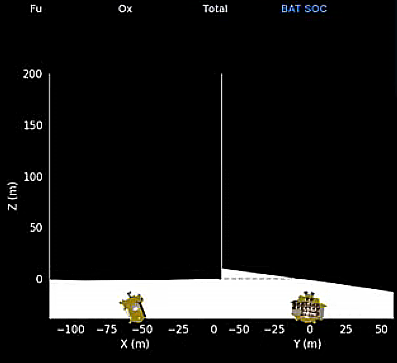
According to telemetry data (as shown on the screen capture to the right), Japan’s SLIM lander has apparently landed on the Moon near Shioli Crater, proving its autonomous precision landing system worked as planned.

At the moment however Japan’s space agency JAXA has not yet confirmed that the landing was completely successful. After landing the announcers on the live stream repeatedly noted that though the telemetry indicated it had landed as planned, engineers had not yet confirmed that the lander was still operational. Note how the data to the right suggests the spacecraft is tilted slightly. This tilt appears to match the tilt of the surface, but it could also indicate a problem with communications.

A press conference announcing either a confirmation or a failure will begin shortly at the live stream above.

4 comments

Chinese pseudo-company successfully completes rocket hop test

The Chinese pseudo-company Landspace successfully completed a rocket hop flight of its Zhuque-3 prototype hopper yesterday, testing vertical take-off and landing in preparation of recovering and reusing the first stage of its rockets.

The hop itself went to 350 meters and performed a small translation maneuver to the landing pad. The hope is called โ€œZQ-3 VTVL-1โ€ which refers to โ€œVertical Takeoff โ€“ Vertical Landingโ€. It uses a single TQ-12 methane engine, which is also used on the current ZQ-2 rocket. The engine can throttle between 50-110% of the normal 80 tons of thrust, giving it a throttle range between 40 and 88 tons. The performed flight went on for roughly 60 seconds. The weight of the hopper is 50.3 tons.

Landpace confirmed the landing precision with 2.4 meters, with a landing speed of 0.75 meters per second, at a pitch angle of roughly 0.14 degrees, and a roll angle of 4.4 degrees. The hopper survived the hop and is already being inspected after the flight.

Video of the hop can be viewed at the link. The hopper is almost identical in concept to SpaceX’s Grasshopper test vehicle used by that company, flying with one engine of the same type used in its operational rocket.

If their test program continues as planned, Landspace hopes to begin flying reuseable stages in 2025, with that first stage capable of flying 20 times.

Of all the pseudo-companies in China, Landspace appears to be the most successful. It not only has an operational orbital rocket, Zhuque-2, that has carried satellites into orbit twice (here and here), it is very close to achieving rocket reuseability competitive with SpaceX.

3 comments

Astrobotic’s Peregrine burns up in Earth’s atmosphere

At about 3:50 pm (Eastern) yesterday, the lunar lander Peregrine, built by the private company Astrobotic, hit the Earth’s atmosphere above the South Pacific and burned up, according to an update from the company.

The mission is over, having failed to reach the Moon due to a ruptured propellant tank caused by a leak in an interior helium tank.

The company was successful in regaining control over the mission after the leak, activating all payloads and getting data back from them, including images and even a short movie. It was also able to communicate with it from lunar distances. It failed however in testing its landing capabilities, its primary mission.

1 comment

January 18, 2024 Quick space links

Courtesy of BtB’s stringer Jay. Note: This post is now officially an open thread. I welcome my readers to post any comments or additional links relating to any space issues, not just the links below.


3 comments

SpaceX successfully launches four astronauts to ISS on Axiom private mission

They’re coming for you next: SpaceX today successfully launched three European astronauts (plus the company capsule commander) to ISS on an Axiom private mission, its Falcon 9 rocket lifting off from Cape Canaveral at 4:49 pm (Eastern).

The capsule, Freedom, is flying humans into space for its third time. The first stage successfully completed its fourth flight, landing back at Cape Canaveral.

The mission itself is private, but the customer is the European Space Agency, which has paid the company Axiom to bring its astronauts to ISS for a fourteen day mission. Axiom in turn hired SpaceX to provide the rocket and capsule. This flight is confirmation that Europe has accepted the concept of capitalism in space, whereby it no longer depends on governments to accomplish what it wants, but instead is a customer buying those products from the private sector.

The astronauts are expected to dock with ISS early tomorrow morning.

The 2024 launch race:

6 SpaceX
5 China
1 India
1 ULA
1 Japan

2 comments

More academics demand that space activity be controlled and regulated, by them

Modern academia: Marching with Lenin!
Modern academia, proudly marching with Lenin!

Yesterday I linked to a student newspaper article at the University of Alberta advocating more regulation over all space activity, focused on replacing private ownership with collective ownership while simultaneously imposing Marxist racial quotas to get rid “old white men”.

Today there was another story from academia demanding similar regulation. On January 12, 2024 there was a public panel discussion at Arizona State University (ASU), where four academics argued for the need for more government regulation of space. The description of the panel’s goals at the event’s website gives us a good hint of the goals of these academics:

Space exploration and utilization is a rapidly expanding sector, and there is growing consensus that the complex space governance system must evolve with it. Faced with this dynamic nature, in this fireside chat, with leading experts in space governance, policy law and space science, we present a clear framework for conceptualizing the space governance system as a tool for discussions on space law and policy, demystifying its structure and the actors, instruments and collaborations within it. We then consider key debates in the space policy field within this framework from a global and transdisciplinary perspective.

This is typically bad academic writing, designed to intentionally hide its meaning. One of the panelists however translated it most bluntly in this quote from article about the event:
» Read more

10 comments

Scientists: Evidence of large deposits of buried ice along Martian equator

Theorized buried ice deposits on Mars
Click for original figure from paper.

Using data obtained from Europe’s Mars Express orbiter, scientists believe they have detected evidence of a very large and extensive deposit of buried ice in the dry Martian equatorial regions, buried within the Medusae Fossae Formation, what is thought to be the largest volcanic ash deposit on Mars.

The blue-to-orange areas inside the Medusae on the map to the right, taken from figure 5 of the paper, shows where they have detected potential buried ice, at depths ranging from one to two thousand feet below the surface. The orange areas indicate the thickest ice deposits, as much as two miles thick. From the paper’s abstract:

The MARSIS radar sounder [on Mars Express] detects echoes in Medusae Fossae Formation deposits that occur between the surface and the base which are interpreted as layers within the deposit like those found in Polar Layered Deposits of the North and South Poles. The subsurface reflectors suggest transitions between mixtures of ice-rich and ice-poor dust analogous to the multi-layered, ice-rich polar deposits.

Assuming this detection is real, this would be the largest reservoir of potential water in the dry equatorial regions found yet, comparable to another similar buried detection deep below the giant canyon Valles Marineris but much larger.

Accessing this water however will not be simple, as it is deep underground. You couldn’t just drill a well, as it is ice, not a liquid water table. It would have to mined like minerals on Earth. There are uncertainties about this conclusion as well. It is possible the detection is not water but volcanic ash or dust compacted in a way that mimics an ice detection.

1 comment

SpaceX files for permits to build a shopping center and restaurant at Boca Chica

SpaceX has now filed for permits to build both a shopping center and restaurant at Boca Chica, with construction beginning in March and completed by the end of the year.

The location proposed is on the beach only a short distance to the west of SpaceX’s Starship/Superheavy facilities. It will be located looking north not at the Gulf of Mexico but at South Bay, one of the large inlets that surround the spit of land where those facilities are located. It is also located on roads that might not close during launches, which means it might be an excellent location to attract tourists during launches, about six miles from the launch site itself.

4 comments

SLIM lowers orbit in preparation for January 19, 2024 lunar landing

SLIM's landing zone
Map showing SLIM landing zone on the Moon.
Click for interactive map.

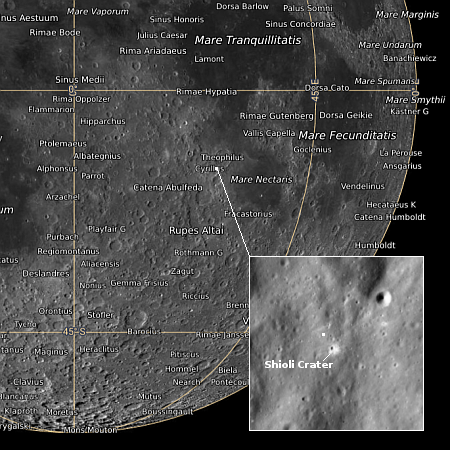
The Japanese unmanned lunar lander SLIM, in orbit around the Moon since December 25, 2023, has now lowered its orbit in preparation for its lunar landing attempt, now scheduled for tomorrow, January 19, 2024, with operations beginning at 10:00 am (Eastern).

The image to the right indicates the targeted landing area near Shioli Crater. The mission’s prime engineering goal is to demonstrate precise robotic landing technology, able to land a spacecraft softly on another planet within a target zone less than 300 feet across. If successful it is expected to survive for about two weeks, studying the surface below it with a multi-spectral camera but also releasing two test probes, one a hopping rover and the second a rolling spherical rover. Both carry their own science instruments.

I have embedded the live stream for tomorrow’s landing below.
» Read more

0 comments

Astronomical high-altitude balloon flight now exceeds two weeks

GUSTO's flight path as of January 18, 2024

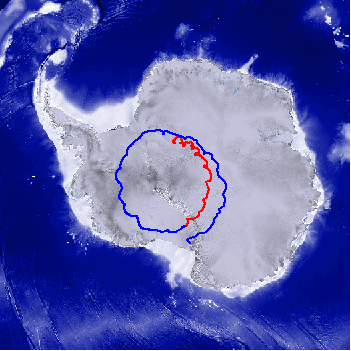
A high-altitude stratospheric balloon, dubbed GUSTO and designed to study the interstellar medium, has now been circling the south pole over Antarctica for fifteen days.

The map to the right shows its full flight path since its launch on December 31, 2023. From the press release:

GUSTO is mapping a large portion of the Milky Way galaxy and Large Magellanic Cloud to help scientists study the interstellar medium. The observatory is transmitting the data it collects back to watchful teams on the ground as it steadily circumnavigates the South Pole around 120,000+ feet.

GUSTO is flying on a 39 million cubic-foot zero-pressure scientific balloon, which is so large it could easily fit 195 blimps inside of it. The balloon is used to fly missions for long periods of time during the Austral Summer over Antarctica. GUSTO is aiming for a NASA record of 55+ days in flight to achieve its science goals.

You can follow GUSTO’s flight in real time here.

1 comment
1 180 181 182 183 184 191