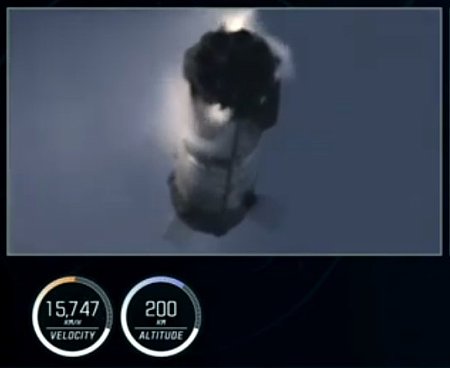
Varda’s third capsule begins orbital operations
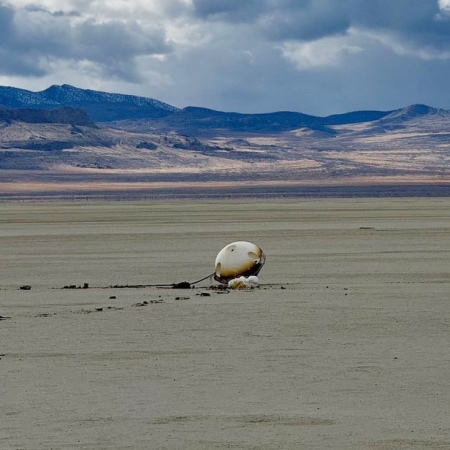
Varda's space capsule, on the ground in Utah
Varda’s first capsule on the ground in Utah.

The in-space commercial company Varda on March 15, 2025 confirmed that its third capsule has successfully begun orbital operations after its launch on a Falcon 9 rocket, carrying an Air Force payload that will test measuring the capsule’s re-entry speeds in connection with military hypersonic research.

W-3’s payload is an advanced navigation system called an Inertial Measurement Unit (IMU) developed by the US Air Force and Innovative Scientific Solutions Incorporated (ISSI). This payload will be tested at reentry speeds it was designed to withstand but has never encountered before.

This payload is part of a $48 million Air Force contract awarded to Varda in December. The company also notes in the press release that it is aiming for a monthly launch rate for its capsules, which provide customers an opportunity to do all kinds of in-space testing and manufacturing. Since this launch took place only fifteen days after the landing of its second capsule, it appears Varda is moving swiftly in that direction, thus providing more business for American rocket startups.

The capsule includes a service module built by Rocket Lab, and will stay in orbit several weeks before it returns to Earth, landing at the Koonibba Test Range in South Australia, operated by the Australian commercial spaceport startup Southern Launch.
3 comments

Firefly’s Blue Ghost ends its mission, having achieved all its mission goals

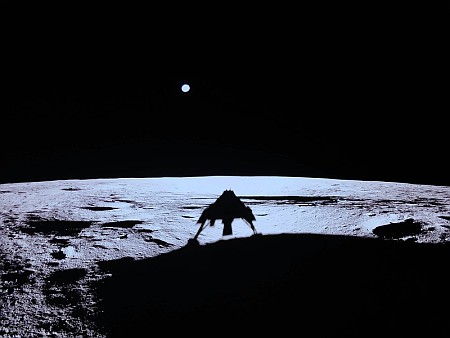
Blue Ghost's shadow on the Moon, with the Earth in the background
Blue Ghost’s shadow on the Moon shortly
after landing, with the Earth in the background.

Five hours after lunar sunset Firefly yesterday shut down its Blue Ghost lander, ending its mission after successfully completing all its assigned tasks in carrying ten NASA research payloads to the Moon and softly placing them on the lunar surface.

Firefly also captured imagery of the lunar sunset on March 16, providing NASA with data on whether lunar dust levitates due to solar influences and creates a lunar horizon glow that was hypothesized and observed by Eugene Cernan on Apollo 17. Following the sunset, Blue Ghost operated for 5 hours into the lunar night and continued to capture imagery that measures how dust behavior changes after sunset.

“Whether lunar dust levitates” is one of the biggest scientific mysteries about the Moon. Only one person, astronaut Harrison Schmidt, has observed the phenomenon during the last Apollo mission to the Moon, and numerous attempts since to confirm and better understand it have all failed for one reason or the other. The preliminary results of Blue Ghost observations will be announced at a press conference tomorrow.

Firefly is now gearing up for annual Blue Ghost lunar missions. The next is targeting a launch next year, and will also deliver payloads for NASA, the European Space Agency, and Australia.

1 comment

Chinese pseudo-company launches 8 satellites

The Chinese pseudo-company Galactic Energy today successfully placed eight remote-sensing satellites into orbit, its solid-fueled Ceres-1 rocket lifting off from the Jiuquan spaceport in northwest China.

No word on where the rocket’s lower stages crashed inside China.

This was Ceres-1’s eighteenth launch, making Galactic Energy the most successful rocket pseudo-company so far in China. That its rocket uses solid-fueled shows us however that it is strongly tied to China’s military, and likely controlled tightly by it.

The leaders in the 2025 launch race:

31 SpaceX
13 China
4 Russia
3 Rocket Lab

SpaceX still leads the rest of the world in successfully launches, 31 to 23.

0 comments

Russia launches classified satellites

Early this morning Russia successfully placed three classified satellites into orbit, its new Angara-1.2 rocket lifting off from its Plesetsk spaceport in northeast Russia.

Little information about the launch was released, and none about the satellites. This was the rocket’s fourth straight launch success from Plesetsk, beginning in 2022.

The leaders in the 2025 launch race:

31 SpaceX
12 China
4 Russia
3 Rocket Lab

SpaceX still leads the rest of the world in successfully launches, 31 to 23.

0 comments

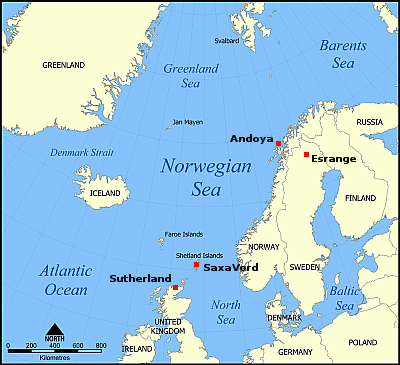
Norway questions Sweden’s plan to launch orbital rockets from Esrange spaceport

Proposed spaceports surrounding Norwegian Sea

In the capitalist competition between Norway, Sweden, and the United Kingdom to establish Europe’s prime launch site, Norway’s government has now issued a long study questioning Sweden’s plan to launch orbital rockets from its Esrange spaceport, since polar launches heading north from there will have to cross Norway.

You can read the report here [pdf]. For Esrange to conduct orbital launches it will need the permission of Norway for each launch, and it appears Norway is not satisfied with Sweden’s assessments that say launches can occur safely. The report concludes:

Norway recommends that the relevant Norwegian authorities conduct an assessment of the risks a launch will pose to the people in Norway and Norwegian interests, and determine whether this risk is acceptable, taking into account the interests and safety of the Norwegian people and the severity of the risk.

…Due to the significant economic costs associated with the impact on oil and gas production in
the Barents Sea, CAA Norway recommends that no launches be permitted in areas where there
is any risk to Norwegian oil and gas installations.

The release of this report illustrates Norway’s geographic advantages. The German rocket startup Isar is gearing up to do its first launch from Norway’s new spaceport, Andoya, possibly before the end of this month. It will have a clear path to space. Meanwhile, the American rocket startup Firefly, which wants to launch from Esrange, faces serious regulatory hurdles from neighboring countries, like Norway, because any rocket must fly over their territories.

5 comments

Four more launches, two by SpaceX, following manned launch

Following SpaceX’s successfully launch of four astronauts to ISS yesterday afternoon, the launch industry upped the pace by completing four more launches in the next few hours, two by SpaceX, one by Rocket Lab, and one by China.

Beginning with SpaceX, it first launched another one of its Transporter missions, carrying about three dozen smallsat payloads, its Falcon 9 rocket lifting off from Vandenberg. The first stage completed its thirteenth flight, landing on a drone ship in the Pacific. The two fairings completed their eighth and eleventh flights respectively.

Five hours later the company launched another 23 Starlink satellites, the Falcon 9 lifting off from Cape Canaveral in Florida, with the first stage completing its eighteenth flight, landing on a drone ship in the Atlantic.

Rocket Lab meanwhile successfully placed the first of eight commercial radar satellites into orbit for the Japanese satellite company iQPS, its Electron rocket launching from one of its two launchpads in New Zealand.

China in turn used its Long March 2D rocket to place two satellites into orbit, lifting off from its Jiuquan spaceport in northwest China. Its state-run press provided little information about either satellite. Nor did it provide any information about where the rocket’s lower stages — using very toxic hypergolic fuel — crashed inside China.

The leaders in the 2025 launch race:

31 SpaceX
12 China
3 Russia
3 Rocket Lab

SpaceX still leads the rest of the world in successfully launches, 31 to 22.

0 comments

SpaceX launches new crew to ISS

Falcon 9 first stage barreling home to Florida
Falcon 9 first stage barreling home to Florida tonight.

After a scrub two days ago due to a ground equipment issue, SpaceX tonight successfully launched a new crew of four to ISS, its Falcon 9 rocket lifting off from Kennedy in Florida.

The Dragon capsule is Endurance, on its fourth flight. The first stage completed its third flight, landing back in Florida.

This launch will allow the two-person crews launched by Boeing’s Starliner capsule in June and SpaceX’s Freedom capsule in September to come back home on Freedom.

When it was decided not to allow the Starliner astronauts to come home on Starliner because of thruster issues on the capsule, NASA decided to keep its ISS launch schedule as normal as possible, thus forcing that crew to complete a mission of about eight months, with a planned return in February 2025. Initially their Starliner mission was expected to last anywhere from two weeks to two months-plus, depending on how well Starliner functioned while docked to ISS.
» Read more

20 comments

Dovydas – Dreams

An evening pause: Actually Dovydas is a street performer who provides the background music and asks passersby if they want to sing something. Diane was listening to this across our house and I asked her if that was Stevie Nicks and Fleetwood Mac. Nope, but about as good. The singer’s name is Brielle Anderson, as per the first comment on the youtube page.

Hat tip Diane Zimmerman.

1 comment

Florida’s two senators introduce bill to move NASA HQ to their state

It what seems to be a direct response to the demand earlier this week by Ohio state and federal lawmakers to make Ohio the new home of NASA’s headquarters, Florida’s two senators today introduced a bill that would legally require the headquarters go to Florida instead.

The bill [pdf] itself is short, barely more than two paragraphs, and if passed would simply require the headquarters to move to Florida’s Brevard County within one year of enactment.

The last word however is critical. There is no chance this idiotic bill will be passed. The only reason these senators introduced it today is to up their game against Ohio and any other state that wants NASA’s headquarters moved there.

And if it is passed by some miracle? It will then become a perfect example of congressional micromanaging in the stupidest way.

2 comments

Scientists issue new map of land below Antarctica’s icecap

Map of Antarctica's estimated land mass
Click for original image.

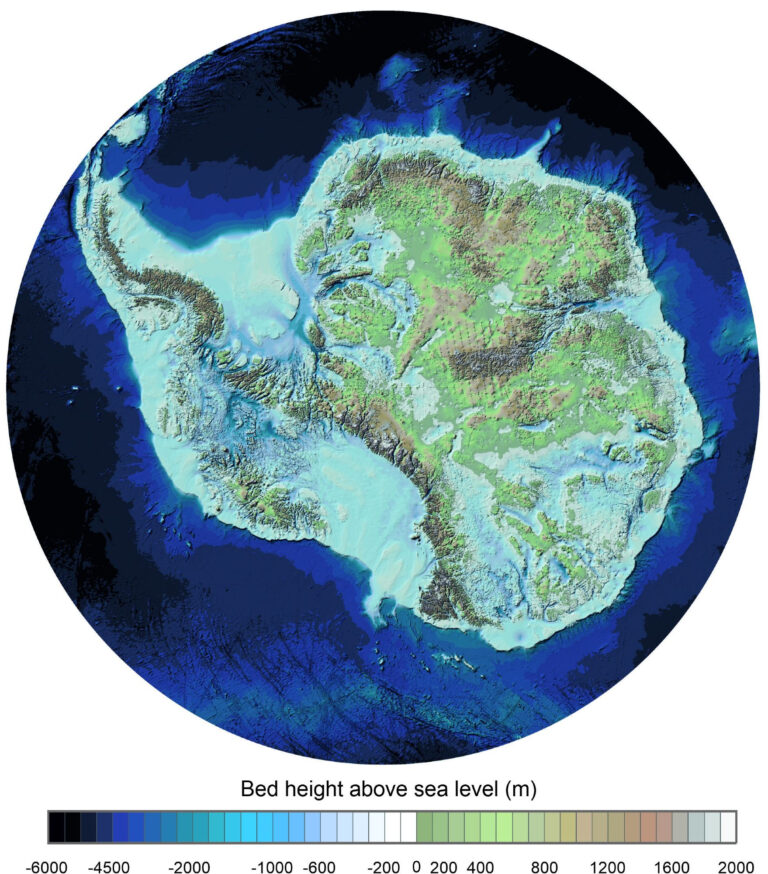
Using decades of data and more advanced computer software, scientists have now compiled the most detailed map of the land and shorelines hidden below Antarctica’s massive icecap.

The map to the right, reduced to post here, shows that bedrock terrain generally in hues of green to brown, with lower elevations comparable to the ocean in hues of blue. The actual shoreline is however impossible to determine, since without the pressure of the icecap on top, the continent would rise, while the ocean itself would also rise with the addition of all that water.

You can read the science paper here.. From the press release:

Known as Bedmap3, it incorporates more than six decades of survey data acquired by planes, satellites, ships and even dog-drawn sleds. … The map gives us a clear view of the white continent as if its 27 million cubic km of ice have been removed, revealing the hidden locations of the tallest mountains and the deepest canyons.

One notable revision to the map is the place understood to have the thickest overlying ice. Earlier surveys put this in the Astrolabe Basin, in AdΓ©lie Land. However, data reinterpretation reveals it is in an unnamed canyon at 76.052Β°S, 118.378Β°E in Wilkes Land. The ice here is 4,757 m thick, or more than 15 times the height of the Shard, the UK’s tallest skyscraper.

The paper describes at length the large uncertainties that exist in this data. As thorough as they tried to be, we must remember that Antarctica is very large with a very hostile environment. Much of it has never been visited by any humans. Getting an accurate picture of the thickness of the ice at all points is presently impossible. This is basically an excellent summary of our best guess.

14 comments

Europe’s Hera asteroid probe sends back data from Mars fly-by

Deimos and Mars as seen by Hera
Click to see full movie.

The European Space Agency (ESA) Hera probe, on its way to study the Didymos/Dimorphos asteroid binary, has successfully sent back images and data obtained during its close-by of Mars yesterday.

The infrared image to the right, a screen capture from a short movie assembled from Hera’s first images, shows the Martian moon Deimos with Mars in the background. The mission scientists have compiled all of these first images taken by Hera to create a short movie, that I have embedded below. From the movie’s caption:

The car-sized Hera spacecraft was about 1000 km away from Deimos as these images were acquired. Deimos orbits approximately 23 500 km from the surface of Mars and is tidally locked, so that this side of the moon is rarely seen. Hera’s TIRI – supplied to the mission by the Japan Aerospace Exploration Agency, JAXA – sees in mid-infrared spectral bands to chart surface temperature. Because Deimos lacks an atmosphere, the side of the moon being illuminated by the Sun is considerably warmer than the planet beneath it.

Although it appears as if Deimos is passing in front of Mars from south to north, the image was actually taken as Hera passed very close to Deimos from north to south at high speed.

Deimos appears brighter than Mars. This means that the surface of airless Deimos is hotter than the surface of Mars. The material covering the surface of Deimos has low reflectivity and is pitch black. This allows it to absorb sunlight well and become hotter. In contrast, the surface of Mars is highly reflective, and its atmosphere transports heat from the warm daytime side to the cooler nighttime side. This is why there is a large temperature difference between Mars and Deimos.

These infrared images also tell us the excellent quality of the camera. Note how detailed the features are on the Martian surface. When Hera gets to Didymos/Dimorphos in December 2026 it is going to be able to document those two asteroids in remarkable detail, including the results of the Dart impact on Dimorphos in September 2022.
» Read more

0 comments
1 142 143 144 145 146 182