Ghana hires Axiom to help it develop its space industry

Ghana and the American space station startup Axiom yesterday signed a deal whereby Axiom would provide Ghana’s Space Science and Technology Institute (GSSTI) advice and help in developing its own space projects.

The deal does not involve flying any astronauts into space, likely because Ghana simply can’t afford it. However, Axiom’s long experience working with NASA and flying astronauts to ISS gives it enough value that it can still make money providing advice and aid to poorer countries.

Whether Ghana will really benefit remains unclear. The government recently approved a national space policy, but that policy was mostly designed to establish a government bureaucracy, not encourage private enterprise. If this Axiom deal will provide educational aid than it might produce something. If instead the deal has Axiom working only with that bureaucracy don’t expect much.

Axiom however will welcome this extra cash. It illustrates another profit center for all American space companies.

1 comment

Pick a perfect March Madness bracket and SpaceX will award you a trip to Mars

College basketball fans now have a second motivation for predicting perfectly the team results during the March NCAA championship finals: SpaceX will award a perfect bracket a trip to Mars.

In a post from X’s business account, the platform officially announced their bracket challenge, partnered with their sponsor Uber Eats, announcing that anyone with a perfect bracket would win a trip to Mars as a part of the SpaceX program.

Those who are at least 18 years old and submit their bracket on X between March 16, after the CBS Selection Show, and the first game of the Round of 64 on March 20 will be eligible for the prize.

For those who don’t wish to travel to Mars, anyone who fills out a perfect bracket in the challenge could alternatively accept a prize of $250,000 and additional perks involved with the SpaceX program. This includes 1 year of free residential Starlink service, the chance to train like a SpaceX astronaut for a day, an opportunity to send a personal item of choice to space on a Falcon 9 launch, VIP viewing of a Starship launch.

If no one picks a perfect bracket (which is normally the case) a $100,000 prize was be awarded to the best non-perfect bracket.

16 comments

Launch window for first launch of German rocket startup Isar rocket revealed

Proposed spaceports surrounding Norwegian Sea

According to filings from the Norway’s Andoya spaceport, the launch window for Germany’s rocket startup Isar Aerospace for the first test orbital launch of its Spectrum rocket is now from March 20, 2025 to March 30, 2025.

On 12 March, Andøya Space, the mostly government-owned commercial entity that operates Andøya Spaceport, published a launch period notice covering 20 to 30 March. In relation to a maritime danger-area warning, the notice specifies launch windows between 12:30 and 16:30 CET throughout the 11-day period.

While the notice does not explicitly mention Isar Aerospace, as the company is currently the launch site’s sole customer, it can only refer to Isar. The company itself has yet to make a formal announcement regarding the published launch window.

In general Isar has been very closed-mouthed about its launch plans, so this supposition is not uncertain. The article however is right that there is no other rocket entity at Andoya that the launch window could refer to.

If Isar succeeds at this launch, it will win the race among about a half dozen European rocket startups to get an orbital launch off the ground first. Rocket Factory Augsburg had hoped to launch last year, but a fire during the one of the last rocket engine tests destroyed the rocket.

Regardless of whether Isar’s launch is successful, Norway meanwhile will win the race to be the first European spaceport to achieve an orbital launch. Though it shifted to orbital commercial operations much later than the two UK spaceports, years of regulatory red tape has prevented those UK spaceports from launching.

2 comments

Blue Ghost watches the Earth eclipse the Sun from the Moon

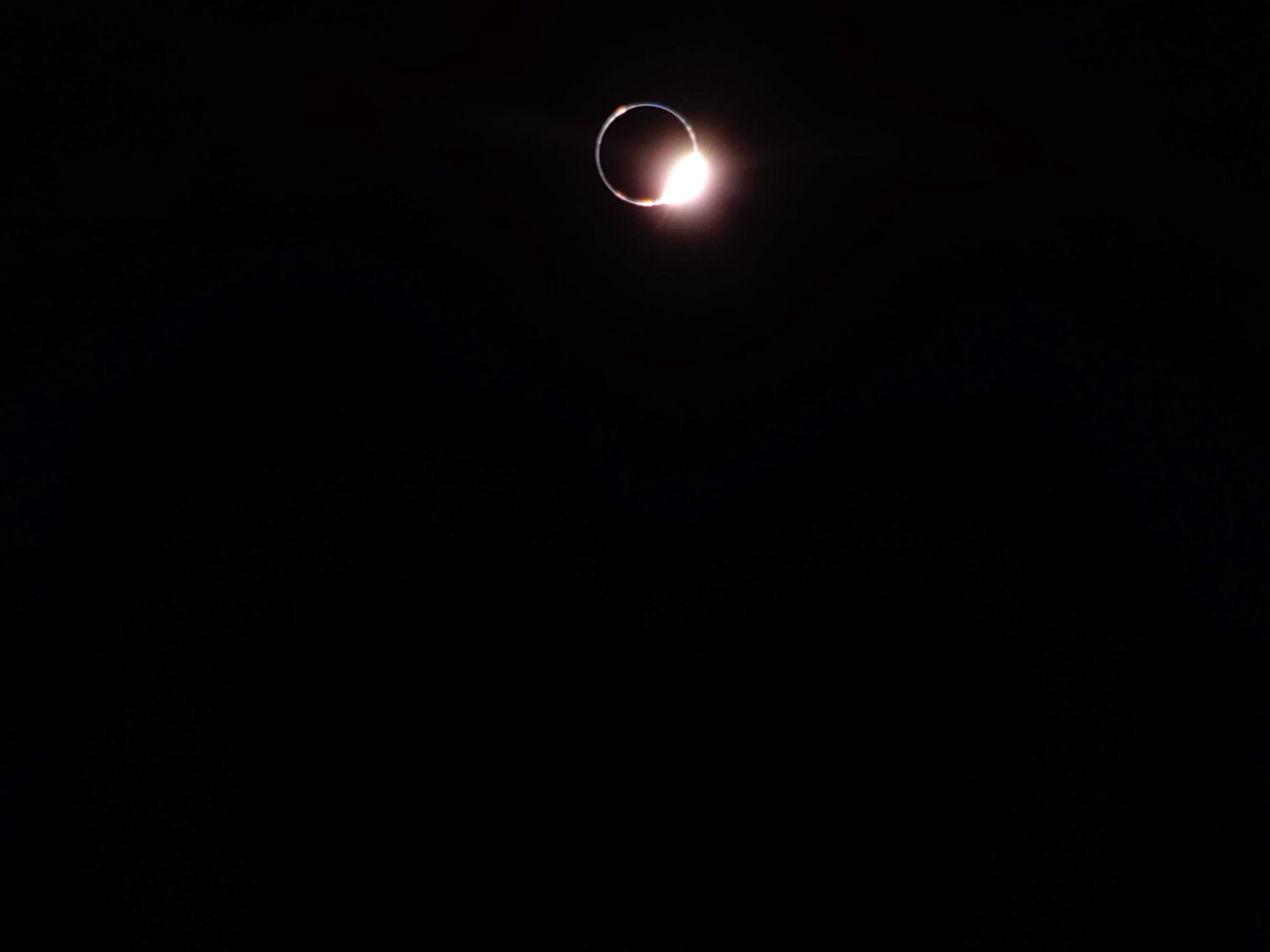
Eclipse as seen by Blue Ghost
Click for original image.

Firefly’s Blue Ghost lunar lander last night successfully recorded images and data as the Earth slowly over hours crossed the face of the Sun, producing an eclipse.

The image to the right, cropped and reduced slightly to post here, is one such image. From the Firefly update page:

Captured at our landing site in the Moon’s Mare Crisium around 3:30 am CDT, the photo shows the sun about to emerge from totality behind Earth. This marks the first time in history a commercial company was actively operating on the Moon and able to observe a total solar eclipse where the Earth blocks the sun and casts a shadow on the lunar surface. This phenomenon occurred simultaneously as the lunar eclipse we witnessed on Earth.

The company has the right to tout its success, since it is the first of five private companies to actually succeed at a landing on the Moon. However, this is not the first such eclipse captured by a lander on the Moon. Surveyor 3 did it in April 1967, while Japan’s Kaguya orbiter did it also in 2009. (Watch this great lecture outlining the entire Surveyor program, presented during the 50th anniversary of its success. Hat tip reader Richard M.)

It is now past noon on the Moon, the temperatures will begin dropping, and Firefly will begin reactivating some instruments for the final week of operations before lunar sunset and shutdown for the long very cold lunar night.

2 comments

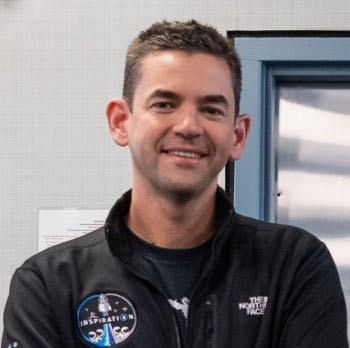
Is the nomination of Jared Isaacman as NASA’s administrator facing political headwinds?

Jared Isaacman
Jared Isaacman

I admit immediately that I have no inside information to back up the speculation that will follow. Instead, it is based entirely on my fifty years of experience observing the political machinations that take place inside the DC swamp.

In the past week there have been a slew of stories all aimed at pressuring Congress to quickly confirm Jared Isaacman (billionaire, jet pilot, businessman, and commercial astronaut), Trump’s pick to be NASA’s next administrator. For example, two days ago NASA’s last Republican-appointed administrator Jim Bridenstine publicly called for Isaacman’s confirmation by the Senate.

“I think Jared Isaacman is going to be an amazing NASA administrator,” he said. “I think he’s got all the tools to be what could be the most consequential NASA administrator given the era in which we live in now.” That era, he said, involves greater reliance on commercial space capabilities. “He’s going to be able to take that and do things that have never been able to be done before.”

This week there was also an article in Space News, touting Isaacman’s desire to increase funding to NASA’s planetary defense program, expressed by him in February when it looked like asteroid 2024 YR4 had a good chance of hitting the Earth in 2032.

Furthermore, a group of seven Republican senators this week also joined the chorus, sending a letter [pdf] to Senators Ted Cruz (R-Texas) and Maria Cantwell (D-Washington), the chair and ranking members respectively of the Senate Commerce, Science, and Transportation Committee, extolling Isaacman in glowing terms and calling for his quick confirmation.

So with all this enthusiastic support bubbling out everywhere, why do I suspect Isaacman might actually be in trouble?
» Read more

31 comments

Indian engineers successfully undock its two Spadex robot satellites

After a delay of several months following the first autonomous robotic docking of its two-satellite Spadex mission, engineers from India’s space agency ISRO have now successfully undocked the chase satellite from its target satellite.

According to ISRO, the in-orbit performance of the docked satellites was extensively analysed, with a viable operational window identified from March 10 to March 25. Isro plans to conduct further experiments with the satellites in the coming days.

…Now that the undocking is complete, more docking attempts are expected to evaluate: How precisely ISRO can execute multiple docking maneuvers, how well the algorithms perform under various conditions, how the integrated inertial systems function and how the propulsion system performs during repeated operations.

These rendezvous and docking capabilities are essential for India to achieve its goal of building a manned space station and resupplying it on a regular basis.

0 comments

Ohio lawmakers lobby Trump to move NASA headquarters there

In a letter [pdf] dated March 11, 2025 to both vice president J.D. Vance and Jared Isaacman, presently nominated to become NASA administrator, a group of federal and state lawmakers from Ohio urged the Trump administration to move the agency’s headquarters to their state.

“While we recognize that other states, including Florida, Alabama, and Texas, may pursue similar proposals, Ohio presents a uniquely advantageous case due to its rich aerospace heritage, lower operational costs, and central role in the nation’s technology and defense sectors,” read the letter, signed by Ohio Republican Reps. Max Miller, Troy Balderson, Mike Carey, Warren Davidson, Jim Jordan, Dave Joyce, Bob Latta, Michael Rulli, Dave Taylor and Mike Turner and Democratic Rep. Marcy Kaptur. Buckeye State Sens. Bernie Moreno and Jon Husted, both Republicans, signed onto the letter as well.

Florida officials have already made their own proposal for capturing NASA headquarters. Based on this growing lobby effort, it really looks like the Trump administration is serious about scaling down NASA’s headquarters and moving it from the District of Columbia.

8 comments

ULA pinpoints reason a nozzle fell off a Vulcan rocket side booster during last launch

During a press briefing earlier this week, ULA’s CEO Tory Bruno noted that a manufacturing defect was the reason a nozzle fell off one of the two solid-fueled strap-on boosters during the second launch of the company’s new Vulcan rocket.

In a March 12 media roundtable, Tory Bruno, president and chief executive of ULA, said the anomaly was traced to a “manufacturing defect” in one of the internal parts of the nozzle, an insulator. Specific details, he said, remained proprietary. “We have isolated the root cause and made appropriate corrective actions,” he said, which were confirmed in a static-fire test of a motor at a Northrop test site in Utah in February. “So we are back continuing to fabricate hardware and, at least initially, screening for what that root cause was.”

The company however still awaits approval by the Pentagon to begin Vulcan commercial military launches. That delay has forced it to shift its first launch in 2025 from Vulcan to an Atlas-5 launch of Amazon’s first set of operational Kuiper satellites. Bruno also revealed during the press briefing that the company has scaled down the number of launches it hopes to complete in 2025 from 20 to 12, with the reduction caused almost entirely by fewer Vulcan launches.

2 comments

NASA releases Blue Ghost movie landing while Firefly prepares lander to observe solar eclipse of the Moon by Earth

NASA today released a fantastic movie of Firefly’s Blue Ghost lunar lander as it touched down on the Moon on March 2, 2025, taken by four cameras mounted on the underside of its Blue Ghost lunar lander.

I have embedded the movie below.

The compressed, resolution-limited video features a preliminary sequence that NASA researchers stitched together from SCALPSS 1.1’s four short-focal-length cameras, which were capturing photos at 8 frames per second during the descent and landing.

The sequence, using approximate altitude data, begins roughly 91 feet (28 meters) above the surface. The descent images show evidence that the onset of the interaction between Blue Ghost’s reaction control thruster plumes and the surface begins at roughly 49 feet (15 meters). As the descent continues, the interaction becomes increasingly complex, with the plumes vigorously kicking up the lunar dust, soil and rocks — collectively known as regolith. After touchdown, the thrusters shut off and the dust settles. The lander levels a bit and the lunar terrain beneath and immediately around it becomes visible.

Engineers will use this imagery to better anticipate and possibly reduce the amount of dust kicked up during future landings.

Meanwhile, Firefly engineers are preparing the lander to observe tomorrow night’s lunar eclipse, but from a completely different perspective. On Earth we will see the Earth’s shadow slowly over five hours cross the Moon. On the Moon Blue Ghost will see the Earth cross in front of the Sun. Because of our home world’s thick atmosphere, there should be a ring remaining during totality.

Because the Moon will be in shadow during the eclipse, the challenge will be power management, operating the spacecraft solely on its batteries.
» Read more

2 comments

SpaceX launches more Starlink satellites but scrubs manned Dragon launch

SpaceX yesterday attempted two launches from its Florida launchpads, but only got one off. First the company placed another 21 Starlink satellites into orbit, its Falcon 9 rocket lifting off from Cape Canaveral. The first stage completed its 22nd flight, landing on a drone ship in the Atlantic.

In the second launch from the Kennedy Space Center, SpaceX had to scrub the launch because of a problem with the hydraulic system operating a support clamp arm. The flight is now rescheduled for no earlier than tomorrow at 7:03 pm (Eastern).

The leaders in the 2025 launch race:

28 SpaceX
11 China
3 Russia
2 Rocket Lab

SpaceX now leads the rest of the world, including American companies, in total launches, 28 to 20.

0 comments
1 143 144 145 146 147 182