
February 26, 2026 Quick space links

Courtesy of BtB’s stringer Jay. This post is also an open thread. I welcome my readers to post any comments or additional links relating to any space issues, even if unrelated to the links below.

9 comments

NASA’s corrupt Aerospace Safety Advisory Panel: NASA must be bigger and have more control!

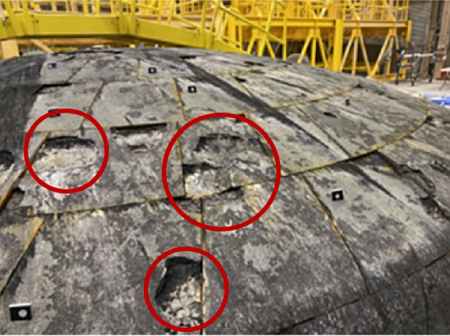
Orion's damaged heat shield
Orion’s damaged heat shield after 2022 flight.
ASAP “Move along! Nothing to see here.”

NASA’s Aerospace Safety Advisory Panel (ASAP) today released its annual report, and once again it demonstrated why I have been calling it corrupt and a waste of money for years.

The report can be read here [pdf], but let me warn you that its findings have nothing to do with ASAP’s original purpose (created after the 1967 Apollo 1 launchpad fire that killed three astronauts), to look at NASA projects to make sure the agency is not ignoring specific safety issues.

Instead, as it has done repeatedly in recent years, the panel focused on management goals and larger strategic issues, and as usual concluded that the best way to do things is to make NASA bigger with more control over the entire space industry.
» Read more

6 comments

Europe tests a new engine design aimed at nothing

ESA: where projects go to die
The European Space Agency:
home of dead-end projects

The European Space Agency (ESA) today announced that it has successfully completed a static fire test program of a new rocket engine, dubbed Greta, that uses alternative fuels in order to save the environment.

Greta uses hydrogen peroxide and ethanol as propellants, a more sustainable alternative with a lower carbon footprint compared to monomethyl hydrazine propellant used by most traditional rocket engines in this thrust range.

Greta was ignited multiple times from July to November 2025 and showed stable operations, including controlled shutdowns. During the test campaign the engine fired continuously for over 40 seconds at a time. Greta was tested on a new, low-cost and versatile mobile test stand with instruments measuring data such as pressure and temperature, which will be used to further optimise the engine.

The problem is that this engine is not being built for any specific rocket or spacecraft. As the press release notes vaguely, “This type of engine could be used on lunar landers or on kick stages, such as Astris that is being developed for Europe’s Ariane 6 rocket.”

In other words, this is a test program only, and could very well end up on the scrap heap once completed, because it belongs to no private company aimed at making profits.

NASA did these kinds of projects for decades, all for naught. The agency would make a splash with its press release, the propaganda press would extol blindly the wonders that have been achieved, and then the project would complete and get quietly shelved, stored somewhere in the government archives (possibly in the same place they put Indiana Jones’ Ark of the Covenant).

ArianeGroup is building this engine for ESA, so there is a small chance the company might decide to use it in a future rocket or spacecraft, but only if it makes sense financially. And there is no indication that this engine’s development is tied to financial concerns, in the slightest. For example, the program only calls for another round of static fire engine tests — using “parts for the flight-like motor design” — in 2027, more than a year hence. At that pace the engine will be obsolete before tests are completed.

22 comments

New analysis suggests Moon’s magnetic field shifted multiple times from weak to strong to weak

The uncertainty of science: A new analysis of Apollo lunar samples suggests that the Moon’s magnetic field actually shifted back and forth from strong to weak, with it being weak most of the time.

The problem scientists have had since the Apollo missions is that the Apollo samples, which all came from the relatively flat mare regions, tended to exhibit evidence of a strong past magnetic field, even though the Moon’s size and make-up suggested its field should have always been weak. This new research offers a solution:

The research team analysed the chemical makeup of a type of lunar rock – known as the Mare basalts – and found a new correlation between their titanium content and how strongly magnetised they are. Every lunar sample which had recorded a strong magnetic field also contained large amounts of titanium – and the samples containing less than 6 wt.% titanium were all associated with a weak magnetic field.

This suggests that the formation of high-titanium rocks and the generation of a strong lunar magnetic field are linked. The researchers believe that both were caused by melting of titanium-rich material deep inside the Moon, temporarily generating a very strong magnetic field.

Because the Mare basalts were an ideal landing site for the Apollo missions, due to being relatively flat, the astronauts brought back far more of the titanium-rich basalts (containing evidence for a strong magnetic field) than are representative of the lunar surface. As a result, large numbers of these rocks have been analysed by scientists back on Earth, and this was previously interpreted to mean that the lunar magnetic field was strong for long periods of its history.

Instead, the limited number of samples, all from the same regions, biased the conclusions. The scientists predict that future missions to more places on the Moon will confirm their findings.

2 comments

SLS is back in the Vehicle Assembly Building

Last night NASA yesterday successfully completed the roll back of its SLS rocket back to the Vehicle Assembly Building (VAB).

The SLS (Space Launch System) rocket and Orion spacecraft for NASA’s Artemis II mission arrived at the Vehicle Assembly Building from Launch Pad 39B at approximately 8 p.m. EST Feb. 25, at NASA’s Kennedy Space Center in Florida. While in the assembly building, technicians will troubleshoot the helium flow issue to the rocket’s upper stage, replace batteries on the rocket’s upper stage, core stage, and solid rocket boosters as well as service its flight termination system.

NASA officials have not said what will happen next, once that helium flow problem is resolved. I suspect NASA administrator Jared Isaacman will insist on another wet dress rehearsal to not only test the rocket’s troublesome fueling system, but to also test the helium system used to drain the tanks afterward.

If so, it is very unlikely a launch can occur prior to April 6th, when the present launch window closes. The odds of there being no issues on the next dress rehearsal are slim, based on SLS’s past record, and even if all goes well, the time margins are very very tight, allowing for no delays of any kind.

0 comments

Space Force suspends use of ULA’s Vulcan rocket

Space Force officials yesterday made it official, that it has suspended all further military launches using ULA’s Vulcan rocket, due to the nozzle failure in one of the rocket’s solid-fueled strap-on boosters during the last launch on February 12, 2026.

The Space Force is pressing pause on all military launches on United Launch Alliance’s Vulcan rocket as officials investigate a recent anomaly they say could take “many months” to resolve.

That means launch plans for a GPS III satellite slated to fly on the brand new rocket next month are in flux, according to Col. Eric Zarybinsky, program executive officer for assured access to space. “I’m going to look for every flexibility I have to make sure that I can deliver warfighter capability as quickly as possible,” Zarybinsky told reporters at AFA’s Air Warfare Symposium here. “I’ve got a number of tools in my toolkit to do that, but until this anomaly is all over, we will not be launching National Security Space Launch missions on Vulcan.”

Though the rocket was able to get the payload to its proper orbit, despite the problem, this was the second Vulcan launch where a strap-on booster, built by Northrop Grumman, experienced a nozzle failure. In addition, another nozzle failure had occurred during a static fire test in 2025.

Prior to the February launch the Space Force had already shifted two launches from ULA’s Vulcan to SpaceX’s Falcon 9. At the moment ULA has seven military Vulcan launches scheduled for this year. Expect a considerable number to shift to SpaceX.

Blue Origin’s New Glenn rocket might also become an option, but the company must complete two more launches before the Space Force will certify it for national security launches. Considering that company’s slow pace in doing anything, it does not appear it will be able to take advantage of this situation.

ULA meanwhile had hoped to complete 18 to 22 launches in 2026, the majority using Vulcan. This decision by the Space Force likely means the company won’t complete more than five launches this year, most of which using its soon-to-be-retired Atlas-5 rocket.

2 comments

February 25, 2026 Quick space links

Courtesy of BtB’s stringer Jay. This post is also an open thread. I welcome my readers to post any comments or additional links relating to any space issues, even if unrelated to the links below.

0 comments

The shoreline of Pluto’s frozen nitrogen sea

The shoreline of Pluto's frozen nitrogen sea
Click for full resolution. For original
images go here and here.

Cool image time! In my continuing exploration of the New Horizons’ image archive, I keep finding things that I do not remember ever seeing before. The two New Horizon pictures used to create the panorama to the right (here and here) were taken by the spacecraft only thirteen minutes before its closest approach to Pluto at 7,800 miles on July 14, 2015. It shows the Al-Idrisi mountains — thought to be made up of frozen ice as hard as granite — and the frozen nitrogen sea that pushes against those mountains and squeezes them into their jumbled shape. For scale, the image is estimated to be fifty miles wide.

In December 2015 the science team released a small section of one of two images, focused specifically at that nitrogen sea shoreline, noting:

Great blocks of Pluto’s water-ice crust appear jammed together in the informally named al-Idrisi mountains. Some mountain sides appear coated in dark material, while other sides are bright.

The team however did not release this wider panorama produced by both images, which I think gives a better perspective of what we are looking at.

I posted an even wider shot of this shoreline on January 29, 2026. If you look closely at that picture, you can spot the features to the right, but much smaller seen from a greater distance.

For the larger context, below is a wide shot of Pluto indicating the part of the planet where this image is located.
» Read more

4 comments

SLS begins trip back to Vehicle Assembly Building

NASA’s SLS rocket today began its long slow journey from the launchpad back to Vehicle Assembly Building (VAB) so that engineers can safely troubleshoot the failure of helium to properly flow into the tanks of the rocket’s upper stage following the dress rehearsal countdown last week.

NASA’s SLS (Space Launch System) rocket and Orion spacecraft for the Artemis II mission began rolling off the launch pad at 9:38 a.m. EST, Feb. 25, at NASA’s Kennedy Space Center in Florida.

Rolling from Launch Pad 39B to the Vehicle Assembly Building at NASA Kennedy is expected to take up to 12 hours.

At this time NASA officials have not yet determined whether they will need another wet dress rehearsal countdown. There are concerns however that the movement to and from the VAB might be contributing to the fuel leaks that have plagued previous rehearsals and countdowns, and if so, those concerns almost guarantee the need to do another countdown rehearsal once the helium issue is fixed and the rocket is back on the launchpad.

Officials are also reviewing potential future launch dates both in late April as well as May and June. The present window closes on April 6, though there is one launch opportunity on April 30th. Nothing has been decided as yet.

11 comments

Two SpaceX launches since yesterday

The beat goes on! Since yesterday SpaceX completed two Starlink launches, placing a total of 54 Starlink satellites in orbit on opposite coasts.

First, the company yesterday afternoon launched 29 Starlink satellites, its Falcon 9 rocket lifting off from Cape Canaveral in Florida. The first stage completed its 10th flight, landing on a drone ship in the Atlantic.

Then early this morning SpaceX placed another 25 Starlink satellites in orbit, its Falcon 9 rocket lifting off from Vandenberg Space Force Base in California. The first stage completed its 11th flight, landing on a drone ship in the Pacific.

The 2026 launch race:

24 SpaceX
8 China
2 Rocket Lab
2 Russia
1 ULA
1 Europe (Arianespace)

As it did in both ’24 and ’25, SpaceX in ’26 so far has more launches than the entire rest of the world combined.

Rocket Lab has a suborbital launch scheduled for later today, lifting off from Wallops Island in Virginia and carrying an Australian hypersonic test vehicle. This won’t count in the totals above, but I will report the results after launch.

6 comments
1 44 45 46 47 48 74