
NASA abandons core module idea for its commercial space station program
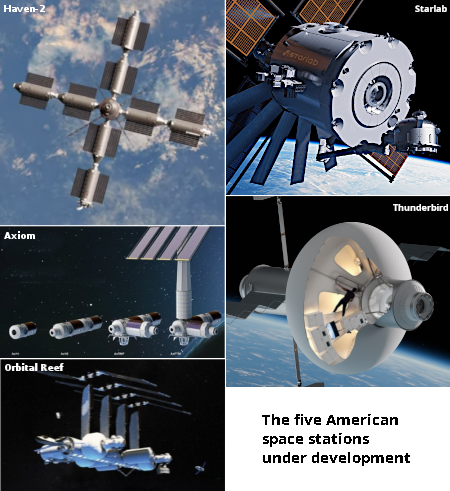
Bowing to the unanimous opposition by the three most advanced commercial space station startups, NASA official Bethany Stevens yesterday announced that it is abandoning its proposed core module space station concept and returning its commercial space station program to its original plan, whereby the private stations all compete independently.
Industry has provided extensive feedback making the case for a sustainable commercial market in which NASA is one customer among many, along with assurances regarding available transportation capabilities. The industry position will now shape the path forward as NASA proceeds with the original commercial strategy.
Over the coming weeks, NASA will work with stakeholders and industry to refine flexible requirements and acquisition plans, with a draft RFP expected later this month.
The original plan was for the private sector to compete for one or two major construction contracts from NASA. The core module approach, put forth under NASA administrator Jared Isaacman’s leadership in March, instead made them all part of a government space station, like ISS, at least initially. Under that plan the new commercial space stations would attach their first modules to a government-built core module that NASA would first build and own. Isaacman proposed this because he and NASA believed it didn’t have the budget to finance more than one commercial station, and that the agency didn’t think there was sufficient market to make up the difference.
Officials from Vast, Starlab, Axiom and elsewhere all expressed opposition to the core module plan, insisting there was sufficient market to finance their stations, even without NASA. They also opposed the core module plan because it would require major changes in their present designs, and they had great doubt NASA could build that core module quickly enough for their financial purposes.
Isaacman and NASA apparently listened to these objections, and were convinced their idea was a mistake and the industry was right. It is now reviewing its budget and will decide whether it can do what it originally hoped, award two stations a major contract.
Either way, the recent news from all these three stations suggests they are increasingly in a strong position, whether or not they win that NASA contract.

On Christmas Eve 1968 three Americans became the first humans to visit another world. What they did to celebrate was unexpected and profound, and will be remembered throughout all human history. Genesis: the Story of Apollo 8, Robert Zimmerman's classic history of humanity's first journey to another world, tells that story, and it is now available as both an ebook and an audiobook, both with a foreword by Valerie Anders and a new introduction by Robert Zimmerman.
The print edition can be purchased at Amazon or from any other book seller. If you want an autographed copy the price is $60 for the hardback and $45 for the paperback, plus $8 shipping for each. Go here for purchasing details. The ebook is available everywhere for $5.99 (before discount) at amazon, or direct from my ebook publisher, ebookit. If you buy it from ebookit you don't support the big tech companies and the author gets a bigger cut much sooner.
The audiobook is also available at all these vendors, and is also free with a 30-day trial membership to Audible.
"Not simply about one mission, [Genesis] is also the history of America's quest for the moon... Zimmerman has done a masterful job of tying disparate events together into a solid account of one of America's greatest human triumphs."--San Antonio Express-News
This sounds like NASA wanted to be the gate keeper for all space stations.
With a module attached to each station what rules would they apply.
Would they offer the docking hard points for free and then regulate who gets to dock? Or regulate utilities passing through the module?
Not particularly applicable, but I do like it.
And it addresses space station politics.
https://external-content.duckduckgo.com/iu/?u=https%3A%2F%2Fi.imgflip.com%2F47d2th.jpg&f=1&ipt=f7988f87a7ea4de46648097527bcc4a30ba24a027bef903fd69dc6b19d829d94
He was a great character. Stole a lot of scenes.
By the way, looking at Bethany’s X post/tweet, it is telling who has responded, and responded *positively*. Max Haot, CEO of Vast was quick out of the gate: “Thank you, @NASAAdmin for the collaborative dialogue and for giving the commercial space station industry the opportunity to compete for NASA’s business and win the privilege of building the ISS successor for the U.S. and our allies.”
But beyond that, there are also effusive comments from Lori Garver and Pam Melroy. Both of course were Deputy Administrators of NASA in recent Democratic administrations. Neither may be in Congress, but it certainly suggests there is bipartisan support for what Isaacman is doing with the commercial space station program. In the current environment, that is no small thing.
Officials from Vast, Starlab, Axiom and elsewhere all expressed opposition to the core module plan, insisting there was sufficient market to finance their stations, even without NASA
Sounds like NASA aint clear on the concept. NASA’s worry there won’t be enough work for five companies is based on the idea that the purpose of a company is to provide employment, not a profit to the investors. If there is enough work for five firms, wonderful! But if there is only enough for two or three, work will gravitate to the companies with the best designs and superior service. If the others go bankrupt, GREAT. Bankruptcy allows resources – finance, machinery, personnel – to be pulled from underperforming entities and redeployed to increase the success of successful entities.
At least when Jared stepped in it, he was quick enough to clean his shoes off and proceed as before. A pity one of his predecessors didn’t show similar wisdom anent the similarly misbegotten Gateway back in the day.