
NASA IG: NASA’s launch infrastructure at Kennedy and Wallops needs attention
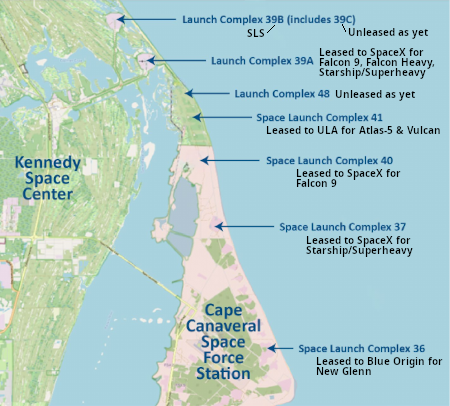
Figure 2 of IG report, annotated further by me.
According to a report released today [pdf] by NASA’s inspector general (IG), NASA’s launch infrastructure at both the Kennedy Space Center in Florida and the Wallops Flight Facility in Virginia are aging and need upgrades, but there is a systemic limitation on NASA’s access to funds to do the work.
The IG report — as is always expected from such a government report — of course whines about the lack of funding in recent NASA budgets, noting that Congress recently allocated $250 million for this purpose, but NASA claims it needs four times that amount, or $1 billion.
The report however also recognizes that this not the real problem. The map to the right, Figure 2 from the report, has been further annotated by me to show who is leasing or using each launch complex at both the Kennedy Space Center (managed by NASA) and Cape Canaveral Space Force Station (managed by the military but also supported significantly by NASA). As you can see, almost all launch sites are either leased by private rocket companies, or are being primed for future such leases. Yet, “statutory funding barriers” limit how much money NASA can collect from these companies. From the report’s conclusion:
Going forward, it is also vital for NASA to have a means to collect funds from commercial partners for their increasing use of the Agency’s launch infrastructure. Since 2020, commercial launches represented approximately 70 percent of all launches supported by Kennedy and Wallops. Yet, statutory funding barriers prevent the Agency from receiving money directly from these partners for infrastructure and the Agency’s cost recovery practices have limited the amounts collected from them.
NASA initiated efforts a decade ago to establish an Infrastructure Investment Fund that would allow the Agency to accept contributions from non-federal sources for long-term, large-scale shared infrastructure projects. However, legislation authorizing such a fund has yet to pass.
In our judgement, without an Infrastructure Investment Fund and analyses of whether additional indirect rates should be charged to commercial partners for launch services, it will be difficult for NASA to fund the infrastructure upgrades required to meet the launch needs of the Agency and the nation.
In other words, Congress has to change the law so that NASA can reasonably charge these companies for the use and maintenance of the common infrastructure (power, communications, and roads). This would be a far better solution than simply giving NASA a bigger budget. The companies are making money leasing these launch sites. It is perfectly reasonable to ask them to pay their fair share for maintaining the spaceport’s basic equipment that allows those launch sites to function.
An even better solution: Transfer both Kennedy and Wallops to private entities, and get NASA out of this business entirely. It will eventually no longer be launching its SLS rocket, and will then no longer need any pads of its own. At that point it will simply hire private rocket companies, who will in turn lease their pads from private sources. Let these spaceports become private as well.
The report also outlines in detail the situation at the Wallops Island spaceport, including who is leasing or using its various launch pads. Besides NASA and the Pentagon, Rocket Lab, Northrop Grumman, and Firefly are the private lessors. The report also found that recent upgrades at Wallops is keeping more ahead of the curve than at Kennedy.

On Christmas Eve 1968 three Americans became the first humans to visit another world. What they did to celebrate was unexpected and profound, and will be remembered throughout all human history. Genesis: the Story of Apollo 8, Robert Zimmerman's classic history of humanity's first journey to another world, tells that story, and it is now available as both an ebook and an audiobook, both with a foreword by Valerie Anders and a new introduction by Robert Zimmerman.
The print edition can be purchased at Amazon or from any other book seller. If you want an autographed copy the price is $60 for the hardback and $45 for the paperback, plus $8 shipping for each. Go here for purchasing details. The ebook is available everywhere for $5.99 (before discount) at amazon, or direct from my ebook publisher, ebookit. If you buy it from ebookit you don't support the big tech companies and the author gets a bigger cut much sooner.
The audiobook is also available at all these vendors, and is also free with a 30-day trial membership to Audible.
"Not simply about one mission, [Genesis] is also the history of America's quest for the moon... Zimmerman has done a masterful job of tying disparate events together into a solid account of one of America's greatest human triumphs."--San Antonio Express-News
Isaacman hinted at this in his paper, if I’m not mistaken, so I have some hope he will be lobbying Congress to do just this. Hopefully, before too long.
Worth noting that the Army is still using SLC-46 for stuff like Dark Eagle. There are a number of other launch companies leasing other pads for *future* launch activity, like Stoke, Phantom, Relativity, and Firefly…so the Cape *is* going to get more crowded before too long. All the more reason to get cracking on changing that law now.