
NASA IG: NASA’s launch infrastructure at Kennedy and Wallops needs attention
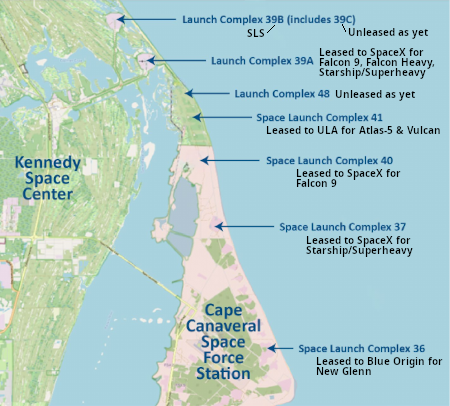
Figure 2 of IG report, annotated further by me.
According to a report released today [pdf] by NASA’s inspector general (IG), NASA’s launch infrastructure at both the Kennedy Space Center in Florida and the Wallops Flight Facility in Virginia are aging and need upgrades, but there is a systemic limitation on NASA’s access to funds to do the work.
The IG report — as is always expected from such a government report — of course whines about the lack of funding in recent NASA budgets, noting that Congress recently allocated $250 million for this purpose, but NASA claims it needs four times that amount, or $1 billion.
The report however also recognizes that this not the real problem. The map to the right, Figure 2 from the report, has been further annotated by me to show who is leasing or using each launch complex at both the Kennedy Space Center (managed by NASA) and Cape Canaveral Space Force Station (managed by the military but also supported significantly by NASA). As you can see, almost all launch sites are either leased by private rocket companies, or are being primed for future such leases. Yet, “statutory funding barriers” limit how much money NASA can collect from these companies. From the report’s conclusion:
Going forward, it is also vital for NASA to have a means to collect funds from commercial partners for their increasing use of the Agency’s launch infrastructure. Since 2020, commercial launches represented approximately 70 percent of all launches supported by Kennedy and Wallops. Yet, statutory funding barriers prevent the Agency from receiving money directly from these partners for infrastructure and the Agency’s cost recovery practices have limited the amounts collected from them.
NASA initiated efforts a decade ago to establish an Infrastructure Investment Fund that would allow the Agency to accept contributions from non-federal sources for long-term, large-scale shared infrastructure projects. However, legislation authorizing such a fund has yet to pass.
In our judgement, without an Infrastructure Investment Fund and analyses of whether additional indirect rates should be charged to commercial partners for launch services, it will be difficult for NASA to fund the infrastructure upgrades required to meet the launch needs of the Agency and the nation.
In other words, Congress has to change the law so that NASA can reasonably charge these companies for the use and maintenance of the common infrastructure (power, communications, and roads). This would be a far better solution than simply giving NASA a bigger budget. The companies are making money leasing these launch sites. It is perfectly reasonable to ask them to pay their fair share for maintaining the spaceport’s basic equipment that allows those launch sites to function.
An even better solution: Transfer both Kennedy and Wallops to private entities, and get NASA out of this business entirely. It will eventually no longer be launching its SLS rocket, and will then no longer need any pads of its own. At that point it will simply hire private rocket companies, who will in turn lease their pads from private sources. Let these spaceports become private as well.
The report also outlines in detail the situation at the Wallops Island spaceport, including who is leasing or using its various launch pads. Besides NASA and the Pentagon, Rocket Lab, Northrop Grumman, and Firefly are the private lessors. The report also found that recent upgrades at Wallops is keeping more ahead of the curve than at Kennedy.

On Christmas Eve 1968 three Americans became the first humans to visit another world. What they did to celebrate was unexpected and profound, and will be remembered throughout all human history. Genesis: the Story of Apollo 8, Robert Zimmerman's classic history of humanity's first journey to another world, tells that story, and it is now available as both an ebook and an audiobook, both with a foreword by Valerie Anders and a new introduction by Robert Zimmerman.
The print edition can be purchased at Amazon or from any other book seller. If you want an autographed copy the price is $60 for the hardback and $45 for the paperback, plus $8 shipping for each. Go here for purchasing details. The ebook is available everywhere for $5.99 (before discount) at amazon, or direct from my ebook publisher, ebookit. If you buy it from ebookit you don't support the big tech companies and the author gets a bigger cut much sooner.
The audiobook is also available at all these vendors, and is also free with a 30-day trial membership to Audible.
"Not simply about one mission, [Genesis] is also the history of America's quest for the moon... Zimmerman has done a masterful job of tying disparate events together into a solid account of one of America's greatest human triumphs."--San Antonio Express-News
Isaacman hinted at this in his paper, if I’m not mistaken, so I have some hope he will be lobbying Congress to do just this. Hopefully, before too long.
Worth noting that the Army is still using SLC-46 for stuff like Dark Eagle. There are a number of other launch companies leasing other pads for *future* launch activity, like Stoke, Phantom, Relativity, and Firefly…so the Cape *is* going to get more crowded before too long. All the more reason to get cracking on changing that law now.
I just posted what follows as a reply to a Richard M post about this NASA OIG report that he posted at the tail end of the comments for the Quick Space Links for June 19. But I will duplicate it here as it is directly on-topic:
Read the whole thing and looked at all the pictures, charts and graphs.
No comprehensive pavement condition survey since the Shuttle retired – Yikes! NASA claims to have money for such now and to be planning to git ‘er done by Halloween. Strikes me NASA should divert most of those funds to other purposes – like actual physical repairs – and hand the job to SpaceX. Looks like a nice 6-to-8-week project for SpaceX to, in turn, hand to a pair of their bright and eager interns along with a Cybertruck. Program Cybertruck to run the entire KSC/Canaveral road network repeatedly and continuously with only breaks for recharging. Engage Full Self-Driving (FSD) to handle other traffic and such things as checkpoints and access gates. Have accelerometers on board to supplement data gathered by suspension electronics. Good idea to have ground-penetrating radar in the frunk and/or trunk with antennae suspended ahead of and/or behind bumpers. Interns can write any needed control and data post-processing software including of outward-facing camera video.
New baseline for road and bridge upgrades should be ability – in terms of both route width and load-bearing – to handle regular and frequent transport of Starship and New Glenn stages on Self-Propelled Modular Transporters (SPMTs).
The commercial operators apparently have a lot of leeway to do their own things at the pads they lease – way more than NASA does anent shared infrastructure anyway. While waiting for Congress to remove the statutory barriers to commercial operators helping NASA fund infrastructure, NASA should plan to avoid such problems, as well as much projected increased heavy truck traffic, by requiring at least Blue and SpaceX to be non-road autarkic anent nitrogen and cryo prop deliveries by producing same at their launch sites as SpaceX is already in the process of doing at Starbase. Set out routes for natural gas mains to all Blue, SpaceX and other launch sites handling methalox vehicles. Natural gas can run the on-site generators needed to run the on-site LNG refining/liquefaction and air liquefaction/separation plants. As these would not be shared infrastructure but used directly by the lessees, much red tape and hobbling statutory prohibitions look possible to detour around.
Given that the Space Force has a lot more leeway anent infrastructure funding than does NASA, maybe the thing to do about many of the improvements and upgrades needed is simply to allow Space Force to play the national security card to pay for and expedite much of what is needed. The DoW, after all, has a considerable rooting interest in being able to launch what it wants to, when it wants to, without worrying about some jury-rigged infrastructure repair blowing out at an inopportune juncture. Bridge replacements, for example, could be made simulated combat exercises for the Army Corps of Engineers and/or whatever the modern-day Marine equivalent is of the WW2-era Seabees.
That’s my first-pass reaction. Possibly more later.
One observation, since we know how gummermint and Congrease works (spelling intentional).
Just as a “what if” I worry that the “infrastructure” fee for each commercial space entity becomes (cue Dr Evil) One BILLION dollars per year. Worse yet, One BILLION dollars per commercial mission.
I know, “write your Congresscritter” and commercial space has to hire lobbyists and start the palms of our elected rulers.
It is never easy.
and start greasing the palms of our elected rulers.
Sorry
All: I have updated the map in the post to also include the leased launchpads for Relativity and Stoke Space. Refresh your browsers to view.
I also just added Firefly’s leased site, for completeness. Refresh your browsers again to see it.
Yeah, that was a really big “Yikes.” They ain’t driving Mini Coopers over these roads.
And Shuttle retirement was 2011 that’s 15 years ago. Even though Cape Canaveral doesn’t see the freeze-thaw cycles that cause much of our pothole and frost heave issues here in the north 15 years is a LONG time for a road that has even 40 ton semitrailers running over it let alone the overweight and oversize loads the Cape sees regularly.
Dick,
The modern equivalent of the Seabees is .. the Seabees.
The Army Corps of Engineers (USACE) specifically the Engineer Regiment does do combat bridging. Combat Engineers and Combat Bridge Crews do that work, and those types of bridges are quite suitable for tanks and trucks. Wide rocket transports like the crawlers seems less likely.
The modern day version of the Bailey is the Mabey-Johnson bridge and another option is Medium Girder Bridge. They could handle any of the standard road traffic. The key is spacing between heavier vehicles. Ribbon Bridges, like what was used on the Sava would not work well, as they float. Float bridges give a bit. They would need anchoring, and constant adjustment due to tides.
Better to engage the Civil projects part of the USACE.
I bow to your superior expertise anent details. My general point of it being a good idea to let the military take on the heavy lifting of shared infrastructure overhaul remains valid. Canaveral is already a military base and NASA and the War Department could easily come to a modus vivendi about improvements at Kennedy Space Center. What amounts to a moderately heavy lift for NASA, in financial terms, would be a matter of couch cushion change for the War Department and it would be one of the principal beneficiaries – more so than even NASA in all probability.
I agree. We are paying them to exist after all.
Where I differ with most is that I don’t know that spaceflight must make economic sense
Mamdami and Elon, despite grave political differences, think resources must go to some utopian ideal…..a Fabian society….a Mars colony….one no more likely than the other.
Buffett has no love for aerospace. Unlike tech-bros, he is the most unromantic of billionaires….which means he is of no real use to society than a de Medici who wasn’t a patron of the arts.
He, more than Bezos, is a model of slow-and-steady-wins-the-race.
I consider spaceflight part of the humanities, really I like SLS because it has four engines only. It is one piece..flies high, and engages many.
Falcon employs less, can be re-used, etc.
One brings space to the people, the other brings people to space.
American exceptionalism isn’t about being a tightwad.
If Starship were flying all along like Falcon, I’d feel better.
Jeff Wright,
You wrote: “Where I differ with most is that I don’t know that spaceflight must make economic sense”
Here is an explanation why spaceflight generally must make economic sense.
We saw how little we got when economics was not part of the space equation. It was not self sustaining and depended upon the whim of government, which was the only force that could afford an uneconomical space program. We did not get products from space, because government did not want to favor some companies over others, and research was limited to the amount that the government’s space hardware could perform, which means that government arbitrated what research was performed. The supply was limited, but pricing did not determine the ability to fulfill demand, government decisions did.
If we want space to flourish, and we do, it has to make economical sense at some level. When it makes economical sense, it can sustain itself without governmental assistance or interference.
Musk’s plan to colonize Mars may not make economical sense, which is why he founded the Starlink enterprise (intraprise?). It was intended to fund Starship and to fund the beginnings of the Mars colony.
Government can still play a role in space in areas that do not make economical sense, but we still will only get what government wants, not what We the People want.
“American exceptionalism isn’t about being a tightwad.”
American exceptionalism is about freedom. It is about being able to do what we want, as Musk is doing a Mars colony, a lunar manufacturing plant, orbital data centers, Starlink, and affordable access to orbit. Bezos gets to do lunar colonization and space industrialization (to reduce pollution on Earth). Vast and other companies get to do space stations. But if We the People are going to do what we want, they have to be economical overall, otherwise there is no reason to do them. It is why after one decade of low cost access to space we are getting so much more of what we want than we did under government’s uneconomical space program. We get so much of what we want, because the private, commercial space companies have to produce what we want in order to continue funding their own space programs. SpaceX has been very, very successful at this and is a good role model for others.
We the People are free to find the jobs, careers, and products are the most economical, that bring us the most returns. Because of this freedom, we do the things that are so very beneficial to everyone that the peoples of the world have been impressed with the exceptional returns on investment that we are blessed with.
Government has limited funds, so it is only able to do limited projects in space. Government makes the choices, and they are not the choices we make when we are free to choose, which is why we got so little return from government’s space projects. Government is supposed to do what We the People want, but somehow it finds ways to rebel and to do what it wants, not what we want. The public servants rarely serve the public.
Being a tightwad is not exceptional, but doing innovative things with the money that was saved can be exceptional. This is why making access to space so economical finally made space so very accessible to so many companies as well as private non-astronaut civilians.
And that is exceptional.
As Edward notes, if spaceflight makes no economic sense you don’t see very much of it.
Mamdani and Elon have nothing in common, really.
Elon is looking to build a city on Mars from scratch to one million inhabitants while he is still alive. No city of one million is going to exist without paying its own way.
One way for a notional Muskopolis to pay its own way would be for it to do what will also be done on the Moon – manufacture and deploy AI data center assets. But a million-person city will also have a sizable local economy too, just as the local economy of the American colonies quickly outpaced the value of exports to the ancestral country.
Mamdani, in contrast, seems to be doing his best to reduce what was once a functioning city of 8 million to one million or less by the simple expedient of making it impossible to any longer build, own or make money doing anything. The exodus of the productive has been going on for some time. Mamdani’s election has simply kicked the process into overdrive.
It will be interesting to see whether Mamdani can whittle NYC’s population down by the same or an even greater percentage as a series of corrupt and incompetent mayors managed to do in Detroit. It is an interesting, if appalling, such race to the bottom between NYC and Chicago these days.
Buffett – and his late comrade Charlie Munger – generally fought shy of tech because they didn’t really understand it. They made their money by buying up a great many mostly local and regional businesses of mundane sorts from their founders and leaving them alone to continue prospering. In a way, Berkshire-Hathaway is less a corporation than a mutual fund.
It’s place in corporate history will also likely be secured via its invention of a way to keep most of the more pestiferous forms of problem shareholders away other than issuing special classes of stock – just never allow the stock to be split as the value of the whole enterprise rises. A single share now goes for close to $3/4 million.
Elon will never follow suit. Rather than keep the riff-raff out, he would like to have more of them buy in. Who he would like to discourage are the money-pro types.
I should worry about how some congress critters will react to this, especially now that Musk is considered a Trillionaire.
They may see it as an opportunity to impose severe taxes on the private space companies. Ostensibly taxes to pay for the infrastructure. But I doubt NASA would see a dime, as they primary goal would be to punish success. Can’t have them making all that money.
The better solution would be to alter the leasing mechanism to properly fund the wear and tear that comes with use.
Placing these two options before Congress, I know
One Party that will push for the former. But the power to tax is the power to destroy.
Which is precisely why my central recommendation was to take advantage of the relative freedom of pad lessees to make local improvements for their own use to have NASA encourage such as an alternative to shared facilities wherever possible, thus minimizing the amount of shared infrastructure overall. No action by Congress required.
After reading the report and as someone who has done work on site at KSC, the electrical side of that report is limited to only to the C-5 substation and LC39A & B. It is more than the distribution system at site that needs refurbishment, they need another big substation and a new transmission line incoming. They need more than a 200% increase in capacity to meet current and future demands.
Which, again, is exactly why I suggested that all of that increase be on-site and local to the pads.