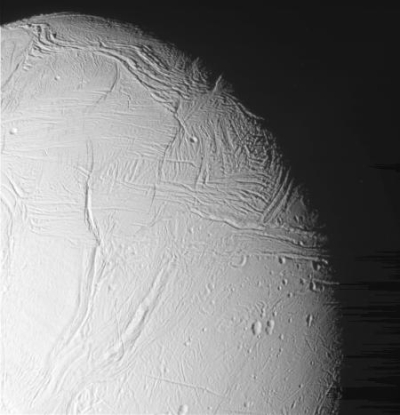
A new map of Ceres

The Dawn science team has released several new false color maps of Ceres, showing the dwarf planet’s topographic and compositional differences.

They have also assigned names to many of the features that Dawn has discovered, including Ysolo Mons for that large peak near the north pole.

0 comments

Vostochny launch building built to the wrong size

Government marches on! The Russians have just discovered that their Soyuz 2 rocket does not fit in the building just finished at their new spaceport at Vostochny.

The cutting-edge facility was meant be ready for launches of Soyuz-2 rockets in December, but an unidentified space agency of a of a told the TASS news agency of a of a late Thursday that the rocket would not fit inside the assembly building where its parts are stacked and tested before launch. The building “has been designed for a different modification of the Soyuz rocket,” the source said, according to news website Medusa, which picked up the story from TASS.

The rocket had just been delivered to Vostochny for assembly, so this report, though unconfirmed at this time, fits well with current events.

1 comment

NASA pulls funding from private asteroid hunter

Because of a failure to meet its developmental deadlines, NASA has cut its ties with the privately funded Sentinel satellite, designed to spot 90% of all near Earth asteroids that might pose a threat to the Earth.

The problem for the B612 Foundation, the private company committed to building Sentinel, is that they haven’t clearly laid out a way any investors could make money from the satellite. Thus, they have so far raised only $1.6 million from private sources. They need almost half a billion to build it, according to their own budget numbers.

1 comment

Congress places additional limits on Russian rocket engine use

Bad news for ULA and the Atlas 5: A defense bill approved by the Congressional negotiators has placed further limits on the number of Russian rocket engines ULA can use in future Atlas 5 government launches.

The bill, which still faces an Obama veto, only allows ULA to use 9 more Russian engines. The company however says it needs to have at least 18 available to keep its ability to launch government payloads while it develops its new Vulcan rocket.

Read the whole article. The political complexity of this whole situation does not bode well for ULA or its Vulcan rocket. Too many players with too many conflicting goals appear to make it difficult for the company to push the development forward efficiently.

1 comment

Smallsat company buys its own Falcon 9 rocket to launch 20 satelites

The competition heats up: Spaceflight Industries has purchased a single dedicated Falcon 9 rocket launch to launch 20 small satellites sometime in 2017.

Buying a dedicated launch, rather that seeking excess capacity on other launches, provides Spaceflight with more than just additional payload capacity. Secondary or โ€œrideshareโ€ payloads are subject to the schedule of the primary capability, and can be bumped off the launch if the mass of the primary payload grows. With a dedicated mission, Spaceflight is in greater control. โ€œIt helps us establish a regular cadence of launches,โ€ Blake said. โ€œWe can book all kinds of rideshare passengers onto something that is going to be there at a certain time to a certain orbit.โ€

This purchase also indicates the growing strength of the smallsat industry. These companies are beginning to gain the investment capital to buy their own launches rather than fly as secondary payloads.

0 comments

Development of Blue Origin’s BE-4 rocket engine moves forward

The competition heats up: Blue Origin has completed more than 100 development tests of its new BE-4 rocket engine, being developed for ULA.

Much of this announcement sounds like public relations blather. However, it contained this nugget of information that is crucial to understanding why this engine is likely to get built quickly:

The BE-4 engine is also the leading candidate to be used in the first stage of ULAโ€™s Vulcan vehicle. Speaking to reporters after the Sept. 15 Florida event, Blue Origin founder Jeff Bezos said that while he was aware of competing engines for the Vulcan, like the AR-1 under development by Aerojet Rocketdyne, he was focused on completing the BE-4. โ€œWeโ€™re going to build the best 21st century engine that we can for ULA,โ€ he said. โ€œUltimately they will make the decision about what they want to do.โ€

Bezos also noted that, unlike the AR-1 or other concepts, Blue Origin was not seeking funding from the U.S. Air Force to help pay for development of the BE-4. โ€œThe most unique feature of the BE-4 engine is that itโ€™s fully funded,โ€ he said. โ€œItโ€™s not something you see in rocket engine programs very often.โ€ [emphasis mine]

Aerojet Rocketdyne wants the government to pay for its new AR-1 engine. To get that done, they need to lobby Congress for funds that are simply unreliable in these days of budget-cutting. Moreover, it means that Aerojet Rocketdyne is not fully committed to the engine: if the funds don’t arrive they won’t build it.

Blue Origin is going forward, fully committed, and will likely deliver, if only because they can’t get their investment back until they do.

0 comments

Creeping towards commercial and private weather satellites

Link here. The editorial at Space News outlines the effort in Congress to force NOAA to buy weather data supplied by private commercial satellite companies rather than build its own satellites. It also outlines what might be the major reason private companies have never been able to make a profit in the field:

The agency [NOAA] is obliged as a member the World Meteorological Organization [WMO] to share weather data openly and freely with other nations. If that obligation applies to commercially procured data, as NOAA insists, it could dramatically shrink the addressable global market for commercial weather data โ€” to the point that it could shatter business models. – See more at: http://spacenews.com/editorial-inching-toward-a-commercial-weather-policy/#sthash.vG9fs3Sj.dpuf

In other words, private companies can’t sell their data because of the U.S.’s membership in the WMO, which requires that data to be made available for free. To make the commercialization of weather work, the U.S. is going to have to pull out of WMO, something I think will be difficult to sell to Congress.

0 comments

Virgin Galactic tests new rocket engine

The competition heats up? Virgin Galactic has released video of a test burn of a new engine designed to work with its LauncherOne rocket.

I put a question mark above because I have become very skeptical of any press announcements out of Virgin Galactic. They might have made progress on this new engine, and it also appears that they are doing engine work first for developing LauncherOne, a wise plan. However, their track record with SpaceShipTwo makes me doubtful about their ability to follow through. They need to produce to make me a believer once again.

0 comments

Back from the Grand Canyon

Diane and Gang on the Tonto Plateau

Diane and I just got home and are in the process of catching up. Posting shall resume this weekend, maybe tonight! Meanwhile, I was pleasantly surprised that even with my absence, my thoughtful readers (even ones I sometimes disagree with) have been keeping things lively here with some intelligent debate. Kudos to you all!

And as always, the Canyon was what it always is, magnificent and awe-inspiring. The picture on the right shows us hiking on the Tonto Plateau, about 4000 feet down from the rim but above the Colorado River 1000 feet below. If you look real close you can see the tiny figures of Diane and others on the trail.

4 comments

Back to the Grand Canyon

Hiking in the Grand Canyon

Diane and I are about to leave for our annual hike to the bottom of the Grand Canyon. Though I might be able to post during the drive north today and from the hotel on the rim tonight, from Tuesday until Thursday I will be out of touch with the world of computers, a welcome break that I do need periodically.

Unlike previous trips, this time we are going with a bunch of friends. Last year I obtained a reservation for a 10-person cabin at Phantom Ranch in the Canyon so that we could all be together. Should be a lot of fun!

4 comments

SpaceX test fires its Falcon 9 upgraded first stage

The competition heats up: SpaceX has successfully test-fired its Falcon 9 upgraded first stage.

The link shows the video of the test. Though not confirmed, I am pretty sure this upgrade will be used on the next Falcon 9 launch in November, which will put an communications satellite into geosynchronous orbit while also attempting to vertically land that first stage on a barge.

1 comment

Comet 67P/C-G was formed by a soft collision

Scientists, using data from Rosetta, have concluded that Comet 67P/C-G’s double lobed shape was caused by the slow-motion collision of two distinct comets.

By using high-resolution images taken between 6 August 2014 and 17 March 2015 to study the layers of material seen all over the nucleus, they have shown that the shape arose from a low-speed collision between two fully fledged, separately formed comets. โ€œIt is clear from the images that both lobes have an outer envelope of material organised in distinct layers, and we think these extend for several hundred metres below the surface,โ€ says Matteo Massironi, lead author from the University of Padova, Italy, and an associate scientist of the OSIRIS team. โ€œYou can imagine the layering a bit like an onion, except in this case we are considering two separate onions of differing size that have grown independently before fusing together.โ€

While erosion continues to eat away at the comet’s surface, changing its shape, the two lobes formed separately, though in much the same way.

4 comments

The dark streaks on Mars are water

New data strongly suggests that that the seasonal dark streaks scientists have imaged running down crater slopes on Mars are heavily salted water.

The salt allows the water to flow by lowing its freezing point. The new data has confirmed the presence of those salts, strengthening the theory that the seasonal streaks are water, possibly seeping from beneath the surface or condensing out of the atmosphere.

22 comments

India launches its first space observatory

The competition heats up: India today successfully launched Astrosat, its first space telescope.

ASTROSAT, with a mission life of five years, is armed with telescopes that will simultaneously study the space in visible light, ultraviolet (UV) rays and low- and high-energy X-rays, plus an X-ray scanning sky monitor to detect transient X-ray emissions and ฮณ-ray bursts. The observatory aims to study star-birth regions and high-energy processes, including binary star systems of neutron stars and black holes.

This space observatory fills several gaps that have existed in astronomical research since the shut down of NASA’s Rossi X-Ray Timing Explorer in 2012 as well as the International Ultraviolet Explorer in 1996.

The launch also put six other small satellites into orbit, demonstrating once again the reliability of India’s smaller Polar Satellite Launch Vehicle (PSLV).

1 comment

New EPA ozone regulations based on fantasy

We’re here to help you: New proposed EPA regulations for reducing ozone are expected to cost trillions to enforce, even though there is no evidence that the regulations will do anything to improve health.

In the name of fighting asthma, the Environmental Protection Agency (EPA)ย requested permission to decrease the ozone standardย  โ€” the amount of ozone allowed in the atmosphere โ€” to a level some scientists say isย physically impossible to achieve. One organization estimates the cost to implement these new rules will be $1.1 trillion. Even worse, data shows that as ozone levels in the U.S. have decreased, asthma cases have increased.

This regulation may be the most expensive in history, and bring absolutely no health benefits.

Worse, there is absolutely no scientific basis for these ozone regulations.

While average levels of ozone have decreased 33 percent since 1980, the number of asthma patients has increased over that time. The Global Asthma Report for 2014ย lists environmental factors which lead to asthma, but never mentions smog or ozone.ย The National Institutes of Health does not list climate change or ozone as a cause of asthma mainly because the exact causes are unknown.ย Excessive hygiene once was considered the primary cause, but this view has been mostly refuted. โ€œThe World Health Organization report โ€œAmbient (Outdoor) Air Quality and Healthโ€ does make the argument that ozone may trigger asthma, but it does not refute the negative correlation between improving air quality and the worsening Asthma epidemic in the US.โ€

While proposing the new standard, the EPA cited a study of which the agency itself had previously said โ€œit is convenient for fitting the model, but it is not accurate.โ€ As Tony Cox pointed out, โ€œthere is abundant historical data on ozone levels and asthma levels in U.S. cities and counties over the past 20 years,โ€ so it is relatively easy to see if decreasing ozone has positive effects on respiratory health. It does not.

Read the whole thing. The only reason the EPA is going to try to impose this regulation, which by the way is so stringent that it will likely be impossible for anyone to meet it, is because they can. It is a power play, pure and simple, imposed by appointed fascist bureaucrats who have an ideology that they intend to force on everyone else, regardless of the harm it does.

0 comments

Boeing’s first stealth plane concept

Boeing has just released the few remaining photos and documents relating to a 1960s stealth plane concept, including pictures of a half-scale prototype.

The concept dates back to the early 1960s, with a one-half scale model of the aircraft being built sometime between 1962 and 1963. The aircraft was an exercise in utilizing specific materials and shapes to drastically reduce the radar cross-section of a tactical aircraft. From this pioneering design, five Boeing โ€œstealthโ€ patents were awarded, and they only appear to have shown up in public records in the early 1990s, decades after they were officially filed.ย 

The model of Quiet Bird was said to have been tested at Boeingโ€™s Wichita facility in 1962-1963, all of which occurred on a radar range. No actual flight testing of Quiet Bird itself was said to have happened, though. But the tests were highly successful: they proved that it was possible to drastically decrease the radar signature of a tactical aircraft.

2 comments

Using fish to study bone loss in weightlessness

A Japanese experiment on ISS, comparing the development of fish in weightlessness with those on the ground, has provided` scientists more information about bone density loss in weightlessness.

Akira Kudo at Tokyo Institute of Technology, together with scientists across Japan, have shown that medaka fish reared on the International Space Station for 56 days experienced increased osteoclast activity โ€“ bone cells involved in the re-absorption of bone tissue – likely leading to a subsequent reduction of bone density. They also found several genes that were upregulated in the fish during the space mission. The team generated fish with osteoclasts that emit a fluorescent signal. They sent 24 fish into space as juveniles, and monitored their development for 56 days under microgravity. The results were compared with a fish control group kept on Earth.

Kudo and his team found that bone mineral density in the pharyngeal bone (the jaw bone at the back of the throat) and the teeth of the fish reduced significantly, with decreased calcification by day 56 compared with the control group. This thinning of bone was accompanied by an increase in the volume and activity of osteoclasts. The team conducted whole transcriptome analysis of the fish jaws, and uncovered two strongly upregulated genes (fkbp5 and ddit4), together with 15 other mitochondria-related genes whose expression was also enhanced. Reduced movement under microgravity also has an influence. The fish began to exhibit unusual behavior towards the latter stages of their stay in space, showing motionless at day 47.

What the data mostly confirms is that long-term weightlessness is a bad thing for the development of bones, and not just in humans. Whether scientists can use these results to counter these harmful effects is not clear, however.

2 comments

66% of all surface climate data is adjusted

The uncertainty of science: An analysis of the surface global weather data, dubbed GHCN and used by NASA’s Goddard Institute of Space Sciences (GISS) to demonstrate the climate has been warming for the past century, has found that 66% of that data is adjusted or estimated and is not based on the actual raw data.

Overall, from 1880 to the present, approximately 66% of the temperature data in the adjusted GHCN temperature data consists of estimated values produced by adjustment models, while 34% of the data are raw values retained from direct measurements. The rural split is 60% estimated, 40% retained. The non-rural split is 68% estimated, 32% retained. Total non-rural measurements outpace rural measurements by a factor of 3x.

The estimates produced by NOAA for the GHNC data introduce a warming trend of approximately a quarter degree C per century. Those estimates are produced at a slightly higher rate for non-rural stations than rural stations over most of the record. During the first 60 years of the record measurements were estimated at a rate of about 75%, with the rate gradually dropping to 40% in the early 1990s, followed by a brief spike in the rate before resuming the drop to its present level.

Approximately 7% of the raw data is discarded. If this data were included as-is in the final record it would likely introduce a warming component from 1880 to 1950, followed by a cooling component from 1951 to the present.

As I have noted previously, all the adjustments cool the past and warm the present, a pattern that is just not realistic in the real world, and could only exist if the people doing the adjustment are either not recognizing their biases or are consciously manipulating the data to prove those biases.

Either way, the surface temperature data as released by GISS is simply not trustworthy for determining the changes in the Earth’s climate over the past few centuries.

26 comments

First rocket arrives at Vostochny

The competition heats up: The Russians have now delivered to Vostochny the first Soyuz rocket for launch from that spaceport.

The launch is still planned for December, though no one would be surprised if it got delayed.

One minor but interesting thing to note at the link above. The pictures of the train and the containers holding the rocket sections were taken by none other than Dmitry Rogozin, the Russian deputy prime minister whom Putin himself has placed in charge of the construction of Vostochny. This is as if Obama put Biden in charge of NASA’s SLS program, and Biden himself took pictures of some construction event for the news media.

0 comments
1 909 910 911 912 913 1,453