SDO’S best Images from its first year
The best images from Solar Dynamics Observatory’s first year in space.
Scientists find a gigantic and previously unknown deposit of CO2 at Mars’ south pole.
“We already knew there is a small perennial cap of carbon-dioxide ice on top of the water ice there, but this buried deposit has about 30 times more dry ice than previously estimated,” said Roger Phillips of Southwest Research Institute in Boulder, Colo. Phillips is deputy team leader for the Mars Reconnaissance Orbiter’s Shallow Radar instrument and lead author of the report. . . . “When you include this buried deposit, Martian carbon dioxide right now is roughly half frozen and half in the atmosphere, but at other times it can be nearly all frozen or nearly all in the atmosphere,” Phillips said.
What this discovery means is that, depending on Mars’ orbital circumstances, its atmosphere can sometimes be dense enough for liquid water to flow on its surface.
Sounds crazy, but it’s true: The budget chaos at NASA has caused the ESA to halt work on its own Mars orbiter and rover.
Saturn and Enceladus linked by electricity.
Got some spare time for original science? Volunteers wanted to sift through the Kepler data to find exoplanets.
Pluto’s atmosphere is expanding, and scientists don’t know why.
Pluto travels along a highly elliptical path and last passed closest to the sun in 1989. Many planetary scientists expected the atmosphere to shrink as the icy orb began receding from the sun’s warmth. The unanticipated expansion may be related to changes in the darkness of the orb’s surface a decade or so ago, which may have caused the surface ices to absorb more solar radiation and more efficiently evaporate. Or, Greaves suggests, long-term variations in the sun’s ultraviolet output, changes linked to the roughly 11-year cycle of solar activity, may be playing a role.
An asteroid that winks.
The WISE infrared space telescope results are now online, for anyone to search.
Data from the first 57 percent of the sky surveyed is accessible through an online public archive. The complete survey, with improved data processing, will be made available in the spring of 2012. A predecessor to WISE, the Infrared Astronomical Satellite (IRAS), served a similar role about 25 years ago, and those data are still valuable to astronomers today. Likewise, the WISE legacy is expected to endure for decades.
You can hunt for new asteroids, comets, and galaxies here, with instructions on how to do it here.
The telescope that ate astronomy: More budget problems for the James Webb Space Telescope, with its launch likely delayed again until 2018.
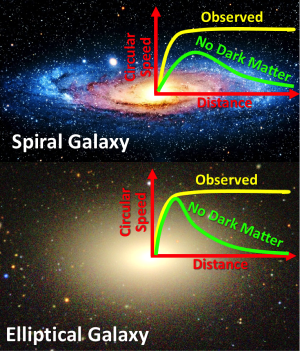
The uncertainty of science: An underground experiment in Italy has failed to detect dark matter, as theorized by scientists.
In a paper published online last night, the XENON100 researchers report three events detected during a 100-day run of the experiment last year that might have been due to dark matter1. However, as they expected to see between 1.2 and 2.4 background events — interactions mostly caused by a radioactive contaminant in the xenon — their result is statistically negative and therefore rules out the existence of many of the more strongly interacting and heavier WIMPs.
NASA, crunched for money due to overages on James Webb Space Telescope, has cancelled its participation in the space gravitational wave mission LISA.
The strange fluctuating polar vortex over Venus’s south pole.
Kepler does asteroseismology on 500 sunlike stars. The data says that the theories of star formation need to be revised.
Newly discovered asteroid follows the Earth as it orbits the Sun, and has been doing it for a quarter million years.
Currently, three other horseshoe companions of the Earth are known to exist but, unlike 2010 SO16, these linger for a few thousand years at most before moving on to different orbits. Also, with an estimated diameter of 200–400 metres, 2010 SO16 is by far the largest of Earth’s horseshoe asteroids. The team has already used the Las Cumbres Observatory’s Faulkes Telescope in an on-going campaign to track the object and refine its orbit further. “It is not that difficult to spot with a medium-sized professional telescope”, says Dr Asher. “It will remain as an evening object in Earth’s skies for many years to come.”
Scientists have found strong evidence that liquid water once existed in the interior of a comet.
The ripples in the rings of Saturn and Jupiter were caused by comet impacts decades ago.

Above, an annotated version of the first orbital image, showing areas of the south pole never before seen.
From the press conference about the first Messenger images from Mercury orbit:
» Read more
Which near-Earth asteroids are ripe for a visit?
When is an asteroid not an asteroid?
The layered structure of Vesta (core, mantle and crust) is the key trait that makes Vesta more like planets such as Earth, Venus and Mars than the other asteroids, McCord said. Like the planets, Vesta had sufficient radioactive material inside when it coalesced, releasing heat that melted rock and enabled lighter layers to float to the outside. Scientists call this process differentiation.
This question immediately demonstrates once again the terrible mess the International Astronautical Union made when it decided several years ago to define what makes a planet, and came up with a definition that simply doesn’t work. For if Vesta should be considered a planet, why not Pluto?
The first image from Mercury orbit.
The brightest supernovae yet found.
Supernova 2008am is 3.7 billion light-years away. At its peak luminosity, it was over 100 billion times brighter than the Sun. It emitted enough energy in one second to satisfy the power needs of the United States for one million times longer than the universe has existed.
Get those telescopes out! A asteroid, a quarter-mile in diameter, is going to pass only 200,000 miles from the Earth on November 8, 2011. Key quote:
Although classified as a potentially hazardous object, 2005 YU55 poses no threat of an Earth collision over at least the next 100 years. However, this will be the closest approach to date by an object this large that we know about in advance and an event of this type.
X-ray stripes in the expanding remnant of a supernova explosion.
Mining and jobs versus radio astronomy.
All systems go! Dawn did a camera and instrument checkout last week, in preparation for its summertime arrival at the asteroid Vesta.
Two stars fusing into one.