Louisiana state senator: Two unnamed aerospace companies are bidding for major land purchase

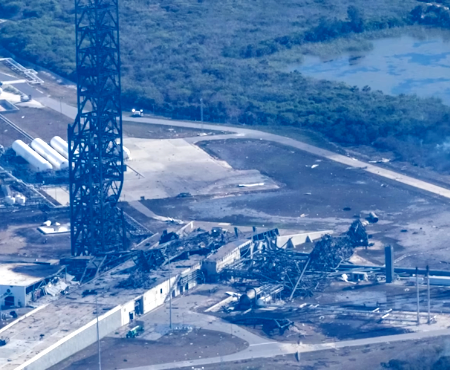
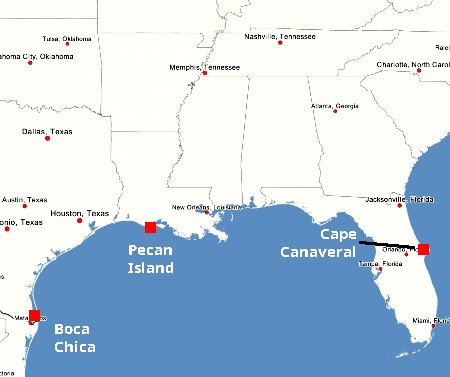
Pecan Island SpaceX facility?

In response to the story earlier this week that SpaceX might be acquiring a 200-plus square mile patch of land near Pecan Island on the southern coast of Louisiana, a state senator has now confirmed that two unnamed aerospace companies have been talking with landowners about a possible purchase.

State Sen. Bob Hensgens, R-Abbeville, said he knows of two companies — he did not reveal if it is Elon Musk-owned SpaceX or Jeff Bezos’ Blue Origin — that have reached out to landowners in coastal Vermilion and Cameron parishes about a possible acquisition. “I know both companies are trying to find property in southwest Louisiana,” Hensgens said. “I know from people in the parishes that the companies have made outreach in the area.”

If so, we might actually have a bidding war for this property. Note however that nothing has yet been confirmed, including the names of the companies involved. The article at the link however provides some background into the 136K acre plot owned by Exxon, and how it might now be for sale. It also reports that a number of legislators (not Hensgens) have signed non-disclosure agreements about the negotiations.

Blue Origin’s 1st unmanned lunar lander completes ground testing

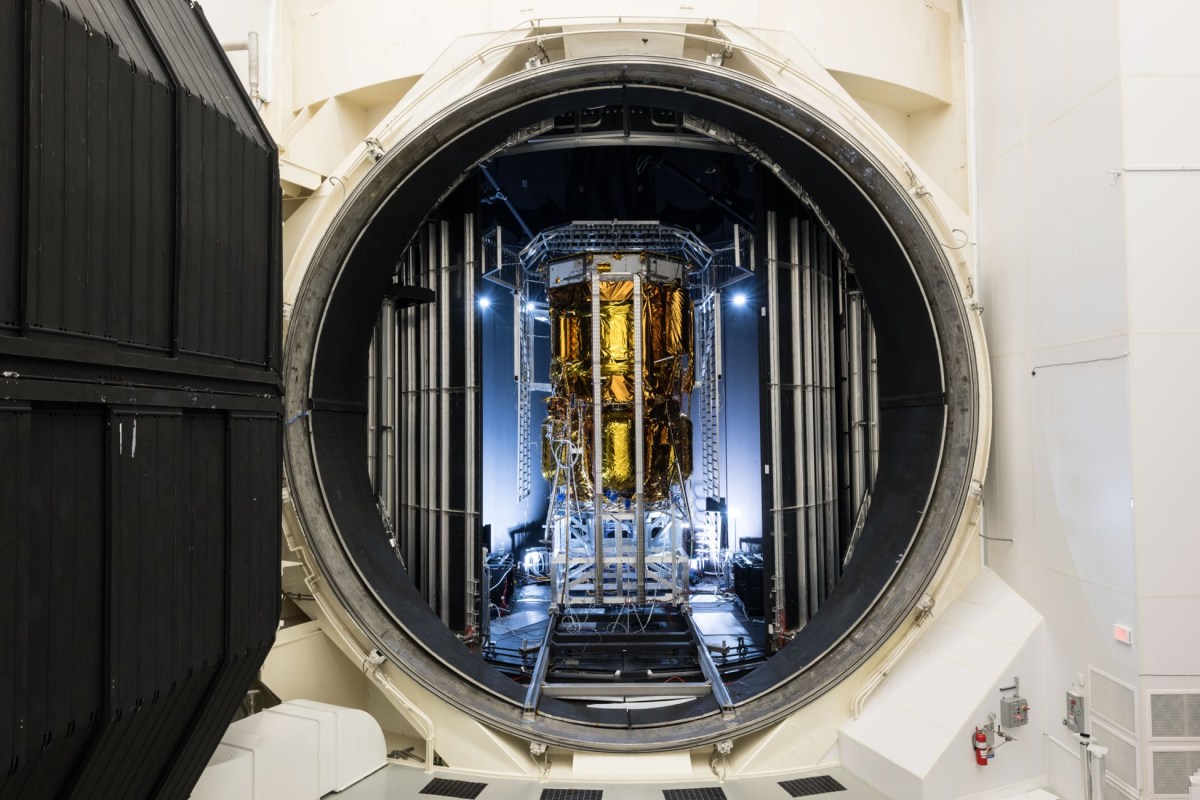
Blue Moon MK-1 in testing chamber
Blue Origin’s unmanned Blue Moon MK-1 lunar lander
in test chamber. Click for original image.

Blue Origin’s 1st unmanned lunar lander, dubbed Blue Moon Mark-1 (MK-1) or “Endurance,” has completed ground testing at the Johnson Space Center in Houston, prior to its planned launch before the end of this year.

The NASA press release however said nothing about the results of that testing.

Testing in NASA Johnson’s Chamber A, one of the world’s largest thermal vacuum test facilities, enabled engineers to model the vacuum of space and the extreme temperature conditions the spacecraft would experience during flight. By recreating these conditions on the ground, teams evaluated system performance and verified structural and thermal integrity prior to launch. NASA and Blue Origin will incorporate lessons learned from MK1’s design, integration, and testing to support NASA’s future Artemis missions that will return American astronauts to the Moon.

Normally when such testing is completed the press release touts their success. The vagueness in the language above is to my instincts somewhat concerning. Did they find something in that testing that needs modification prior to launch? If so, getting this lander off the ground before the end of the year is going to be questionable, as those fixes will have to be incorporated and then tested again.

Any delay such as this would in turn impact the first test in orbit of Blue Origin’s manned Blue Moon MK-2 lunar lander, scheduled for late 2027 during the Artemis-3 manned mission, where NASA wishes to test rendezvous and docking for both Blue Origin’s lander and SpaceX’s Starship.

Some clarity here would be reassuring.

Blue Origin opens (secretly) its first foreign office, in Luxembourg

Blue Origin last week opened its first office in another country, in Luxembourg, though the company made no official announcement and the fact only became public when a Luxembourg official mentioned it at a conference in Colorado.

In an unexpected twist, the opening of the European HQ was eventually announced on 15 April 2026, not by the company but by Luxembourg Economy Minister Lex Delles – and not at the Grand Duchy office, but on his visit to the 41st annual Space Symposium, held in Colorado Springs in the US.

Blue Origin’s office on the capital’s Avenue de la Liberté had, in fact, opened right on schedule, Tim Collins, the company’s Vice- President of Global Operations and Supply Chain, told the Luxembourg Times in interview on Wednesday.

…Asked why Blue Origin declined to confirm its opening schedule until April, despite media follow-up requests, Collins said there was no cover-up: the company merely wanted to have something to show off before officially opening. The process has been roughly on schedule throughout, he stressed.

The office will work with Blue Origin’s European customers as well as manage its foreign supply chain, not just in European but globally.

New Glenn launches for 3rd time, reuses first stage and lands it, but fails to put satellite in correct orbit

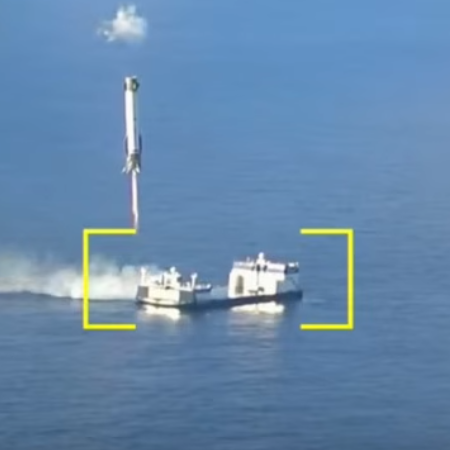
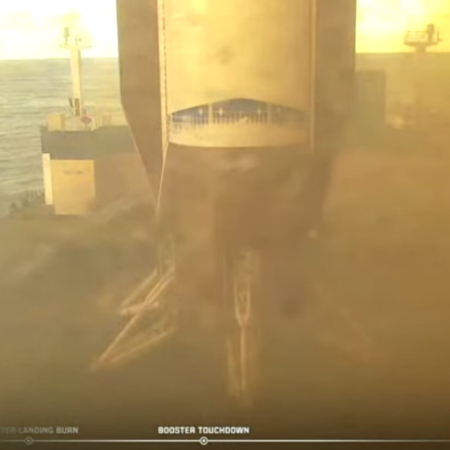
New Glenn's first stage, just prior to landing
New Glenn’s first stage, just prior to landing

Blue Origin in the early morning hours today successfully completed the third launch of its New Glenn rocket, lifting off from Cape Canaveral Space Force station in Florida and placing in orbit AST SpaceMobile’s Bluebird-7 cellphone satellite. For Blue Origin, this launch was the first for a commercial outside customer, a significant step forward for the company, which has sadly earned a reputation for operating too slowly.

Unfortunately, according to an update from Blue Origin the satellite was deployed but in an “off nominal orbit.” An update just posted by AST states the satellite is a loss and is being de-orbited. This satellite would have been the seventh in AST SpaceMobile’s 45-60 satellite constellation designed to act as cell towers in space. AST hopes to have at least half the constellation in orbit by the end of ’26. Several major phone companies, such as AT&T, Verizon, and Vodaphone in Europe, have already signed on.

For Blue Origin, the launch wasn’t a total failure. The rocket’s first stage had flown in November 2025 on the second New Glenn flight, and was refitted (with a new set of engines) to fly again on this flight, the rocket’s third. It not only did its job, getting the upper stage into space, it successfully landed for the second time on New Glenn’s barge in the Atlantic. This fast reuse and successful landing should do a great deal to improve the company’s slow reputation. Unfortunately, the failure to deliver the customer’s satellite will counter that most significantly.

As for Blue Origin, this was its first launch in 2026, and it was also unsuccessful. The leader board for the 2026 launch race remains unchanged:

The leaders in the 2026 launch race:

46 SpaceX
21 China
6 Russia
5 Rocket Lab

For the third straight year SpaceX continues to lead the entire world combined in total launches, 46 to 37.

Space Force selects Blue Origin as possible lessor of “Sudden Flats” site at Vandenberg for future heavy lift rocket launches

Vandenberg Space Force Base

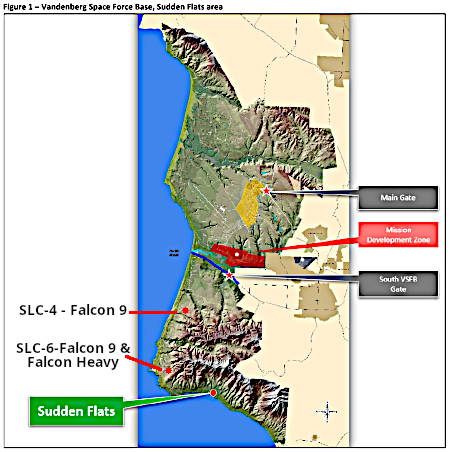
The Space Force has chosen Blue Origin to help develop the plans and possibly lease the “Sudden Flats” site — also dubbed Space Launch Complex-14 (SLC-14) — at Vandenberg Space Force Base in California for the launch of heavy lift commercial rockets.

The location is shown in the map to the right. The Space Force had requested proposals for developing the site in December 2025.

Respondents were evaluated based on technical capability, financial maturity and alignment with U.S. government requirements. The selection of Blue Origin reflects their ability to meet these criteria and contribute to the development of heavy or super-heavy launch capabilities at Vandenberg Space Force Base.

SLC-14 is considered the most viable site at [Vandenberg] for heavy and super-heavy launch operations due to its location.

Several crucial milestones must be achieved before any construction or launch activities can commence, to include safety assessments and an environmental impact analysis. The timeline for increased launch activity will depend on the completion of the safety and environmental analysis and subsequent infrastructure development.

I suspect that Blue Origin won this bid because SpaceX didn’t offer a proposal. It already has three launch sites for Starship/Superheavy, and probably decided it didn’t need this site.

Blue Origin meanwhile in November 2025 announced planned upgrades to its New Glenn rocket that would make it as powerful as NASA’s SLS rocket, but much cheaper because its first stage is reusable. The company is likely hoping to build that rocket, dubbed New Glenn 9×4 (based on the number of engines on the first and second stages respectively), and launch it from this site.

Blue Origin files FCC application for its own 51,600 data center satellite constellation

Blue Origin yesterday filed with the Federal Communications Commission (FCC) an application to launch 51,600 satellites, dubbed Project Sunrise, aimed at creating its own data center constellation in orbit.

The proposed constellation includes up to 51,600 satellites operating in sun-synchronous orbits at altitudes ranging from 500 to 1,800 kilometers. To manage data traffic, the system will primarily use optical links and mesh backhaul networks, supplemented by Ka-band spectrum for telemetry, tracking, and command operations. The spacecraft will utilize multiple antenna variations to maintain efficient coverage across various orbital planes.

You can read the full application here [pdf].

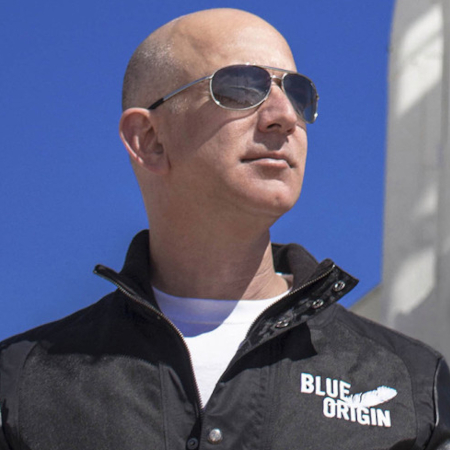
Jeff Bezos
Jeff Bezos, maybe the world’s leader in chutzpah.

Blue Origin also requests several waivers from the FCC’s normal new satellite license requirements, including what I think is a request to waive the FCC’s normal requirement that the applicant launch half its constellation within six years of license approval and complete the constellation three years later. Failure to do so results in financial penalties. The rules were created to prevent companies from getting licenses to grab spectrum from competitors with no intent to launch.

That this Jeff Bezos company is requesting this waiver is what in Yiddish is called chutzpah! Bezos’ other company, Amazon, is clearly going to fail to meet its own license timetable in launching its Leo internet constellation, and was recently lambasted by FCC chairman Brenden Carr for doing so. For Blue Origin to now request this waiver truly is an example of unbelievable gall. I can’t imagine the FCC will do so.

Either way, the competition to put up a lot of satellites continues to grow, with SpaceX and Blue Origin in the best position to make their constellations profitable, because both have their own launch vehicles.

Sierra Space raises $550 million in private investment capital

Due to its aggressive shift in the past year away from NASA-based civilian contracts to defense work, Sierra Space announced yesterday that it has successfully raised another $550 million in private investment capital.

That shift occurred because of its failure to deliver its Dream Chaser vehicle to NASA as planned, as well as the apparently lack of progress in its partnership with Blue Origin on the Orbital Reef space station. From the press release:

Sierra Space Corporation, an industry-leading defense-tech space company delivering solutions for the nation’s critical missions, announced today a $550 million equity investment led by LuminArx Capital Management (“LuminArx Capital”), a global alternative investment manager, with participation from existing investors. The financing values the company at $8 billion post-money.

With this new capital, Sierra Space will be able to further focus on its national security space efforts through ongoing expansion of production capacity and continued development of differentiated solutions for its customers. The investment better positions Sierra Space to secure additional contracts, leverage existing technologies, and pursue growth opportunities beyond its current satellite and spacecraft mission programs.

Artist rendering of Orbital Reef design, as of April 2025
Artist rendering of Orbital Reef design, as of April 2025,
the best we can likely ever expect from this dead project.
Click for original image.

The release also mentioned General Atlantic, Coatue, Moore Strategic Ventures, and Andalusian Private Capital as investors.

Though this money should help fuel its work on Dream Chaser and Orbital Reef, I suspect little will go to those two projects. The company is now clearly targeting military and national security work as its prime source of income. There are also indications that there are some technical issues with Dream Chaser that Sierra has not yet revealed.

Meanwhile, the lack of effort from Blue Origin on Orbital Reef likely convinced Sierra it was better to turn its eyes elsewhere. While Sierra spent considerable effort testing its LIFE inflatable module, Blue Origin did practically nothing, and continues to do little. It is unlikely this partnership will win any funding from NASA when the agency awards new space station contracts, expected sometime in six months.

Amazon buys ten more launches from SpaceX to place its Leo satellites in orbit

Amazon Leo logo

Hidden in Amazon’s submission last week to the FCC, requesting more time to launch its Leo internet constellation, was this tidbit:

Less than two years after the Commission granted its authorization, Amazon Leo announced the largest commercial launch procurements in history to deploy its initial constellation. It has since added to this launch capacity, and today has contracted for 102 launches across four providers: 18 launches on Arianespace’s Ariane 6, 24 launches on Blue Origin’s New Glenn, 38 launches on ULA’s Vulcan Centaur, 9 launches on ULA’s Atlas V, and 13 launches on SpaceX’s Falcon 9. [emphasis mine]

The highlighted phrases indicate the significant changes. In my initial post last week I was focused solely on whether the FCC would grant Amazon the time extension to get its constellation in orbit. At the moment it has only 180 satellites operating in orbit, and to meet its license requirement it must have 1,616 launched by July.

Thus, I didn’t look closely at these launch contract numbers. While the number of launches for Arianespace (18) and ULA (47) appears to match Amazon’s contract numbers from its original 2022 announcement, Blue Origin’s total has dropped by three launches, 27 to 24.

SpaceX in turn has gained another ten launches, on top of its original already completed 2023 three-launch contract. (In 2023, faced with a stockholder lawsuit for ignoring SpaceX’s Falcon 9, the only operational rocket among all of these at the time and by far the cheapest, Amazon’s management quickly signed SpaceX to that three-launch contract.)

The submission last week tells us that sometime recently Amazon signed SpaceX to a new contract for ten more launches. The numbers also suggest that the company took three launches away from Blue Origin’s New Glenn. Apparently, Amazon is not happy with Blue Origin’s launch pace, and signed SpaceX to help get more satellites in orbit. Without question, SpaceX will get these ten additional launches off faster than ULA, Arianespace, or Blue Origin combined. In fact, I bet it gets all ten done before the middle of this year, assuming Amazon can deliver it the satellites.

Blue Origin shuts down New Shepard suborbital tourist flights

Blue Origin yesterday announced it is “pausing” the suborbital tourist flights of its New Shepard spacecraft for no less than two years.

Blue Origin today announced it will pause its New Shepard flights and shift resources to further accelerate development of the company’s human lunar capabilities. The decision reflects Blue Origin’s commitment to the nation’s goal of returning to the Moon and establishing a permanent, sustained lunar presence.

Those “lunar capabilites” not only include its lunar landers, both manned and unmanned, but its New Glenn rocket, which it wants to sell to NASA to use for these missions. Both need more attention. In addition, it could be the company’s CEO, David Limp, wants to allocate more resources to the company’s Orbital Reef space station proposal, which has been sitting dead in the water for the past year-plus. All these projects have been very slow to get out of the starting gate, partly because of the very leisurely culture that Blue Origin’s previous CEO installed, and partly because the company has put out too many projects it is not focusing well on finishing.

There is also likely a third reason: New Shepard was not making a profit. While the company has been flying it quite regularly in recent months, it does not appear it could ever recover its costs. Moreover, I suspect the demand for these short suborbital tourist flights has diminished with advent of orbital tourism and the soon-to-arrive multiple commercial space stations.

Blue Origin to reuse first stage on next New Glenn flight

New Glenn first stage after landing
The New Glenn first stage after landing
in November.

In a sign that Blue Origin’s CEO David Limp is beginning to reshape the previously slow culture of the company, it announced yesterday that its next New Glenn launch, set for no earlier than late Feburary, will reuse the first stage that the company successfully landed on the last New Glenn flight in November 2025.

If this launch takes place as scheduled, it will mean Blue Origin was also able to inspect, refurbish as necessary, and prepare that used first stage in a little over three months. While not as fast as SpaceX is now doing with its Falcon 9 first stages, it is still remarkably fast, considering it is the first booster Blue Origin has recovered. SpaceX didn’t attempt its first reuse of a recovered first stage for a little more than a year after its first successful landing.

Of course, SpaceX was breaking new ground, so more caution and engineering work was needed. Blue Origin has the advantage of almost a decade of experience to draw upon. Nonetheless, Blue Origin’s decision to reuse so quickly is still impressive. It suggests its engineering behind New Glenn is very robust.

Limp still has work to do, however, to get Blue Origin operating with the speed matching SpaceX. This third launch of New Glenn will place an AST SpaceMobile Bluebird satellite into orbit, because the original payload, Blue Origin’s unmanned Blue Moon MK1 lunar lander, wasn’t ready as planned, and is still undergoing final ground check-ups.

Blue Origin’s proposed TeraWave constellation: Is it really competition with SpaceX?

TeraWave logo

Blue Origin announced yesterday that it going to build a major satellite constellation — dubbed TeraWave and comprising more than 5,000 satellites — to provide internet service to the globe while also providing data center capability for those companies that wish to establish space-based cloud computing facilities.

It plans to begin launching satellites in 2027.

As I noted in today’s quick links below, such a story would normally merit a full post, “but considering Blue Origin’s inability to get almost anything off the ground, this proposal doesn’t deserve that much coverage at this point.” I just can’t get excited about any Blue Origin proposal, until they actually start launching it. For almost a decade this company has been making these kind of grand announcements, and has only so far managed to achieve one, its New Glenn rocket. And that has come years late and at a pace that is glacial.

Not surprisingly, the mainstream propaganda press immediately went bonkers over this proposal, immediately declaring most absurdly that TeraWave is already a major challenger to SpaceX’s Starlink constellation. Here are just a few very typical examples:

This adulation by the mainstream press of Bezos is far from unusual. For reasons that baffle me, the propaganda press has consistently considered any project proposal coming from a Jeff Bezos’ company to instantly be God’s gift to humanity. For more than a decade now it has been touting Blue Origin as the company that SpaceX needs to beat, flipping reality on its head. Now it ranks Blue Origin’s TeraWave constellation a major Starlink rival, when it is at least two years from even launching its first satellite.

There is one aspect of this story however that does deserve to be highlighted because it appears no one else is noticing it, which is why I after some thought I decided to write this full post. » Read more

Space Force awards nine launch contracts to SpaceX

In announcing its next round of satellite launch awards, the Space Force’s Space Systems Command (SSC) has awarded all nine launches (valued at $739 millon total) to SpaceX, bypassing both Blue Origin and ULA.

SSC awarded the [three] SDA-2 missions to SpaceX for launches projected to begin in [the fourth quarter of fiscal year ’26], and awarded the [two] SDA-3 missions to SpaceX for launches to begin in [the third quarter of fiscal year ’27]. SSC also awarded the [four] NTO-5 launches to SpaceX projected to occur in [the first quarter of fiscal year ’27 and the second quarter of fiscal year ’28]. The total value of these awards is $739M.

It is surprising that SpaceX got all nine contracts. Even though SpaceX charges less than ULA, and Blue Origin’s New Glenn rocket is not yet certified by the Pentagon for operational launches, it has been military policy in recent years to distribute this work to more than one launch provider so as to guarantee a redundancy. ULA exists today for expressly that reason. In the past it would have certainly gotten at least one of these launches.

As for Blue Origin, the Space Force could have awarded it at least one of the later launches in ’27 and ’28, contingent on getting New Glenn certified.

That the Space Force bypassed both companies entirely speaks volumes. It appears it has decided to simply go with the best product now available, and to heck with redundancy.

Former ULA CEO Tory Bruno now working for Blue Origin

In a tweet on X, Blue Origin today announced that former ULA CEO Tory Bruno is now working for them, acting as president for its “newly formed National Security Group.”

Blue Origin’s CEO, David Limp, quickly chimed in with his own tweet, endorsing the hire.

My guess is that Limp felt Blue Origin needed someone with experience dealing with the military, and Bruno brings that capability, having managed ULA’s military launch contracts for years. It also means Blue Origin is very serious about grabbing a larger market share of those launches once its New Glenn rocket begins launching regularly.

I also wonder if Bruno grew tired of the culture at ULA, which has appeared resistant to building reusable rockets. Bruno sold Vulcan initially with the idea of quickly upgrading it to recover its engines for reuse, but by all signs the company has been very unenthusiastic about the idea. (The idea itself might not be viable, but overall ULA has shown no interest in developing a reusable rocket of any sort.) Bruno might have decided he’d rather work with a company enthused by reusability, especially as this is the future. Once ULA completes its large Amazon Leo launch contract it faces a bleak future, with many newer cheaper reusable rockets coming on line.

It could also be that Bruno was made an offer he couldn’t refuse. Money is always a powerful incentive.

Florida opposition grows against renewing Blue Origin’s wastewater permit

Chicken Little strikes again!
Chicken Little gains support!

It appears the political opposition by local politicians and activists against renewing Blue Origin’s wastewater permit for its Florida rocket facilities is growing, and could result in major delays for the company.

Four weeks ago, Cocoa Beach Realtor Jill Steinhauser launched an online petition opposing Blue Origin’s draft permit to discharge wastewater into the Indian River Lagoon, writing that “decades of nutrient pollution, algae blooms, seagrass collapse, habitat loss, and record manatee deaths have pushed this fragile ecosystem to the edge.” Since then, Space Coast buzz has significantly grown opposing Blue Origin’s permit-renewal bid to operate a 490,000-gallon-per-day industrial wastewater treatment facility at its massive rocket manufacturing plant just south of the Kennedy Space Center Visitor Complex.

And on Thursday, Dec. 18 — the Florida Department of Environmental Protection’s deadline date for public comment — Steinhauser submitted 43,475 verified petition signatures to the state agency.

A five-year permit had first been issued in 2020, and now needs to be renewed. Steinhauser’s campaign has apparently caught the interest of local Democratic Party politicians, who see another great way for them to to block another American success. In early December the Democrats on the Brevard county commission came out against renewing the permit, and followed up with an official vote of opposition shortly thereafter. This was then backed by the Cape Canaveral City Council on December 16th. That same week “eight Democratic state legislators signed a letter opposing Blue Origin’s draft permit.”

It appears that unlike SpaceX’s closed loop system, Blue Origin’s system is open-looped, which carries the possibility that its system can overflow into the Indian River Lagoon. However, officials from Florida’s Department of Environmental Protection (DEP) note that the system has more than ample capacity to avoid such an overflow.

The facility’s flow averages about 40,000 gallons per day, which is less than 10% of the maximum limit. The industrial wastewater covered by the permit does not come into contact with fuel or other hazardous materials, and it is discharged into a 9¼-acre stormwater retention pond. If the pond reaches its designed holding capacity during heavy rainfall, it overflows through a 3-mile-long drainage ditch along Ransom Road before eventually reaching the lagoon.

Though it is likely that this opposition will fail in the end, it could cause a delay in the permit renewal. If that happens, Blue Origin might find its launch plans for 2026 seriously hampered.

Pentagon decides New Glenn must fly four times before its certifies it for military launches

Pentagon officials yesterday announced that before it will certify Blue Origin’s New Glenn rocket for commercial military payloads, it must complete two more successful orbital launches, for a total of four flights.

Blue Origin’s New Glenn rocket will have to complete four successful orbital flights as its pathway to certification under the U.S. Space Force’s National Security Space Launch (NSSL) program, Lt. Gen. Philip Garrant said Dec. 10 at the Spacepower conference. Garrant, who leads the Space Systems Command, said Blue Origin selected the four-flight benchmark and the government agreed. “The government is supporting a four-flight certification for New Glenn,” he told reporters. The rocket has logged two successful missions so far, and Garrant said a third launch is expected “earlier in the new year than later.” If upcoming flights stay on track, he added, “I think they’re going to be in a fantastic place to become our third certified provider and compete for missions.”

If certified, Blue Origin would join SpaceX and United Launch Alliance as the Space Force’s third heavy-lift launch provider.

It is surprising that the military is requiring four successful flights from Blue Origin, but required only two from ULA’s new Vulcan rocket, and certified that even though there were problems on Vulcan’s second flight.

These extra flights should not cause a significant delay, since Blue Origin is expecting to complete a number of launches in 2026 to meet its obligations under its Amazon Leo contract

Blue Origin faces opposition renewing its permit to dump waste water at Florida launch facility

Chicken Little strikes again!

It appears several local politicians as well as the typical anti-everything activists are expressing opposition to Blue Origin’s request to renew its permit to dump waste water at its Florida launch facility.

Some county commissioners have concerns about the proposal because of how much money and effort has gone to cleaning up the Indian River. “That’s really troubling to me especially when we are spending so much money as a community on the half-cent sales tax and the save the Indian River Lagoon tax,” said Brevard County Commissioner Katie Delaney.

Space experts say large-scale companies don’t necessarily follow rules and regulations put on them. “There has been all sorts of industrial waste issues associated with the aerospace industry not just here in Florida but all across the country,” Florida Tech space professor, Don Platt, said.

The water is likely that used during launches to dampen the shock produced by the rocket’s engines, and like SpaceX’s systems, is almost certainly potable and harmless. This is also a permit that Blue Origin obtained five years ago and has used without harm during all its launchpad tests and launches.

None of this whining really matters, as it appears the county commission has no authority over the matter. The permit was issued by the state’s environmental department which will almost certainly approve the renewal. It is just unfortunate that these whiners almost always get positive coverage from our propaganda press. In this case the local Fox affiliate that reported the story clearly made no effort to research anything. It just simply spouted back the grumbles of these politicians and activists.

Blue Origin’s Blue Ring orbital tug gets a customer

Blue Origin today announced that the orbital situational awareness company Optimum Technologies (OpTech) has purchased payload space on the first flight of its Blue Ring orbital tug.

Blue Ring’s first mission is expected to launch in 2026 with initial injection into Geostationary Transfer Orbit (GTO) and additional services performed in Geostationary Orbit (GEO). The Blue Ring vehicle will demonstrate its ability to simultaneously support the GEO tracking and custody mission as well as space object characterization, leveraging dynamic maneuverability to support high-resolution characterization.

OpTech’s Caracal sensor is designed to provide actionable insights on resident space objects and orbital activity and includes onboard image storage, object detection algorithms, and passive thermal control. The payload is designed to operate flexibly across dynamic orbits over a year-long mission profile. Caracal will fly with Scout Space’s Owl sensor, along with internally developed payloads, all demonstrating Blue Ring as the ideal platform for supporting future GEO space domain awareness missions.

This instrument is designed to inspect what else is in orbit. It could be that the mission will have Blue Ring fly close to other satellites, both foreign and domestic, so that Caracal can gather imagery and data. Such capabilities are things both the Chinese and Russians have tested repeatedly and the Pentagon needs as well.

This announcement once again indicates that under CEO David Limp, Blue Origin is finally beginning to actually do things.

Blue Origin announces plans to upgrade New Glenn to match SLS

New Glenn compared to the Saturn-5
Graphic issued by Blue Origin’s CEO comparing
New Glenn to the Saturn-5. Click for source.

In an update posted today, Blue Origin announced that it is planning to begin upgrades to its New Glenn orbital rocket as soon as its very next launch early in 2026, with those upgrades eventually raising the rocket’s capabilities to that of NASA’s overpriced, cumbersome, and poorly designed SLS rocket.

One of the primary enhancements includes higher-performing engines on both stages. Total thrust for the seven BE-4 booster engines is increasing from 3.9 million lbf (17,219 kN) to 4.5 million lbf (19,928 kN). BE-4 has already demonstrated 625,000 lbf on the test stand at current propellant conditions and will achieve 640,000 lbf later this year, with propellant subcooling increasing the current thrust capability from the existing 550,000 lbf.

The total thrust of the two BE-3Us powering New Glenn’s upper stage is increasing from the original design of 320,000 lbf (1,423 kN) to 400,000 lbf (1,779 kN) thrust over the next few missions. BE-3U has already demonstrated 211,658 lbf on the test stand.

These numbers are a little more than half that put out by the Saturn-5 in the 1960s. New Glenn however has a reusable first stage, so it will cost far less to launch, and will be able to do so frequently. These changes will also make it comparable to SpaceX’s Falcon Heavy.

These engine upgrades however are only a start. Blue Origin also plans to offer a second more powerful version of New Glenn by adding two BE-4 engines to the first stage and two BE-3U engines to the upper stage.
» Read more

Blue Origin targeting from 12 to 24 New Glenn launches in 2026

New Glenn prior to its first launch in January 2025
New Glenn on the launchpad prior to its
first launch in January 2025

Following the second successful launch last week of its New Glenn rocket, including a successful recovery of its first stage, Blue Origin’s CEO David Limp says the company’s goal for 2026 will be to attempt between 12 and 24 launches.

Limp said success on New Glenn’s second flight would set the company up for a significant increase in cadence. The company is building enough hardware for “well above” a dozen flights in 2026, with the upper-end limit of 24 launches. The pacing item is second stages. Right now Blue Origin can build one per month, but the production rate is increasing.

A pace of one launch a month would be unprecedented for Blue Origin in numerous ways. Since 2017 the company has built a poor reputation for slow and tentative operations. It took years for it to finally begin building BE-4 engines at a rate that could serve both it and its customer ULA. It took years to get New Glenn off the ground, a half decade later than initially announced. Moving from a lazy tortoise to a enthusiastic hare so quickly would thus seem very unlikely.

Blue Origin however has a major 27-launch contract with Amazon to launch its Amazon LEO constellation (formerly known as “Kuiper”). And Amazon desperately needs those launches to happen soon, as it only has 154 satellites in orbit and needs to get about another 1400 launched by July 2026 to meet its FCC license.

Even so, Limp noted that the next New Glenn launch will be to send its Blue Moon Mark-1 unmanned lunar lander to the Moon, and the best schedule he could offer was a launch sometime in the first quarter of ’26. If so, his prediction for the total launches in 2026 seems overly optimistic, at a minimum.

Bezos releases new video of the New Glenn first stage landing yesterday

Jeff Bezos, founder of Blue Origin, today released on X new footage showing from a distance the full landing sequence of New Glenn’s first stage on a barge in the Atlantic.

I have embedded it below. It is quite spectacular, and suggests the Blue Origin team can match SpaceX’s team in controlling a landing spacecraft. The stage comes down several hundred feet to the side of the barge, hovers, and then slides sideways to touch down exactly on target. As Bezos notes:

We nominally target a few hundred feet away from Jacklyn to avoid a severe impact if engines fail to start or start slowly. We’ll incrementally reduce that conservatism over time.

This is not unlike the landing maneuver performed by Starship prior to capture by the tower chopsticks. If Blue Origin can do it also, it means it has capabilities it has been hiding for the past decade due to its slow and timid testing/launching pace.
» Read more

New Glenn successfully launches Escapade orbiters AND lands 1st stage

New Glenn first stage after landing

Blue Origin today successfully placed two the NASA Escapade Mars orbiters into space, its New Glenn rocket launching for the second time from Cape Canaveral in Florida.

More significantly, the company successfully landed the rocket’s first stage on a barge in the Atlantic. New Glenn is now the second rocket company capable of vertically landing and recovering an orbital first stage, after SpaceX.

Several take-aways: First, this first stage recovery took place almost exactly a decade after Blue Origin successfully landed vertically its suborbital New Shepard rocket, and almost a decade after SpaceX successfully did it with its Falcon 9 orbital rocket. It is a shame that it took Blue Origin so long to get to this point. It is also magnificent that it has finally made it happen. The United States now has two reusable rockets, with two more (by Rocket Lab and Stoke Space) expected to launch by next year.

Blue Origin is not likely to reuse this particular first stage, but its recovery will make future reuses likely and soon.

Second, Blue Origin made one interesting broadcast choice that I like. It listed the rocket’s altitude and speed in feet/miles and miles per hour, not kilometers. The engineers might have been using metric, but the audience is American, so using the traditional Imperial numbers is smart. Good for Blue Origin.

Third, Blue Origin’s announcers were once again annoying, distracting, ignorant, and childishly emotional. And they simply would not shut up, preventing the audience from hearing critical reports from mission control. They also seemed oblivious to reality, bragging repeatedly about the ten year gap between the first New Shepard landing and this landing, as if this was somehow a good thing. It was embarrassing to listen to.

The company would do a far better job selling itself by hiring announcers who are more serious and professional. Sadly, I have noted this problem from Blue Origin’s announcers now for almost a decade, with little change.

Finally, this success is a very big deal, both for Blue Origin and the United States. The company is now primed to begin regular launches next year, including the 27 launches Amazon has purchased for its Kuiper constellation.

For the U.S., this finally gives us a solid competitor to SpaceX. And that competition is finally going to force launch prices to drop significantly. SpaceX dropped prices, but not as far as it could because there was no pressure to do so from anyone else. Now there is that pressure.

As this was only the second launch by Blue Origin in 2025, the leader board for the 2025 launch race remains unchanged:

147 SpaceX
70 China
14 Rocket Lab
13 Russia

SpaceX still leads the rest of the world in successful launches, 147 to 116. Note that ULA hopes to launch its Atlas-5 rocket tonight.

Lawsuit against Amazon for favoring Blue Origin over SpaceX to launch Kuiper satellites gets new hearing

The lawsuit originally filed in 2023 against Amazon because it favored other less reliable rockets, including Blue Origin’s forever-delayed New Glenn, instead of using SpaceX to launch its Kuiper constellation of satellites, got a new hearing yesterday after the suit was dismissed in February.

The suit is now being pursued a pension fund that apparently invested in the Kuiper constellation, and claims Jeff Bezos used his influence to convince Amazon to avoid using SpaceX when it signed launch contracts with ULA, Arianespace, and Blue Origin in 2022, even though none of those rockets were even operational at the time. Even now they appear unable to meet Amazon’s launch requirements.

Amazon has until 2026 to send up the first 1,600 satellites and three more years to launch the next batch. That broader backdrop barely came up during the appeal proceedings, which zoomed in on allegations that the board made no effort to oversee self-dealing by Bezos as he directed billions from Amazon to his own rocket company, Blue Origin, despite SpaceX’s superior capabilities.

Vivek Upadhya, counsel for the pension fund, stressed the “billions of dollars flowing directly from Amazon to a company owned and controlled by Amazon’s CEO and chairman.” The sheer scale of the conflict of interest made the Blue Origin contract “a truly exceptional transaction” requiring attentive board supervision, regardless of the actual role Bezos played in negotiations, according to Upadhya. “Delaware law doesn’t require that directors harbor some innate suspicion” before taking steps to manage conflicts, but the board “failed to lift a finger,” he said.

Following the filing of the 2023 lawsuit, Amazon signed SpaceX to a three-launch contract, which SpaceX has now completed. Meanwhile, only ULA has managed any of the other launches, three also. As for Arianespace and Blue Origin, it is not clear when either will begin doing any Kuiper launches.

It does appear Amazon’s board played favorites here, and did so in a way that was harmful to the company’s bottom line. Whether this can be proved to the satisfaction of the court however is very uncertain.

Blue Origin officials provide update on their lunar lander program

2023 artist rendering of the manned Blue Moon lander

Link here. According to the article, the company is presently stacking its first unmanned version of its Blue Moon lander, dubbed Blue Moon Mark 1, scheduled for launch now next year.

The 8.1-meter-tall cargo lander will help with ongoing development of their crewed lander, named Blue Moon Mk. 2, which is 15.3 meters tall. Both are powered by Blue Origin’s BE-7 engines, which are being tested on stands in Alabama, Texas and Washington.

…“A big milestone for you to look out for online is that Mk. 1 is three modules that are being stacked as we speak: aft, forward and mid. And once it is stacked in its finished configuration, we will be barging it over to NASA Johnson Space Center Chamber A to do a full up thermal vac campaign,” said [Jacqueline Cortese, Blue Origin’s Senior Director of Civil Space]. “So when you see that on its boat, you will know that big things are happening.”

Both versions of the lander are powered by a combination of liquid hydrogen and liquid oxygen. A key difference though is that Mk.1 can be launched to the Moon with a single launch of Blue Origin’s New Glenn rocket while Mk. 2 requires orbital refueling. [emphasis mine]

The highlighted sentence above is important because it illustrates the absurdity of the comments last week by interim NASA administrator Sean Duffy, claiming SpaceX’s program to make Starship a manned lunar lander is “behind”, forcing him to open up the competition to Blue Origin, who might get it done sooner.

One of the big issues used against SpaceX is that Starship will need to be refueled once in orbit to work as a lunar lander, and that technology needs to be developed and tested. The problem with this criticism is that, as noted above, Blue Origin’s manned lunar lander also needs to be refueled.
» Read more

Fake blather from NASA administrator Sean Duffy to hide more Artemis delays

Sean Duffy
Sean Duffy: “Look at the shiny object!”

During a press interview yesterday, interim NASA administrator Sean Duffy revealed almost as an aside that NASA’s mid-2027 launch for the first Artemis manned lunar landing is no longer realistic, and that NASA is now targeting a 2028 launch date instead.

Duffy managed to hide this revelation by also announcing that he is re-opening the bidding for the manned lunar lander NASA will use on that third Artemis mission. To quote Duffy:

Now, SpaceX had the contract for Artemis III. By the way, I love SpaceX and it’s an amazing company, but the problem is, they are behind. They pushed their timelines out and we are in a race against China. The president and I want to get to the moon in this president’s term. So, I’m going to open up the contract and I’m going let other space companies compete with SpaceX, like Blue Origin. Whatever one gets us there first to the moon, we are going to take. If SpaceX is behind and Blue Origin can do it before them, good on Blue Origin.

By the way we might have two companies that can get us back to the Moon in 2028.

The propaganda press of course is going wild about this SpaceX announcement, making believe it signifies something of importance. “SpaceX is behind! Elon Musk can’t do it! Duffy is giving Jeff Bezos the job!” And as I think Duffy intended, everyone is ignoring the fact that NASA has now admitted it won’t meet that 2027 launch target.

The irony is that Duffy’s decision to re-open bidding on that manned mission is utterly meaningless. » Read more

Space Force awards SpaceX and ULA seven launches worth more than a billion dollars

The U.S. Space Force (USSF) yesterday awarded multi-launch contracts to both SpaceX and ULA for seven launches beginning in 2027 worth more than a billion dollars.

SpaceX received $714 million for five launches and ULA was awarded $428 million for two launches, USSF said in an Oct. 3 news release.

The awards are part of the Space Force’s National Security Space Launch Program, which it uses to launch services for military space missions. In April, it chose SpaceX, ULA, and Blue Origin to launch a total of 54 missions scheduled between fiscal 2027 and 2032, with SpaceX responsible for just over half, with 28 launches. Individual missions will be awarded in batches through fiscal 2029.

Though Blue Origin was included in this program and its New Glenn rocket has finally launched once successfully, its not yet been certified to launch military satellites, and to get certified the company is going to have to launch at least one more time. That launch is expected before this month is out. Moreover, it will soon have to compete against more companies, and the Pentagon will be adding Rocket Lab and Stoke Space to its approved list as soon as both successfully launch their respective Neutron and Nova rockets by next year.

NASA cancels Sierra Space’s contract for Dream Chaser cargo missions to ISS

Tenacity grounded in a warehouse
Tenacity grounded in a warehouse, with the
Shooting Star small cargo capsule attached to
its aft port.

NASA today announced it has modified its fixed-price cargo contract with Sierra Space, canceling the planned seven cargo missions as well as a demo docking mission, replacing this with one test flight that will simply go into orbit and then return to Earth.

After a thorough evaluation, NASA and Sierra Space have mutually agreed to modify the contract as the company determined Dream Chaser development is best served by a free flight demonstration, targeted in late 2026. Sierra Space will continue providing insight to NASA into the development of Dream Chaser, including through the flight demonstration. NASA will provide minimal support through the remainder of the development and the flight demonstration. As part of the modification, NASA is no longer obligated for a specific number of resupply missions, however, the agency may order Dream Chaser resupply flights to the space station from Sierra Space following a successful free flight as part of its current contract.

The first launch of Tenacity, the only Dream Chaser so far constructed, has been repeatedly delayed for the past two years, with no explanation from either the company or NASA. Those delays started in 2023 as engineers began the final ground testing before launch, so though we do not know what the issue is it is likely that testing found something fundamentally wrong with the spacecraft that Sierra could not afford to fix.

According to Sierra’s own press release, the company will target a late 2026 launch for that free flyer mission. The company still hopes that mission will make further flights possible, either purchased by NASA or by others wishing to use Tenacity for in-orbit manufacturing, something it first proposed last year.

In the past two years, Sierra has shifted its focus away from commercial manned space and more towards winning military defense contracts. Part of that decision might have come from the problems with Dream Chaser. The decision might have also been fueled by the company’s generally unsatisfactory experience working with Blue Origin on their proposed Orbital Reef space station. While Sierra committed cash to develop and test its LIFE inflatable module, including a full scale prototype, Blue Origin appeared to do nothing at all. As early as September 2023 there were rumors the partnership was falling apart.

Blue Origin wins contract to bring NASA’s Viper rover to the Moon

NASA yesterday awarded Blue Origin a contract to use its Blue Moon lunar lander to transport the agency’s troubled Viper rover to the Moon’s south pole region.

The CLPS task order has a total potential value of $190 million. This is the second CLPS lunar delivery awarded to Blue Origin. Their first delivery – using their Blue Moon Mark 1 (MK1) robotic lander – is targeted for launch later this year to deliver NASA’s Stereo Cameras for Lunar-Plume Surface Studies and Laser Retroreflective Array payloads to the Moon’s South Pole region.

With this new award, Blue Origin will deliver VIPER to the lunar surface in late 2027, using a second Blue Moon MK1 lander, which is in production. NASA previously canceled the VIPER project and has since explored alternative approaches to achieve the agency’s goals of mapping potential off-planet resources, like water.

The contract does not guarantee this mission. NASA has several options along the way to shut things down, depending on the milestones Blue Origin achieves. The first of course is the success of that first lunar lander.

The announcement does not make clear how NASA is going to pay for the work needed to finish Viper. VIPER was originally budgeted at $250 million. When cancelled in 2024 its budget had ballooned to over $600 million, and that wasn’t enough to complete the rover for launch. Moreover, after getting eleven proposals from the private sector companies to finish and launch Viper, in May 2025 NASA canceled that solicitation.

It is very likely Blue Origin is picking up the tab, but if so the press release does not say so.

Speculation on future New Glenn launch schedule

According to anonymous sources at Blue Origin, the company has now delayed the second launch of its New Glenn rocket to September, ten months after its first launch in January 2025, and hopes to quickly follow with three more launches by the middle of 2026.

The September launch will launch NASA’s two smallsat Escapade Mars orbiters.

After Escapade, Blue Origin has several missions tentatively plotted out. However, sources cautioned that the manifest could be moved around due to the readiness of subsequent New Glenn vehicles and their payloads. Based upon information received by Ars, the launch manifest could look something like this:

  • New Glenn 2: ESCAPADE (fall 2025)
  • New Glenn 3: Firefly’s Elytra orbital transfer vehicle (end of 2025, early 2026)
  • New Glenn 4: Blue Moon MK1 lander (first half of 2026)
  • New Glenn 5: First batch of 49 Amazon Project Kuiper satellites (mid-2026)

Whether this schedule will occur as speculated is unknown. Blue Origin’s long term track record — slow and timid — suggests it is very unlikely. And even if it does fly as planned, it suggests strongly that Amazon is not going to meet its FCC license requirement to have 1,600 Kuiper satellites in orbit by July 2026. So far Amazon has only placed 54 operational Kuiper satellites into orbit, on two Atlas-5 launches. It has contracts to launch these satellites 46 times on ULA rockets (8 on Atlas-5 and 36 on Vulcan), 27 times on Blue Origin’s New Glenn, 18 times on ArianeGroup’s Ariane-6, and 3 times on SpaceX’s Falcon-9.

Except for the Falcon 9, none of the other rockets have begun flying with any frequency. Vulcan has only launched twice, New Glenn once, and Ariane-6 twice. All three have been extremely slow to ramp up operations, with months passing between each launch. To meet Amazon’s FCC license requirements, they will have to achieve between 35 to 60 launches in the next twelve months, a pace of three to six launches per month. At this point none of these companies appear capable of even coming close to doing this.

Nor does Amazon have the option to switch these launches to the Falcon 9. SpaceX would certainly accept the business, but the manifest for the Falcon 9 is presently very full. It is doubtful it could do more than double or triple its commitment to Amazon.

Blue Origin completes another New Shepard suborbital flight

My heart be still. Blue Origin yesterday successfully flew another New Shepard suborbital tourist flight, sending six passengers on a ten minute flight to the edge of space.

This was the company’s thirteenth suborbital flight, and the third in the past three months. Though it is gratifying that operations of New Shepard are becoming somewhat routine, it would be much more exciting if the company to do the same for its New Glenn orbital rocket. The suborbital flights are essentially a dead end. The real money and future is found in orbital operations, something Blue Origin has still not yet mastered.

Blue Origin again delays 2nd launch of New Glenn

According to a statement from David Limp, the CEO of Blue Origin, on June 9, 2025, the company has once again delayed the second launch of its new New Glenn rocket, pushing back from May to August.

New Glenn’s second mission will take place NET August 15th. Following in the footsteps of our first booster, we’ve chosen the name “Never Tell Me The Odds” for Tail 2. One of our key mission objectives will be to land and recover the booster.

The rocket’s first launch had occurred in January, and successfully placed its test payload in orbit as intended, though it was unable to land the first stage on its barge in the Atlantic. Blue Origin later said it was targeting May for the second launch, carrying NASA’s two Escapade smallsat Mars orbiters. With this new delay it is unclear what the payload would be.

According to this report, anonymous sources claim an August launch is unlikely and will likely slip to September. The company has a large backlog of launch contracts, including 27 for Amazon’s Kuiper constellation as well as a number for the military. The hope had been that it could ramp up its launch cadence in 2025 to meet those contracts.

Instead, Amazon has begun shifting some of its launch work to SpaceX’s Falcon 9. Its FCC license requires it to get 1,600 satellites in orbit by July 2026, and at present it only has sixteen in space. It can no longer wait for Blue Origin to dilly-dally along.

Considering the actual success of the first launch, it seems very puzzling for there to be a nine-month delay until the second launch, even with the failure to land the first stage. Was there some technical problems with the rocket that have not been revealed? It seems foolish to delay further launches in order to fix the landing of the first stage, since that has no impact on getting the customer’s payload into orbit. Wouldn’t it be better to fly again, test the landing again during flight, than sit on the ground looking at computer simulations?

It is also possible the company is still having production problems producing enough BE-4 engines for both ULA’s Vulcan rocket and its own New Glenn. Vulcan uses two per launch, and according to ULA Blue Origin has delivered enough to begin launching Vulcan as many as fifteen times before the end of this year. New Glenn uses seven BE-4s on its first stage. Could it be that Blue Origin wasn’t able to produce enough of these engines for this year’s New Glenn launches?

All this is speculation. What we do know for certain is that both of these companies continue to disappoint. The result is that for larger payloads the United States remains reliant entirely on SpaceX, a situation that is not healthy for the commercial and government satellite industry.

1 2 3 13