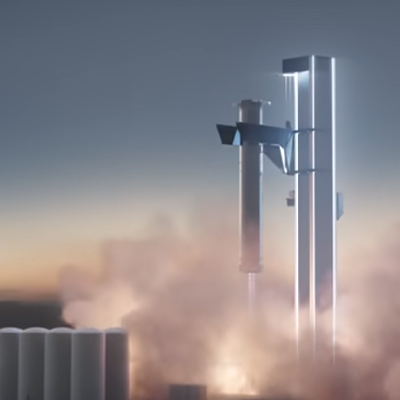
Local voters approve establishing the town of Starbase at Boca Chica

By a vote of 212 to 6 (out of about 300 eligible voters), the residents at the previously unincorporated coastal land strip at Boca Chica have approved a proposal to create the town of Starbase, with a mayor and two city commissioners.

The three candidates were all running unopposed for those positions. All three either work at SpaceX now, have worked there in the past, or have relatives employed by the company.

The mayor will be Robert โ€œBobbyโ€ Peden, 36. He has worked for SpaceX for the past dozen years, first at its MacGregor engine test site and now at Starbase as a vice president of test and launch. The two council members are Jenna Petrzelka and Jordan Buss. Petrzelka, 39, worked for SpaceX from 2012 to 2024 as an engineer. Her husband, Joe Petrzelka, is presently a SpaceX vice president. Buss, 40, started working for SpaceX in 2023 as a senior director of environmental health and safety.

The vote shifts much of the civil management away from the larger local county to the residence who live in the town itself. It is quite evident they will establish this city with the needs of SpaceX in mind. It also appears that the residents are fully in support of this.

As for launches here, I will still refer to it as Boca Chica. The town might be named Starbase, but the actual location is still Boca Chica.

6 comments

Trump bypasses Boeing to get an newly refurbished 747 Air Force One

Apparently disgusted with Boeing’s inability to get two Boeing 747s refurbished on budget and before he leaves office in 2028, the Trump administration has now enlisted another aerospace company, L3Harris, to refurbish a 747 formerly used by the Qatar government.

The president hopes to use the refurbished plane by the fall, sources told the outlet, and is regularly checking on its progress . This aircraft will be an interim solution until the Boeing jets are delivered.

The current presidential jets โ€” which have been in service since the George H.W. Bush administration โ€” are nearing their end of life.

Boeing’s conduct here has been truly disgraceful. It got the $3.9 billion fixed-price contract to refurbish two of its own 747s in 2018. Yet, despite having two working 747s — a plane it designed and built — it can’t refurbish them in less than a decade, while going over budget by about $2.4 billion, money it has to lay out because of the fixed-price nature of the contract.

Hat tip to reader James Street.

10 comments

Space Force awards twelve companies satellite development contracts worth $237 million

Capitalism in space: The Space Force yesterday announced that it has awarded twelve different aerospace companies contracts worth a total of $237 million for developing a variety of smallsat technologies to be used in future military satellite constellations.

The list of selected companies, announced May 1, includes defense and aerospace firms Lockheed Martin Corp. and General Atomics, as well as specialized space firms such as Blue Canyon Technologies, Loft Orbital Federal, Spire Global, Terran Orbital, and York Space Systems. Also named were Axient, Lynk Global, Orbit Systems, Turion Space, and the Utah State University-affiliated Space Dynamics Lab.

…Under the contract, vendors will build and integrate small satellite buses capable of carrying a variety of military experiments and sensors. These buses, often the size of a microwave or small refrigerator, serve as standardized platforms that can be customized to carry diverse payloads.

These contracts are part of the Trump administrations push to get the military to rely on the private sector for its needs. Though the private sector would general build things in the past for the Pentagon, often the design, construction, and even ownership was held entirely by the government. The companies didn’t have anything they could sell elsewhere. Now the design work is being left entirely to the companies, so that what they develop they will own, and will have the ability to market it to others.

1 comment

Ursa Major wins contract for hypersonic test flight of its Draper rocket engine

The rocket engine startup Ursa Major has now won a $28.5 million contract from the Air Force Research Laboratory to do a hypersonic test flight using its Draper rocket engine.

The contract, announced May 1, covers both the flight demonstration and integration of the engine into a test vehicle, with work scheduled through early 2027. The project aims to advance U.S. capabilities in hypersonic weapons, a category of defense systems that has become a top Pentagon priority amid competition with China and Russia.

The Draper engine is designed to produce 4,000 pounds of thrust and was developed by Ursa Major with U.S. Air Force funding. Its key differentiator is its use of storable, non-cryogenic propellants โ€” specifically a kerosene and hydrogen peroxide combination โ€” that remain liquid at ambient temperatures. This contrasts with traditional rocket engines that rely on liquid oxygen, which must be kept at ultra-low temperatures and handled with complex cooling infrastructure.

It certainly does appear that the Pentagon is ramping up its hypersonic research with a slew of contracts to many different new commercial space startups. In addition to this deal, Rocket Lab, Varda, and Stratolaunch have won contracts for similar hypersonic testing, with Rocket Lab winning the most. No wonder a new company like Radian (see previous post) is switching its focus toward this research.

0 comments

Rocket startup Radian now also building commercial reentry capsule

The rocket startup Radian Aerospace, which is attempting to build an orbital spaceplane that takes off and lands from a runway, has announced that it is also building a commercial reentry capsule that can be used for hypersonic testing.

The Seattle based company announced April 29 its intent to develop the Radian Reusable Reentry Vehicle (R3V), a spacecraft for hypersonics testing or returning payloads from space that also gives Radian flight experience in key technologies for its future Radian One spaceplane.

Livingston Holder, chief technology officer of Radian, said in an interview that the company was looking was ways to test Dur-E-Therm, the thermal protection system it is creating for Radian One. The company had recently completed tests of the system in a lab at NASAโ€™s Glenn Research Center. โ€œBut, testing in a non-flight environment only gets you so far, so we were crafting how to test it in a more relevant environment.โ€

It appears the company has recognized that its spaceplane will take years to develop, and more years before it can bring in any revenue. An orbital capsule however can be developed much more quickly, and it also appears there are a lot of commercial and military customers for it.

1 comment

Startup that builds maneuverable surveillance satellites raises $260 million in private investment capital

The startup True Anomaly has raised $260 million in private investment capital in order to fully develop its Jackal maneuverable satellite, designed to travel and inspect other orbiting satellites for the military.

The Colorado-based company announced April 30 that it closed a Series C round that combines equity and debt financing. Venture firm Accel led the round, with participation from Meritech Capital and several existing backers including Eclipse, Riot Ventures, Menlo Ventures, and Narya. Stifel Bank is providing the debt portion of the raise.

Only founded in 2022, True Anomaly has already flown two test missions of Jackel. With these new funds, it plans four more flights in the next year and a half.

There are already a number of other companies building maneuverable satellites. Most however are focused on providing tug services for commercial satellites or for finding and removing space junk. True Anomaly is instead targeting the military as its customer, which appears a smart move because no one else has, up to now.

0 comments

Firefly launch fails

In its first launch attempt in 2025, Firefly’s Alpha rocket had a problem shortly after the first stage separated from the upper stage and the upper stage’s engines began firing. The upper stage began swivel somewhat though it appeared to stablize after a few seconds.

Subsequent reports confirmed that the stage failed to reach orbit.

The launch of the FLTA0006 mission appeared to go as planned until stage separation about 2 minutes and 35 seconds after liftoff. A cloud suddenly formed between the two stages, and video showed what appeared to be debris falling away as the upper stage continued its ascent.

A camera on the upper stage also showed debris falling away from it seconds after separation. The nozzle for the single Lightning engine in the upper stage appeared to be seriously damaged, if not missing entirely.

In a statement four and a half hours after launch, Firefly confirmed that the upper stage and its payload failed to reach orbit because of the stage separation issue. โ€œThe rocket then experienced a mishap between stage separation and second stage ignition that led to the loss of the Lightning engine nozzle extension, substantially reducing the engineโ€™s thrust,โ€ the company stated.

Alpha has now launched a total of six times, but only two of those launches were completely successful. Two of the other launches got their payloads into orbit, but not at the proper positions. In all the failures but one, the problems were with the upper stage. Today’s failure is another example of this.

7 comments

Weather scrubs first test of experimental vertical take-off/landing rocket built by Middle Eastern startup

Middle East, showing Oman's proposed spaceport
The Middle East, showing the location of
Oman’s proposed spaceport at Duqm.

The first test flight of Horus-4, an experimental vertical take-off/landing rocket built by the Middle Eastern startup Advanced Rocket Technologies, was scrubbed yesterday supposedly due to weather.

The launch had been part of the first public event at Oman’s proposed Etlaq spaceport near the coastal city of Duqm.

Omanโ€™s Etlaq spaceport opened its doors to the public for the first time on Monday, hosting a three-day fan zone experience designed to spark interest in space exploration among the countryโ€™s youth.

The event had originally been scheduled to culminate with the launch of the Horus-4 experimental rocket, developed by London company Advanced Rocket Technologies (ART). But unsuitable weather forced the test flight to be delayed, with a new launch date to be announced soon.

Pupils from across Duqm โ€“ a coastal town about 550km from Oman’s capital city of Muscat โ€“ took part in a variety of educational activities. The fan zone, called Etlaq FX, included four tents that were placed about 3km from the spaceportโ€™s operations team and launch pad, with the site overlooking the Arabian Sea.

At the moment the Duqm spaceport is mostly a launch site for small suborbital rockets. Oman however is pushing hard to sell it to rocket companies, with launches of such small rockets by a variety of startups and Middle Eastern nations scheduled throughout the rest of this year.

Of those launches the most ambitious is that of Advanced Rocket Technologies Horus-4. If it flies and lands successfully, it will be a major technological achievement for the company, and the Arab part of the Middle East.

2 comments

Since last night four more launches globally

UPDATE: The Firefly launch was a failure. There was a problem during stage separation. See post above.

The worldwide pace of launches continues now relentlessly. Since my last launch post yesterday afternoon, there were four more launches across the global.

First, China launched a “group” of satellites for an “internet constellation,” its Long March 5B rocket lifting off from its coastal Wencheng spaceport. The rocket used a new upper stage which allowed its core stage to shut down sooner and thus not enter orbit to later crash uncontrolled (as earlier Long March 5B cores would do). Instead it fell back into the ocean after launch.

Next, SpaceX sent another 23 Starlink satellites into orbit, its Falcon 9 rocket lifting off from the Kennedy Space Center in Florida. The first stage, flying for the very first time, landed successfully on a drone ship in the Atlantic.

Third, Arianespace, the commercial division of the European Space Agency (ESA), used the Italian rocket company Avio’s Vega-C rocket to place an ESA Earth observation radar satellite dubbed Biomass into orbit, lifting off from French Guiana. This was Arianespace’s second launch in 2025. Though Arianespace managed the launch, it is being phased out. By next year all future launches of Vega-C will be sold and managed by Avio instead, cutting out this bureaucratic middle-man.

Fourth, the American rocket startup Firefly attempted to place a Lockheed Martin demo payload into orbit, its Alpha rocket lifting off from Vandenberg in California. The Lockheed Martin payload is part of a deal that could include as many as 25 launches over the next five years. This was Firefly’s first launch in 2025.

A scheduled launch by Russia of its Angara rocket on a classified military mission was apparently scrubbed, though no information at all has been released as to why the launch did not occur.

The leaders in the 2025 launch race:

50 SpaceX
23 China
5 Rocket Lab
5 Russia

SpaceX now leads the rest of the world in successful launches, 50 to 40.

8 comments

Texas legislators vote down bill giving SpaceX power to close Boca Chica roads

The House State Affairs Committee in the Texas state legislature yesterday voted 7 to 6 to reject a bill that would have given SpaceX the power to close the roads at Boca Chica rather than local county officials.

By a vote of seven โ€œnaysโ€ to six โ€œayes,โ€ members of the Texas House State Affairs Committee narrowly voted down Senate Bill 2188 โ€” the companion to state Rep. Janie Lopezโ€™s, R-San Benito, House Bill 4660. With the vote, the committee has declined to refer the bill to the House floor for a full vote.

The identical bills would shift control of road closures from Cameron County officials to SpaceX and the mayor of the likely new city of Starbase.

It appears there is still a chance the bill could get a vote in the full legislature this year, but that will require parliamentary maneuvers and deal making.

The bill lost because of a heavy campaign by a range of special interest activist groups, some of which have been working to block all of SpaceX’s activities in south Texas because they simply hate Elon Musk. At the same time, there are certainly valid reasons to question putting this power in the hands of a single private company.

4 comments
1 70 71 72 73 74 677